
ART AS AN ESCAPE ROUTE FROM DEPRESSION: A CONVERSATION WITH TORA KIZU
Throughout art history, some of the most iconic works have emerged from the depths of psychological suffering. Vincent Van Gogh, Edvard Munch, Yayoi Kusama… they all teach us that art is somehow an antidote to pain.
Tora Kizu is a young Japanese artist, born in Okayama in 2008. At the age of 17, he developed depression and began creating art as a form of self-expression. Just two weeks after starting, his work was selected for Japan’s largest open-call exhibition.
“I believe that having my aesthetic sensibilities and artistic vision recognised has also contributed to my recovery from depression”, he said. He is yet another example of how art could help transform something negative into something deliberatively beautiful.
Tora’s contribution for the exhibition COLOR AS CONCEPT is a digital art piece titled “Peony”, from the series “The Flower”.
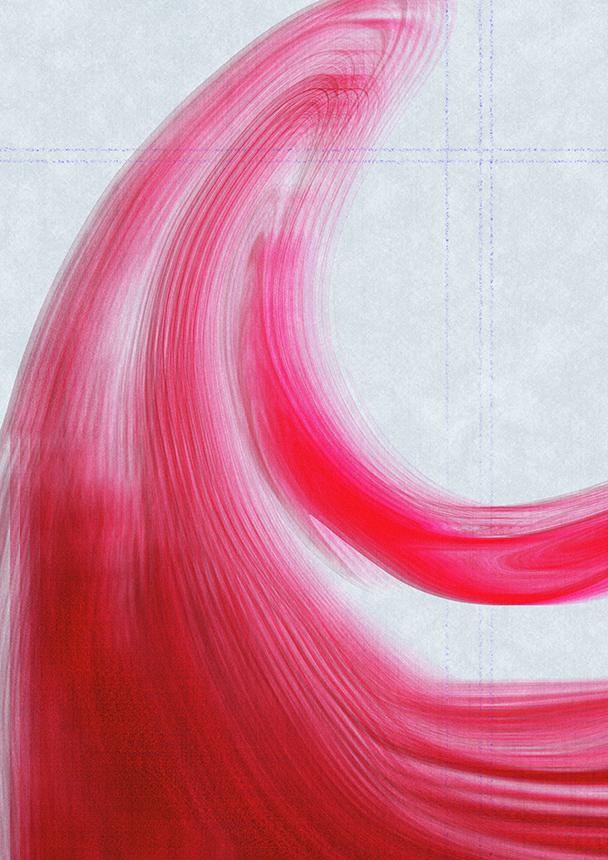
Peony, from seriesThe Flowers, Tora Kizu, 2026
“This series is, as the name suggests, a collection of works inspired by flowers. I hypothesised that a flower's beauty or ugliness is determined not by its form, but by the beauty or ugliness of the memories the viewer associates with it. Therefore, this is an attempt to maximise the connection between the viewer and their memories of the flower by abstracting the flower as much as possible and deliberately omitting its specific form in my depictions”.
The choice of flowers as a subject is not accidental. Flowers have carried symbolic weight across cultures for centuries; in Japanese tradition in particular, they are deeply tied to concepts of impermanence, beauty, and emotional states. Tora, however, is less interested in symbolism than in memory: what makes a flower beautiful is not its petals, but what people felt the last time they saw one. It is an idea that of course requires abstraction to work.
“I believe that the greatest value of abstract art lies in creating forms and colors that we find beautiful with our own hands, without relying on the beauty of existing forms in the world.”
“The work I’m exhibiting this time was actually inspired by a piece I saw one day in a local art museum, where they were holding an exhibition of ancient Chinese art. There, I saw a painting of peony flowers, and reinterpreted the beauty of its flowing lines and the layers of its vibrant vermilion color, recreating it as my own work. In that sense, I believe appreciating the works of others positively influences my own work. However, in today’s world - where the development of AI and social media makes it possible to view a vast number of artworks - I believe it’s important not to simply copy and paste others’ work, but rather to reinterpret and reconstruct it”.
The instinct to absorb, transform, and make one's own is at the heart of how artistic traditions have always evolved. What sets Tora's approach apart is his awareness of it: he doesn't stumble into influence, he reflects on it consciously, filtering what he sees through his own emotional and aesthetic lens.
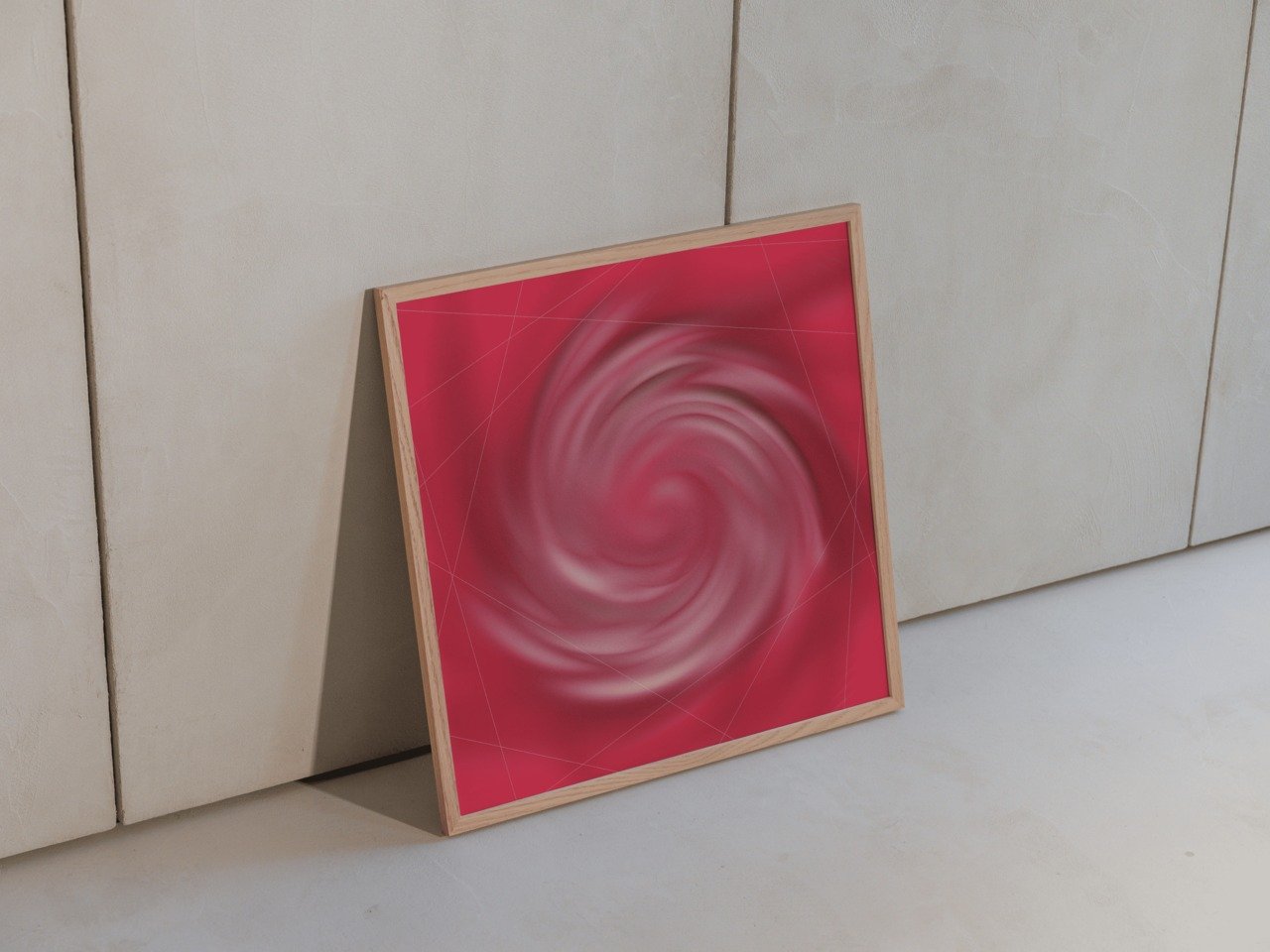
Courtesy of Tora Kizu.
“I believe that the greatest value of abstract art lies in creating forms and colors that we find beautiful with our own hands, without relying on the beauty of existing forms in the world”.
The colours he uses are vivid, brought to life thanks to Adobe Photoshop. “Within Photoshop, I arrange, distort, and manipulate colors, and add noise. This process combines two aspects: the mechanical - such as layer structure and noise application - and the human - such as creating natural distortions and forms. Using Photoshop, I create works that convey a variety of messages and embody beauty”, he said.
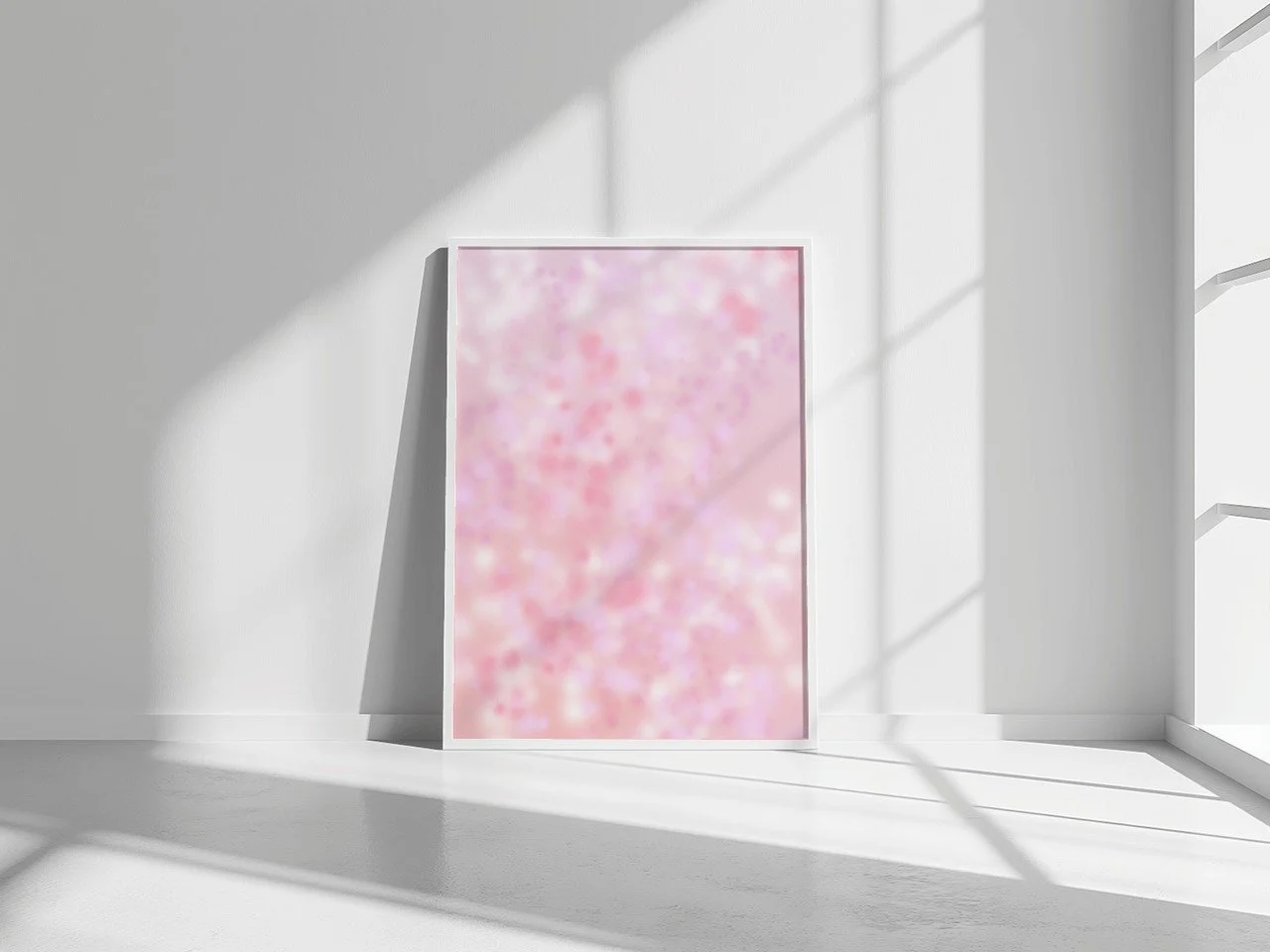
Courtesy of Tora Kizu.
In his hands, the software becomes then an extension of his emotional process, a tool for externalising what is otherwise difficult to put into words.
“Through my art, I saved myself from depression. From now on, I hope to use my art to help others struggling with depression or a lack of self-expression. Even if my work isn’t featured in large-scale exhibitions or recognised by renowned curators, my art truly fulfills its greatest purpose for me when it inspires viewers to find the courage and potential for self-expression”.
A quite powerful ambition that carries hope within.
Article by Gabriella Ventaloro
Born in Sicily but currently based in Brussels, Gabriella is a communication professional with a passion for visual arts and culture. With a background in journalism and strategic communication, she enjoys exploring the intersections of art, society, and politics, writing engaging stories accessible to a broad audience.