A SPACE YOU ENTER: SALLA AIDA
"I think of image-making and memory as fundamentally spatial - an active space you enter," says Salla Aida.
Her work began in traditional, representational photography. Not anymore. Now it lives in the space between the machine and the handmade. She photographs industrial waste and digitizes watercolors, then deconstructs and rebuilds them on the computer - using custom digital brushes that translate the feel of paint, of grain, of tactility. The result isn't quite photography. It isn't quite painting. It's something else - partly photograph, partly paint, partly code, built not to capture a moment but to reconstruct one.
In this conversation, we talk about that hybrid medium, the ambiguity of translation across languages, and why she trusts instinct and intuition over any single influence.
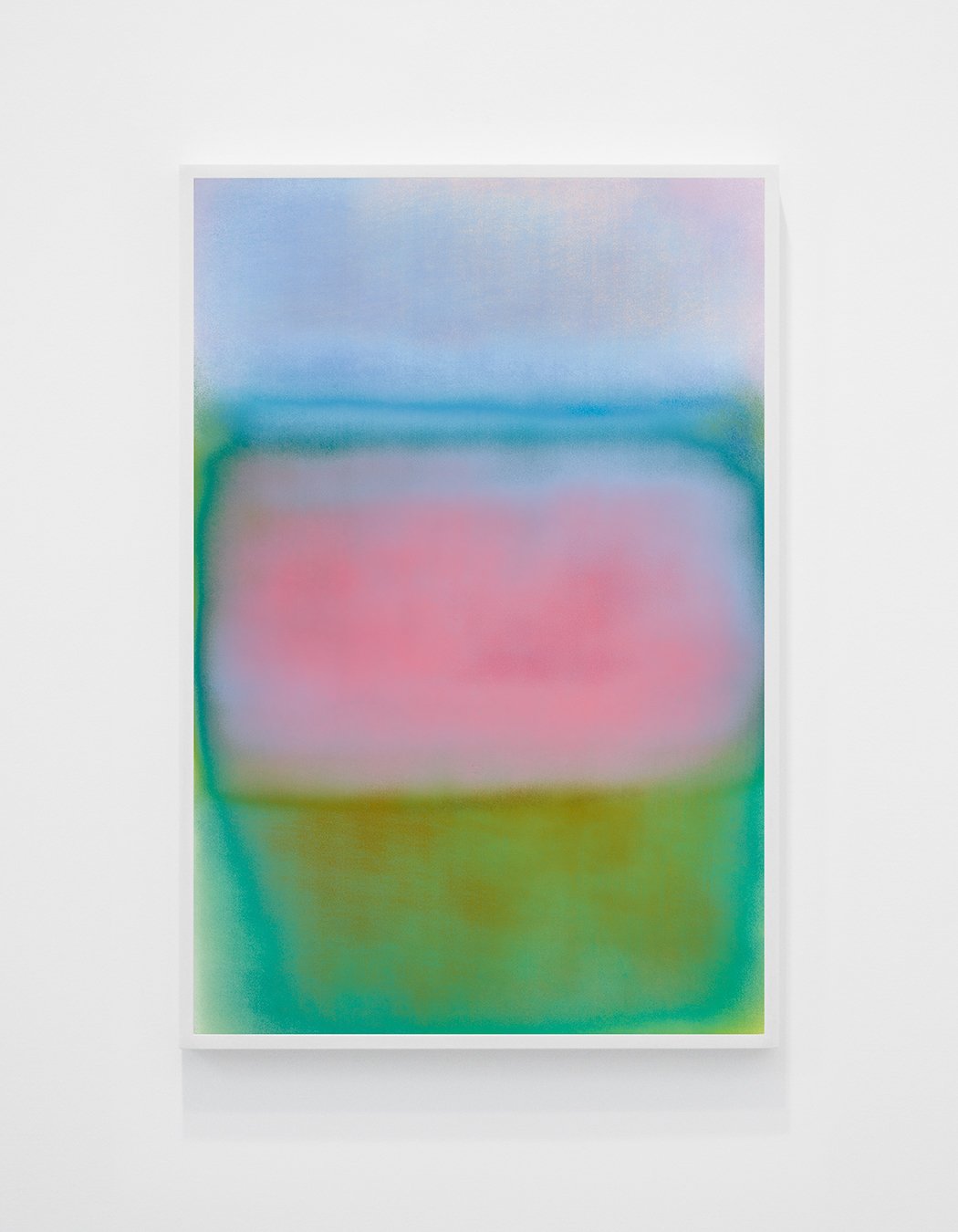
Untitled, Salla Aida.
I love starting by asking about the beginning of a creative journey. Do you remember your first attempts at making art? Can you share some memories with us?
As a young child, I would usually wake up early in the morning and start sketching, painting, and narrating stories to myself. Most of what I made came straight from my imagination. Sometimes I’d wander out of my room in search of something to look at, close my eyes to hold the image in my mind, then hurry back to recreate it from memory.
What is the most valuable lesson you have learned in your life that helps you create?
Let go, step aside, and let intuition be your guide.
Memory is a recurring theme in your work. When a memory emerges, it usually brings a specific feeling - whether nostalgic, sad, or warm. Through your work, what kind of feeling are you depicting most of the time?
I think of memory and image-making as fundamentally spatial - an active space you enter. Instead of being submerged in a single emotion like 'nostalgia', 'sadness', or 'joy', I prefer the word 'atmosphere', because it carries a sense of spatial depth, something ambient, and a multisensory quality that feels truer to how memory actually works. For me, memory behaves like paint itself - a tangible medium that constantly accumulates, distorts, transforms, and reconstructs. In that sense, imagination is the only limit.
“For me, memory behaves like paint itself - a tangible medium that constantly accumulates, distorts, transforms, and reconstructs.”
Is there a movement or an artist that has had a strong influence on you?
I find it challenging to single out one artist over another, as they have all been influential in their own way. I also spent nearly two decades abroad, and everything I have lived and experienced has had an impact on me. In terms of art exhibitions, I was particularly struck by "Jardins" at the Grand Palais in 2017, curated by Laurent Le Bon, Marc Jeanson, and Coline Zellal, as well as by the essay "The Romantics Were Prompted" from Mark Rothko's Writings on Art, 1930–1970.
You’ve mentioned that around 2010 - 2012, traditional photography stopped offering what you needed, which led you to embrace chance and start photographing waste. How did that shift evolve into the mix of painting and photography you do today?
It started around 2009. I wanted to rediscover the part of myself that could imagine, reconstruct, and work with things by hand - without a camera standing between me and the world, dictating how it should be represented. So I began building a large-scale version of rikka, the oldest form of ikebana, the ancient Japanese art of flower arrangement, made entirely from waste materials. "Rikka" also happens to mean "trash" in Finnish.
A stop-motion animation and a photograph of the piece were later selected for the Helsinki Photography Biennial in 2012, which became a turning point for me. I remember looking at a pile of trash one day and thinking, "I can do something with this - these are my precious stones, this is my paint !"
I started treating photographs and digitized watercolors the same way - not as finished images, but as raw material I could reuse and transform on the computer. That same impulse has stayed with me ever since, whether I'm working with waste, paint, or whatever comes next.
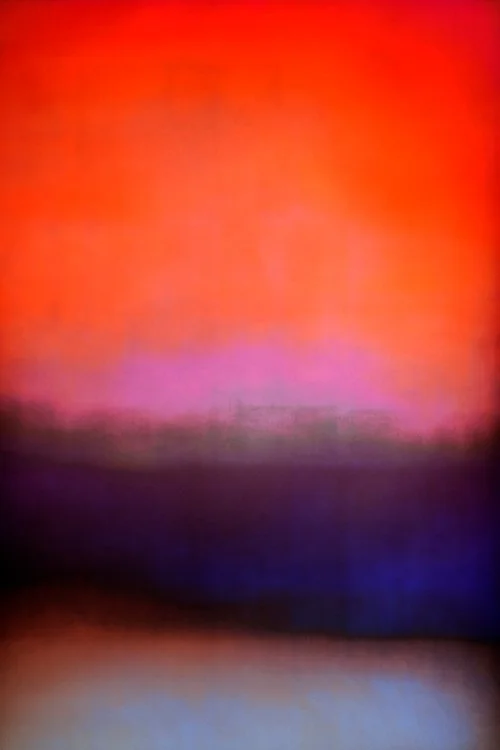
Untitled, Salla Aida.
Your first exhibition took place at Luova Gallery, Helsinki, in 2009. How did the act of sharing your work with the public impact you? Can you share some memories from that show?
This was a group show, part of a photojournalism project. Eleven other photographers and I stayed in South Korea for nearly a month, and our work was featured both in a Finnish photojournalism magazine and in this exhibition. To portray something as abstract and intangible as "air," I showed a series of portraits of kite flyers.
That month made me realize how complex it is to truly get inside a culture, and to translate ideas across language barriers. It's part of why I was drawn to making images in the first place - it's a language totally of its own, with and without words.
What stayed with me most, from the time we all spent together and from the show itself, was how much you can learn by observing how fellow artists work, and by hearing how the public responds to something you've made. South Korea left a lasting impression on me.
You don't name your pieces. Why is that?
Having lived for years in another culture, and coming to inhabit other languages, I've developed a certain sensitivity to words - to their charge, their depth, their meaning. “Untitled” holds both a lack and an abundance of expression at once, while staying open. It’s at the gate of things.
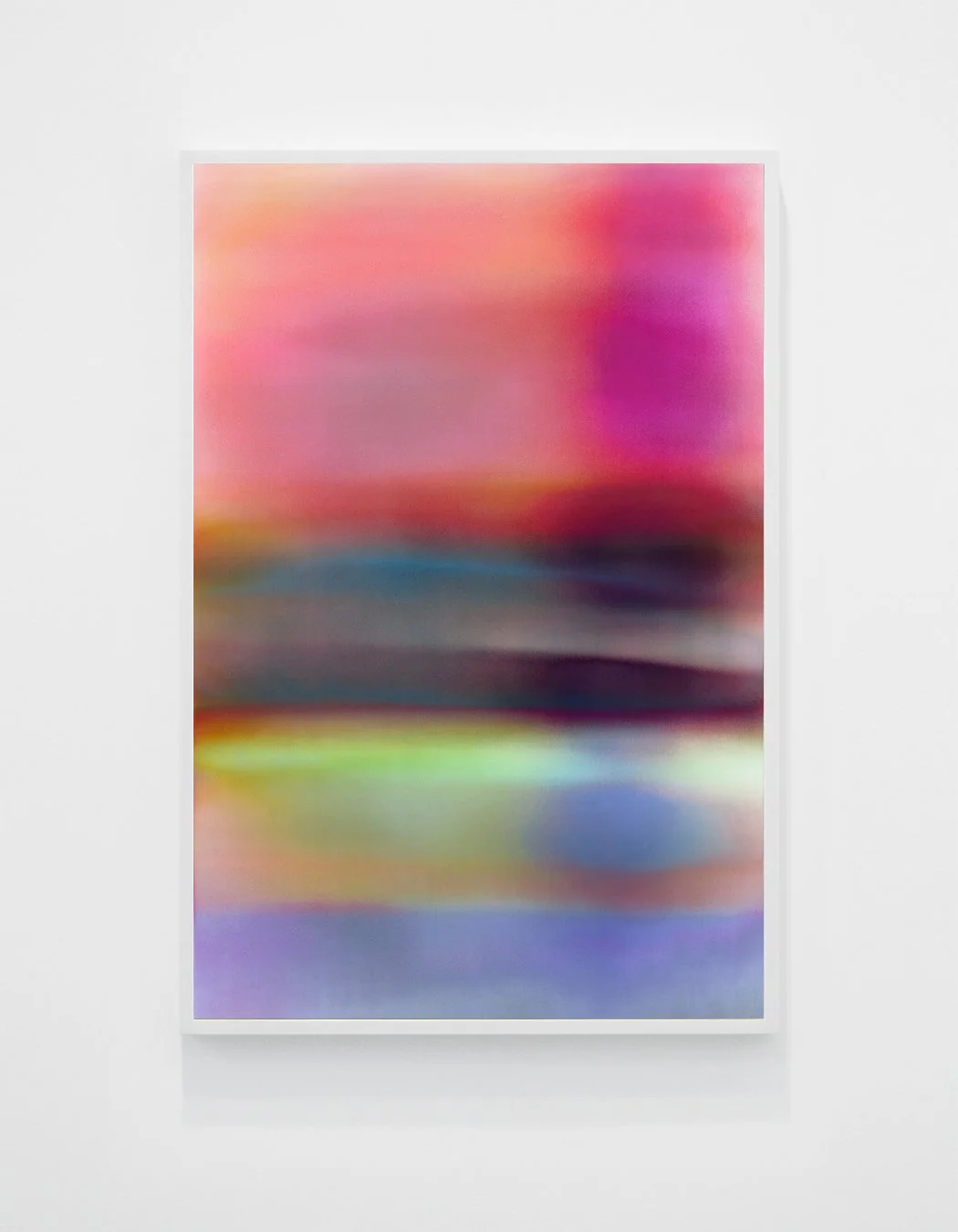
Untitled, Salla Aida.
Can you tell us about your work featured in this exhibition, Untitled (2025)? What was the process and idea behind it?
Untitled (2025) belongs to a long-term project exploring memory as an active reconstruction of accumulated perceptions. At its core is a photograph of a fragment of industrial waste - but here, the image slips away from photography's usual role as a fixed record of time and place. Instead, it becomes raw material, reworked and painted using digital software.
Early on, I noticed unexpected affinities between the colors and textures in my photographs of industrial waste and those of traditional watercolor. This led me to relearn painting, and to start combining digitized watercolors with my photographs - reusing and transforming existing material, and tweaking my own custom brushes to simulate the physical qualities of both mediums. I work in scattered stages - some tasks wrap up in a day, others take longer. The result is a new digital medium through which I paint.
Ultimately, I'm asking what memories truly are, how reliable they really are, and how they shape our thinking and imagination. I want to encourage viewers to see memory not as passive, but as something we can actively work with. It's a garden.
What is the main message you want to convey to people through your work?
The beat of a single wing can shift a mountain a world away.
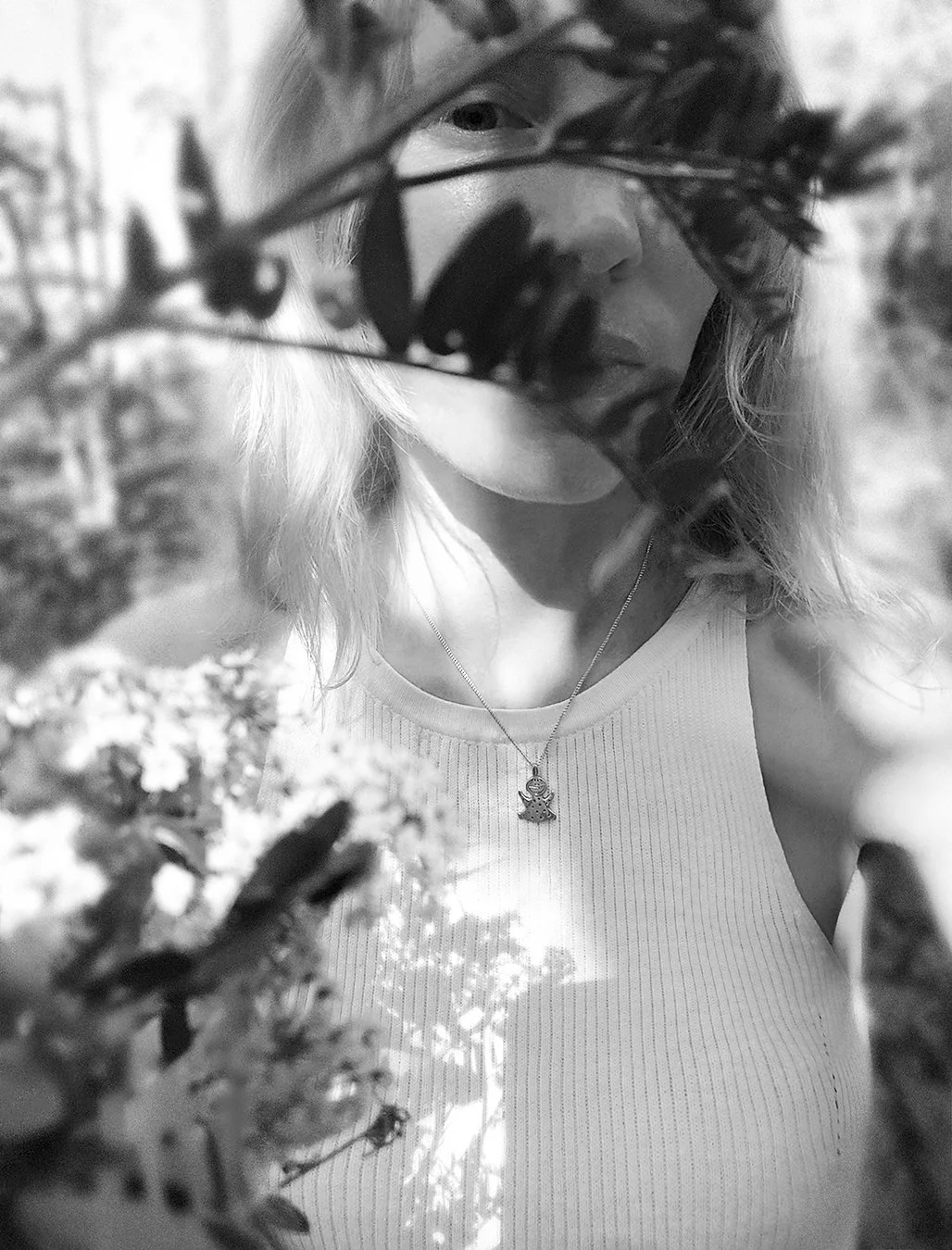
Salla Aida; courtesy of Salla Aida.
Salla Aida doesn't work from a fixed plan. She trusts the process, letting it reveal itself as she goes - layer by layer, gesture by gesture. There's no fear in not knowing; if anything, that uncertainty is where the work comes alive. It's less about control than about flow: showing up, paying attention, and letting the image find its own shape. In her own words, even the smallest gestures can set things into motion, reaching out far beyond what we can see.
To learn more about Salla Aida’s practice, visit her website.
Article by Vasya Kavka
Based in Ukraine, Vasya Kavka is a writer working at the intersection of contemporary art and digital culture. Through his platform @ambient.delusion, he researches emerging and underground artists, publishing interviews and editorial features that move beyond aesthetics to examine context, creative process and cultural relevance. His work is driven by curiosity and a commitment to thoughtful, accessible storytelling that situates artistic practices within the broader currents shaping contemporary culture.