THE STRUCTURE OF EQUILIBRIUM: SYLVIE HAMOU
“A musician once told me that geometric abstraction is rather like a piece of music. Each note is important for the general harmony but a single note out of place destroys the entire piece.”
While many artists seek freedom in the "messiness" of abstraction, Sylvie Hamou seeks the opposite. She approaches the canvas with the technical precision of a linguist and the structural eye of a designer. Her work isn't just a series of shapes, but a quest for a specific kind of equilibrium.
By blending the bold codes of non-objective art with an intrinsic sensitivity to color, she creates a space where harmony isn't just a goal, but a necessity. In her world, a painting is a composition that leaves no room for inaccuracy. We talked to the Geneva-based artist to discuss the meaning of abstraction and why balance is fundamental.
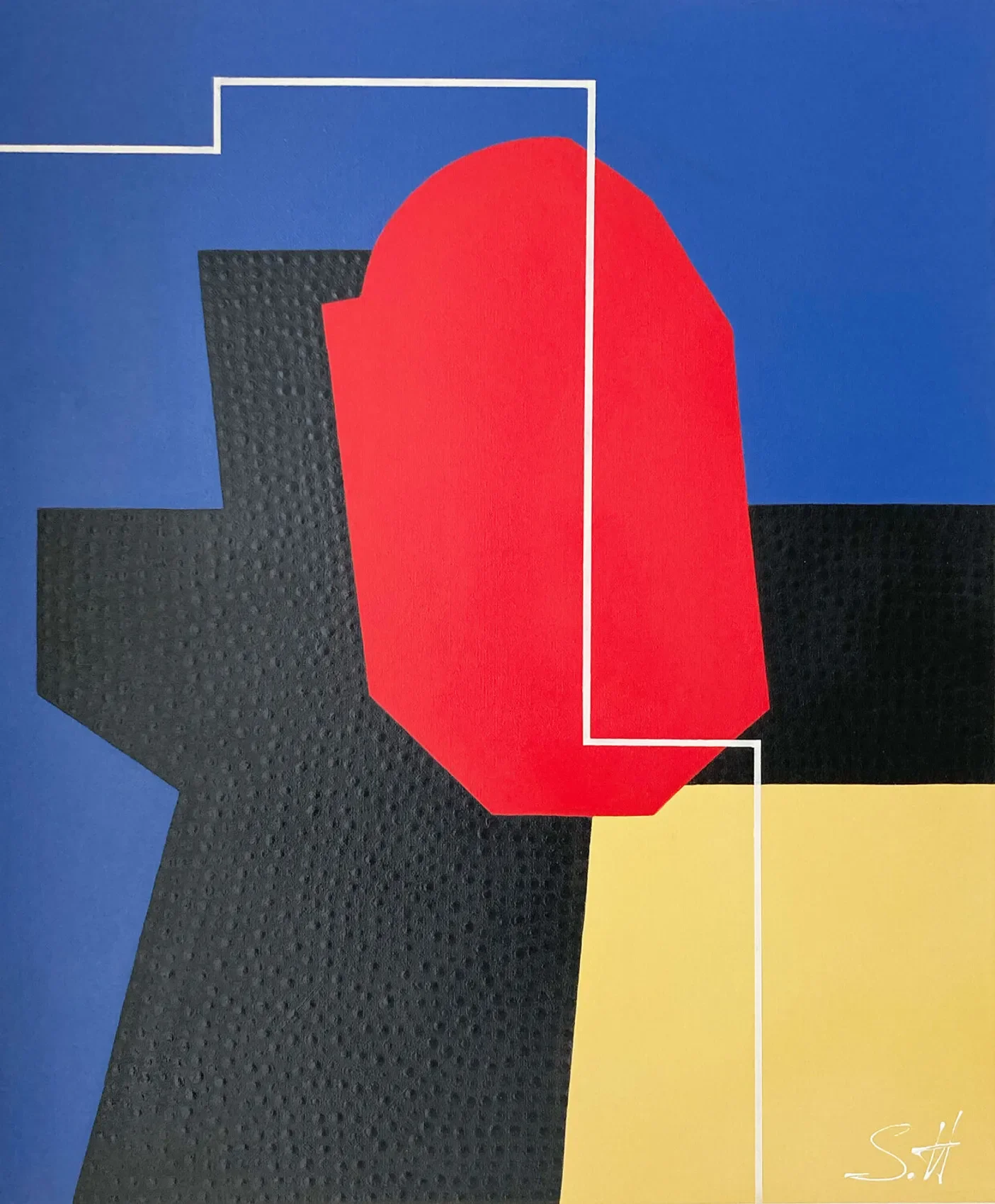
White line III , Sylvie Hamou
As a self-taught artist working in geometric abstraction, you’ve mastered a style that usually demands great technical discipline. Looking back at your journey, what was the most difficult part of training yourself?
By nature, I am precise and orderly. I like structure, clean lines, peaceful energy and balance - a must with hard-edge artwork. The most difficult part of my journey was developing my own distinctive graphic signature – features that make my art recognizable. Throughout my creative journey, I have worked on incorporating texture and dot work in each piece, which is a significant differentiation from most contemporary geometric artworks.
Have you ever considered attending a formal art institution or academy?
No, not really although I did attend numerous creative workshops in my childhood and teenage years. Art also held an important place in the school curricula when I was young. My professional career was in the linguistic field as a teacher and translator, where I juggled and played with words. Today, I play and juggle with paint, shape and texture. But both worlds are creative!
You’ve moved between New Zealand, France, and Switzerland – places that look and feel completely different. Now that you are settled in Geneva, do you find yourself trying to recreate the atmosphere of those other places, or has the new location immediately changed how you paint? Or is it a blend of both?
An interesting question… it is a blend of everything. Who I am, where I grew up, how I grew up and my own personal tastes. I am a cultural melting pot with Swiss and French parents. I was born and raised in a young, free and pacific country on the other side of the world, New Zealand with its Antipodean art influences. Over the years, through the insight of what people say and feel about my work, I have learned much about myself. Geometric abstraction is international. While distinctively structured, my art is perceived as both serene and vibrant. Someone once commented “The perspective is always open and leads the viewer to go beyond the painting itself”. Others have said my colour choices are “from elsewhere”.
“Geometric abstraction is organized and precise. It is a construction, a composition that leaves no place for inaccuracy.”
You often stick to a palette of only four or five colors per work. Is this a strict rule for you? At what point does adding one more color threaten the equilibrium of the piece?
It is not a strict rule but a personal choice. The equilibrium of each piece is important, and I construct each artwork using different shape, colour and textured combinations. Too much of any one of these elements may overpower and threaten the balance of the artwork. My colour choices are very important. I often mix or include a specific hue to offset/enhance the piece. I use dot work in the white and black elements, which in many ways creates a new colour variation, and offers a textured and softer appeal.
You said that your "work evolve around two complementary graphic art collections – Antipodean influences that highlights primitive art inspirations and the Contemporary collection inspired by urban design and architecture." How do you balance these two opposite influences? Do you have to be in a completely different headspace to work on one versus the other?
My artwork today evolves more exclusively around the contemporary collection. For better understanding, the Antipodean influence collection was my starting point. I have always found the use of repeated pattern in Maori art inspiring and totally contemporary, from a graphic standpoint. The use of dot work in Aboriginal art also fascinated me in terms of art technique. While I did not want to reproduce either culture, I revisited both artforms to create my own specific geometric interpretation that naturally embodies ethnic vibes.
Today, I have moved away from this collection but continue to use the dot work for texture and not the design itself. My contemporary collection, which I call “soft geometry” gives me the freedom of mixing irregular shapes to create a dialogue between linear forms and curved elements.
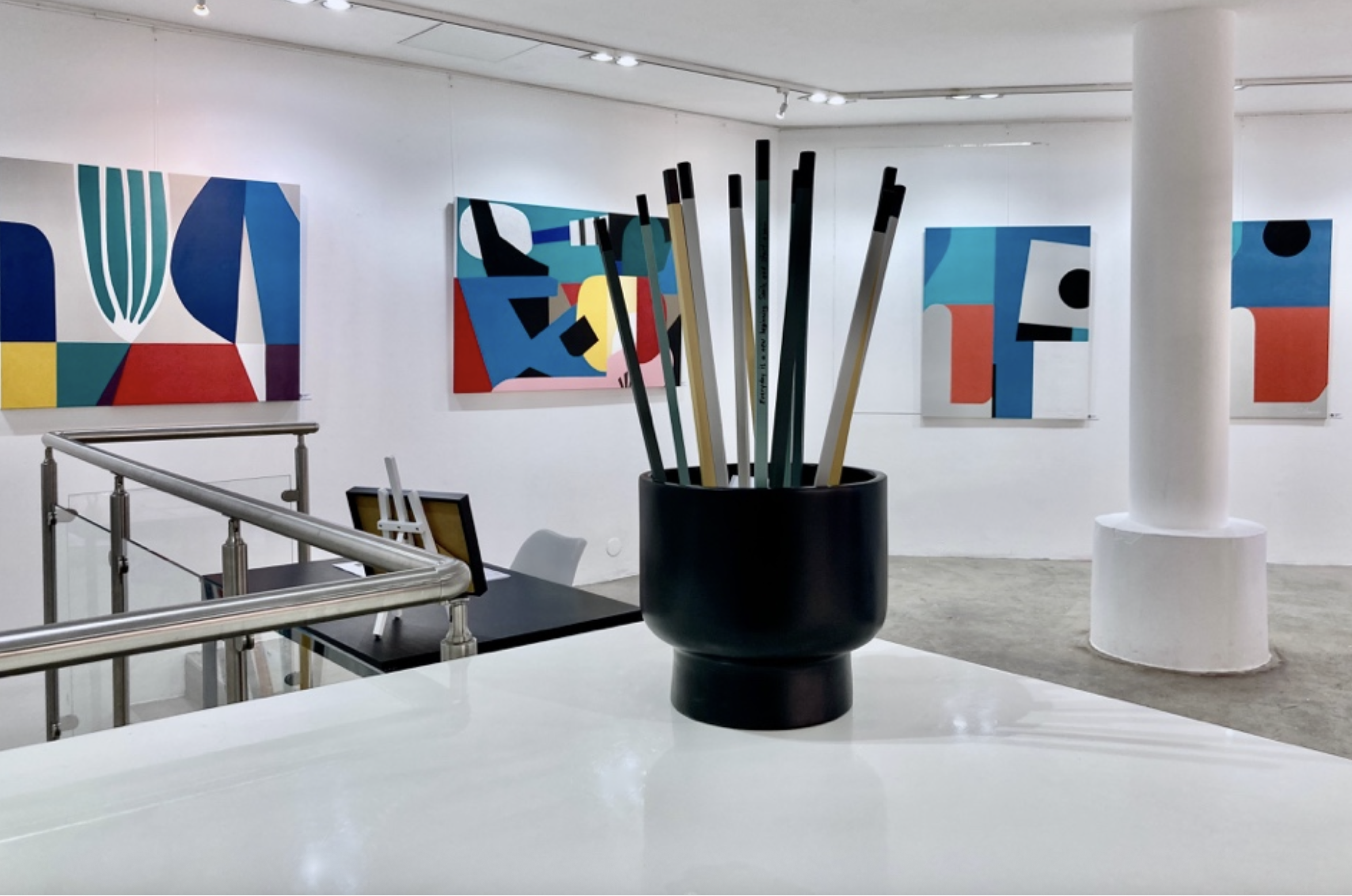
Courtesy of Sylvie Hamou
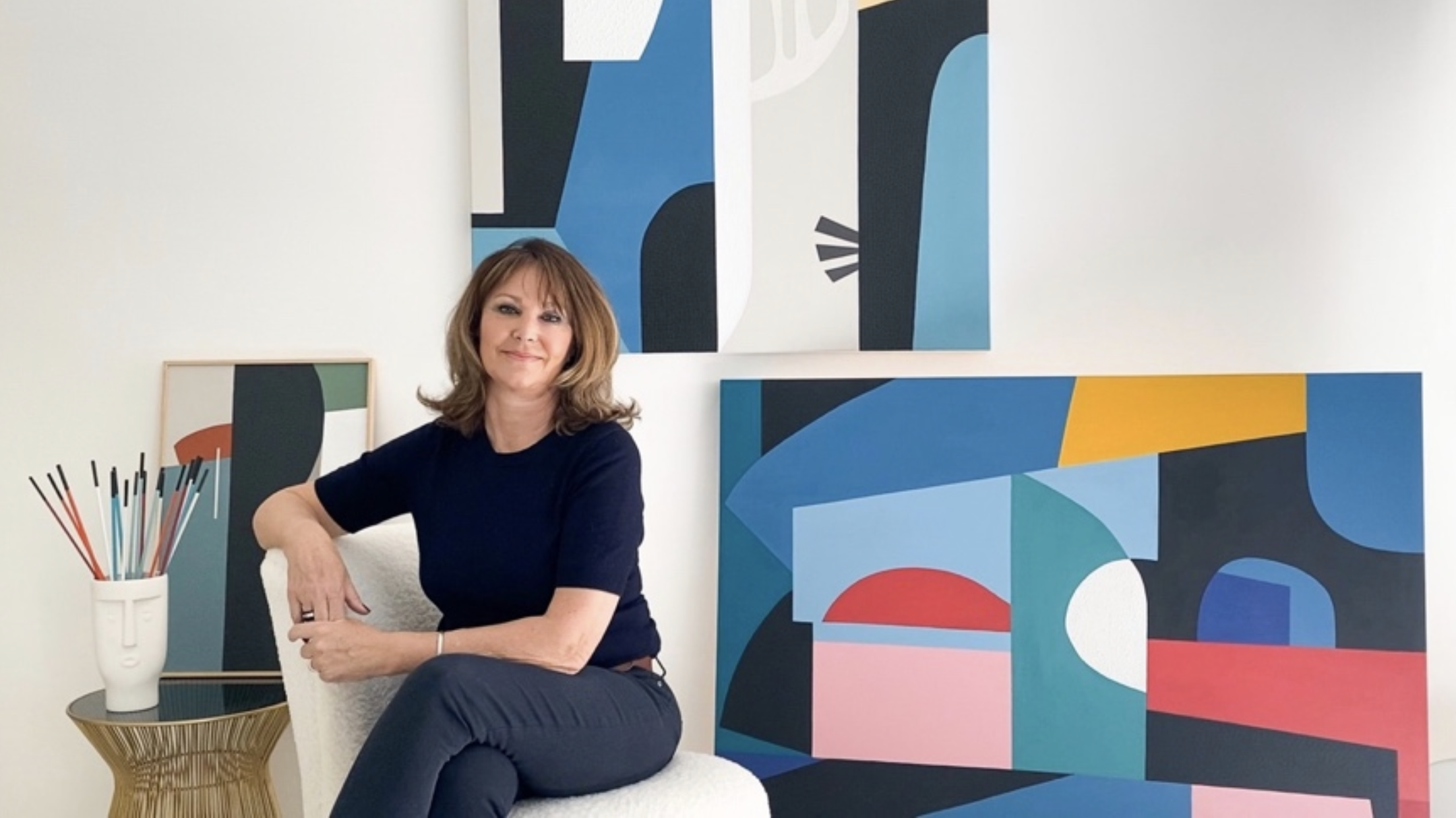
Courtesy of Sylvie Hamou
Besides these two major influences, is there a specific artist (historical or contemporary) who acted as a catalyst for your work?
The Bauhaus movement, architecture and Scandinavian design in general.
Abstraction is often seen as a universal language. Why do you feel it is easier for some people to explain themselves through abstract forms rather than figurative ones?
Abstraction is a universal language in that it does not tell a story or recreate a pictorial form of an event, place or context. Basically, artists express how they feel using the techniques and media that speak to them the most profoundly, and where they feel the most inspired. However, I think figurative forms are easier for the viewer to understand. The viewer can relate to the image, see what he is expected to see and understand. Abstract art, in the broad sense, creates a mood, an emotion through colour and stroke and blending hues, one upon the other. It is intuitive.
Geometric abstraction is different again. It is organized and precise. It is a construction, a composition that leaves no place for inaccuracy. I like that challenge. A musician once told me that geometric abstraction is rather like a piece of music. Each note is important for the general harmony but a single note out of place destroys the entire piece.
I don’t think anything is easier or more difficult. An artist automatically chooses the art style and technique that inspires him the most to create.
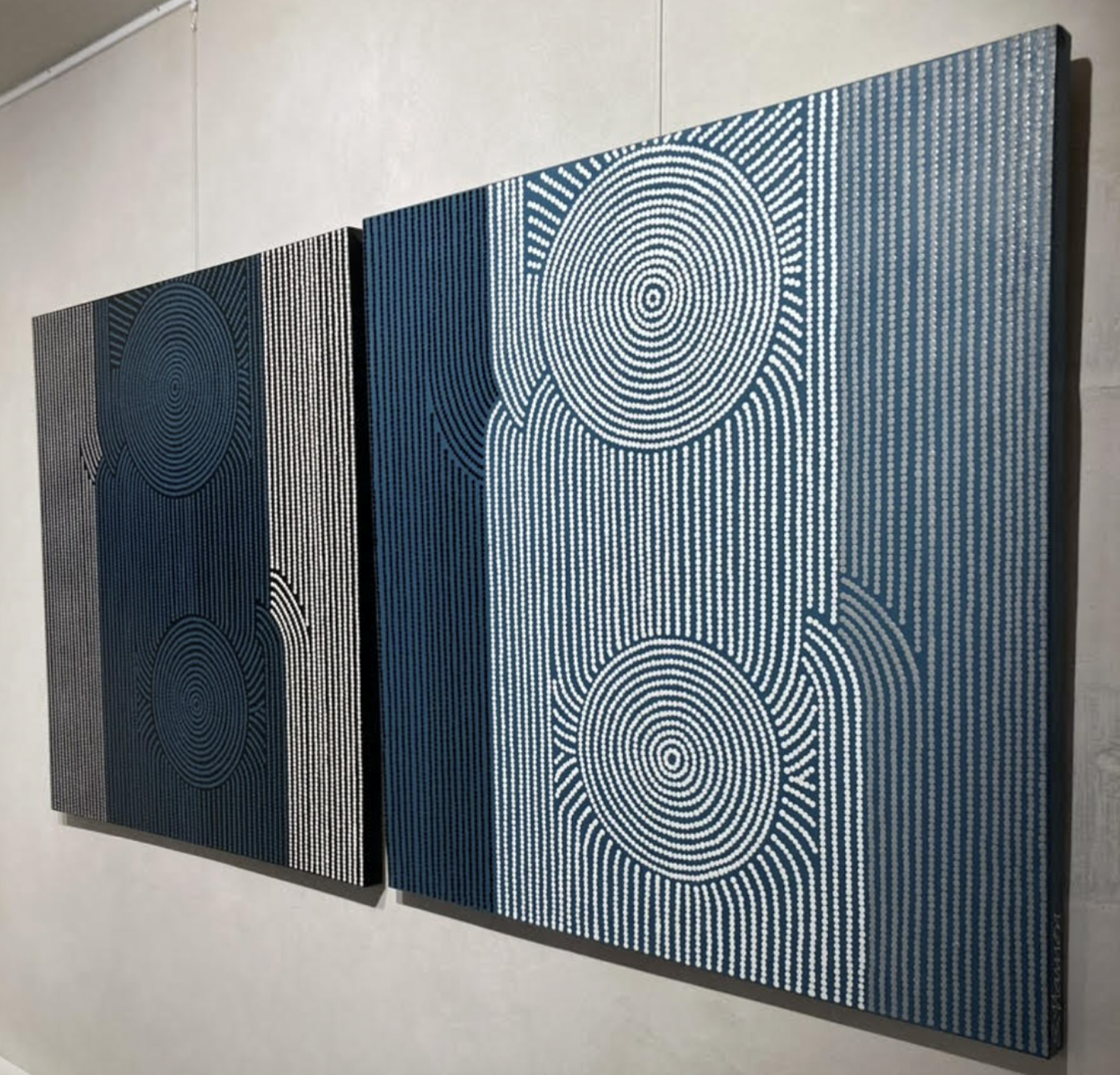
Courtesy of Sylvie Hamou
When you started working on White line III, was that crisp white line the very first thing you placed on the canvas to define the space, or was it the final “character”?
The white line was the final character! It was in the general plan, but its position was only fully identified at the end. It was the powerful element to complete the composition and resolve and unify the tension between the blue and red shapes and to lead the viewer’s eye beyond the limits of the painting itself.
As a gallery director, you spend a lot of time looking at other artists work through a curatorial lens. How does that affect your own process? Do you find yourself judging your own paintings more harshly, or does seeing so many different styles make it harder to keep your own language pure and uninfluenced?
The gallery I co-direct is a beautiful space in the old town of Geneva that gives budding and professional artists the opportunity to rent the space and hold their own solo or group shows. It is important to offer such a space to artists who do not have gallery representation. While I do no curation, over the years I have learned that creative energy and inspiration are boundless. There is room for everyone. The curatorial lens has not affected my painting process or choices but underscored the importance of quality. Personally, feedback from gallery visitors is enriching and indeed there is nothing more stimulating and rewarding than when someone falls in love with one of your artworks and decides to give it a new home.
And for my last question: What do you want people to take away from your work in this exhibition?
Peaceful, positive energy
Ultimately, Hamou’s pursuit of order isn't about rigid control, but the calm process of composition and the vibrant yet serene fascination that remains once the work is finished. For an artist who has spent her life navigating different cultures and languages, her geometric compositions serve as a universal home. She doesn't just invite us to look at a painting, she invites us to step into a space where the noise of the outside world finally goes quiet.
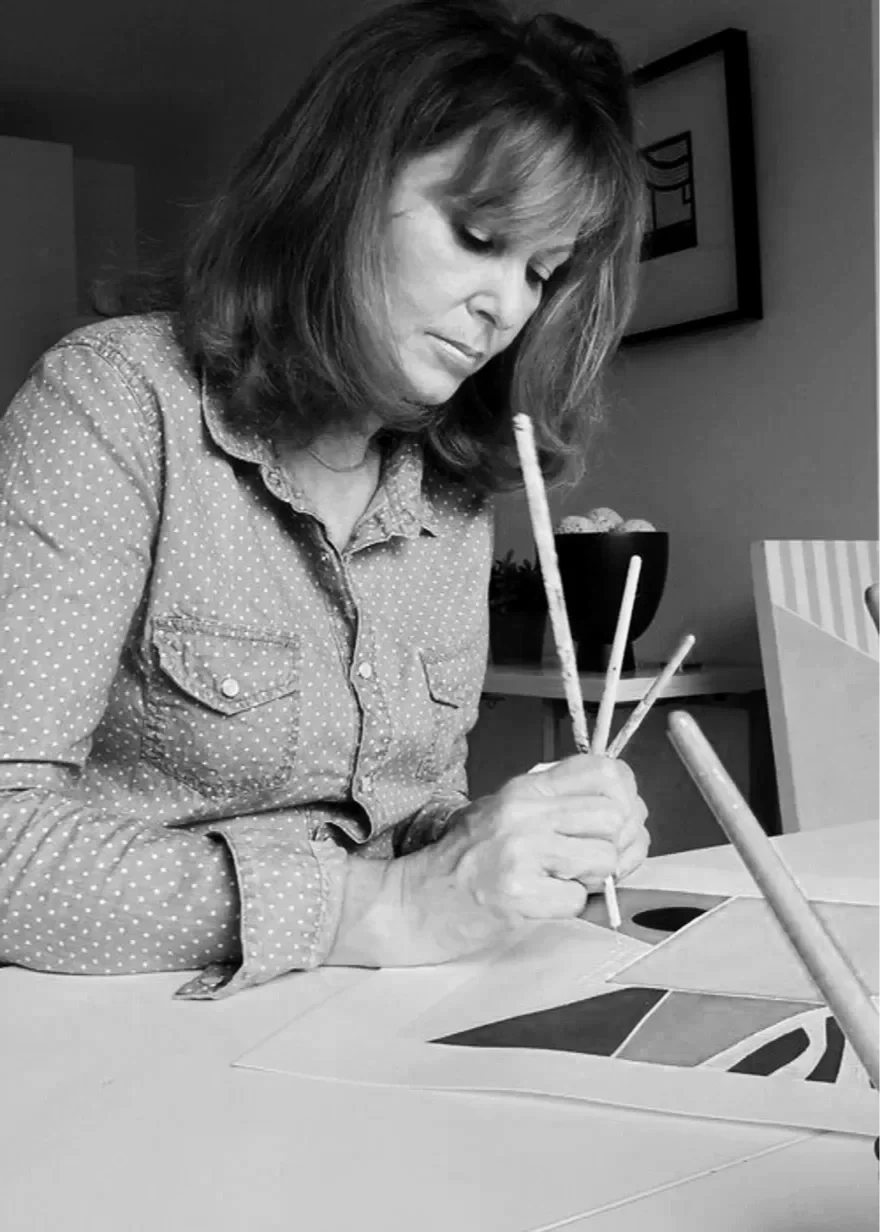
Courtesy of Sylvie Hamou
See more of Hamou’s work on her website.
Article by Vasya Kavka
Based in Ukraine, Vasya Kavka is a writer working at the intersection of contemporary art and digital culture. Through his platform @ambient.delusion, he researches emerging and underground artists, publishing interviews and editorial features that move beyond aesthetics to examine context, creative process and cultural relevance. His work is driven by curiosity and a commitment to thoughtful, accessible storytelling that situates artistic practices within the broader currents shaping contemporary culture.