
SEEING LIFE IN BLUE: A CONVERSATION WITH CHRISTINE BARTH MROZ
"I paint to share emotions, and when I succeed, I know why I paint."
Christine Barth Mroz doesn't follow a map – she follows a feeling. For over 20 years, the Strasbourg-based artist has been refining an internal dialogue, trading formal art education for the raw authenticity of her own palette. By layering light and pigment to capture the rare, precious blues of her Alsace home, Christine transforms the "frantic days" of a working mother into a poetic journey. Whether she is translating the grit of Berlin street art into her piece Ville Folle or capturing the quiet serenity of a stormy sky, her work is a testament to the power of seeing the world through emotion.
In this interview, we explore the origins or Christine’s creative drive, tracing her path of self-discovery and diving into the memories and inspirations that allow her to capture the untouchable.
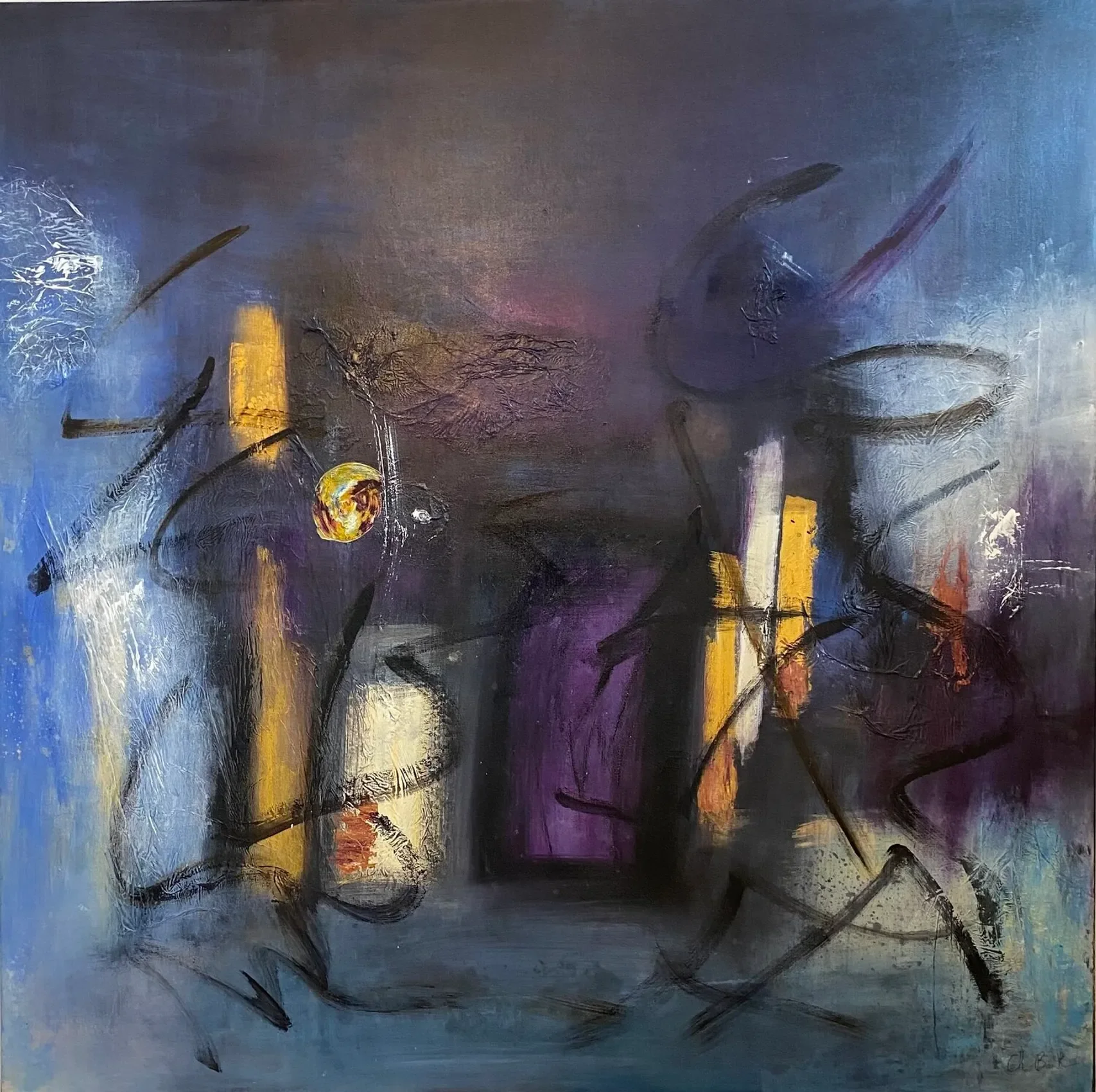
Ville folle, Christine Barth Mroz
I discovered that you are a self-taught artist. I was wondering: what made you start painting? Maybe a specific event or a feeling? Can you share a bit about that moment?
I’ve always painted, but at the time, it was important to pursue traditional studies, painting wasn’t considered a "real job" in my world. However, it was my primary means of expression during my adolescence – a certain freedom I could grant myself through the canvas.
Have you ever considered studying art at an educational institution? Why did self- teaching appeal to you - is it mostly about the freedom it allows?
I tried taking classes for six months, but I felt lost within a framework of rules that I didn't care for. I was simply looking for the pleasure of painting my emotions – a true moment of personal expression.
When did you realize that this “little hobby” was becoming something you want to do for life?
Children, a job, and then in the evening, my own moment in front of my palette of blues – perhaps to escape from the frantic days of a working mother.
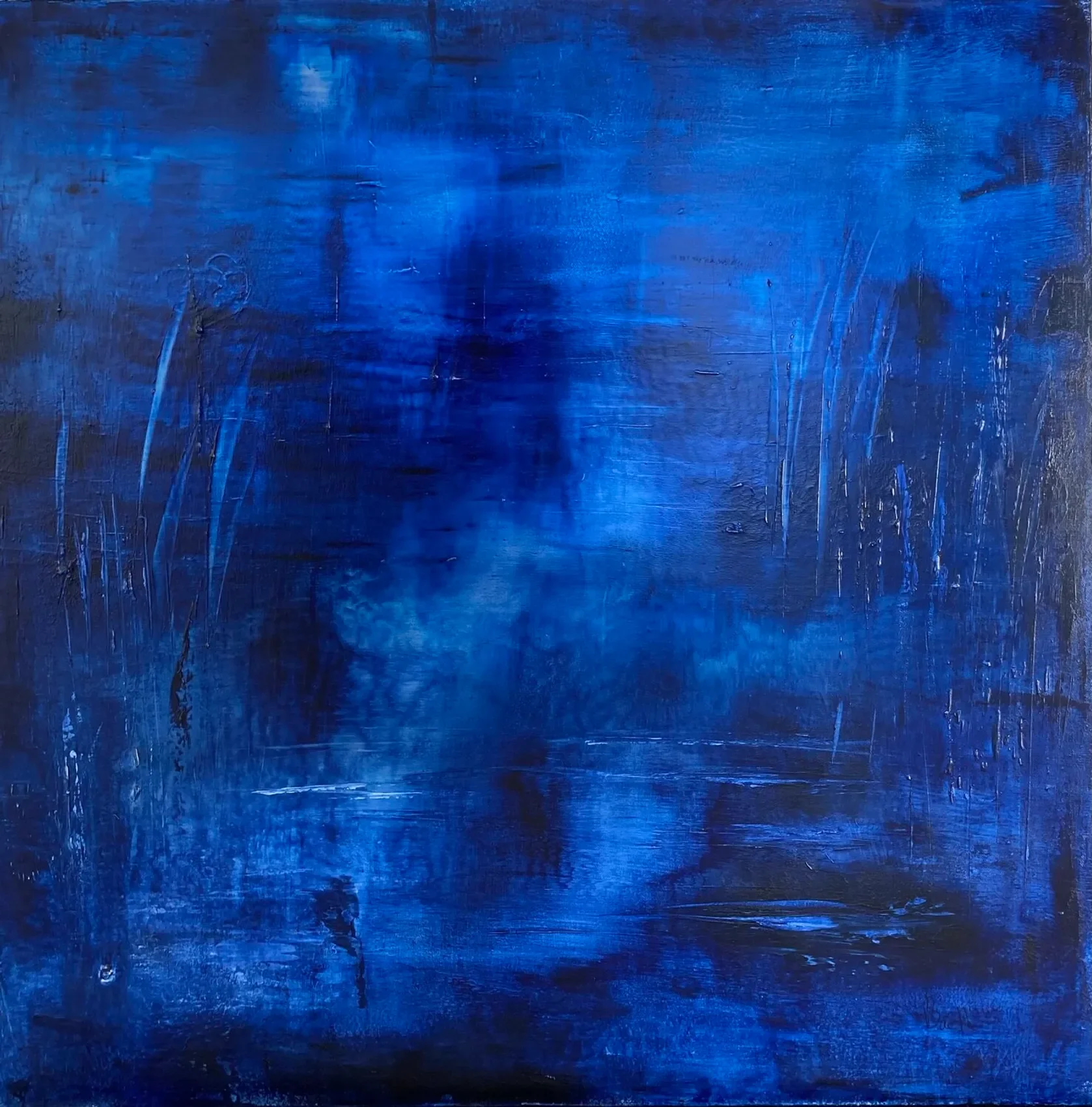
Rêverie bleue marine, Christine Barth Mroz
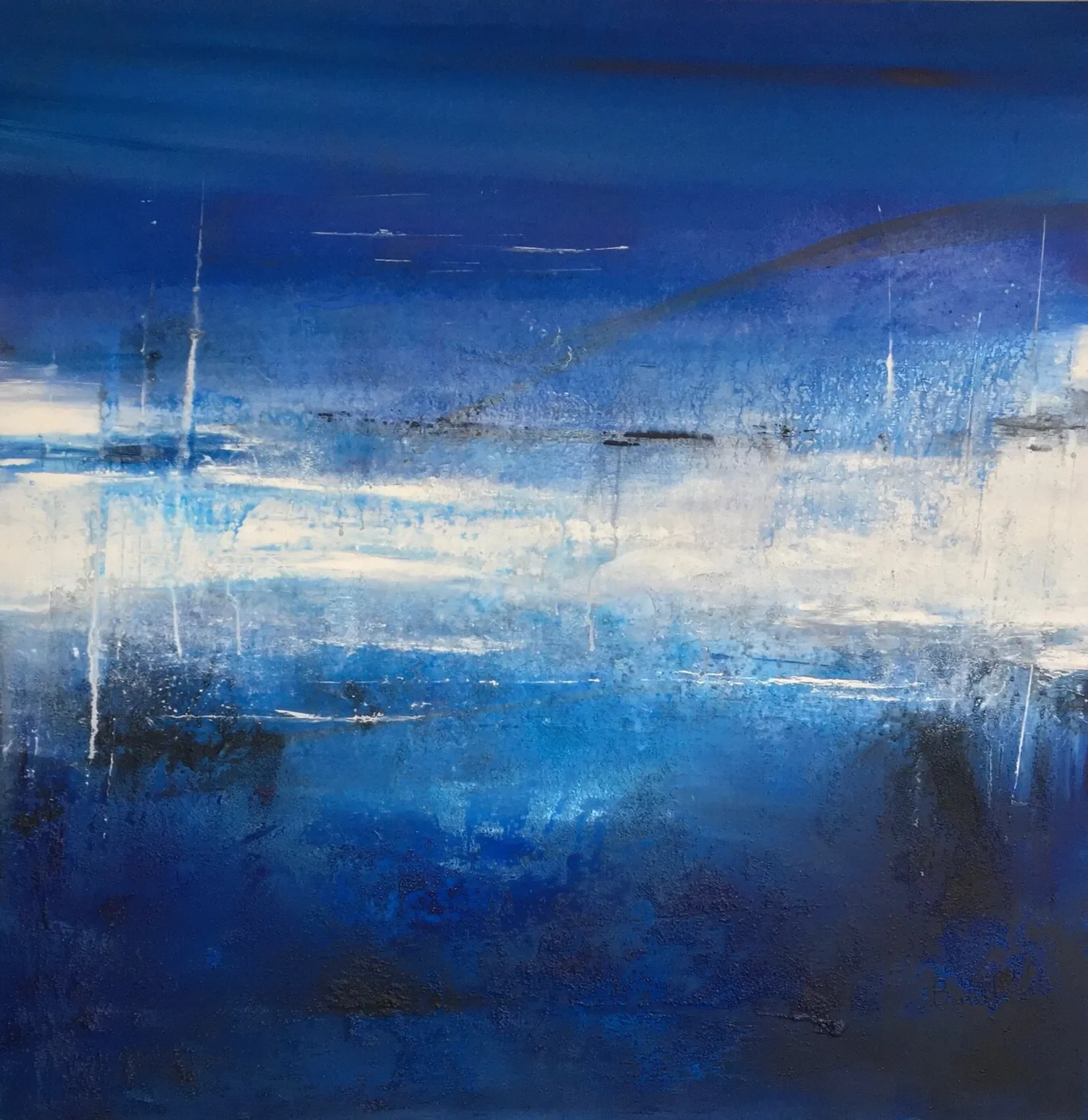
Espoir, Christine Barth Mroz
Most artists hit a “brick wall” from time to time and struggle to create. How do you overcome these obstacles? What inspires you to keep going?
Painting is a means of expression; we all need to express ourselves. Some use words, others singing or a private diary. I really like the image of the diary – my painting is like an internal dialogue that takes shape and evolves along with my emotional state. By playing with textures and patterns, I love this organic relationship with the canvas. It is also a form of meditation; by repeating gestures and focusing on the present, you acquire certain values: patience, calm, and curiosity too.
Let’s talk about your work. I noticed you use many different shades of blue. What feelings do you associate with this color? Do you use the amount of blue in a piece as a tool to highlight those specific emotions?
Peace and serenity. ‘‘Voir la vie en bleue" (‘‘seeing life in blue’’) is a French expression that might seem cliché, but it speaks to me. My many stays on the Côte d'Azur and in Italy – the nuances between the sky and the sea; the sky as seen from a plane; the blue of a summer night or a stormy sky. I find all these elements in my daily life and want to transcribe them onto the canvas. There is also the aesthetic aspect: growing up in Alsace, where a blue sky is a rather rare and precious thing, gave me a taste for this color – one that can be appreciated even at night when the light is absent.
Ville folle - this painting really stands out to me. While you use lines in your work, they feel particularly special in this piece. Can you explain the meaning behind those lines and the painting itself?
Ville folle "emerged" after a trip to Berlin, where I had the chance to meet a guide who introduced me to the street art that is omnipresent on the walls of that history-steeped city. It was quite natural that my hand, guided by those memories, gave birth to the piece.
For some, abstract art is about emotion, for others, it’s about the raw mechanics of color and shape. How would you define what “abstract” means within the context of your own practice?
I love the idea of painting the immaterial. Some associate colors with sounds or smells; I like to paint emotions. I give them angular lines or softness; a sense of dynamic intensity and aesthetics – all of it set to music.
For my last question - what is the main thing you want people to take away from your paintings in this specific exhibition?
I am not looking to show an object. In my canvases, I try to share emotions, and when I succeed, I know why I paint.
“I paint to share emotions, and when I succeed, I know why I paint.”
As Anaïs Nin once said “We don’t see things as they are, but as we are”. By taking away the literal and focusing on the abstract, Christine invites us to stop being spectators and start being participants. When you stand before one of her canvases, you aren’t just looking at her emotions – you are invited to seek the voice of your own within the depth of her blue.
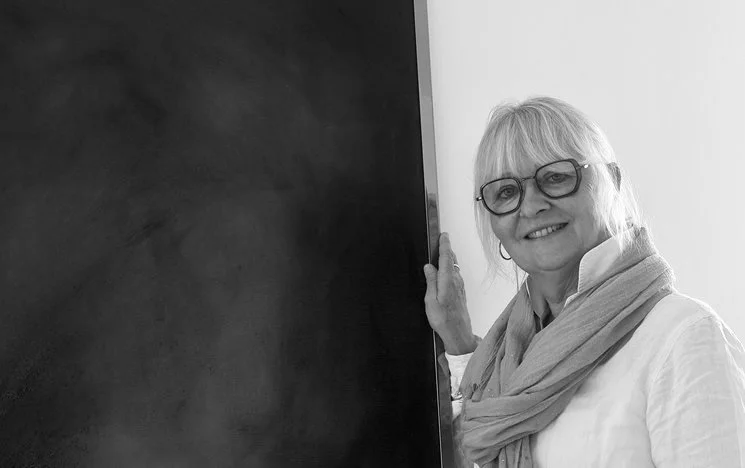
Courtesy of Christine Barth Mroz
See more of Christine Barth Mroz’s work on Instagram.
Article by Vasya Kavka
Based in Ukraine, Vasya Kavka is a writer working at the intersection of contemporary art and digital culture. Through his platform @ambient.delusion, he researches emerging and underground artists, publishing interviews and editorial features that move beyond aesthetics to examine context, creative process and cultural relevance. His work is driven by curiosity and a commitment to thoughtful, accessible storytelling that situates artistic practices within the broader currents shaping contemporary culture.