BETWEEN THE ABSTRACTION AND THE CONCEPTUAL: SALVA NEBOT
"The Mediator between the Head and the Hands must be the Heart."
I see this iconic line from Fritz Lang’s Metropolis as a great representation of Salva Nebot’s creative vision. In his work, the Hands are the ones that physically build the piece – whether carving into wood or layering photographic emulsion. The Head is the observer, the investigator who searches for the hidden and the conceptual depth within the frame. And finally, the Heart is the element that fills the work with emotion, giving a "visual wound" or a "silent shadow" its true meaning.
From his early experimentation to his current mastery of atmospheric tension, he treats reality not as a subject to be documented, but as something to be uncovered. In this conversation, we go behind the frame to see how Salva navigates the space where the seen and the unseen intertwine.
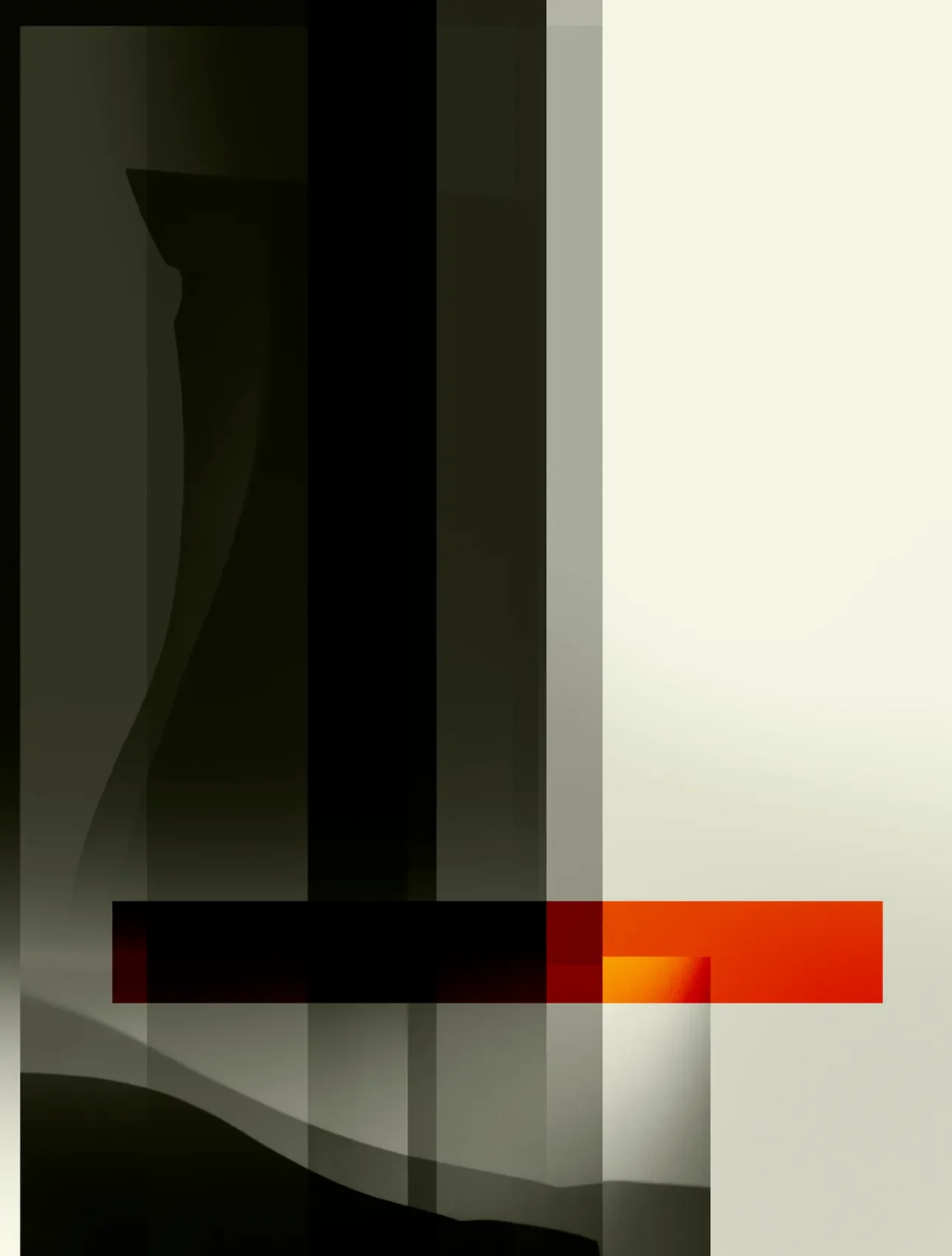
The Wait by Salva Nebot, 2026
I’m always fascinated by an artist's trajectory before they find their "voice." Could you share where your creative path began? What was the first spark that made you realize you had to create?
From childhood, art was very present in my life through my mother, who painted in oils. I grew up surrounded by that material and sensory universe, and I was very soon fascinated by the possibility of seeing how an image could emerge from a blank canvas. When I began painting on my own, I discovered not only the pleasure of the process, but also a deep need for expression. Although I initially studied Teaching because of a family decision, once I finished I understood that my true path lays in art. Entering the Faculty of Fine Arts meant discovering a way of life and a way of thinking with which I deeply identified.
Through the years of creating, how has your perspective on art changed? In the early articles by Manuel Godoy Casanova and Juan J. Zamora, you are described as a "geometrical expressionist" and a "primitivist," and you were known as Salvador Alvaro at the time. Looking at your current work, how much of Salvador Alvaro is still present in Salva Nebot today?
At that stage, I focused on research and experimentation with materials such as calcined sand, earth, burlap, and cardboard, because I felt that process helped me move closer to a language of my own. At the same time, I began discovering artists and movements that deeply influenced me, such as Anselm Kiefer, Antoni Tàpies, Kandinsky, Bacon, Der Blaue Reiter, and CoBrA. I was also fortunate enough to meet Siegfried Reich an der Stolpe, a member of the latter group, in person, and speaking with him was a particularly enriching experience. That drive to investigate, experiment, and continue discovering new forms of expression remains a fundamental part of my work today.
“I am interested in the image not only showing, but also suggesting, activating, and containing meaning.”
Can you tell us about the first moment you felt recognition as an artist? Looking back at your very first exhibition, what was the feeling like, and how does it compare to the way you approach showing your work today?
While studying Fine Arts, I took part in both group and solo exhibitions, a first immersion into the complex world of art that I experienced as something fascinating. However, it was a few years after finishing my degree, when I received a grant for the Ifitry Artists’ Residence in Morocco, that I felt a real turning point in my trajectory. That experience also led me to participate in the 2nd International Biennale of Contemporary Art in Casablanca, where I had the feeling that my work was beginning to be heard, valued, and recognized.
Today, my work continues to be driven by that same commitment to research and experimentation. I keep searching for ways to convey, through my own language, experiences, sensations, and concerns, while keeping alive the need to explore different modes of expression.
In the study "La trayectoria fotográfica de Salva Nebot y la emergencia del retrato en sus investigaciones visuales" [The photographic trajectory of Salva Nebot and the emergence of the portrait in his visual investigations] by Román de la Calle for Archivo de Arte Valenciano, you mentioned that German Expressionism was a major inspiration for you. Could you tell us about the specific artists or films that shaped your visual language?
German Expressionist cinema had a decisive influence on the way I understand art. Chiaroscuro, unsettling atmospheres, distorted sets, and forced framing led me to seek a more personal visual language. Films such as The Cabinet of Dr. Caligari, Metropolis, Shadows, and Genuine shaped my imagination. Since then, I have been especially interested in the image as a way of revealing what is in plain sight for everyone, but what we do not always know how to see.
I would like to talk to you about your work The Wait. What inspired you to create this piece and what was the technical process behind it? Specifically, the choice to use that one flat, red horizontal line to cut through the whole composition?
The Wait arises from my interest in representing that state of suspension that exists before something happens. I was interested in constructing a restrained, almost silent image, where the tension would not come from narrative, but from the relationship between the elements, the empty spaces, the light, and the sense of time standing still. In this work, waiting is not presented as a concrete scene, but as a mental atmosphere, a space of containment and uncertainty.
From a technical point of view, I worked on the composition seeking balance and, at the same time, a certain visual discomfort. The vertical structure of the image creates a feeling of stillness and limitation, while the flat red horizontal line introduces a radical interruption within that order. That line acts almost like a threshold, a signal, or a visual wound that cuts through the composition and activates the entire image. I was especially interested in that contrast: on the one hand, restraint, shadow, and silence; on the other, the presence of a minimal yet forceful element capable of tightening the space and altering the reading of the work.
Red does not appear here as a decorative device, but as a point of intensity, alert, and emotional condensation. It is the element that breaks the neutrality of the whole and turns waiting into something active, charged with contained energy. In that sense, The Wait is built through formal restraint, but also through a search for maximum visual and emotional tension with the fewest possible means.
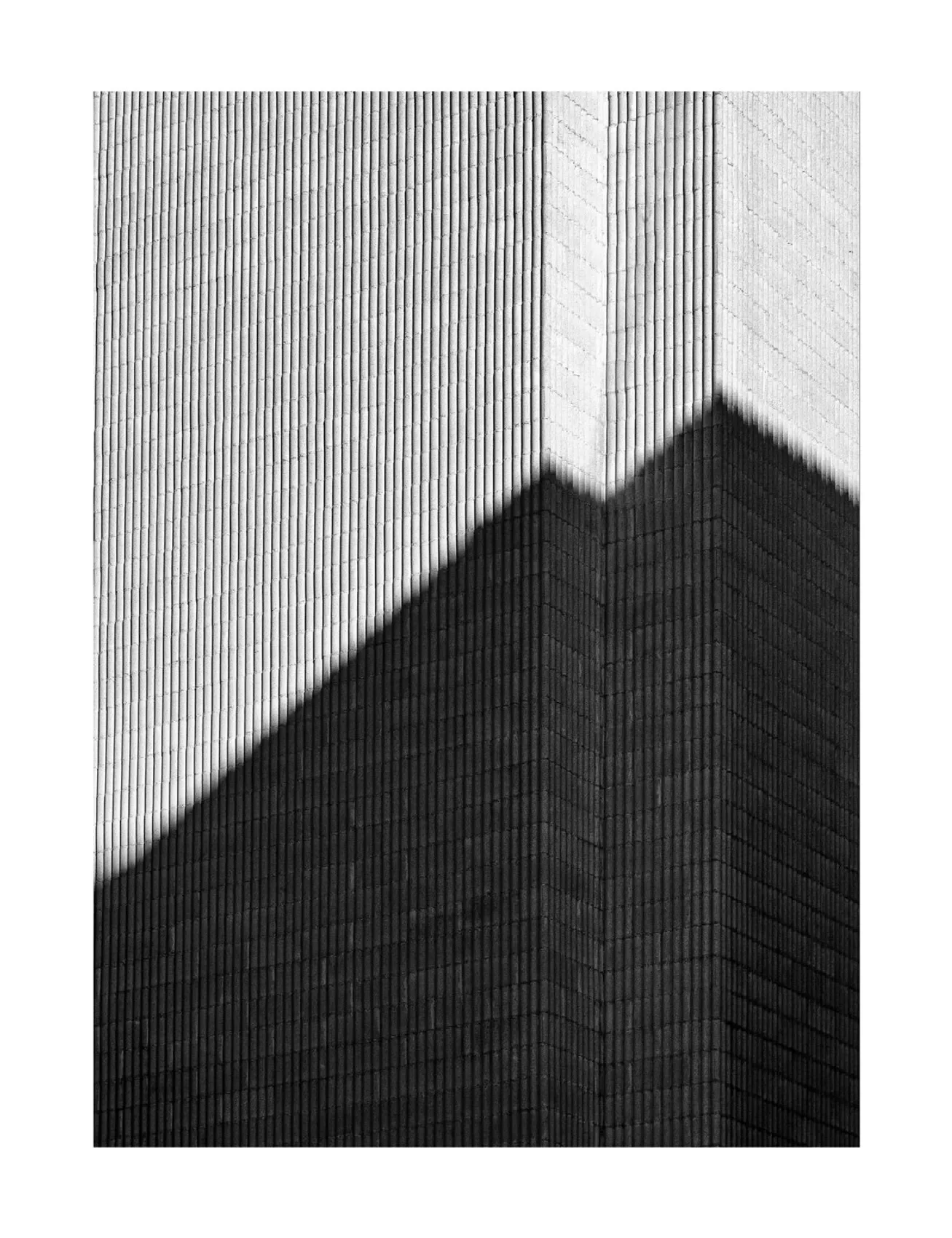
Division by Salva Nebot, 2026
Your work feels like a battle between the methods of expression – photography, sculpture, woodcarving, and painting. At what point in your process does an image "demand" to become a physical object? How do you decide that a specific idea needs the texture of wood or the weight of sculpture rather than staying a photograph?
I do not understand it as a confrontation between different means of expression, but rather as an inner need to find the most appropriate way to create something that truly conveys. What interests me is that the work reaches the viewer in some way, whether through emotion, strangeness, rejection, or curiosity. That concern leads me to continuously investigate the expressive possibilities of each medium, to displace the image from its usual context, and to explore new relationships between matter, support, and meaning.
In the case of photographic emulsion on wood, its incorporation came about because I felt that this support expanded the expressive capacity of the image. Wood is a living material, with grain, grooves, and marks that can almost be understood as wounds or traces of time. All of this brings a visual and symbolic density that intensifies the presence of the image.
In ceramics, on the other hand, I am interested in the possibility that the sculptural piece may function as a container of experiences, memory, and concrete events. By incorporating the image into a three-dimensional object, it ceases to be only a surface and acquires another dimension, another weight, and another form of presence.
Talking about your mediums, if you compare painting and photography, what do you find more challenging – creating a world from nothing, or taking pieces of reality and putting them into a composition?
Both processes present different challenges for me. In painting, and also in sculpture, the challenge lies in constructing an image or a presence out of emptiness. In photography, by contrast, the challenge is knowing how to look, recognize, and isolate a fragment of reality in order to translate it into a composition capable of generating a different intensity and a different meaning.
I do not conceive of them as opposing languages, but as different ways of articulating the same search. In all of them, I am interested in transforming perception and placing the image in a more poetic, denser territory, more closely linked to memory and interpretation.
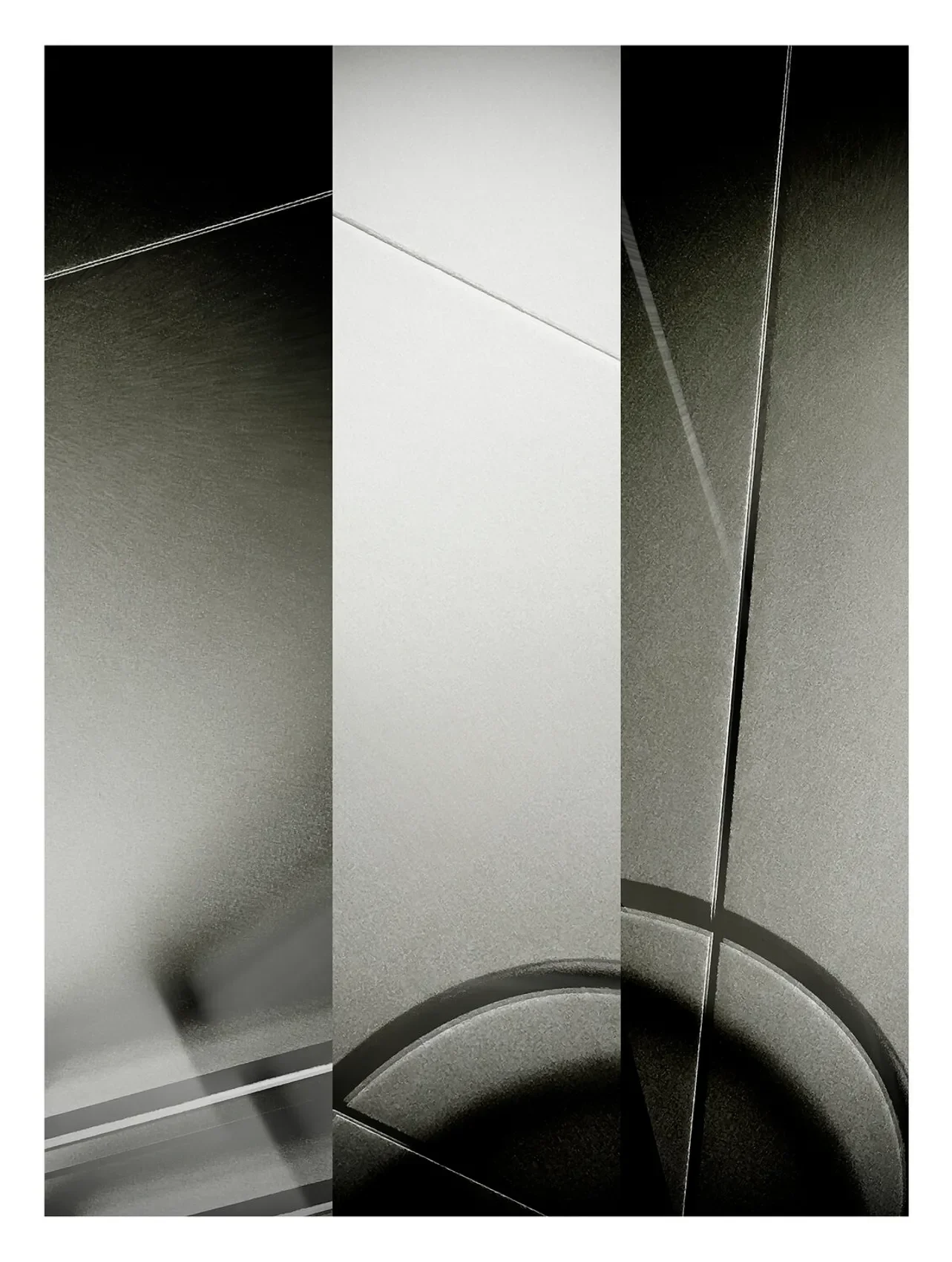
El espejismo del tiempo by Salva Nebot, 2024
To my mind, there is a very strong pull toward abstraction in everything you do. Do you consider yourself an abstract artist, or are you a figurative artist? How would you define your art?
I am not interested in defining my work through a strict opposition between abstraction and figuration. Although many of my works contain recognizable images, traces, or fragments, my intention is not to remain within representation, but to lead them toward a more open territory, where the image enters into dialogue with matter, memory, and interpretation. In that sense, I would define my language as a practice situated between abstraction and the conceptual.
My work often begins with visible elements or concrete experiences, but it seeks to shift them toward a more poetic and reflective dimension. I am interested in the image not only showing, but also suggesting, activating, and containing meaning. For that reason, rather than defining myself exclusively as an abstract or figurative artist, I would say that my practice develops in a hybrid space, where abstraction, materiality, and the conceptual intertwine as part of the same search.
And for my final question: What would you like for people to feel or take away from your work at this exhibition?
I would like the audience to come away with a feeling, however slight, of pause and reflection. In “The Wait”, I am interested in that moment of waiting in which apparently nothing happens, yet in reality everything is contained there: tension, uncertainty, silence, even the possibility that something may be about to occur.
I do not expect everyone to see the same thing in the work, and that is precisely what interests me. I would like each person to be able to find something of their own in it, whether an emotion, a memory, or simply a different way of stopping and looking. If the piece succeeds in creating that small space of inner connection, then for me it already has meaning.
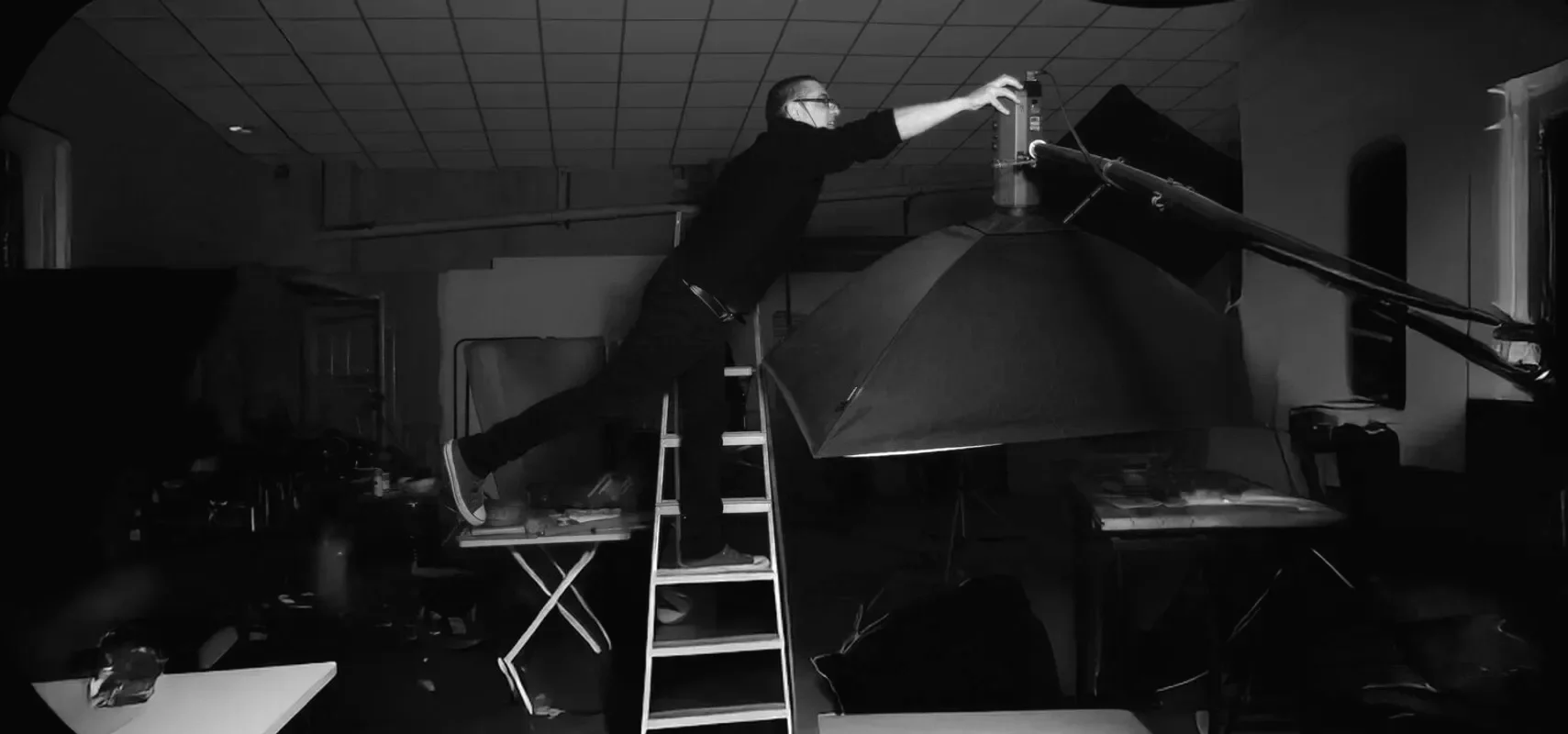
Salva Nebot in his studio, courtesy of Salva Nebot
Salva Nebot isn’t looking for a finale. His focus remains fixed on the moment before – the spark, the sensation, and the tension of a world about to change. Through this conversation, it becomes clear that his work isn't meant to provide answers, it is a way to sustain a question.
By treating reality as a challenge rather than a record, he uses his Hands and Head to build a space where curiosity is allowed to breathe. It is a practice rooted in freedom – the refusal to accept the world as it first appears. We are left in that small, inner space of connection where nothing is settled and everything is possible. The point is not for the Wait to be over, but for it to be felt.
See more of Salva’s work on Instagram.
Article by Vasya Kavka
Based in Ukraine, Vasya Kavka is a writer working at the intersection of contemporary art and digital culture. Through his platform @ambient.delusion, he researches emerging and underground artists, publishing interviews and editorial features that move beyond aesthetics to examine context, creative process and cultural relevance. His work is driven by curiosity and a commitment to thoughtful, accessible storytelling that situates artistic practices within the broader currents shaping contemporary culture.