CAREY COLEMAN WANTS YOU TO SLOW DOWN
“I am interested in what is kept possible by things that don’t immediately and automatically declare what they are.”
We are so conditioned to look at an image and immediately know what it means. Carey Coleman’s work is a deliberate refusal of that habit. By ripping up their own archives, collaging photographic shards, and channeling raw emotion into action painting, she builds spaces that resist easy categorization. Their abstraction is a quiet rebellion against the binary. Here, we talk about the spiritual weight of their process, their earliest artistic memories, and the self-sustaining, endlessly recycled ecosystem that birthed Both And (Icy Hot).
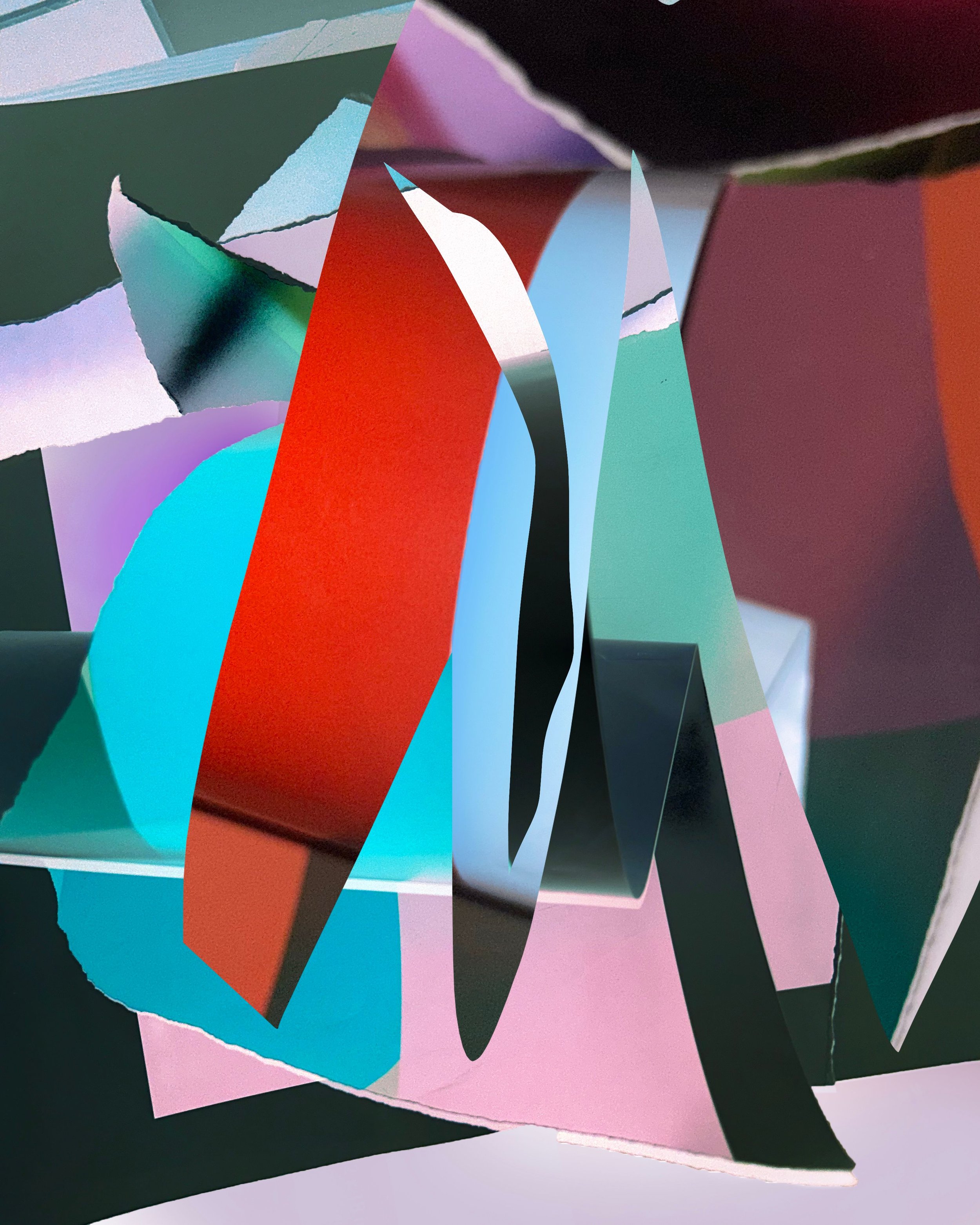
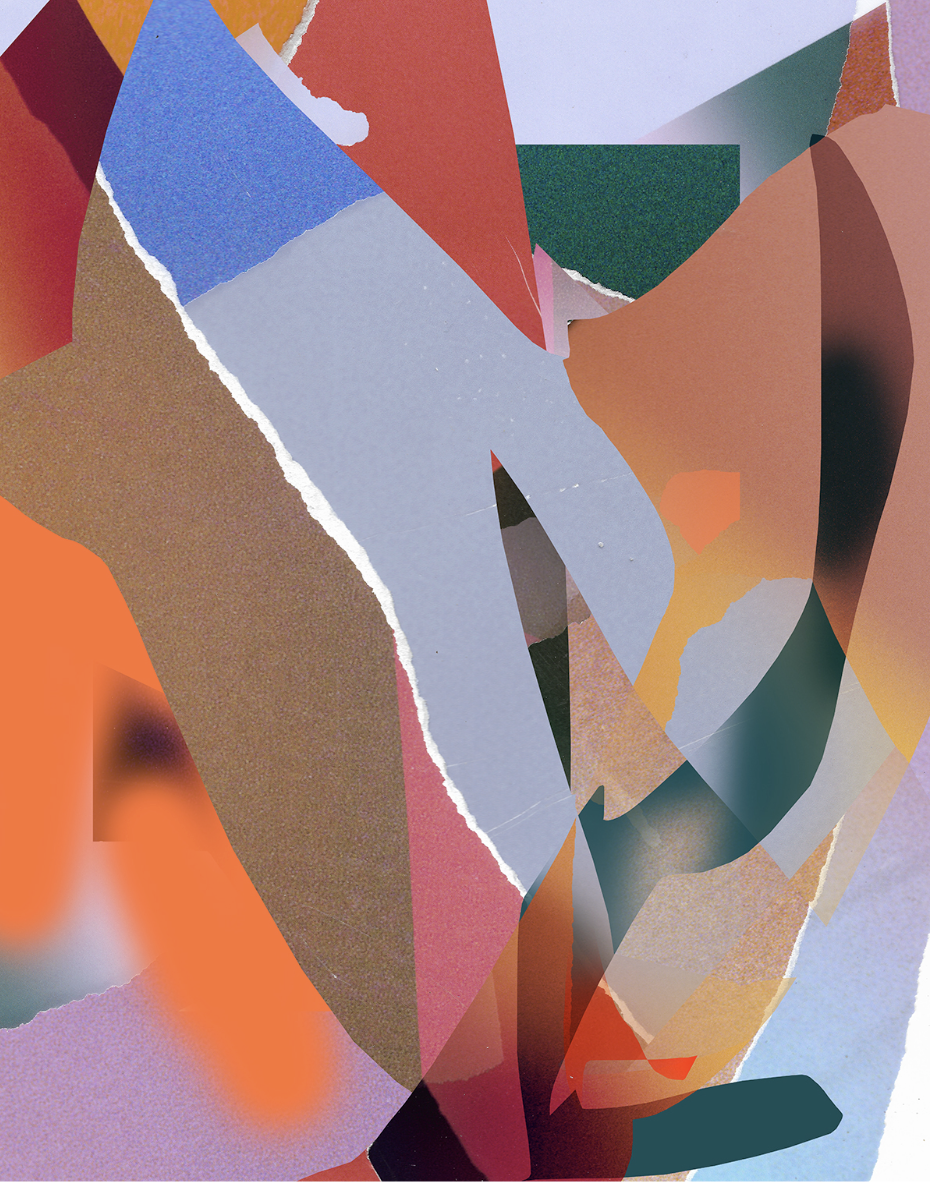
Both And (Icy Hot), Carey Coleman, 2026
Do you remember your first attempts at making art? At what point did you realize you wanted to pursue this professionally?
I have had artistic impulses for as long as I can remember. My earliest wishlists as a kid were always for paper, crayons, scissors, and tape. I had a speech impediment as a child and went to a speech therapist before beginning grade school. She would incentivize me through all of the phonetic flash card sessions by promising time for crafts at the end. I made a creature sculpture with her out of paper plates and construction paper. That is the first thing I can remember describing to myself as my art project. Somehow, art was always something I knew I wanted to pursue as seriously as I could.
What do you remember from your first exhibitions? How did sharing your work with others for the first time impact you?
I participated in my first exhibitions as a teenager and I experienced them as a revelation. I am an introverted person and very much not a performer in this life, though I am in my dreams, but I do have the desperate need to share creative expression, so it was totally enlightening and affirming to understand that I could make things to perform for me for an audience on their own stage.
“Everything I need is within me, and is within it (the striving).”
What are your main influences?
For many years, my top 3 are:
Agnes Martin is my favorite artist for both her paintings and writings. My practice in general and commitment to abstraction in particular are very much for me a spirituality and she’s offered me so much framework for this.
Seeing Eileen Quinlan’s show Curtains at Miguel Abreu Gallery in NYC in 2013 was one of my most formative art encounters. In that work she has drawn onto, scratched into, rubbed off, and otherwise damaged the negatives she prints a photo show from and the insertion of her hand into her images was thrilling to me and freed me to find so many new ways of making pictures.
Encountering Maggie Nelson’s writing helped me understand that your art can think outside of what you know. She takes on the descriptions of so many feelings, urges, desperations, and otherwise mysteries that I experienced only outside of language altogether and insists on offering words for them. As if writing about the impossible can become writing the impossible can become righting the impossible? (even if only in flashes?) To me it feels akin to the endeavor of photographic abstraction for its inner conflict at the crux of the project, to engage a medium in surveying its own limits, or use its constraints to push the line of their own permanence.
How would you describe your own style?
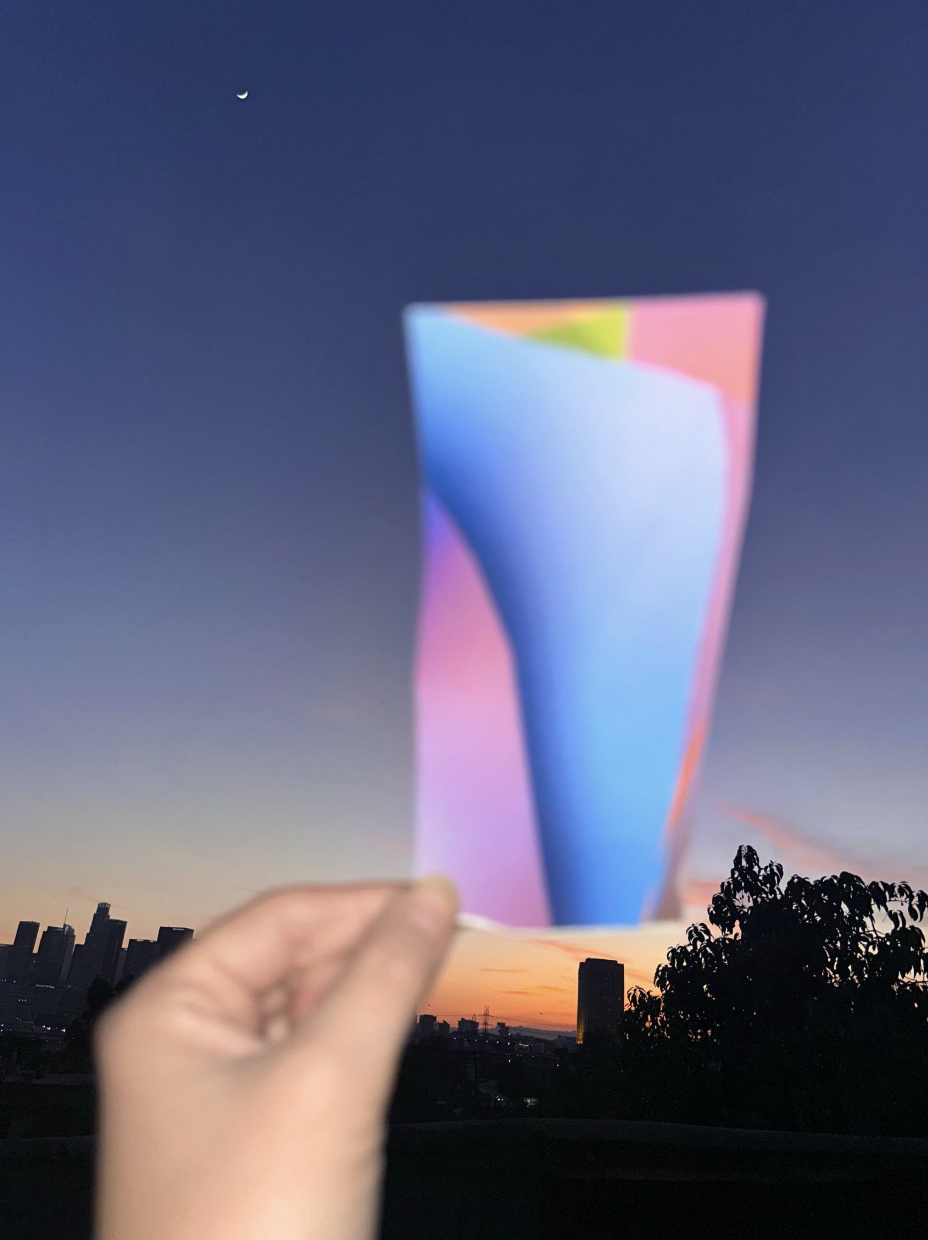
My style varies across visual languages I have developed with different materials, but two primary styles have emerged, one being collage driven photographic abstraction (the style of my work included in Color as Concept), and another mixed media action painting on paper. In the first mode I think of how a mechanism might act more like a body, and the latter a body more like a mechanism. With photographic abstraction I am thinking about injecting myself into the mechanical processes of photographic sight and deconstructing the automatism of image capture. With action painting I am thinking about the body as a lens and my opportunity to transmit emotion as directly as possible. Super sensitized, I have become a recording instrument. It is coming at the question from two directions, but thinking about apprehension as a lens that can be deconstructed.
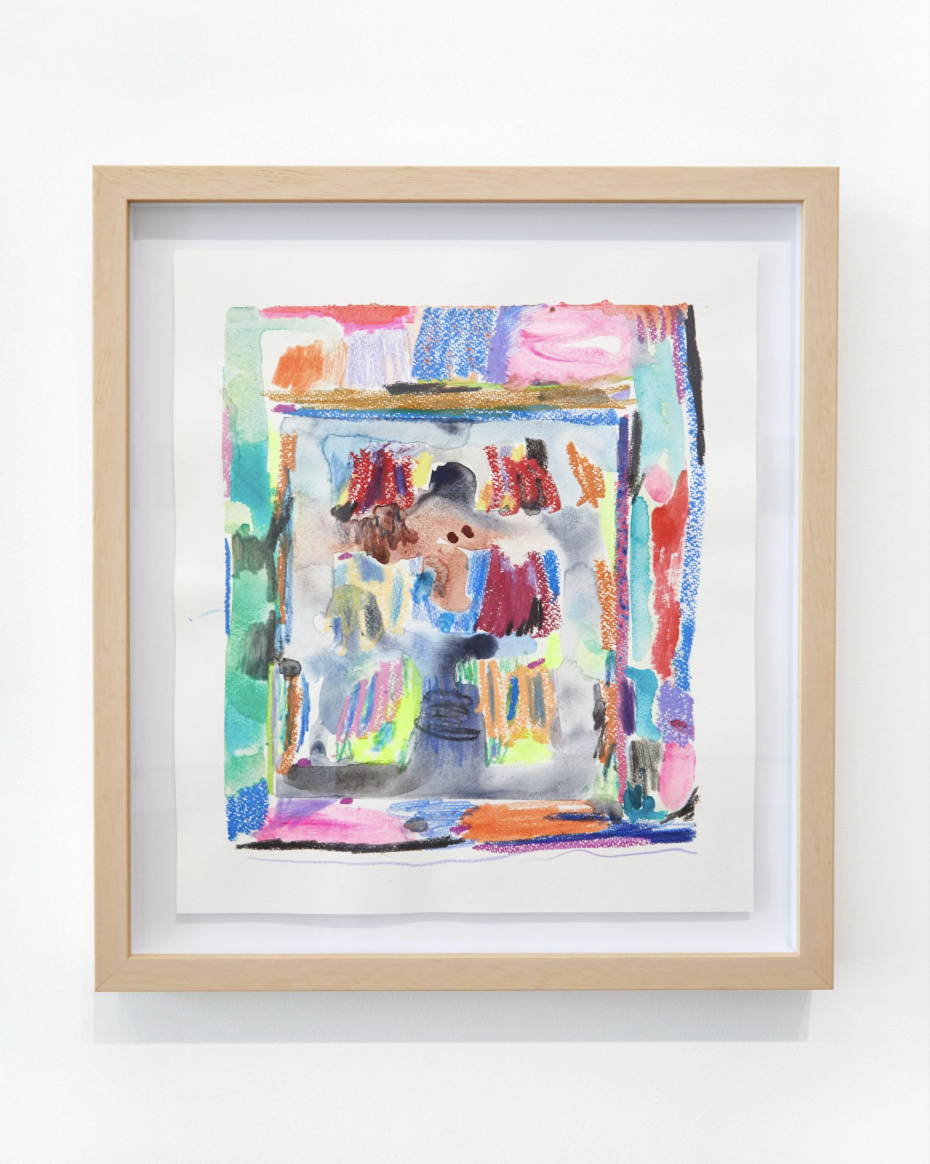
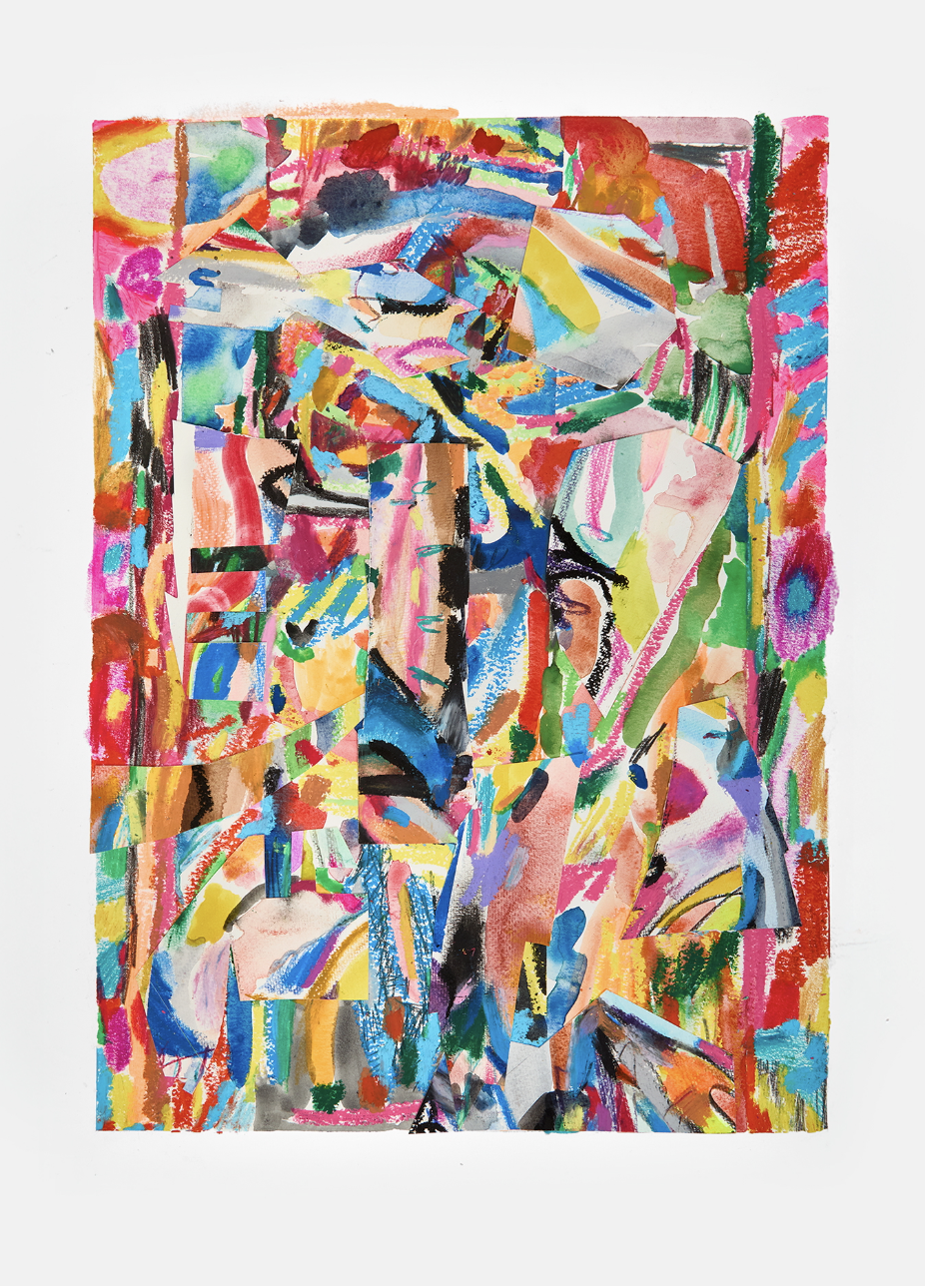
Artworks by Carey Coleman, courtesy of the artist.
Why do you think you dove into abstraction, and what does “abstraction” mean to you personally?
To me abstraction is a scaffolding method to think outside of what you know. Making abstract images allows me to seek beyond what I can already recognize, name, or plan for. Abstract art works ground the body in present perception, motivating senses of awareness and discovery that enable free thinking. Abstraction, in its refusing automatic recognition, nameable efficiency, and mastered information feels to me subversive in a particularly useful way right now. It is the shape of an imagination that resists the violently deterministic demands of our prevailing gender and economic power structures - demands for the digestibly automatic, for hyper-categorization to maximize frictionless transmission into commodities for sale, for identities to legislate and police. I am interested in what is kept possible by things that don’t immediately and automatically declare what they are, that are less about conquest and control in and over representation, that are speculative and unpossessable.
What is the one book you’ve read that has stuck with you for the longest time?
Emergent Strategy by Adrienne Maree Brown
Could you walk us through the creative process of Both And (Icy Hot) and the meaning behind that work?
The idea for the Both/and is a non-binary structure, a form of reasoning that resists the binary of either/or. It is a non-hierarchical antidote to the authoritarian either/or. It is a correlative conjunction used in English to underline connection between distinct terms that are simultaneously true and validly coexist. Non-binary thinking resists an overdetermination that reduces knowing. In particular for me it grounds my inquiries with abstraction as well as my personal self-concept and relationship to my own gender. Icy/hot is a feeling that is both warm and cool. This image is a picture that is both photographic and not, of a space that is both real and not, stretched across a plane both flat and not.
My creative process for collaged photographic abstraction works like Both And (Icy Hot) involves ripping, cutting, rephotographing, scanning, and collaging shards of my own old images endlessly. Moments reappear over years, edges change, scratches accumulate on the surface, contexts shift, and interactions alter colors into new colors. The practice is a self-sustaining eco system in which the raw material of the endeavor is a renewable resource with unlimited potential. A mantra: Everything I need is within me, and is within it (the striving).
Artwork by Carey Coleman, courtesy of the artist.
You have an amazing sense of personal style. When you're picking out an outfit, is the process pretty similar to choosing the palette for a new piece?
Ha, the process is actually so similar. It is all attitudinally driven collage. In both cases I usually begin with one piece I really want to work off of, or wear most (shoes, tops, bottoms, accessory, etc.) and a web of resonance is built around that first desire.
What is the main message you want to convey to people through your work?
I want to invite them to encounter the unknown, and linger.
I want to slow the process and expectations around seeing and recognizing,
to build more space, time, and potential back into looking.
To recalibrate spans of attention,
to contend with something unavailable to the automatic mind.
To build tolerance for destabilized, shifting perspectives.
To host plurality.
To resist rapid, needless acceleration.
To make the most expansive future.
To sit with the self.
Artwork by Carey Coleman, courtesy of the artist.
Carey Coleman, courtesy of the artist.
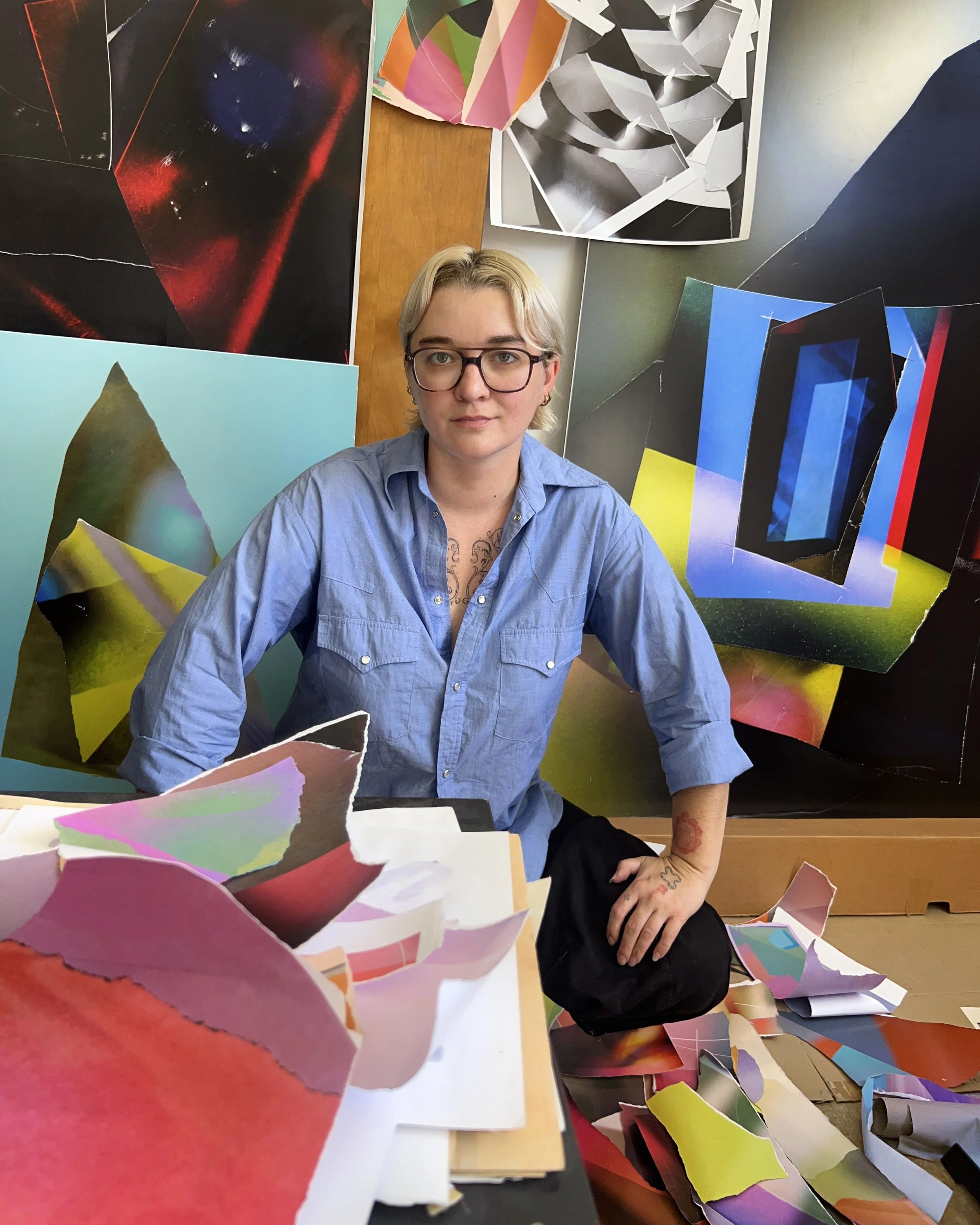
Carey Coleman practice is an endless loop of ripping, scanning, and collaging their own history it is entirely self-sustaining. It rejects the modern demand to produce easily digestible, hyper-categorized content. Instead, she offers the "both/and." Their work stands as a physical refusal of rapid consumption, leaving us with a simple but radical directive: sit with the unknown, and give yourself the time to actually see it.
To learn more about Carey Coleman’s practice, visit the artist’s website.
Article by Vasya Kavka
Based in Ukraine, Vasya Kavka is a writer working at the intersection of contemporary art and digital culture. Through his platform @ambient.delusion, he researches emerging and underground artists, publishing interviews and editorial features that move beyond aesthetics to examine context, creative process and cultural relevance. His work is driven by curiosity and a commitment to thoughtful, accessible storytelling that situates artistic practices within the broader currents shaping contemporary culture.