THE ARCHIVE IS NOT SILENT: SABRINA TIRVENGADUM ON MEMORY, AI AND THE POLITICS OF VISIBILITY
In her multidisciplinary practice, Sabrina Tirvengadum explores the intersections of memory, colonial histories and contemporary systems of representation. Working across photography, collage, digital painting, film, graphic design and generative AI, the artist transforms personal and collective archives into spaces of investigation and speculation. Through works such as If We Were Marrier d’Unienville, which revisits her Mauritian family history and the legacies of Indian indentureship, Tirvengadum examines how race, class and belonging are shaped by the histories that are preserved—and those that have been erased. Her recent exhibition Beauty Fall extends these questions into the digital realm, interrogating how AI and algorithmic systems reproduce inherited ideas of beauty and visibility. As a deaf artist and co-founder of We’re All Human, Tirvengadum also places accessibility and inclusion at the centre of her practice, challenging who gets represented, remembered and heard. In this conversation, she discusses archives as political spaces, speculative image-making as a form of counter-history, and technology as both a creative tool and a system to question.
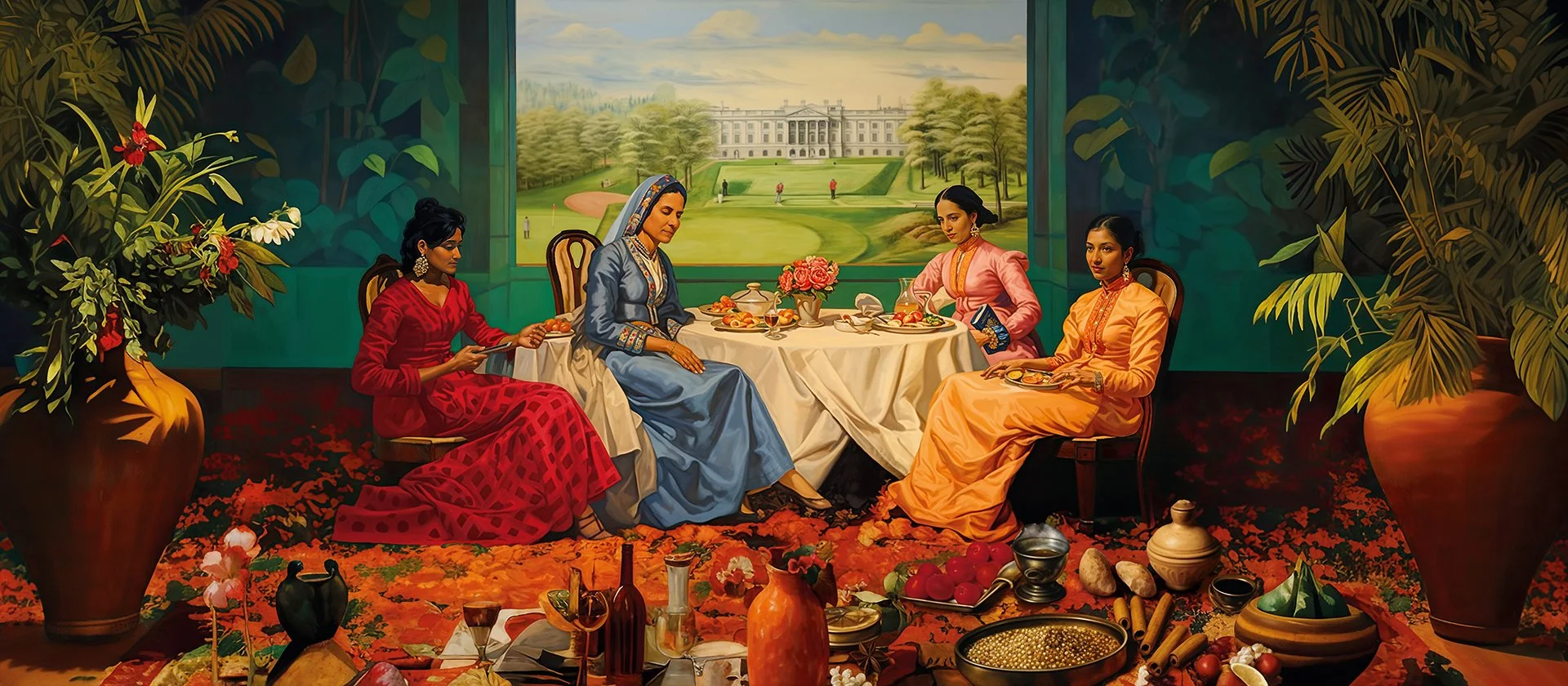
Afternoon Chai, Sabrina Tirvengadum
Your practice moves between photography, collage, digital painting, film, graphic design and generative AI. Do you regard these as distinct visual languages, or as parts of a single image-making process? What has your background in graphic design taught you—and what have you had to unlearn—to develop your voice as an artist?
For me, it all comes from a single image-making process. Unlike graphic design, I don’t plan the final outcome; I let myself experiment and express ideas more freely. Design taught me to be comfortable making mistakes and not to fear producing something imperfect. I wouldn’t say I’ve had to unlearn anything so much as stay aware of a difference: this work is about self-expression and giving myself time to sit with something, rather than working to someone else’s brief or a deadline.
The family archive recurs throughout your work, often as both an intimate inheritance and a record of historical absence. When did you begin to understand family photographs as political material? Is there a point at which the private archive should resist being made public?
At first I simply wanted my family archive to be seen and heard; my family represents many others. As I researched deeper, I came to understand how political these images are. The turning point was concrete: discovering, through DNA and a conversation nobody had ever had aloud, that an aristocratic French surname, Marrier d’Unienville, runs through our line, because my great-grandmother served that family and my grandfather was of mixed heritage. A private silence turned out to be political. That bothered me, but it also brought relief. As for whether the archive should stay private, these are the very histories that were kept quiet in the first place, which is why we don’t know so much.
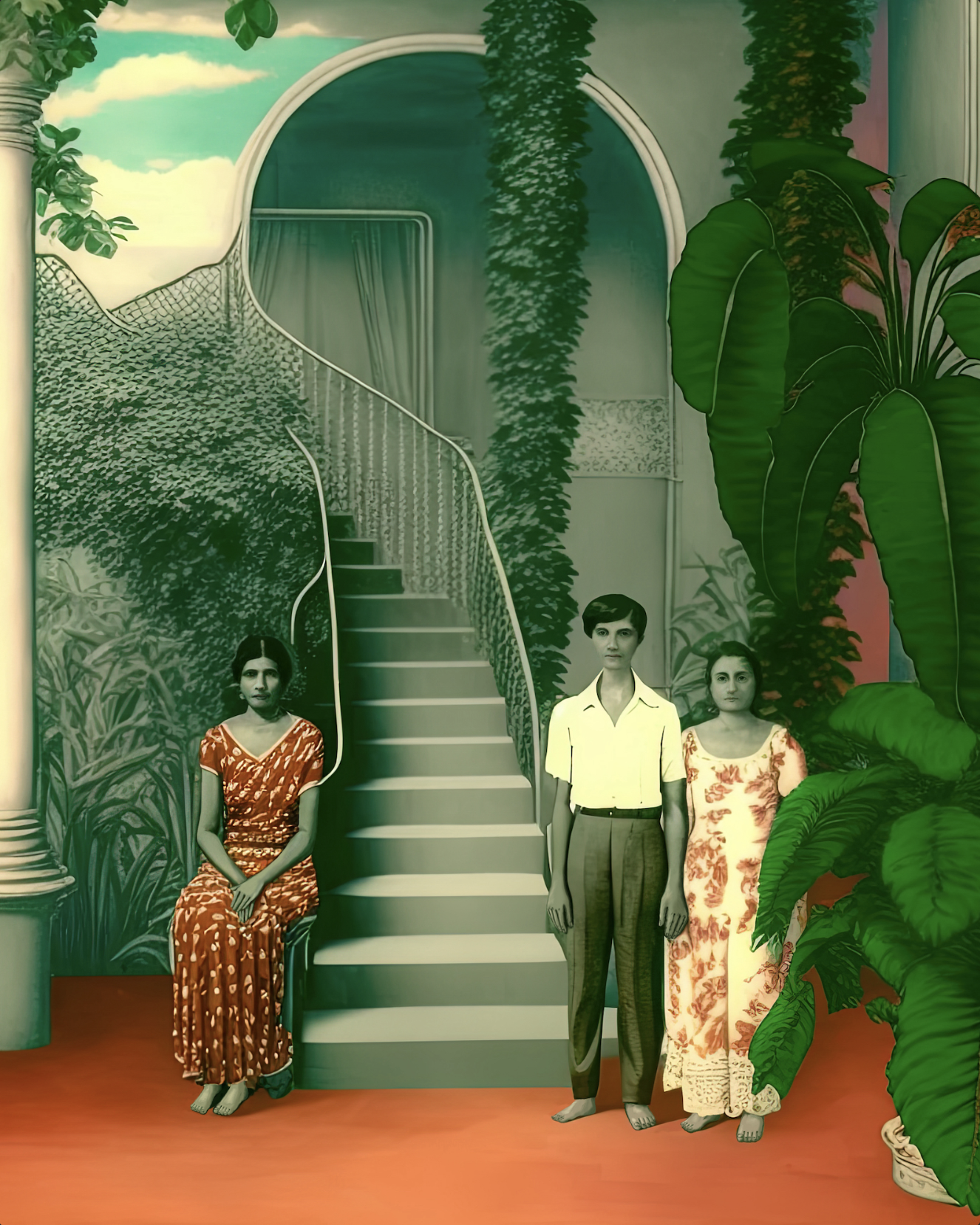
If We Were Marrier d’Unienville, SabrinaTirvengadum
“My work is about un-silencing histories, which runs parallel to my experience as a deaf artist.”
If We Were Marrier d’Unienville begins with a conditional proposition and a collective pronoun. Who is contained within that “we”, and what does the possibility of bearing the name of a wealthy plantation-owning family expose about race, class, kinship and belonging in colonial Mauritius?
“We” begins with my family and widens outward to anyone whose ancestry carries the trace of the coloniser, not through romance, but through the unequal, often coercive, relationships that colonial households were built on. Our own surname, Tirvengadum, was itself adopted; names were given an English spelling at the depot on arrival, or handed down from a step-family, so our name has always been controlled by someone else. And the “if” in the title is doing the heavy work. We were never going to bear that name. The name is belonging; it marks who owned land, sugar, people and time. You could carry it in your DNA and never be allowed to carry it on paper. The work stands for a circumstance that was never meant to be, because bearing the name would have meant whiteness, wealth, legitimacy, a place in the record.
In the work, a staircase recalling Aapravasi Ghat leads nowhere—an AI-generated error that you chose to retain. How do you distinguish between a technological glitch that meaningfully evokes archival rupture and one that risks aestheticising the violence or silence it represents?
I keep a glitch when it opens up questions and points to a rupture in history, rather than just decorating the image. The staircase leading nowhere becomes a metaphor for my ancestors’ uncertain journey—the moment they stepped onto Mauritius, everything those steps took, and for the gaps in a record built from a Western perspective that never acknowledged us. If a glitch helps me consider how the archive was formed by exclusion, I keep it. If it only adds surface-level visual interest, I can let it go.
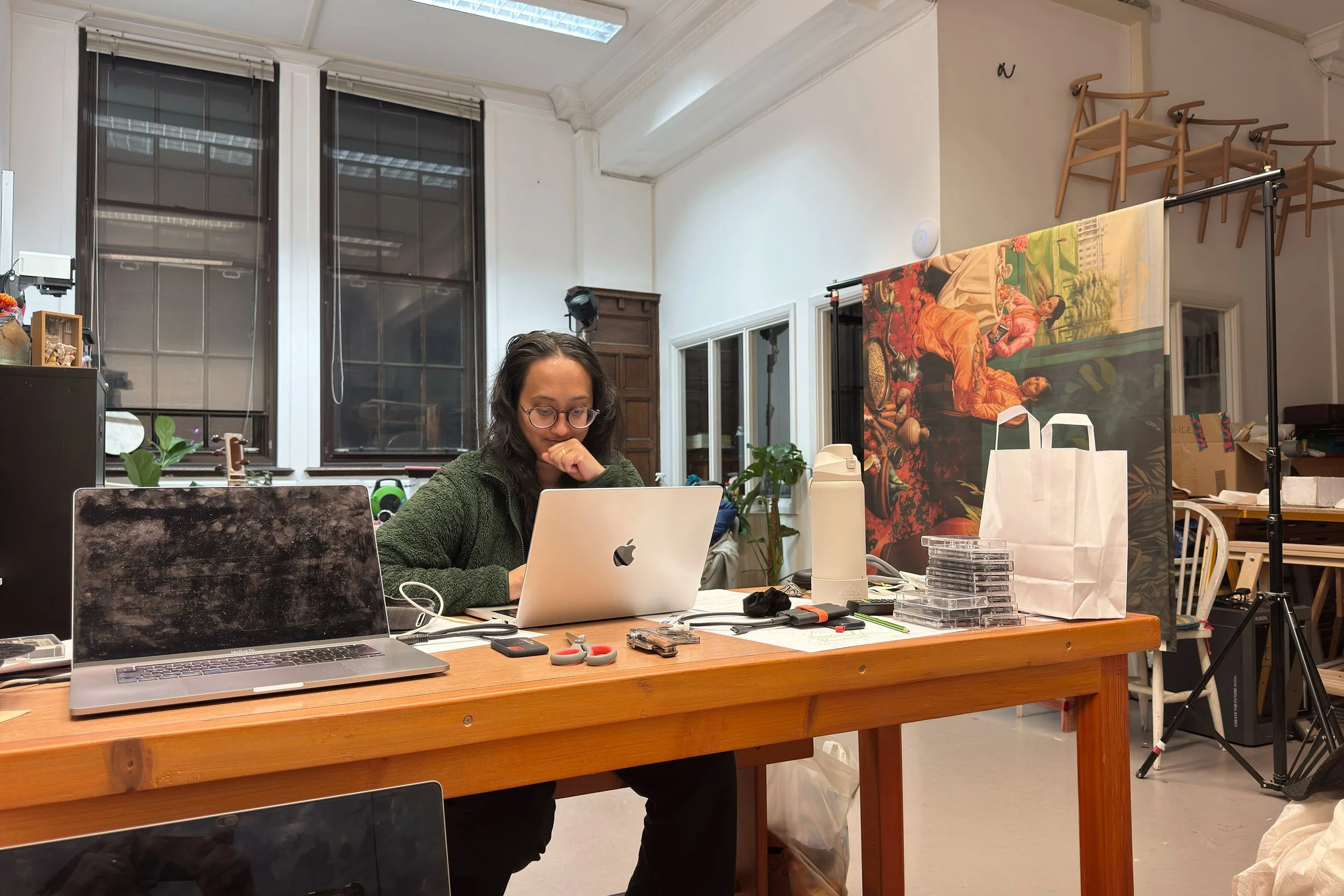
Sabrina Tirvengadum in studio
In Lafami, you photograph living relatives, while works such as Family and A Posh Summer, created with Mark Allred, construct scenes that never existed. What different kinds of truth do documentary and speculative images offer? How does collaboration alter the process of working with an archive rooted in your own family history?
The two modes deliver different kinds of truth. In Lafami, photographing living relatives, the truth is one of presence and record. These are people who are here and telling their story. In works like Family and A Posh Summer, where we construct scenes that never existed, the truth is emotional rather than factual. I’m reaching for lives that were never photographed, filling an absence the archive left, and imagining my ancestors into the frame they were denied. As a descendant of indenture, I’m always giving you an interpretation informed by generational memory, not a fixed fact. Collaborating with my husband, Mark Allred, brings technical skill alongside emotional support; it’s a way for him to connect with family who have passed, to understand them, and through that to understand me better.
Afternoon Chai reworks William Hogarth’s depiction of Wanstead House by placing women of South Asian heritage within a scene connected to wealth generated through the East India Company. Do you understand this act of insertion as reclamation, confrontation or counter-history—and what did presenting it publicly on a billboard make possible?
The billboard made all three possible, though at heart it’s counter-history. It tells a story the history books deliberately hid. By reimagining the Hogarth painting and placing it in Ilford – a predominantly South Asian community – it brings a buried history into public view; it acknowledges a past that formed the people living there, gives them confidence in why they belong, and opens up dialogue about the legacy of the East India Company.
Your current exhibition Beauty Fall transforms the gallery into a satirical beauty salon, using AI-generated advertisements and a face-morphing mirror to expose the colonial influences embedded in algorithmic beauty standards. Has your relationship with AI shifted from using it to reconstruct an absent archive towards treating the technology itself as a subject—and a system of power?
My relationship with AI still centres on exposing how digital systems repeat the patterns of colonialism. What’s changed is the tone. In this work I confront it more directly, with the technology itself becoming the subject and the system of power under scrutiny, whereas in earlier projects I handled the same problem more delicately.
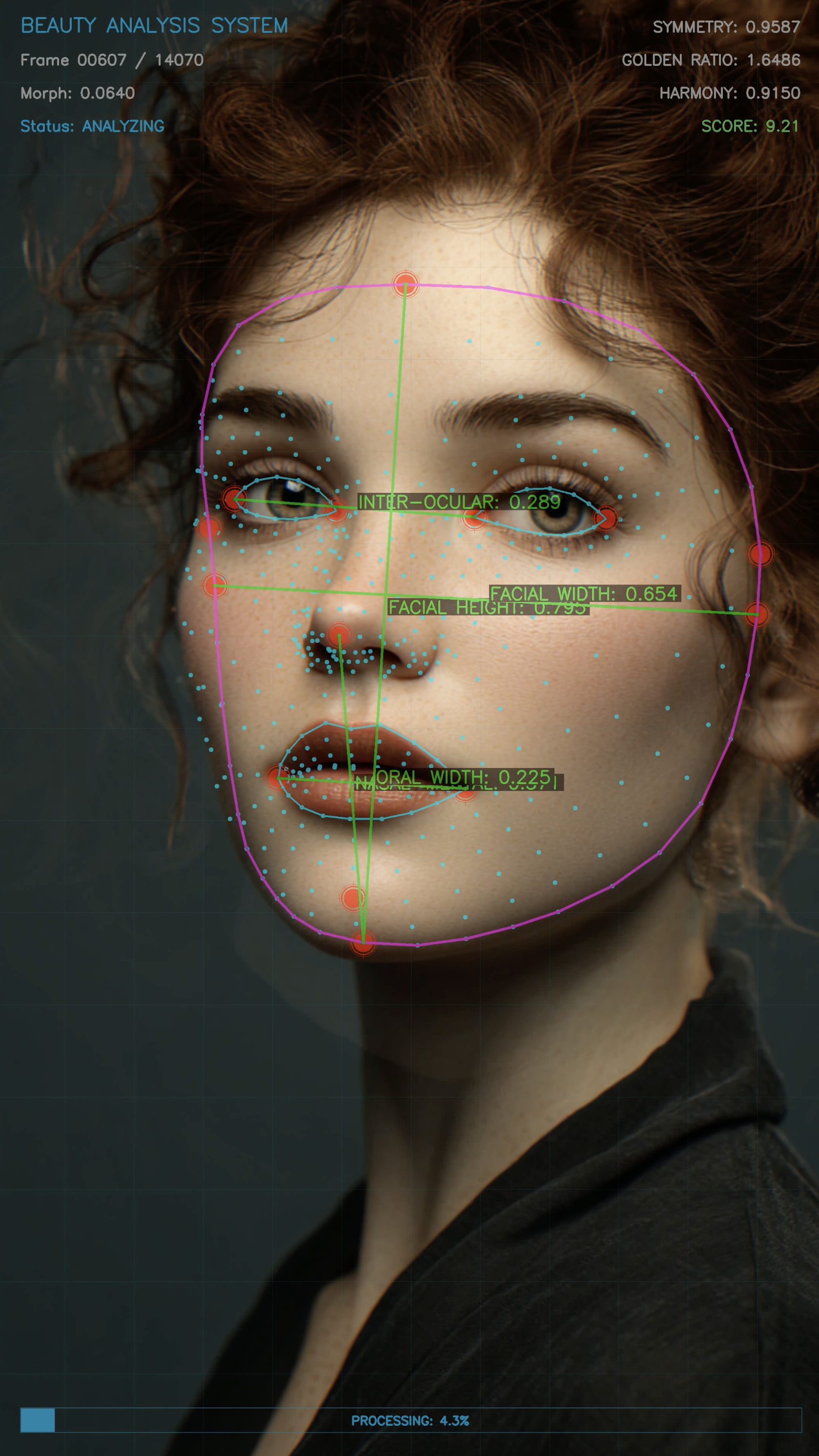
Beauty Fall, Sabrina Tirvengadum
As a Deaf artist and co-founder of We’re All Human, you have consistently advocated for disability justice and digital accessibility. How does your experience of deafness shape the way you make, install and circulate images? Can elements such as captioning, pacing, interface and spatial design become part of an artwork’s form rather than accommodations added afterwards?
My work is about un-silencing histories, which runs parallel to my experience as a deaf artist. I question who technology and culture serve, and who gets left out, since systems—from colonial records to today’s algorithms—quietly decide who counts as “normal” and who is erased. Accessibility, including captioning, pacing, sound design, and spatial arrangement, is always part of my process from the beginning and becomes integral to the work’s form rather than something added afterwards.
Through the 1834 Collective, your personal investigation of Mauritian ancestry enters into dialogue with wider histories of Indian indentureship. What becomes possible when individual genealogies are approached collectively? How do you build solidarity across these histories without flattening the distinct colonial experiences of Mauritius, Guyana, Trinidad and other affected places?
1834 marked the start of the modern indentured-labour diaspora, when the British government chose Mauritius for “The Great Experiment,” replacing enslaved labour with contractual workers. It matters to understand where it began. Mauritius is not Guyana, and it is not Trinidad. The machinery was shared – the ships, the plantations, the archive that logged people as units – but what grew on top of it is specific, with different sugar economies, religions and languages, independence stories, and afterlives. You don’t build a movement by pretending everyone’s history is the same.
Your work has appeared in settings ranging from a public billboard and a community health centre to Autograph and the House of European History. What changes when a deeply personal counter-archive enters an institution responsible for narrating European history? Do you want If We Were Marrier d’Unienville to function there as testimony, an interruption—or an unresolved question?
Bringing the work into the House of European History made me feel our stories are finally being heard, because this history needs to be told. But I resist the idea of the piece as testimony. I’d rather it work as an interruption and an unresolved question, giving the viewer room to imagine, with the facts in front of them, and to ask why the piece was made at all.
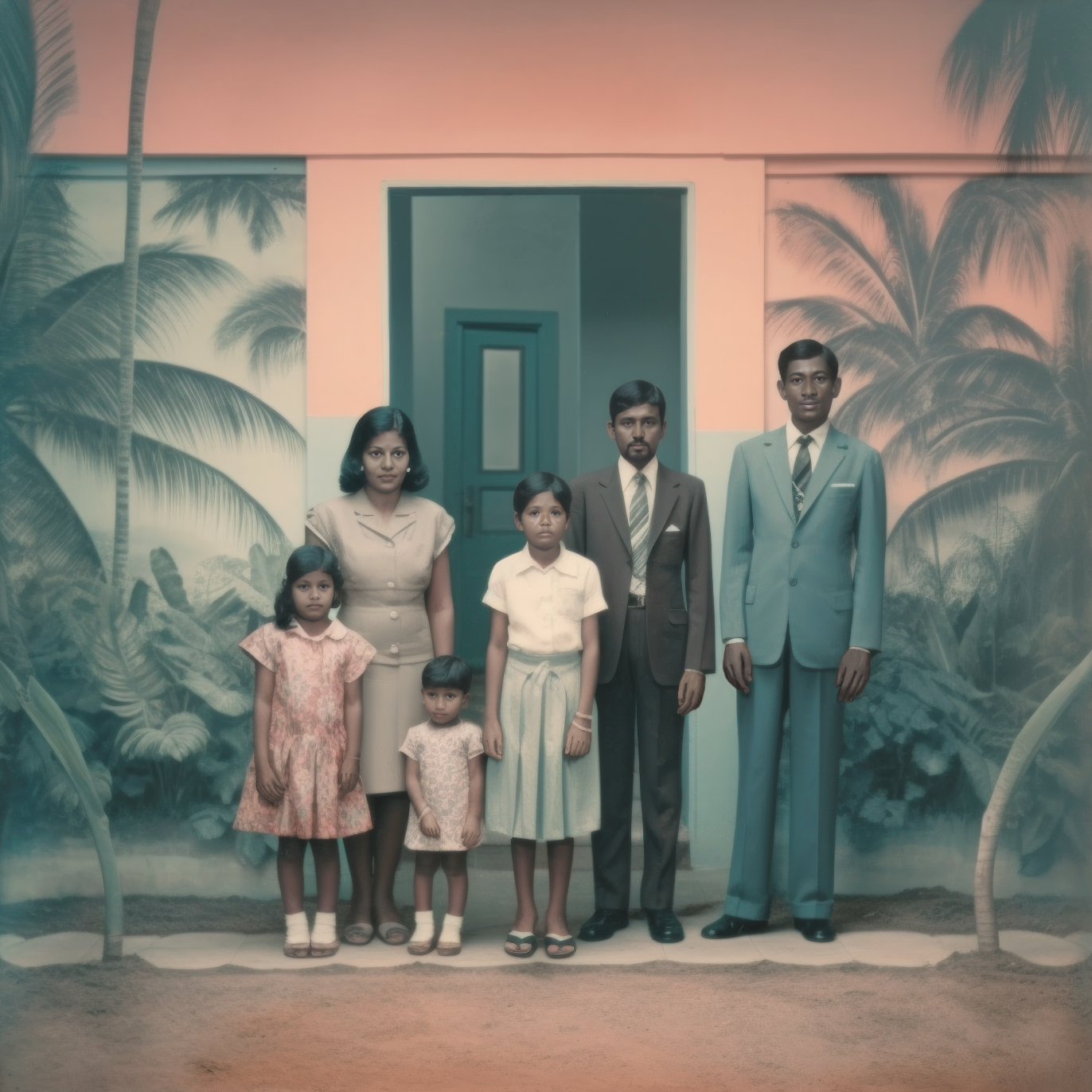
Family, Sabrina Tirvengadum
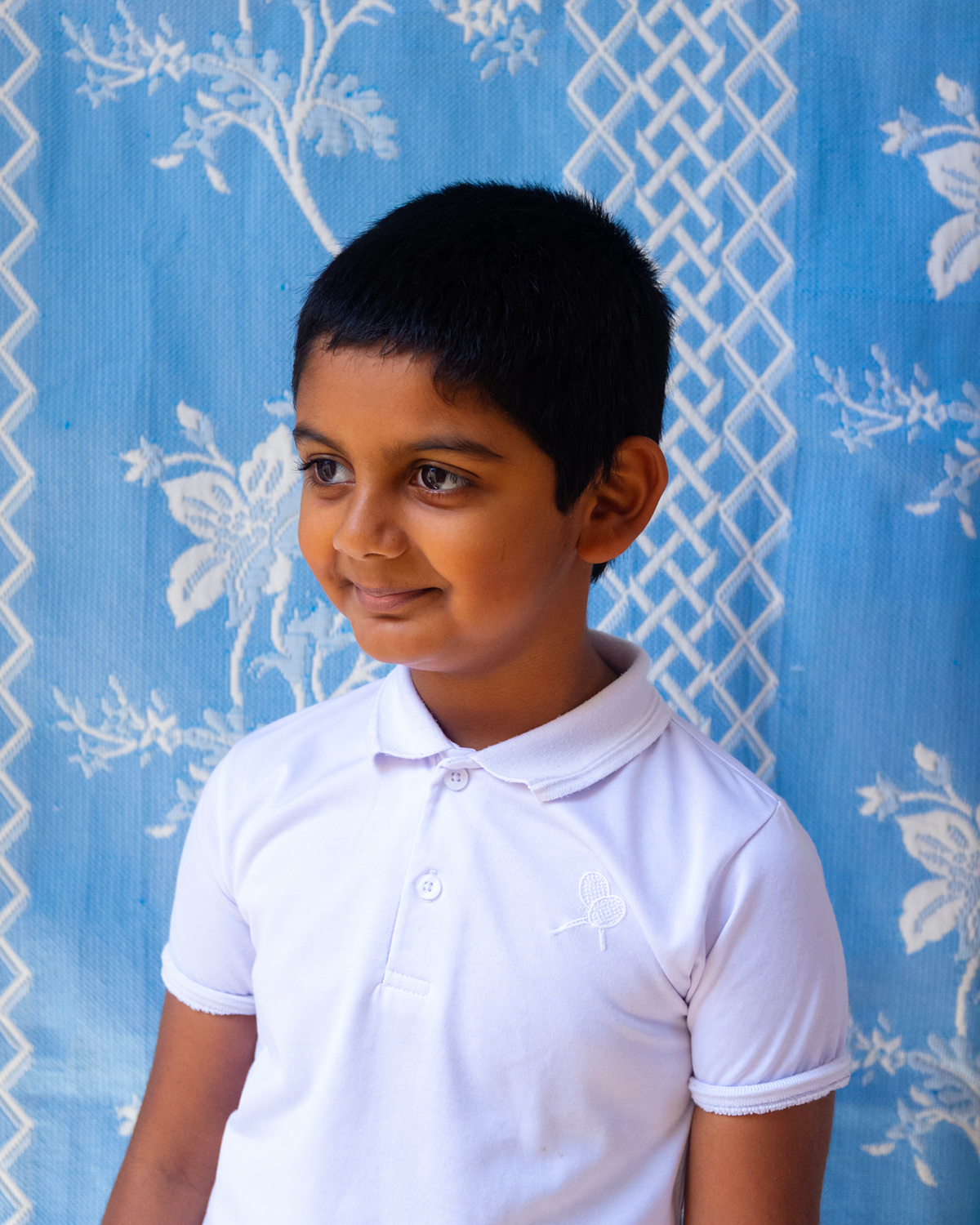
Teerence, Sabrina Tirvengadum
To further explore Sabrina Tirvengadum’s multifaceted practice, visit her website and follow her on Instagram and Facebook. The artist is represented by Jhaveri Contemporary Gallery, Mumbai. Her solo exhibition Beauty Fall is currently on view in Ilford, UK, until 10 October 2026, while her work If We Were Marrier d’Unienville is included in Postcolonial?, anexhibition at the House of European History in Brussels, Belgium, on view until 14 March 2027.
Article by Alexandra Vîstraș
Alexandra Vîstraș is a Brussels-based cultural observer, policy professional and lifelong theatre enthusiast. With a background spanning cultural management, European policy and communications, she is interested in the ways art, politics and collective imagination intersect, particularly through the lenses of gender, identity and social change.