ART AS A BRIDGE TO TRANQUILITY: GIL ZABLODOVSKY ON THE POWER OF SUBTRACTION
First, there was Chaos, but what followed soon enough was the thought that perhaps the universe is actually far more orderly.
Plato and Aristotle, for example, perceived it as a κόσμος (kosmos)—the idea that the world we live in is a perfectly organized, harmonious arrangement, whose true beauty lies in a structure. To them, geometry, with its bare, simplistic forms, offered a way of representing and understanding the universe better than the concept of disarray.
You wouldn’t think their millennial-old ideas still hold much weight in the TikTok-obsessed world, but perhaps they’re as relevant as ever, and the minimalistic order is exactly what we need so as not to lose ourselves in the chatter of technology.
After all, there is something comforting about reducing the world to its simplest forms that resonates today even stronger than it did a thousand years ago.
This is the thought that echoes through the art of Gil Zablodovsky—a multidisciplinary artist whose practice moves fluidly between photography, video, sound, and installation.
Working with simple forms and everyday materials, he reduces them to their essential qualities, creating precise, restrained works where color, space, light, sound, and matter become interconnected.
It’s his way of tuning out the outside noise and introducing peace to a world that seems increasingly overstimulating. For him, there’s no need for definitions, no need for overanalyzing, no need for big intellectual revelations.
Just order and peace and the moment of stillness that, when it comes, can be the artist’s greatest achievement.
“At its core, my art seeks to lower the digital “noise” of the modern era. Through abstract geometric forms—frequently anchored by the circle—I try to strip away the coldness of technology and reveal a resonant, soulful language that invites internal observation and stillness.”
In this interview, Zablodovsky sheds some light on how he perceives his own art, what entices him in the simplicity of everyday matter, and what we can discover when we strip away all the “extras” and simply sit with the art before us.

Sunset, Gil Zablodovsky, 2025
AT THE INTERSECTION OF ART
How would you describe the art that you create?
I view my practice as a "Creative Laboratory" where I explore the intersection of digital media, sound, and spatial environments. My work acts as a visual and auditory bridge between personal emotional states and a collective experience of presence. At its core, my art seeks to lower the digital "noise" of the modern era. Through abstract geometric forms—frequently anchored by the circle—I try to strip away the coldness of technology and reveal a resonant, soulful language that invites internal observation and stillness.
Your work spans photography, video art, sound, and installation. What determines which medium becomes the right language for a particular idea?
The medium is never chosen beforehand; it reveals itself through long-term research into materials, vibration, and space. Sound is often the heartbeat of my process—it carries an immediate, invisible frequency that shapes my visual decisions. If an idea requires temporal flow or physical immersion, it evolves into video art or a site-specific installation. If it calls for an undisturbed focal point—a contemplative anchor—it manifests as a fine art digital print or visual composition. Each medium is simply a different frequency for translating the same core inquiry.
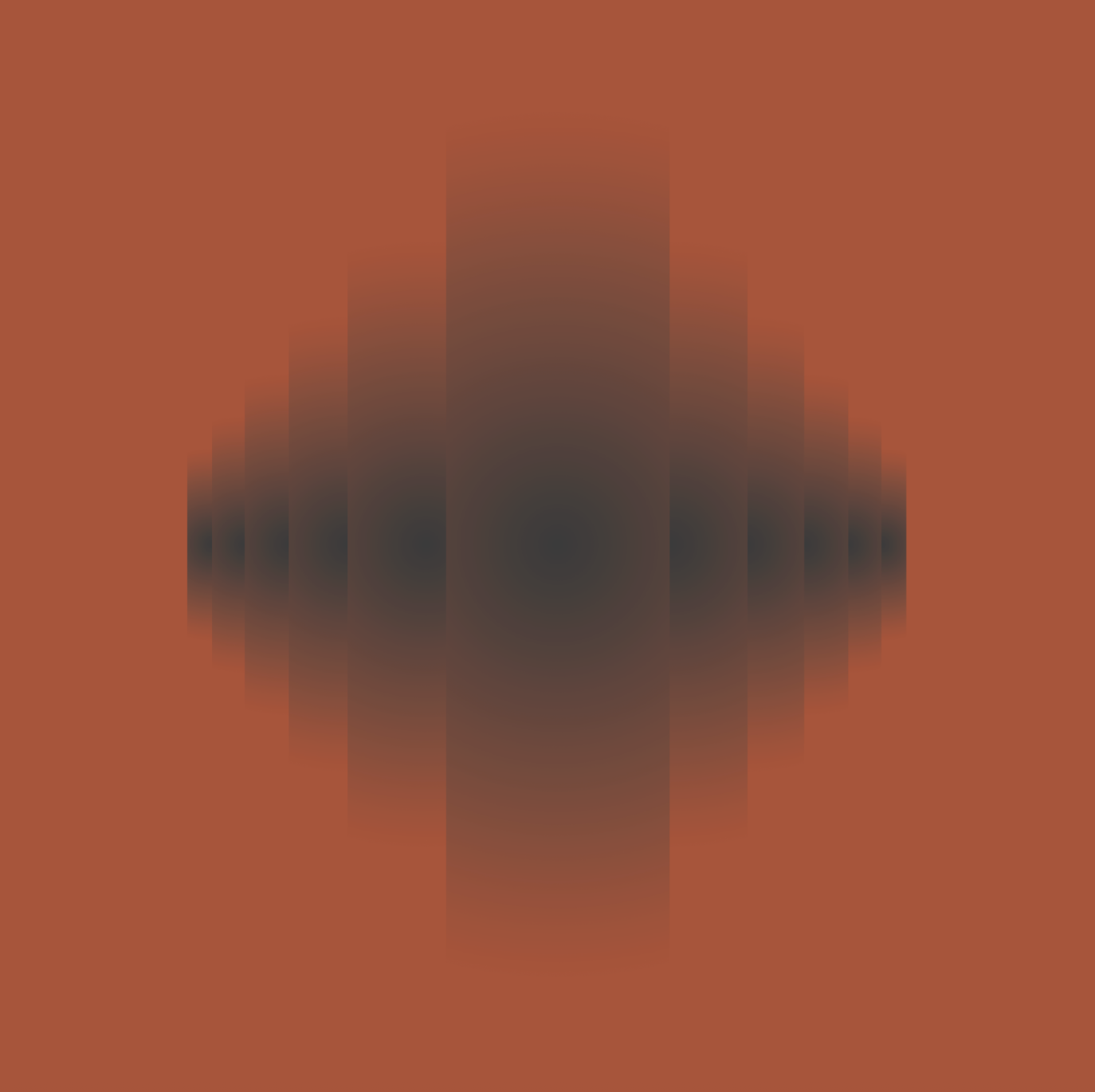
Tilted, Gil Zablodovsky, 2026
ON THE POWER OF SUBTRACTION
Many of your works are built from ordinary, everyday materials. What attracts you to simplicity, and how do you transform familiar materials into something emotionally charged?
Everyday materials and digital fragments carry immediate familiarity. What attracts me to them is their raw potential for transformation. By deconstructing their original context and stripping away their routine functionality, I can highlight their intrinsic visibility, texture, and rhythm. The emotional charge occurs in that threshold—when something familiar loses its ordinary definition and becomes a vessel for quiet introspection and memory.
Building on the minimalistic aspect of your work, would you say that reduction plays a role in your creative process?
Reduction is central to everything I do. We live in a culture saturated with constant visual and sensory input. For me, reduction is not about emptying the canvas; it is an act of purification. By eliminating unnecessary elements, I create space for what truly matters to surface—whether it is a subtle gradient, a pure geometric form, or a specific tone. Reduction allows the work to breathe and gives the viewer room to inhabit it.
“We live in a culture saturated with constant visual and sensory input. For me, reduction is not about emptying the canvas; it is an act of purification.”
WHAT’S IN A COLOR
The simplicity and minimalism are particularly striking when it comes to your paintings. With only a few elements present on the canvas, what stands out the most and where all the attention immediately goes is the color. Is it an intentional device?
It evolved naturally out of my search for balance and stillness. When you reduce complex narratives and busy compositions, color ceases to be a supportive element—it becomes the primary energetic carrier. I didn’t set out with a rigid intention to "paint color"; rather, as I stripped away non-essential details, color emerged as the most direct visual equivalent to sound and emotion. It speaks directly to perception without needing language as an intermediary.
How do you choose which colors to put at the center of your work? Does the creating process start with the color or is it more like a medium?
Color acts as both a medium and a subject. The choice of color is rarely intellectual at first; it is intuitive and grounded in sensory research. I treat color much like an audio frequency—testing how different tones interact, clash, or harmonize. The process begins with a sensation or a mood I want to capture, and I build a palette that acts as a visual wavelength capable of evoking that exact presence.
Speaking of medium, the “COLOR AS A CONCEPT” exhibition presents color as a language on its own, so much more than a mere decoration. Does that idea resonate with your own understanding of color?
Absolutely. Viewing color merely as decoration completely misses its transformative power. Color is an autonomous structural language—it holds weight, temperature, space, and emotional resonance. In my practice, color functions as an active field of energy that shapes the viewer’s perception of space and time, serving as an invitation to pause rather than a decorative gesture.
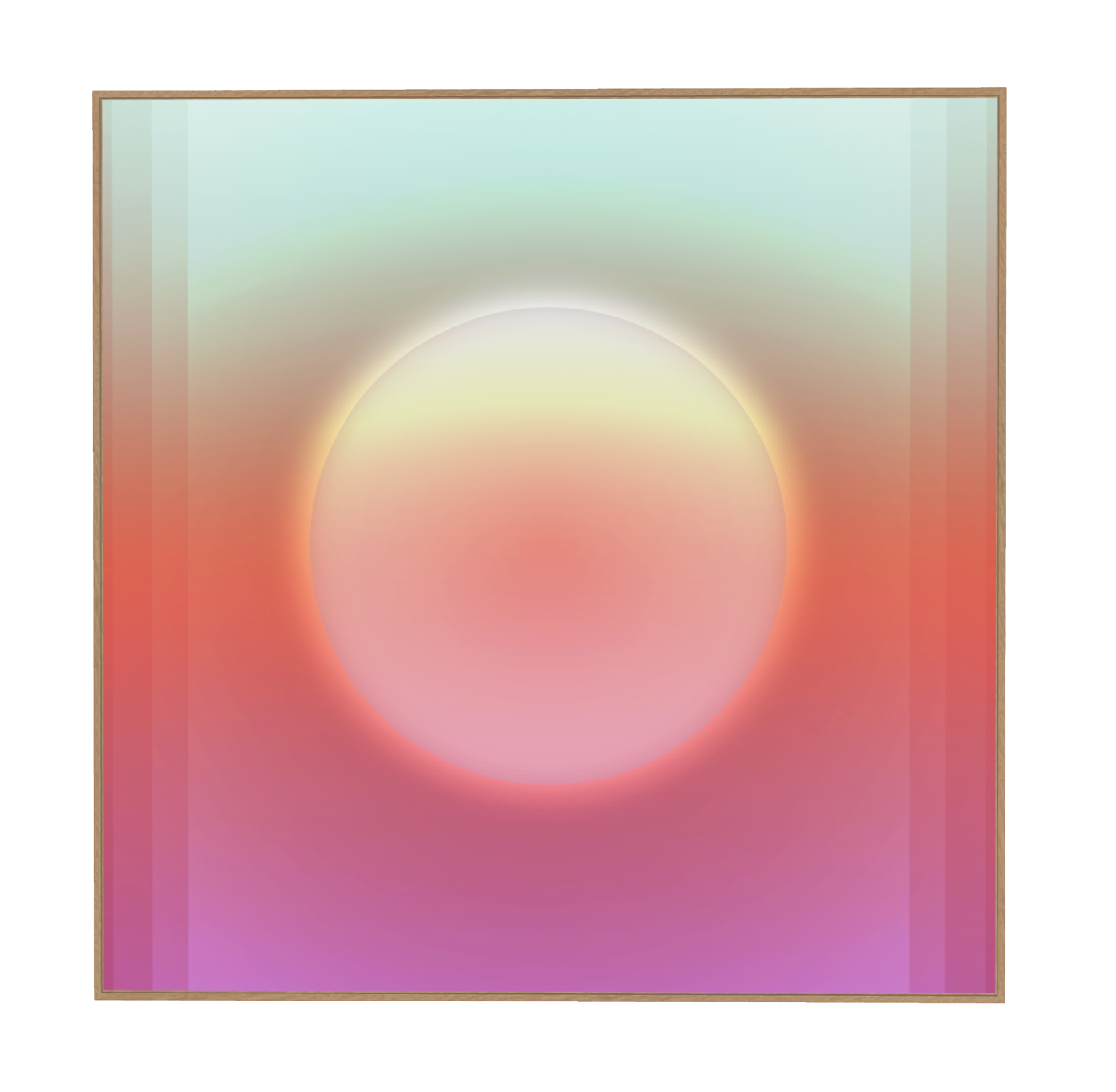
And Then There Was Light, Gil Zablodovsky, 2025
BEHIND THE SUNSET
Can you tell us more about the piece of art that you’re presenting at the exhibition? Why SUNSET?
"SUNSET" explores a profound transitional moment. A sunset is universally understood as a bridge between light and darkness, movement and rest. In this piece, I wanted to capture that precise moment of threshold—where the sky transforms into a continuous, glowing horizon. The title refers not just to the natural phenomenon, but to an internal state of letting go, slowing down, and transitioning into quietude.
The composition of this piece is reduced to subtle gradients, symmetry, and a restrained palette of pinks and reds. How did you arrive at this particular visual language?
Through a rigorous process of subtraction. Pinks and reds carry intense vitality, warmth, and intimacy. By restraining the palette and using soft, seamless gradients combined with subtle symmetry, I wanted to diffuse that intensity into a soft, radiating glow. The geometric discipline holds the emotion, preventing it from overflowing and allowing the color field to feel both boundless and contained.
“Color is an autonomous structural language—it holds weight, temperature, space, and emotional resonance. In my practice, color functions as an active field of energy that shapes the viewer’s perception of space and time.”
Do you think this piece could be translated into another medium—sound, moving image, or installation? What do you think would remain unchanged, if so?
Yes, easily. Because "SUNSET" is rooted in vibration and atmosphere, it could naturally translate into a generative video piece, an immersive light installation, or a low-frequency ambient soundscape. What would remain completely unchanged across any medium is its core essence: the slow, meditative pulse and the sense of an unfolding, quiet presence.
ART THAT WELCOMES AMBIGUITY
Abstract art often asks viewers to slow down rather than search for immediate meaning. How do you hope audiences approach your work?
I hope viewers approach the work without the pressure to "decode" or figure it out intellectually. I invite them to treat it as a mirror or a quiet sanctuary—to simply sit with the work, feel the resonance of the color, and notice their own internal shift. If a piece gives someone a moment of genuine stillness or emotional alignment in their busy day, then it has fulfilled its purpose.
Did participating in an exhibition dedicated entirely to color influence the way you looked at your own work, or did it confirm ideas you had already been exploring?
It was a strong confirmation of the direction I have been pursuing. Placing "SUNSET" within the context of COLOR AS CONCEPT validated my belief in color as a complete conceptual framework in its own right. It re-energized my motivation to keep pushing the boundaries of geometric abstraction, sound, and color as immersive tools for human connection.
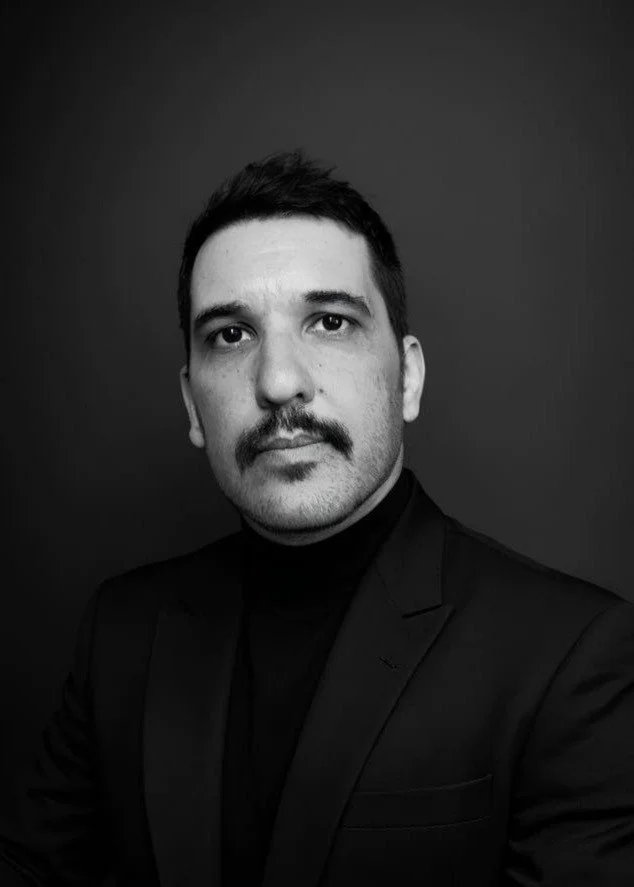
Courtesy of Gil Zablodovsky
See more of Gil Zablodovsky’s art on his Instagram.
Article by Dominika Głowa
Based in Krakow, Poland, but often on the road, Dominika Glowa is a writer, translator, and traveler - fascinated with what lies between visual arts and textual interpretation. In her writing, she seeks to uncover the narratives that emerge when art and language collide, trying to provide fresh perspectives on contemporary creative practices. Drawing on her linguistic education, she’s particularly interested in exploring how language shapes perception, and how meaning shifts as it moves across cultural, literary, and artistic contexts.