
A CONVERSATION WITH GABRIEL CASTILLO
Gabriel Castillo’s “In the Heart of Solitude” series portrays a journey through our desperate need for connection and the endless walls we meet. He draws an individual human figure, who’s almost imperceptible at first sight in some images; the colours are the real protagonist of those pictures. They even seem to contradict each other, as the person is still while the colours surrounding it and the forms they create are in undeniable movement — it is the I, surrounded by the incredible power of the Other.
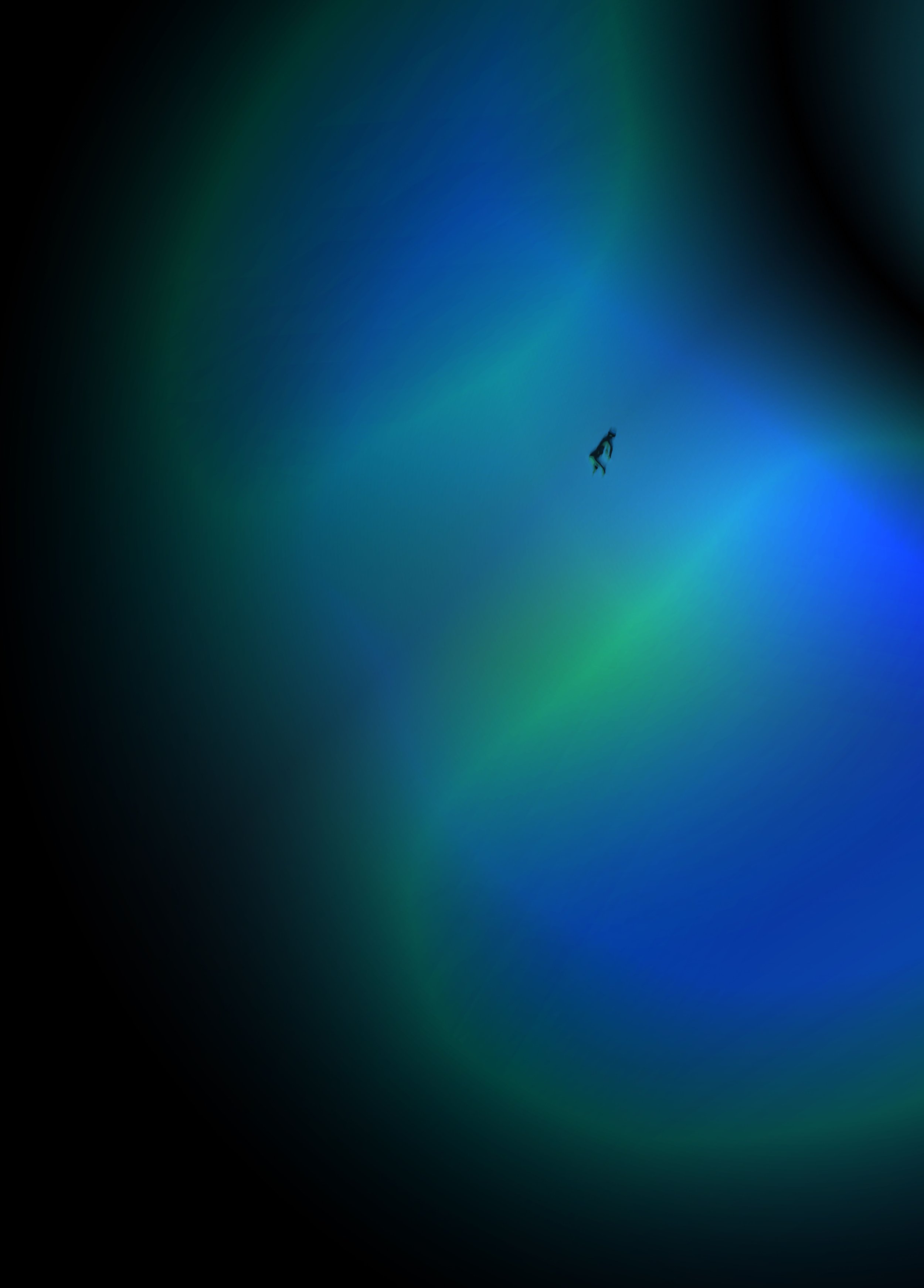
Genesis, Gabriel Castillo, 2021
The overwhelmingness of loneliness can often push someone to cover themselves with that feeling willingly, as if deliberate isolation and separation would somehow “fix” the sensation; maybe, if the loneliness is self-imposed, it will make it hurt less, as I was not decided to be left out by the Others, but rather chose to separate myself from them. In “Signs”, Maurice Merleau-Ponty concludes that we are unable to judge negative feelings of others as real and prolonged, instead seeing them as pure affectation and personal choices. This vision of self-imposed division might not be as real as it is perceived: “A large part of my experience was longing to be seen and a desire for companionship. I’m very close with my family and have close friends. But at the time I felt that wasn’t enough. That other side of that spectrum is as much an influence as the solitary aspect”, Castillo says. “For a while, my process was entirely introspective. Some of those feelings of loneliness still lingered, so a lot of my work at the time was being born out of that.”
Through the human figure present in this series, the viewer can easily trace a linear narrative that mirrors that internal process we more likely than not cannot see in others. The feelings move, their portrayal dancing from painting to painting, changing in colour and in form. Castillo explains it as “someone as they traverse through their anguish, from feeling lost and overwhelmed to being broken down and building themselves back up to a better outcome—much in the same way a caterpillar emerges from their cocoon.” This idea that things can, and oftentimes do, get better is a constant in his work. However, improvement demands a low starting point by definition.
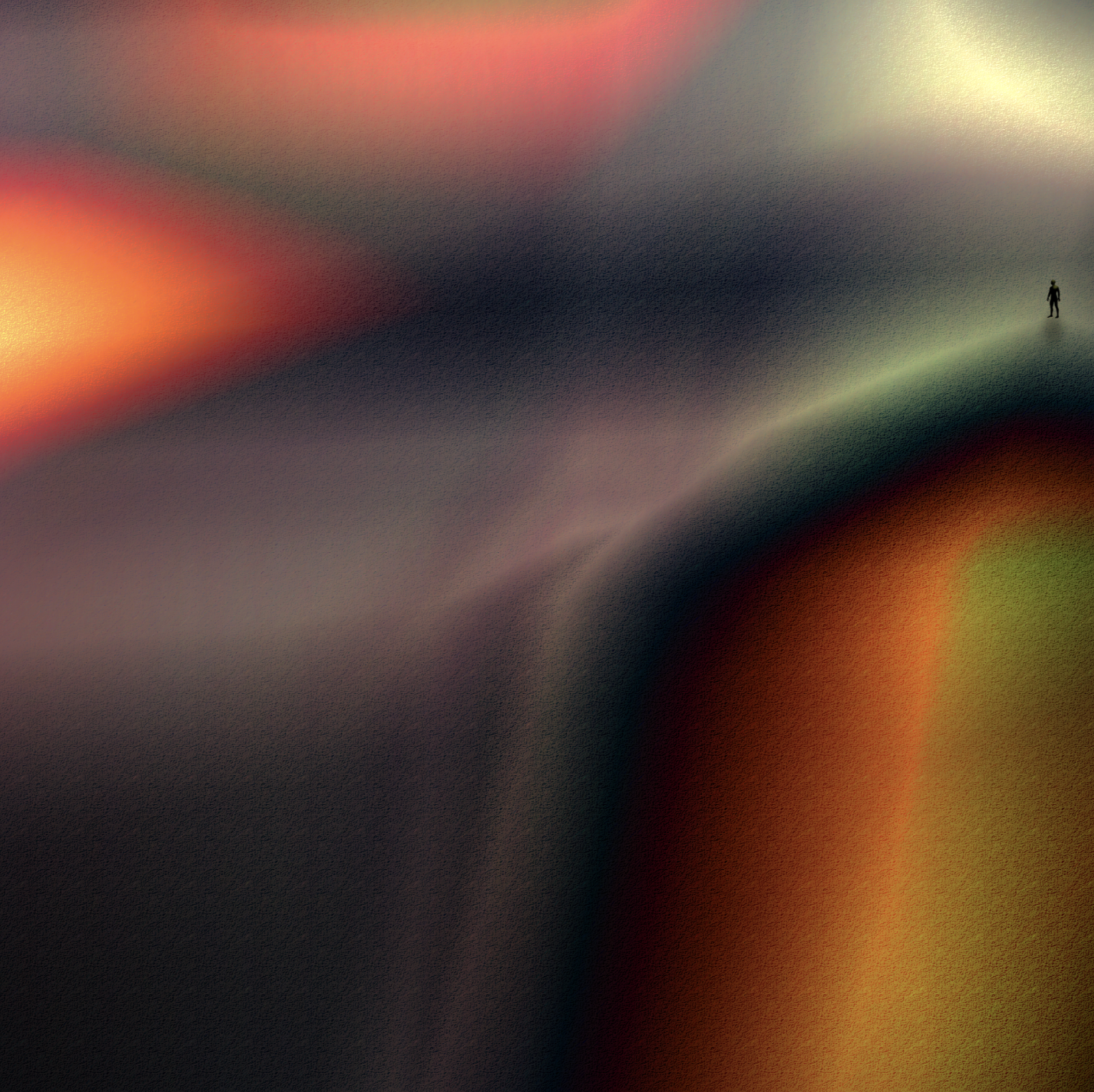
I’ve Had Enough, Gabriel Castillo, 2021
No such point could begin in a vacuum. Rather, it’s a collection of all of everything lived in each step of the series: solitude, anxiety, anger, sadness, powerlessness, hopelessness. Gabriel Castillo also brings up grief as a recurrent sensation that provides inspiration to his work. His intense and colourful auroras and nebulas, analogous to feelings, challenge the Western tradition of associating grief and death with black. “I wanted to show that there can be beauty in one’s pain. I feel that if you’re entirely focused on that darkness, you tend to ignore what good you do have. The colour choices are ultimately to show the viewer that good can come from their pain.”
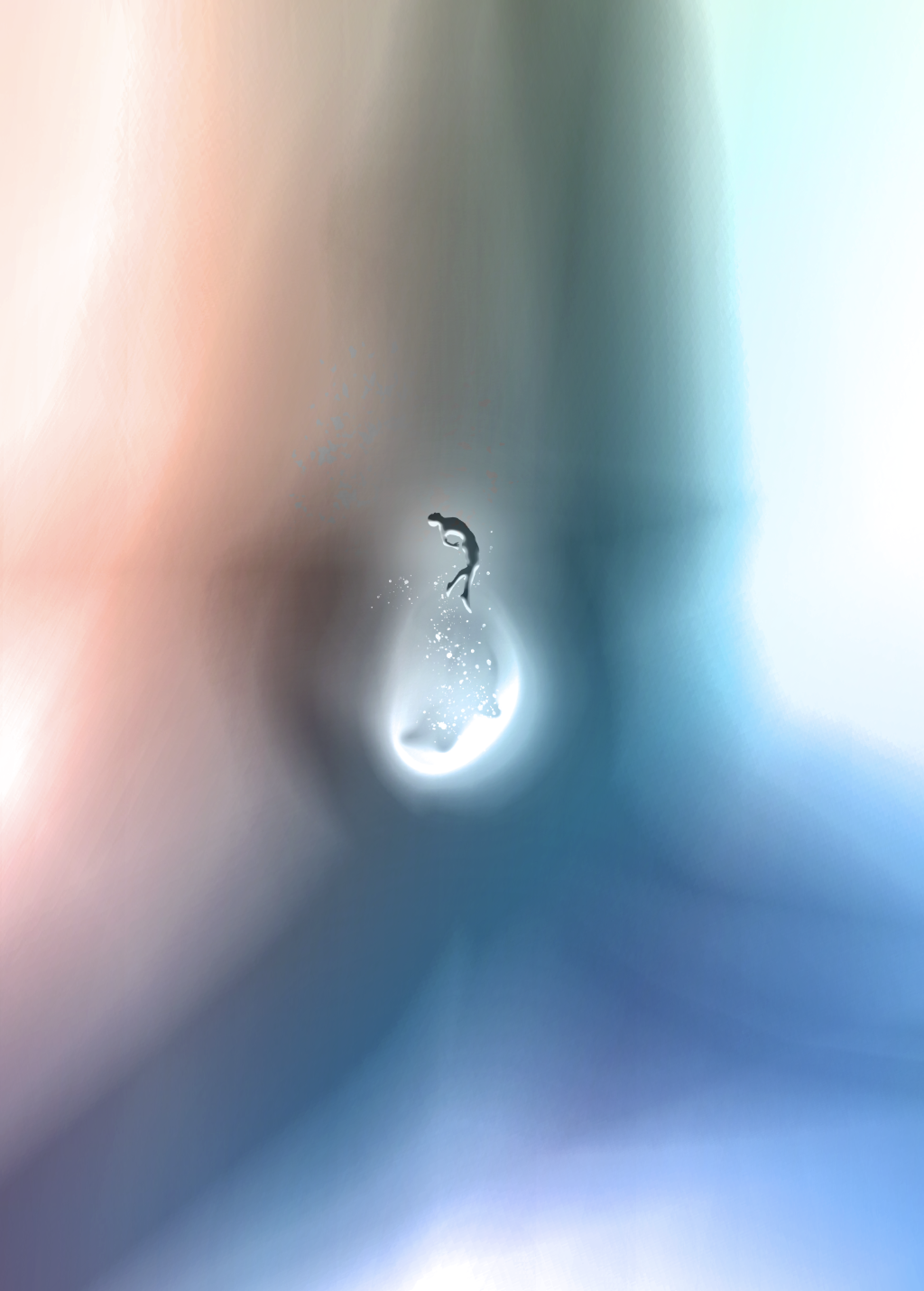
Rebirth, Gabriel Castillo, 2021
Grief is not a feeling reserved exclusively for death: we are constantly grieving and often not processing all of the losses we go through during life, of both material and abstract things, and mainly the passing of time. Anything that provokes a process of transformation and gets you removed from an old version of yourself, in any way, is “death”, but it is also a rebirth. “In the Heart of Solitude came about as a way to put all that behind me: all the worry, the stress, self-deprecation, and heartache would now live elsewhere.”, Castillo says. It’s almost Bataillean how that pain dies as a starting point for something entirely new: “They now serve a purpose and live as art.“ For a very long period of Art History, depictions of anguish would not come explicitly from artists’ personal pain and struggle in a piece: they would use others’ suffering as a proxy, creating allegories to their own. While Catholic tradition puts pain as a crucial part of the process of becoming saintly, that same pain that elevated a person could be seen as destructive and unproductive in another and bring them to exclusion, isolation and even death.
Now, if we circle back to Merleau-Ponty’s claim that we see pain in others as mere affectation, how could we perceive pain in art? The author describes an executioner who, upon looking at his victim’s face — described as “shadows, lights and colours” — recognizes in their anguish his own feelings. Pain, as destructive as it is, drives people to liberation; it can be turned into something productive by simply being portrayed in an artwork, which is just as much made out of shadows, lights, and colours. Gabriel Castillo seems to feel exactly that way. “This series would not exist without those experiences. In a strange way, I’m sort of grateful for the pain.”
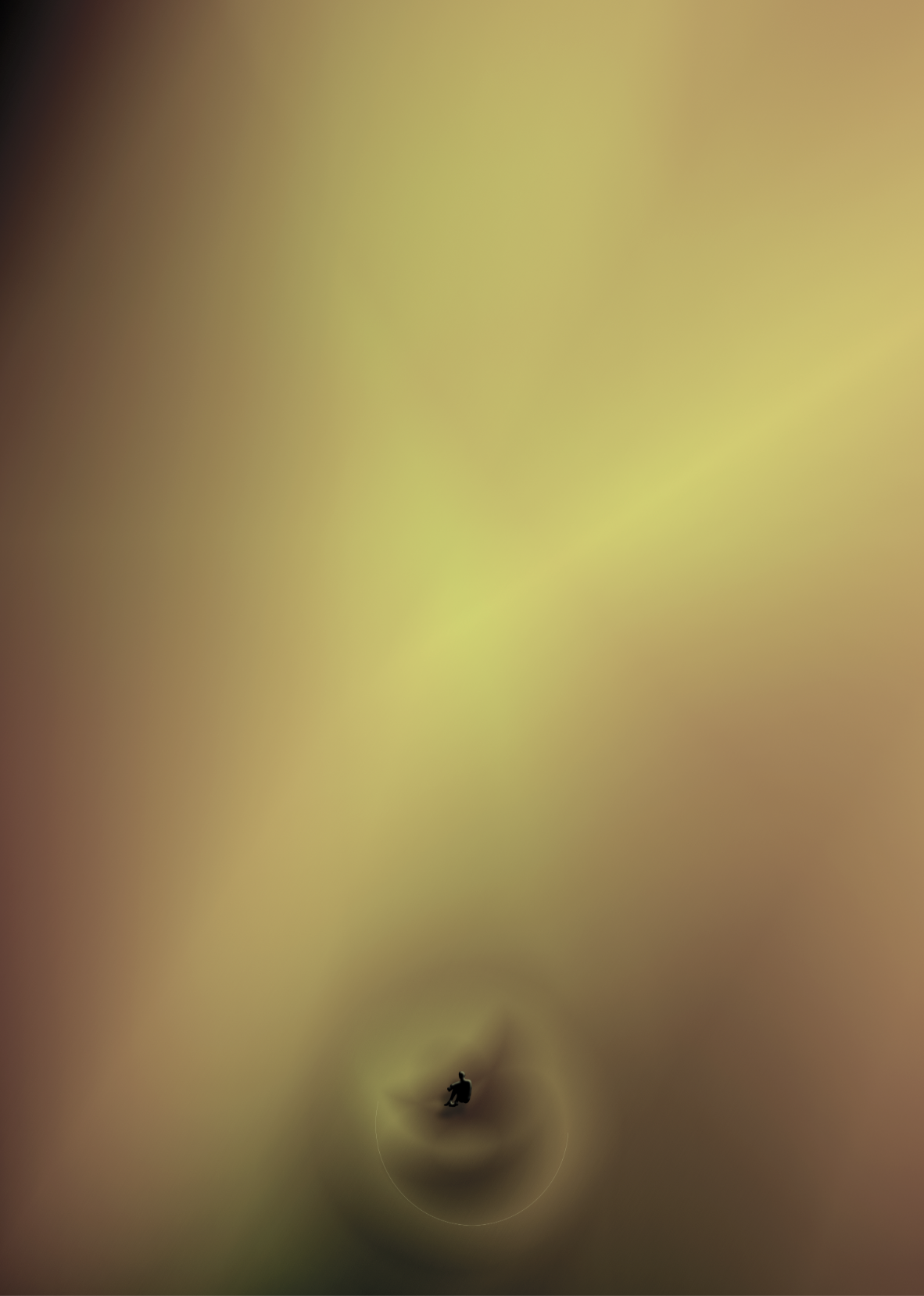
Cradled in Eternity, Gabriel Castillo, 2021
We should not, in any case, surrender to the idea that art reflecting pain has to be sad. Tragedy isn’t as evident in some artworks as in others, be it because of the creator’s choice or because of the spectator’s perception, but dissociating from the idea of a “troubled artist” is necessary in a world where mental health issues are still heavily stigmatized. “I wanted these works and the story behind them to show that it is always worth trying to change things, I guess to provide some hope for those who don’t feel seen”, says Gabriel Castillo.
But we know that sadness, pain, loneliness, grief, anger are everywhere, and seeing that clearly is already enough to provide comfort to so many of us. Castillo affirms that “There were many moments where I felt my situation was never going to change. That I was going to be forever stuck in the same cycle. But I know for a fact with some help and your own desire to keep trying, things will change. For many out there, with situations so extreme, it can feel almost impossible.” But it isn’t impossible. Gabriel Castillo is proof of that.
See more of Gabriel’s work on his website.
Article by Ananda Muylaert
A Paris-based multidisciplinary artist and researcher on the phenomenology of painting, she has produced an extensive body of work in art, music, and poetry. Her artworks and published research on philosophy, essays and poetry have been presented and published in four languages across two continents.
Her artistic practice revolves around the search for rationality in animality (and vice versa) and an infatuation with organic texture, both inside and outside the flesh. More so, there's a desire to portray the relationship of the urban Self with the world around it truthfully, through the worst transgressions and most devastating desertions caused by the domestication of the Human species.
Her previous work experience includes working at the Musée Grand Palais, in Paris, and the Federal Cultural Center of Heritage Paço Imperial in Rio de Janeiro, Brazil, where she worked closely with prestigious institutions such as the Institut Goethe, the Instituto Moreira Salles, and the embassies of France, Japan, and China.