
FINDING HARMONY THROUGH ART: A CONVERSATION WITH OLAH DRAGANA
For artist Olah Dragana, creativity has never been confined to a single chapter of life. After years spent teaching and inspiring others, she turned her focus toward her own artistic practice, creating intricate works that explore themes of nature, interconnectedness, movement and transformation.
In this conversation, Dragana reflects on beginning her artistic journey later in life, the lessons she learned from an extraordinary work of perseverance and why she believes it is never too late to follow a creative calling.
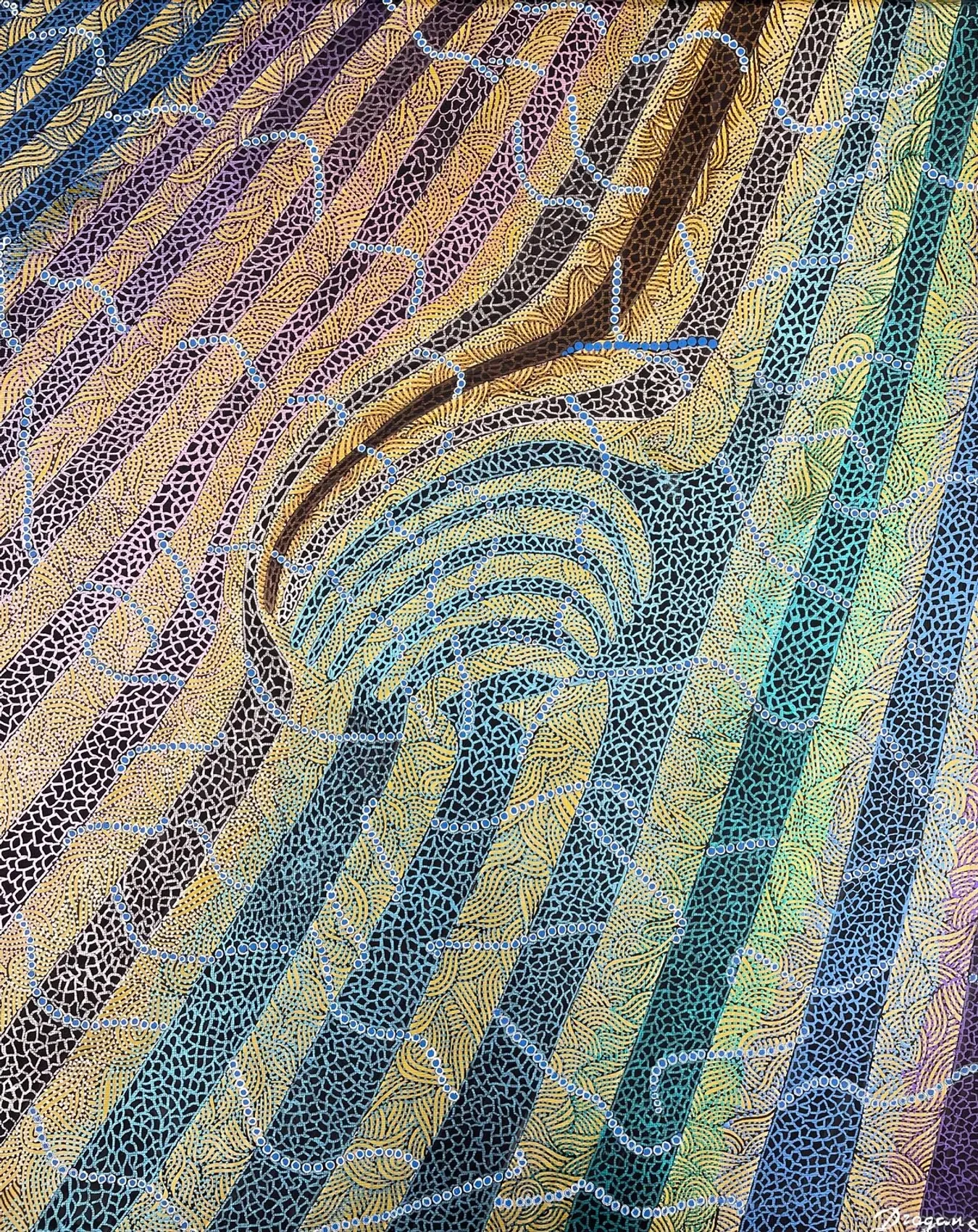
Defying Gravity, Olah Dragana, 2026
You decided to pursue art later in life. How did that change your perspective on the world?
In many ways, it didn't change my perspective - it was the result of it. I reached a point where I felt the noise of the city and the pace of contemporary life were pulling me away from something essential. I needed stillness. I needed nature. I needed harmony. Choosing to fully pursue art was part of returning to that alignment.
My work reflects this desire to be in conversation with nature - not just visually, but energetically. It is about interconnectedness, rhythm, organic flow. Pursuing art was not an escape - it was a necessary recalibration.
What message would you like to send to others who are artistic but aren't pursuing their passion because of life circumstances?
There is a story that deeply shaped how I think about this.
Some years ago, I visited Keszthely in Hungary and discovered a small museum called the Snail Parliament. Inside, there was only one artwork - an eight-meter-long model of the Hungarian Parliament, built entirely from snail fossils. It was created by Ilona Miskei, who began building it at the age of 55. Over fourteen years, she collected and carefully selected 4.5 million fossils to recreate every architectural detail. Standing in front of that work, I had one clear thought: It is never too late to begin. Never too late to return to something. Never too late to start over.
So my message is simple: start now. Even small steps matter. Fourteen years will pass anyway. One day, you may be standing in front of your own "Snail Parliament."
“It is never too late to begin. Never too late to return to something. Never too late to start over.”
Your painting Defying Gravity uses many different shapes and scales. What was your thought process behind it?
For Defying Gravity, it was a balance between intuition and intention. I don't begin with a rigid plan, but I also don't paint randomly.
The different shapes and shifting scales emerged from my exploration of movement - the feeling of rising, spiralling and flowing beyond physical limits. The vertical bands suggest structure or grounding forces, while the spiral and cellular patterns interrupt that stability, creating tension between order and motion.
Imagination definitely plays a role, but it's guided by an underlying meditation on energy, gravity and the idea that movement can exist even within structure.
How do you choose the names of your paintings?
Titles are actually the hardest part for me. If I'm completely honest, I give a title because I have to - paintings seem to demand one. How can something so layered and complex be reduced to just a few words? Sometimes a title comes naturally during the process. Other times it arrives afterward. And occasionally, I play with words in a very childlike way until something feels right. For me, a title doesn't explain the artwork. It's more like a small doorway - just enough to invite someone in, without telling them what they must see.
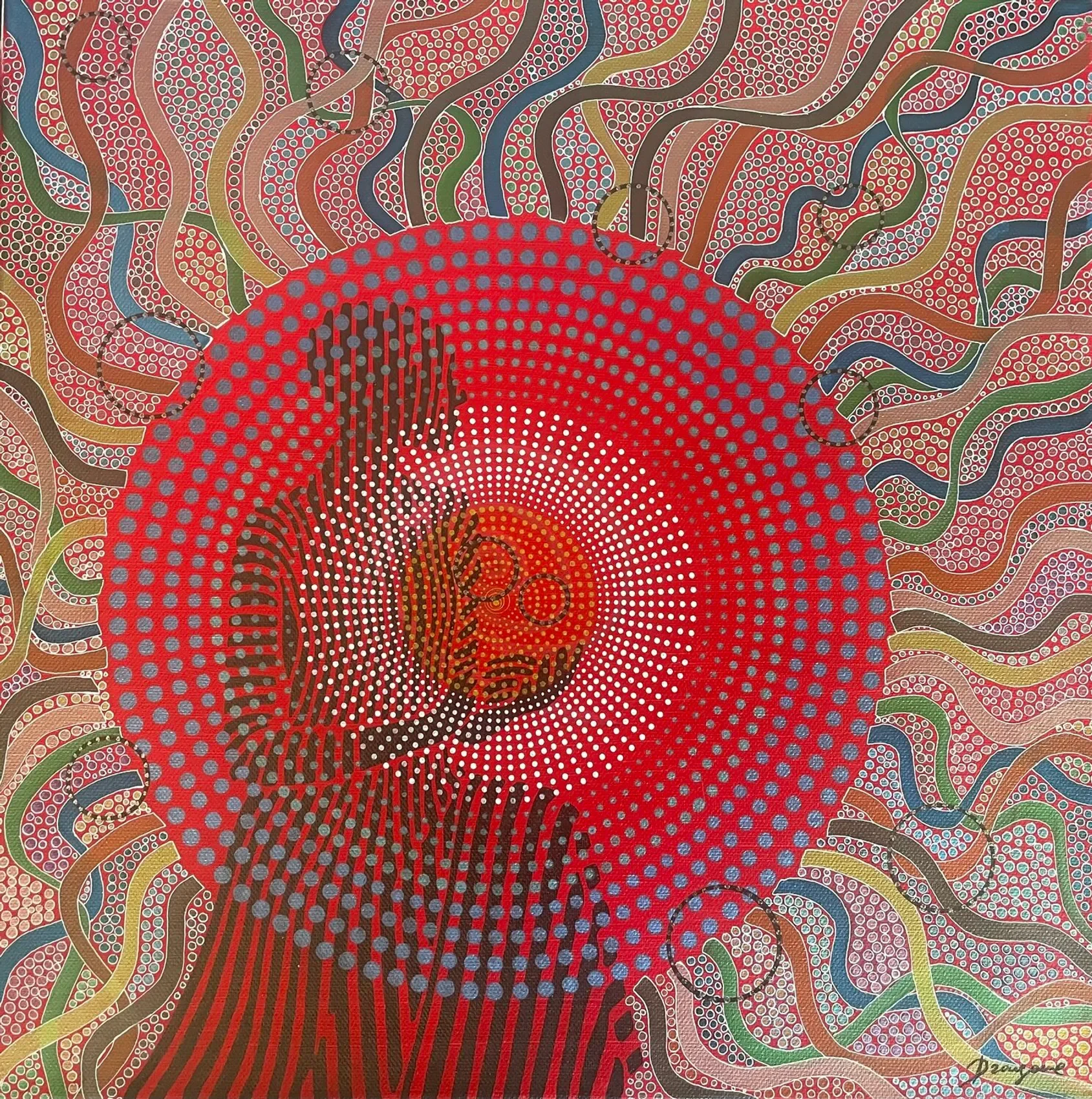
The Observer Within, Olah Dragana, 2026
What message do you want to convey through your art?
I don't think of my paintings as carrying a single, fixed message. They are more like invitations - spaces where viewers can pause and feel something beyond the surface of daily life. If there is a thread running through my work, it is interconnectedness. I want to remind us that nothing exists in isolation - that beneath apparent chaos there is rhythm, geometry and an invisible harmony linking everything. More than delivering a message, I hope the work awakens a feeling of curiosity, connection and quiet expansion.
Looking back, would you have started pursuing art earlier in life?
No, I wouldn't change it. To wish I had started earlier would mean regretting the life I've lived - and I don't.
I am a mother. Through my teaching career, I've had the privilege of influencing hundreds of young souls and nurturing in them a love for art and creativity. That, to me, is deeply meaningful. I believe there is a time for everything. When I finally turned fully toward my own artistic practice, I came to it with depth, experience, resilience and a strong sense of self.
All the years before weren't a delay - they were preparation.
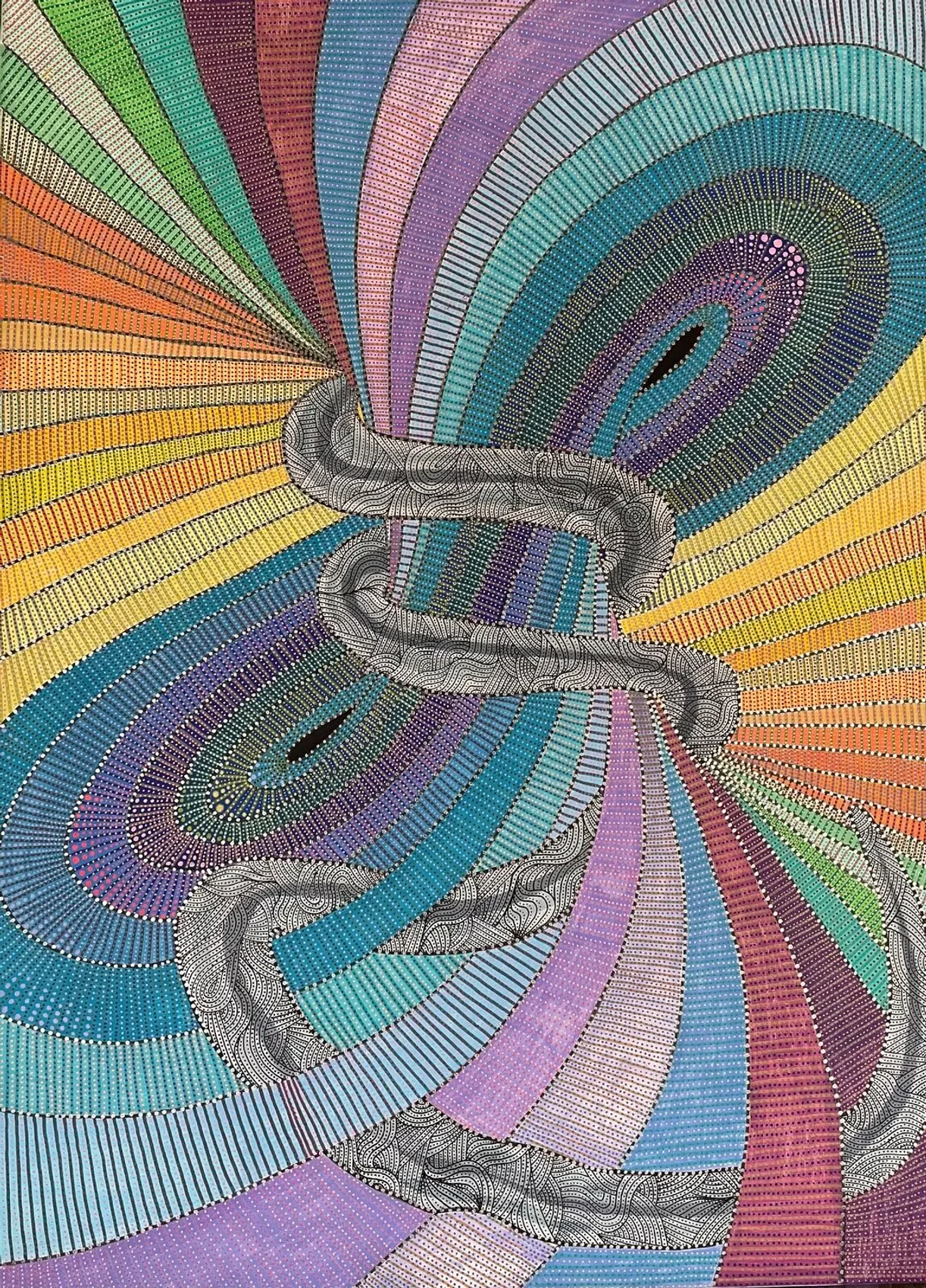
Slow State Mapping, Olah Dragana, 2025
How did you come to abstract art?
I don't experience my work as abstract at all. To me, it feels very literal - just not literal in a photographic sense. I'm painting what's happening beneath appearances: movement, vibration, emotion, consciousness, the way everything is constantly forming and dissolving. Abstraction became the most direct way to speak about those realities. It's less about removing meaning and more about revealing it.
What is one main goal you have as an artist?
Naturally, I want my art to be seen. A painting only fully exists when it enters into dialogue with someone else. When I work, I enter an almost meditative, self-hypnotic state. I use repetition and ritual-like techniques, layering patterns and rhythms until I lose awareness of time. My main goal is for viewers to feel something similar - to be drawn in, to lose their sense of ordinary perception and to travel somewhere unknown within themselves.
If a painting can shift someone's inner state even slightly - open a door, create stillness, awaken wonder - then I feel I have fulfilled my purpose.
Throughout our conversation, one theme surfaced again and again: connection.
Whether speaking about nature, creativity, or the invisible rhythms that shape existence, Dragana's work is rooted in the belief that we are part of something larger than ourselves. Her journey also serves as a reminder that creative beginnings do not belong to a particular age or stage of life.
Sometimes, the years we think are leading us away from our calling are quietly preparing us for it.
See more of Dragana’s work on her Instagram.