
“This creative process is quite self-centered at its origin: I create it thinking only about myself.”
With these words, Monika Grygier strips away the romanticized "service" of art and returns it to its most honest state – an internal necessity. This idea is the core of her creative vision and to my mind this is the only way to go when it comes to art.
Imagine you are a painter, you have an idea – it excites you! But suddenly, there's a doubt in your head: "What if they don't understand me?" and now the idea that once excited you has been diluted by the fear of being rejected. Eventually you decide to push through that but with a few little tweaks, a "compromise" if you will. Finally, the piece is ready, the idea is sort of there, hopefully people will be pleased, but... what about you? What about the excitement you once felt just thinking about it? What was the point?
Why do we create? Because it's fun and as long as it's fun for us, I think we are on the right path. To please your deepest desires is the main point of art and I totally agree with Monika’s philosophy. With this interview, I invite you to take a walk with me through the ever-shifting inner landscapes of Monika Grygier.
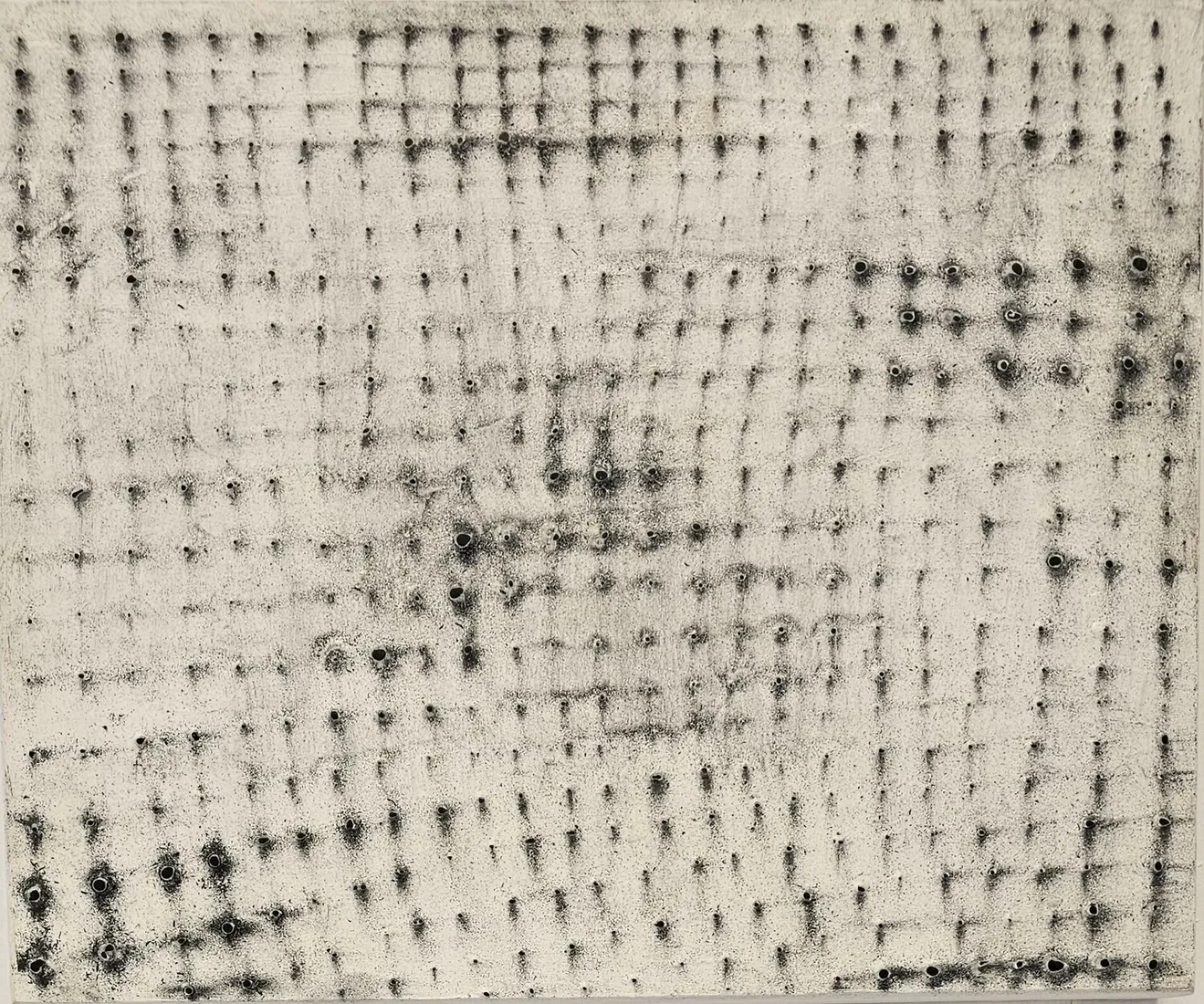
2 MINUTOS 12 SEGUNDOS, Monika Grygier, 2026
I would like to start by asking about the very beginnings of your creative path. Looking back, what were your very first attempts at making art like? Can you share some memories from that time?
I remember that when I was 7 years old, at school, the teacher asked if any parent could paint some birds in a realistic way. That day I was convinced that my mother would be perfect for this activity and that she would be able to take part. I arrived home very happy, but my mother told me she didn’t have time, that she was very busy, and that I would have to wait until the following month. She also said that if it was needed sooner, I should do it myself.
Since I felt embarrassed to tell my teacher that my mother wouldn’t be able to do it, I decided to try it on my own. I set the bar very high, aiming to do it so well that no one would notice I had done it myself. That’s how I managed to reproduce images of birds with great accuracy.
Thanks to that experience, I realized that my hands are capable of creating anything artistic that I set my mind to.
You studied under Stanisław Białogłowicz and Jerzy Wroński, both deeply connected to the legacy of the Grupa Krakowska [Krakow Group]. This lineage is known for a rigorous, avant-garde search for new forms. How did their mentorship shape your understanding of abstraction? Is there a specific lesson from those years that still impacts your approach to a blank canvas today?
What I remember most from that time is the sense of power – the ability, almost overwhelming, to create something that would not exist if you didn’t do it yourself. This idea had a profound impact on my understanding of abstraction, as it freed me from the need to imitate and encouraged me to explore and invent.
I also remember their high level of demand, always accompanied by trust and encouragement regarding my future path. They motivated me to keep going, to push further, to be more precise and honest in my work, while at the same time making me feel capable of developing my own voice.
That combination of rigor and confidence is still with me today, especially when I face a blank canvas – it reminds me to trust the process and to keep moving forward.
“Because abstraction allows me a much greater freedom to express truth.”
You were recently a finalist for the XI Torres García Painting Prize with Cartografies del silenci: 36 km² . Thinking of your early career and your first major awards, what was the internal shift like when you realized your art was no longer just a personal practice, but a professional path you could sustain? Do you remember what was it like doing those first exhibitions?
I remember very clearly my first solo exhibition. The curator discovered my work through an impressionist landscape painting and became interested in organizing a solo show in Praszka, where I was living at the time. I explained to her that my work had already changed – that it had evolved during my studies at the University of Cieszyn – but she insisted, even offering to take care of the transportation.
What I remember most vividly are the faces of the visitors at the opening, which was one of the most important events of the year in that town. They were expecting something very different, and instead found all the walls covered with nudes – not explicit, not figurative, but still completely recognizable.
That moment was a turning point for me. It made me realize that my work could generate a reaction, that it could exist beyond a private space and enter into dialogue with others. It was probably one of the first times I truly understood that my art could become not only a personal practice, but a professional path.
Despite the initial surprise it generated, the museum acquired several works during the exhibition, recognizing the quality of the paintings. This validation encouraged me to continue creating freely without being guided by market expectations.
For several years, you dedicated yourself to founding the Cultural Association IDEA and the Can Clos space, facilitating the work of other artists. What drew you to this role of builder? Did the experience of managing residencies and collaborations change the way you view your own creative process?
After organizing numerous solo exhibitions and participating in international symposiums, I felt it was important to create a meeting space for creative people, especially in a rural environment. My intention was to make all stages of the process visible to the public, from the conception of an idea to its execution and final presentation.
Over the years, this has led to the creation of an international network of organizations and artists that contributes both to the development of creators and to the cultural and social growth of the territory.
This experience has also influenced my own creative process.
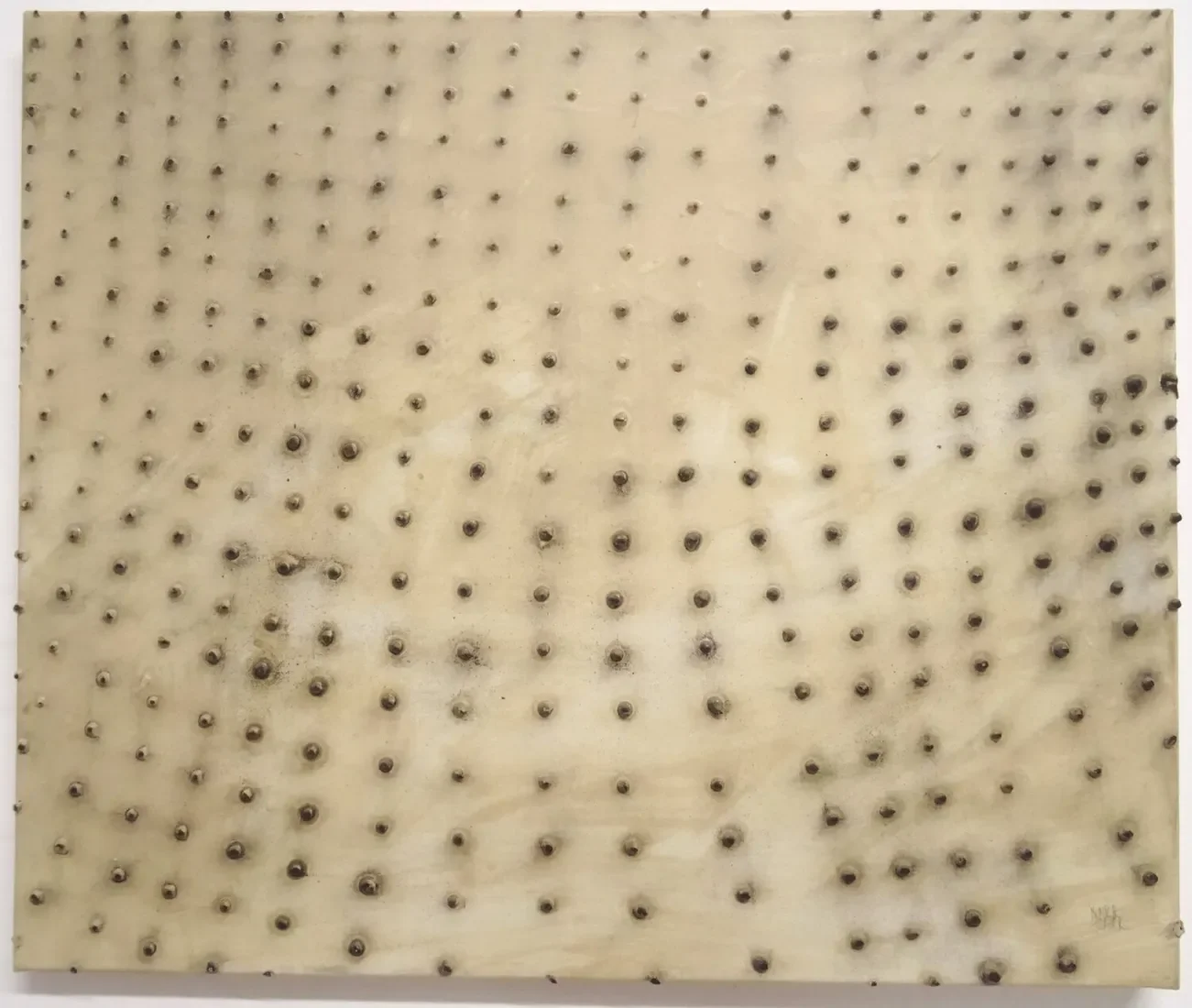
2 MINUTOS DOS SEGUNDOS, Monika Grygier, 2024
What have been your main influences throughout your career? Do you find yourself more influenced by other artists, or is it the city and the way urban spaces are built that really speaks to you?
To be honest, I don’t have any specific reference or influence that determines the direction of my work. What truly drives me is composition, the idea itself, and the desire to express or create an image, a message, or a project. There is also the power to decide whether I want to share it with the public or not.
This creative process is quite self-centered at its origin: I create it thinking only about myself. That does not prevent me, later on, from generously choosing to share it publicly. This inner impulse is my main source of inspiration – the need to give form to something that already exists in my mind. Once the idea is clear, I feel a strong necessity to bring it into the physical world.
Francisco Arroyo Ceballos, in his text "Monika Grygier y la indeterminación del espacio" [Monika Grygier and the Indetermination of Space] describes your work as a blend of abstraction and constructivism. What is it about the non-objective form of expressing yourself that draws you in? Why do you find the abstract more capable of conveying truth than figurative representation?
Because abstraction allows me a much greater freedom to express truth. In figurative work, the image is more conditioned by the representation of something recognizable, by codes that the viewer can quickly identify.
In contrast, abstraction opens up a wider, less limited space, where it is possible to work from what is essential – from emotion, energy, or an idea – without needing to describe it literally. I am interested in that ability to suggest rather than impose, to create a more open experience.
For me, abstraction has a more direct relationship with truth, because it does not depend on external appearance, but on an internal construction.
"Inner landscapes" is a theme that you like to explore and depict in your works. If we were to look at a map of the "inner landscape" of Monika Grygier right now, what features would we see? And how much has that landscape changed throughout the years?
If we were to observe that “inner landscape” right now, we would see a territory in constant transformation, where order and chaos, intuition and structure coexist. It is a space built from experiences, emotions, and processes, where each work leaves a trace, like a cartography in continuous development.
It is not a static landscape, but a dynamic one, with layers that overlap and evolve over time. There are denser, more intense areas, and others that are quieter, more open, where emptiness also plays an important role.
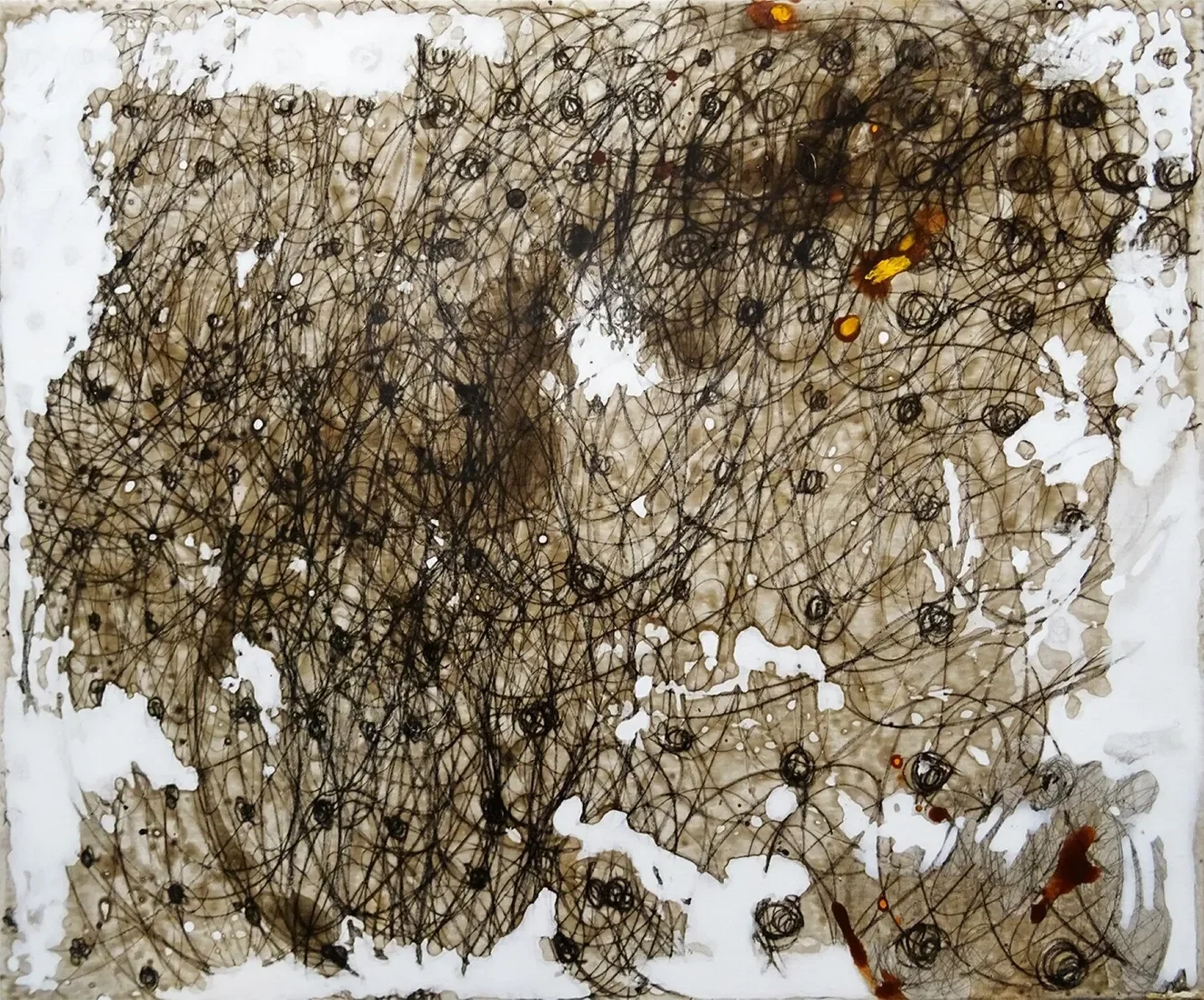
2 MINUTOS 41 SEGUNDOS, Monika Grygier, 2026
You once said: "I don’t try to reflect reality; I do reflect time." This ties in with my question about your work 2 MINUTOS 12 SEGUNDOS from the series "Hours and Weeks." (As a side note: I have to admit that I absolutely love this series – it is so brutal yet soothing, and the relief created by the spots makes the piece feel so alive!). Can you expand on this fascination with the idea of reflecting time, and could you share the creative process behind that specific piece?
The passage of time is, for me, one of the greatest feelings of powerlessness. It is the only thing I cannot control, and precisely for that reason, it obsesses me. In my work, I try to approach this idea – not so much to represent it, but to understand it or, in some way, to contain it.
I am particularly interested in controlling the sensation of time: rhythm, repetition, composition… These are tools that allow me to construct a temporal experience within the work. It is not about measuring time in a literal way, but about generating an almost physical perception of its passage.
In the case of 2 MINUTOS 12 SEGUNDOS, the creative process begins with that tension between what can be measured and what is actually experienced. The title refers to a specific duration, but what happens within the piece is neither linear nor exact. Through the repetition of elements and the construction of relief, a rhythm emerges that can feel both intense and calm at the same time, almost contradictory.
In a way, it is an attempt to capture time within a space – to make it visible and tangible, even if only for a moment.
For the last question: What would you like for people to feel or take away from your work at the exhibition?
I would like people to take a moment to observe the work carefully, without rushing. To see what it conveys to them and how it connects with their inner world.
If that happens, it already has meaning. It might even allow them to slow down for a moment and gain some time in a world that moves too fast.
What did a 7-year-old girl feel when she realized her hands could create anything? What did a young student feel when being encouraged by the legends of the Polish avant-garde scene? What did an unknown painter feel when people were looking at her works and their eyes screamed emotions? What did an experienced artist feel when creating an international network whose aim is to help upcoming creators?
The answer is – excitement.
You see, what I like about Monika is her staying true to herself and calling things what they are. After this conversation, I started looking at her works and her as a person from a bit of a different angle. The angle that makes me appreciate her more.
Stay excited about the things you love. Don't change your landscapes for others.
See more of Monika’s work on her website.
Article by Vasya Kavka
Based in Ukraine, Vasya Kavka is a writer working at the intersection of contemporary art and digital culture. Through his platform @ambient.delusion, he researches emerging and underground artists, publishing interviews and editorial features that move beyond aesthetics to examine context, creative process and cultural relevance. His work is driven by curiosity and a commitment to thoughtful, accessible storytelling that situates artistic practices within the broader currents shaping contemporary culture.