THE MANIFEST: NATALIA PONOMAROVA
“I want people to understand that safety and freedom are not always a given.”
Imagine going about your day, maybe getting ready to watch a movie. Why not? Imagine walking through the city, seeing familiar faces and rocking your brand-new boots. This is a nice movie, you’ve seen the reviews. Exciting, isn’t it? But then you hear the cascade of alarms starting to go off, ruining the illusion of your perfect movie night. To shelter. Praying to God this is not your last night on Earth. You hear a few explosions. And then – silence. Alarms once again sing their depressive song, but this time telling you it’s all over. You get back to the streets. Your brand-new boots got a little bit dusty. You continue your walk to the movies. Why not?
Why not, I ask? You HAVE to live! You HAVE to continue moving forward! You HAVE to continue to create! I described to you a regular day in quite irregular circumstances.
Natalia has probably been in such a situation, probably more than once. But as you will see in this interview, she manages to find that mental space to create anyway. In this conversation, we talk about the art under siege, her creative path, and finding one's identity amidst the background of war.
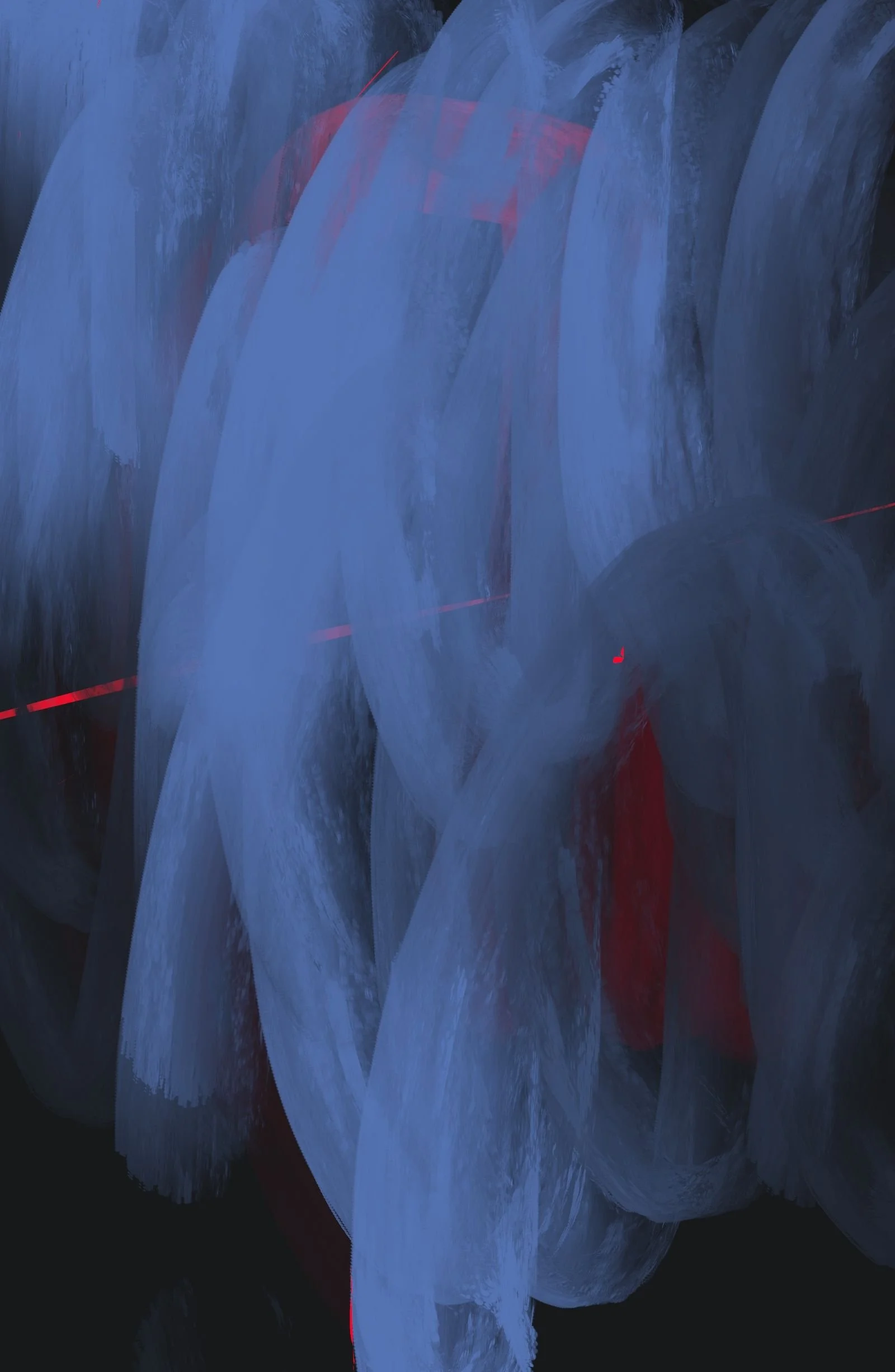
War Within, Natalia Ponomarova, 2022
Every journey has a starting point. Can you recall the first painting or piece of art you created that made you realize you wanted to pursue this seriously?
It probably all started back in university, when I would take random photos and overlay them with graphic designs. Those were my first attempts to understand myself, find my style (which has remained diverse to this day), and express myself through art.
Are there specific artists, either classical or contemporary, whose work has shaped your perspective on painting?
My view on digital painting in particular was most shaped by the Ukrainian artist, my teacher Anton Logov, with his abstract expressive canvases, installations and sketches, and his conceptual view on form and color.
Looking through your Instagram page, nature seems to play a significant role in your life. Do you have specific locations or "places of power" that you return to for grounding or inspiration?
Absolutely true. Nature always brings me back to the beginning of everything, to the truth without distortions. It is usually the forest and the riverbank, where I come to visit my parents, thus returning to my roots. For me, these places have almost magical power. I want to explore the theme of nature and its protection in my next projects.
“At the beginning of the full-scale invasion, art became a way to morally survive.”
The ongoing war has fundamentally altered every aspect of life in Ukraine. As someone living and working in Kyiv amidst constant missile strikes, how has your internal landscape shifted since the full-scale invasion started? How do you find the mental space to create under constant threat?
At the beginning of the full-scale invasion, art became a way to morally survive. But in the first few weeks, I was incapable of art at all. Everything in me seemed to go numb. When the Russians entered the Kyiv region, my family and I moved to live with relatives in a more western region. Then I started painting my abstract works, living through them the fear, anger, and hopelessness that I felt. That’s when the work War Within was born, which is part of a whole series of digital art dedicated to the war. With them, I participated in art charity auctions, the funds from which went to support the Ukrainian military.
Over time, the war became a familiar background of life, which sounds terrible. But because of it, the question of my own national identity became the core of creating art for me. Now I am considering the possibilities of foreign residencies to be able to work in conditions where part of the resource is not spent on survival.
For this exhibition, you chose War Within, a piece created at the very beginning of the full-scale war. Could you guide us through this work? Do you remember the specific day or emotional state you were in when you created it?
This work is a reflection on the night rocket attacks. It was created intuitively and
emotionally, like all my abstract works. Red and black are the two main colors. There are no shades here. Life or death. The work conveys the fatality of this war. When you are not allowed to have subtle emotional experiences, only rough strokes remain.
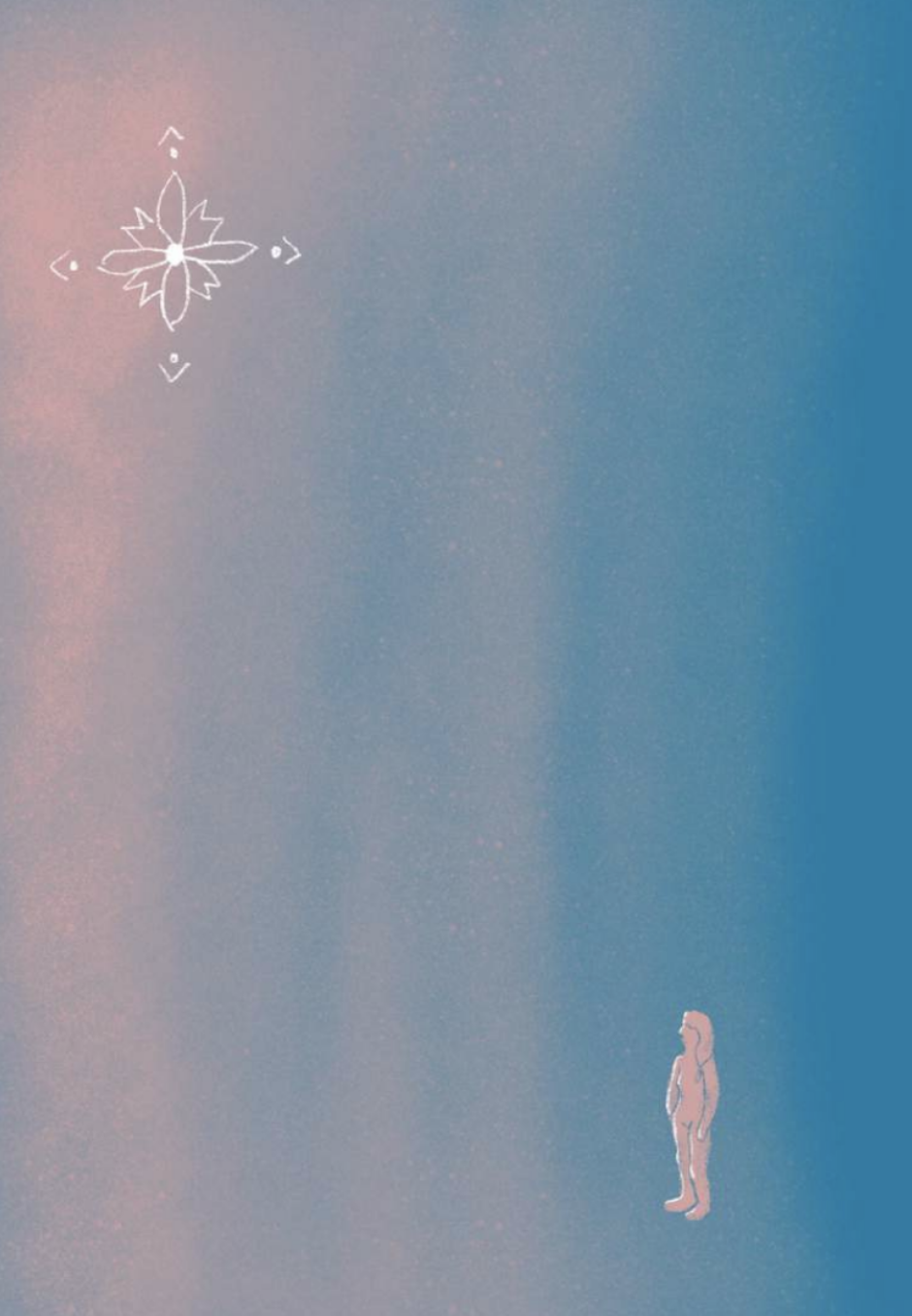
Mourning Star, Natalia Ponomarova, 2026
Your portfolio shows distinct shifts from one style to another. What drives this constant evolution? Is this a deliberate search for a definitive style, or is the process of searching itself your primary mode of creation?
I like the formulation of the search for style as the primary mode of creation. Through art I try to explore different parts of myself and represent them. For example, through photography I document the memory of the past; through abstraction I seek a connection with the intuitive and emotional; through symbols and sketches I try to connect the conscious with the unconscious. For different artistic tasks I choose different styles or media, and it has always seemed quite natural to me.
Your work fluctuates between clear figuration and total abstraction. What dictates that choice for you? Does the subject matter demand the form, or is it an intuitive decision made at the canvas?
When I create an abstraction, it’s as if my hand is leading me, and then I analyze what it wanted to say. Figurative is thoughtfulness and conscious analysis of what I want to say. Actually, in life we balance between these states, where we independently decide where to go, and where our feet find themselves in the right place. The most interesting thing is when in art they are combined into something holistic.
Beyond visual art, you play piano, sing, and write poetry. How do these different creative outlets interact with your painting? Are there specific poets or musicians whose work you find yourself returning to most often?
Recently, poetry has become an important part of my work. It is a completely different way of communicating with the audience, very sincere and direct. I like the work of the poet and writer Rupi Kaur, her frank writing about important things is inspiring. And also, the Ukrainian classic Lesya Ukrainka. I am close to her strength of spirit, feminist and patriotic outlook combined with lyricism and closeness to nature. Music has been with me since childhood, so it is also something like nature that brings me home. Vocal inspiration for me is the Ukrainian band Vivienne Mort, as well as Birdy, Enya, Lana Del Rey.
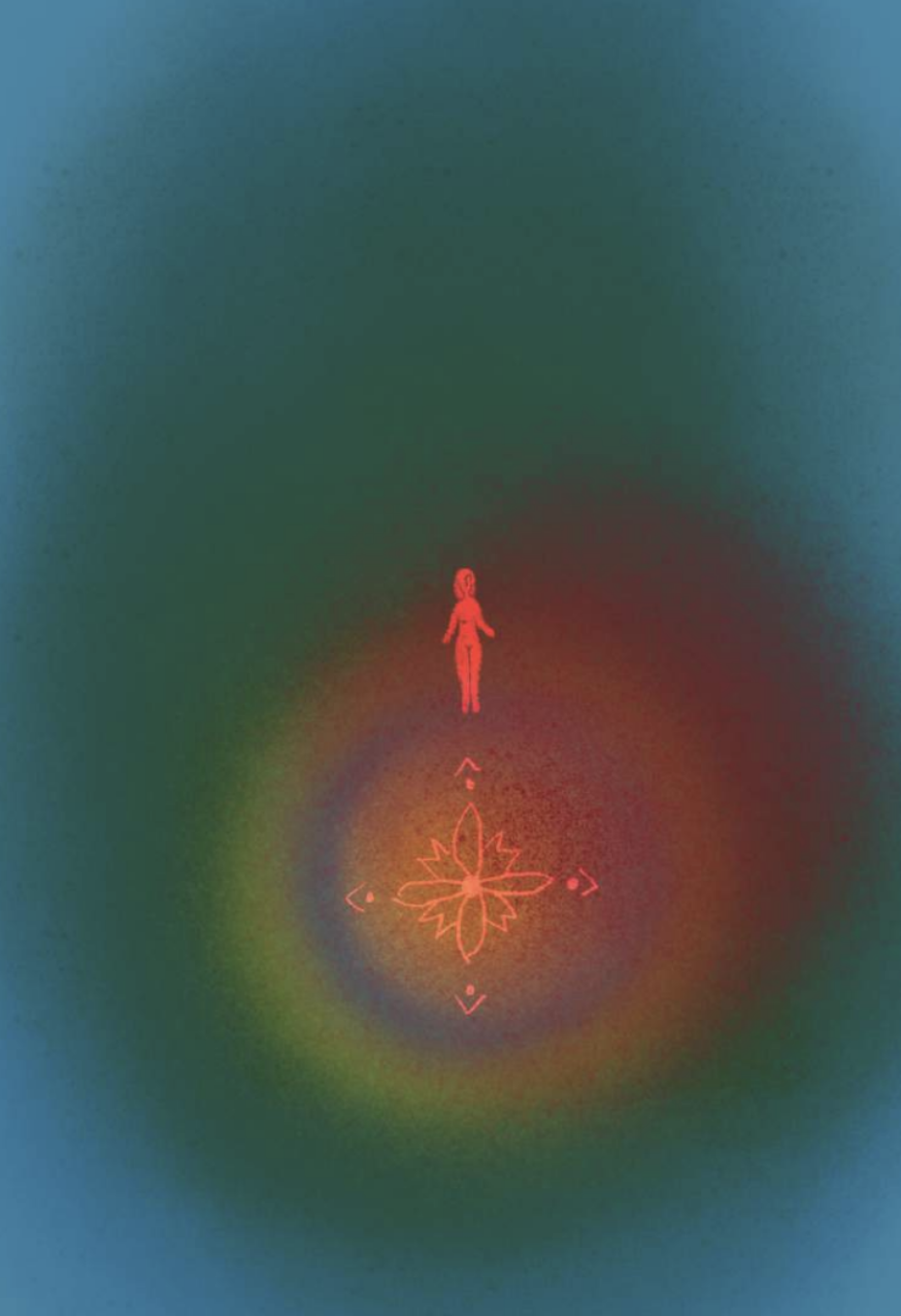
Fern Flower, Natalia Ponomarova, 2026
Do you feel your work acts as a platform or voice for the queer community, especially during a time when collective identity is being redefined?
Yes, in particular, my project “Don’t Hold My Hand” is dedicated to Sapphic love and feminism. This is my first queer manifesto and coming out in the field of art. The representation of queer art is important to me, especially in Ukraine, where homophobic laws and groups are still in force, the latter of which are sponsored by Russia. This is a chance to declare that I want to live in Ukraine without homophobia and sexism, where freedom and human rights are above all.
What is the primary message you want people to take away from your work at this exhibition?
I want people to understand that safety and freedom are not always a given. They are a huge value that you realize when you lose them. As long as there are wars in the world, as long as some people think they can take away the right to life from others, the world is not a safe place for anyone. That is why it is so important to distinguish good from evil, to fight for the light and not to remain indifferent.
I have always seen art not only as something to be looked upon and pondered, but as something much more physical. It acts as an outlet - for raw emotion, and for an urgent voice. Through these canvases, Natalia has carved out a safe space to share what has been sitting inside her for so long. By converting the anxiety of rocket attacks into uncompromising abstract strokes, she has found a way to ease the pain. Art is a way to share. Art is a way to call for action. Art is a way to remind.
No, I want to smile through tears and weeping,
Sing my songs where evil holds its sway,
Hopeless, a steadfast hope forever keeping,
I want to live! You thoughts of grief, away!
- Lesya Ukrainka, “Contra Spem Spero!” (Translated by Vera Rich)
Article by Vasya Kavka
Based in Ukraine, Vasya Kavka is a writer working at the intersection of contemporary art and digital culture. Through his platform @ambient.delusion, he researches emerging and underground artists, publishing interviews and editorial features that move beyond aesthetics to examine context, creative process and cultural relevance. His work is driven by curiosity and a commitment to thoughtful, accessible storytelling that situates artistic practices within the broader currents shaping contemporary culture.