LUCIE NOLIWÉ SANOU ON THE SOCIAL LIFE OF CONTEMPORARY ART
The Founder of Galerienne Art Club Brussels reflects on gathering people around art rather than simply exhibiting it.
What happens when contemporary art is approached not as a closed language, but as a space in which to meet? Through Galerienne Art Club Brussels, Lucie Noliwé Sanou is building a more social and embodied way of encountering art — one shaped by gallery tours, studio visits, and conversations that continue over coffee. In this interview, she reflects on the psychological and linguistic barriers that still surround contemporary art, the possibilities and limitations of commercial galleries, and the role cultural initiatives can play in nurturing community, curiosity, and new ways of seeing.
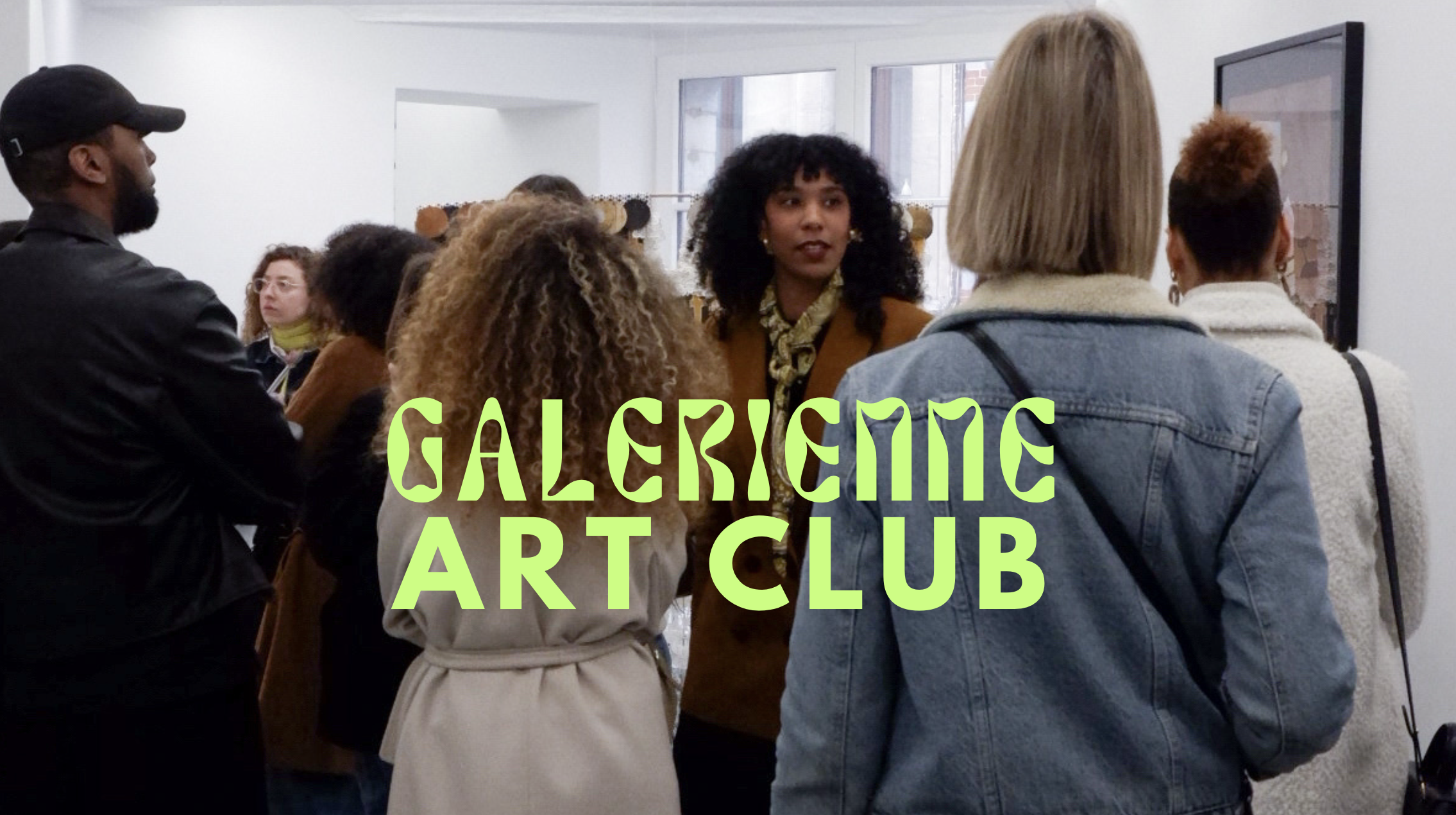
Galerienne Art Club Brussels, photo © Angie Mpeti
Galerienne Art Club begins with the observation that many young people are interested in contemporary art but don't necessarily feel that traditional art spaces are speaking to them. Do you see this as a problem of access, language, or something more structural within the contemporary art ecosystem?
It depends on which art spaces we are talking about. In principle, art centers, cultural centers, and museums work to engage younger audiences because cultural mediation is part of their remit. This is not the case for galleries and art fairs, which have a commercial purpose.
Most galleries are happy to provide visitors with information, and they are all free to enter. However, stepping into a gallery and asking questions can still feel intimidating to some visitors. Free admission does not necessarily mean accessibility. Certain psychological barriers therefore still need to be overcome, which is why I am particularly drawn to working within the gallery world.
As for language, it is often pompous and discourages people from reading. With my Club, I try to discuss concepts simply while keeping my usual tone.
After an Art Gallery Tour, some members told me that they had discovered they could simply walk into art galleries, and that I had made a world they did not really know feel accessible to them.
Your project proposes conversation as a form of cultural mediation — through guided visits, studio tours, and discussions. In an era where much of our engagement with art happens through screens and social media, what do you think is irreplaceable about gathering people together in front of artworks?
The emotions we experience in front of an artwork remain incomparable. You can truly appreciate the textures, nuances, colors, or materials chosen by the artist and observe the work from every angle. Social media is extremely useful for discovering artists and exhibition spaces. For me, however, it is essential to go out and encounter artworks in person.
Gathering together gives everyone an opportunity to share their impressions and compare different points of view. In fact, this is something I would like to encourage more during the visits, because it does not always happen spontaneously when the group is large. These conversations tend to unfold while we move from one gallery to another, or when we gather in a café afterwards to talk informally.
According to participants, it is a lovely way to meet new people and to gain the confidence and courage to step through the doors of galleries. They also find that visiting exhibitions as a group is more motivating and stimulating. In their view, all these aspects make this way of engaging with contemporary art much more intentional and embodied.
In a few months, I plan to organize a first open workshop with the artist Mimi Kunz, a visual artist and poet whose work in India ink centers on body language. It will be an opportunity to discover an artist’s work in an intimate and exclusive setting and, perhaps, to have a deeper conversation about our relationship to the body, movement, and one another. I also hope to offer this kind of encounter with the artists Papytsho Mafolo and Shishi San, whose practices I greatly admire and with whom I am currently in conversation. This type of encounter can only really take place in person.
“Contemporary art contains more questions than answers... it is a space for reflection.”
You describe Galerienne Art Club as intentionally "less codified" and resistant to the elitism often associated with contemporary art. Is the goal to make contemporary art more accessible, or to challenge the institutions themselves to become more porous?
My main objective is to build a community around contemporary art with an audience that I still consider far too absent from contemporary cultural institutions. To speak to this audience, I draw on familiar codes and create formats that make art more accessible to them. For example, when I analyze certain works, I place them in dialogue with more contemporary visual references.
Asking established institutions to change seems far too time-consuming, and it is not what motivates me. I believe that when you want to see change somewhere, it is better — whenever possible — to create your own solution.
Working as a gallery assistant while building an independent art club gives you a perspective from both inside and outside the commercial gallery system. How has navigating these two positions shaped your understanding of what galleries can — and perhaps cannot — offer audiences?
A gallery’s primary objective is to sell. Although mediation remains important, galleries do not have the capacity to develop this aspect intensively. However, I have found them very open to welcoming my project and the new audience I bring with it. I think this introduces a sense of dynamism and change. After all, gallerists are driven by passion, and they always enjoy sharing their knowledge and experience. This is how we have been fortunate enough to receive such a warm welcome from several galleries: Gallery 41, Galerie Fontana, Peter Gaugy, Rodolphe Janssen and, very soon, Sept and Buysse during a summer edition in Knokke.
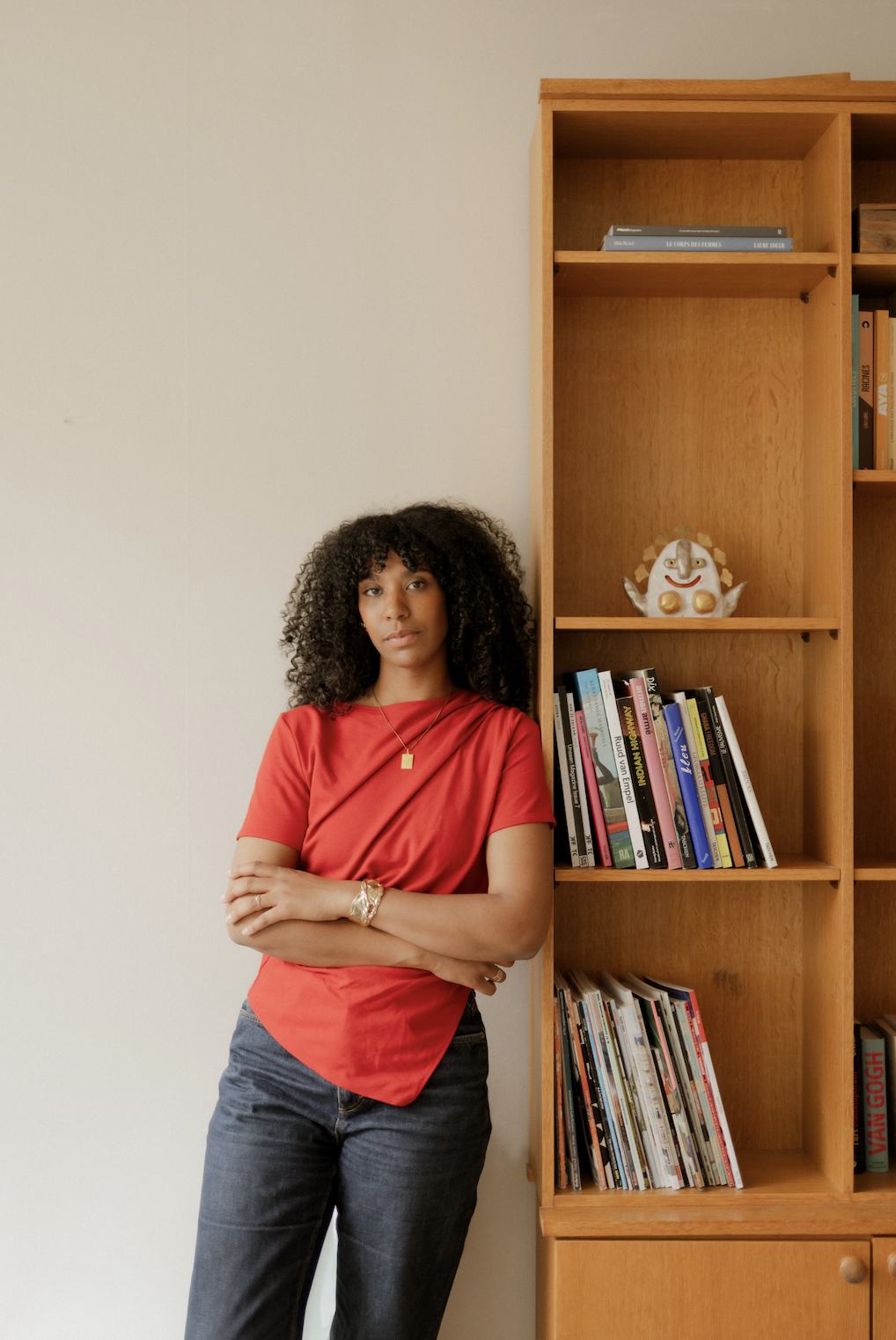
Portrait of Lucie Noliwé Sanou, photo © Inès Dubé, sculpture © Alec Palaz
Your curatorial approach emphasizes artists whose work engages with questions of identity, ecology, feminism, memory, and representation. These themes have become almost ubiquitous in contemporary art over the last decade. What distinguishes practices that genuinely produce new ways of thinking from those that simply reproduce a familiar critical vocabulary?
Practices rooted directly in an artist’s deeply felt experience make the difference. If artists begin with themselves — their identity and their personal journey — this can only be reflected in the works they create. The synthesis of personal identity and intensive research produces a singularity that can open up new ways of thinking about a given subject.
Another aspect that helps me distinguish a work is whether it succeeds in eliciting an emotion in me. If I feel disgust or irritation — or, conversely, wonder and empathy — we are on the right track! Artists who simply reproduce a vocabulary without a critical dimension impoverish their visual language and rarely manage to unsettle the way we think.
Brussels has developed a reputation as one of Europe's most dynamic contemporary art cities, yet many locals still experience its art scene as fragmented or intimidating. How do you think the city's cultural landscape differs when viewed through the eyes of an emerging audience rather than those already embedded in the art world?
A new audience will have the satisfaction of discovering a world they had thought was inaccessible. New possibilities open up, and that is exciting because everything is a source of discovery and wonder. That said, the Brussels scene is so vibrant that even someone well versed in contemporary art will continue to discover new artists and cultural spaces. There is so much on offer that it can sometimes feel overwhelming: you no longer know where to turn — but we can hardly complain! The club also helps people navigate all these possibilities by making a selection and simplifying their cultural lives.
Your background combines visual communication with cultural management. Do you think contemporary curators and cultural organizers increasingly need to think like community builders and storytellers, rather than simply interpreters of artworks?
I think it depends on the personality of the curator or organizer. Personally, I once wanted to develop “cultural boxes,” but the social dimension was missing from that project. I genuinely wanted to meet people and share moments centered on contemporary art.
Today, as we know, people buy a story more than a product. If we want to motivate people, I believe we need to change how we do things and become more creative. Simply exhibiting and interpreting artworks seems insufficient to me; we need to add social value. More than ever, we want to step away from our screens and create more tangible connections.
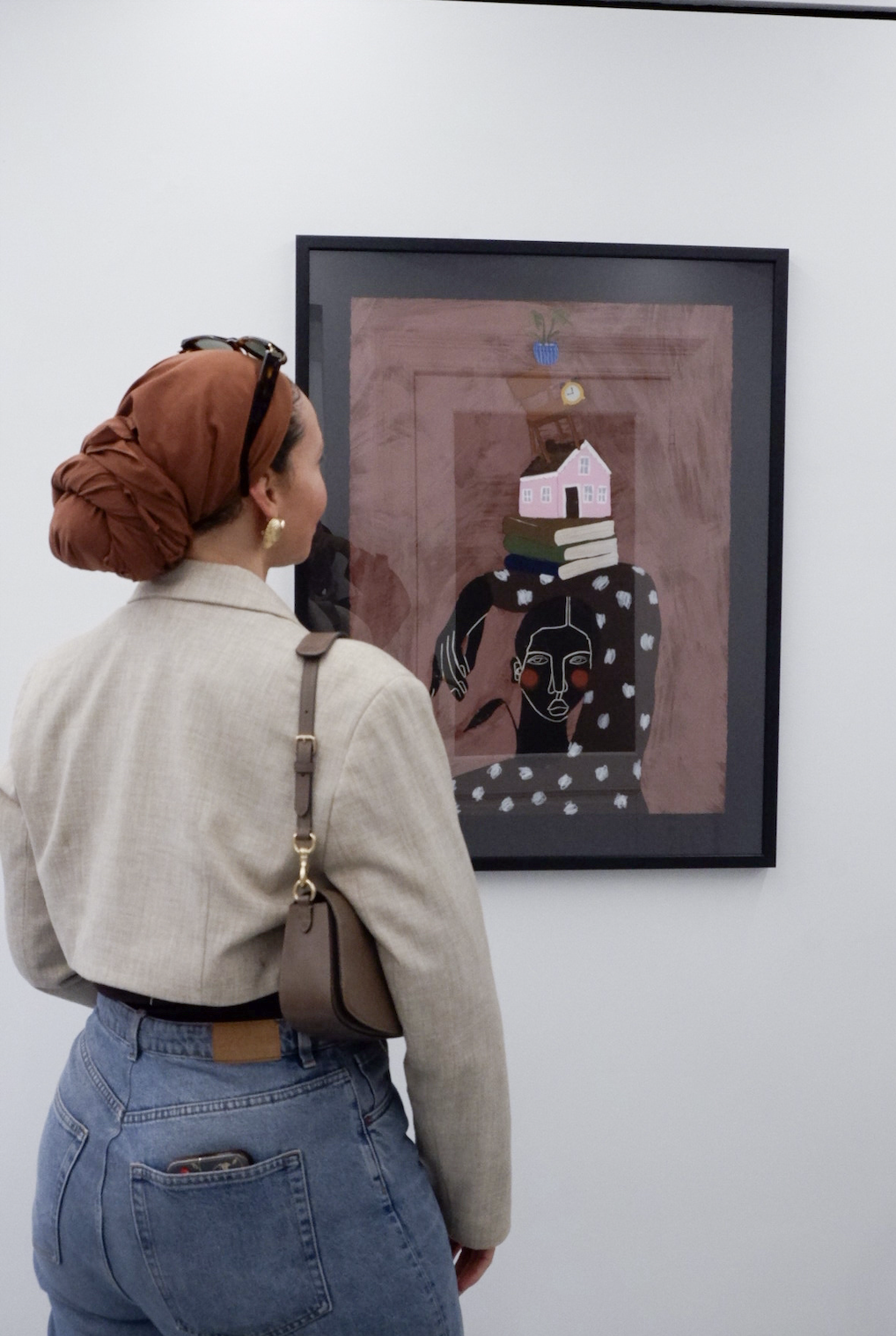
Galerienne Art Club, photo ©Angie Mpeti - illustration © Cristina Martinez
In your portfolio, you write that Galerienne Art Club is also about nurturing "the mind, curiosity and imagination" in a society preoccupied with performance and productivity. Do you see contemporary art as a form of resistance to the logic of optimization that increasingly shapes everyday life?
A great deal of effort and money is invested in the cult of the body. The number of gyms, yoga and Pilates studios, and running clubs is growing considerably, which is an excellent thing for our physical and mental health. But I began to wonder why more and more people were prepared to invest thousands of euros each year in their physical appearance, yet far less in nurturing their intellectual curiosity or cultural lives. And yet, when I leave an exhibition, I genuinely feel an improvement in my mental well-being. I think it is important to set aside a budget for culture.
Contemporary art exhibitions invite us to slow down and take the time to question the issues of our time. It is in this sense that contemporary art can be seen as resisting certain logics of optimization.
Through the club, I want to invite my audience to develop a more sensitive and personal way of looking at art, but also to reconnect with themselves, with others, and with the world around us. What interests me is offering, for a few hours, a space where people can slow down, reflect, and feel. Nevertheless, we remain within a capitalist system, and we clearly cannot claim that contemporary art escapes it.
Many younger cultural initiatives today are less interested in building institutions than in creating temporary communities around shared experiences. Do you imagine Galerienne Art Club evolving into a lasting institution, or do you think its value lies precisely in remaining fluid and responsive?
In the long term, I would like to structure the project professionally, although I still need to determine what form that will take. I think a membership model could be a good option for the future. And, if I allow myself to dream, I would one day love to create a hybrid space bringing together contemporary art, reflection, and events.
Things take time to define and put into place. I am at the beginning of the project and, for now, I want to enjoy myself, deepen my knowledge of art, and share meaningful moments with people who have the same objective. What is interesting about this project is that it can take many different forms. The coming months will therefore be devoted to experimenting with and refining it.
Finally, when someone attends one of your events for the first time, what transformation do you hope takes place — not simply in how they understand contemporary art, but in how they look at the world afterwards?
First of all, I hope that if they have any preconceptions about contemporary art, they will come to see it as more accessible and appealing. I hope they will realize that contemporary art contains more questions than answers and that, above all, it is a space for reflection. Beyond the interpretations we can give it, what we feel in front of an artwork is just as important.
Art can bring to light realities and perspectives experienced by others. Depending on the subjects explored by the artists, I therefore hope that visitors will develop a better understanding of certain lived experiences and become more open to the world.
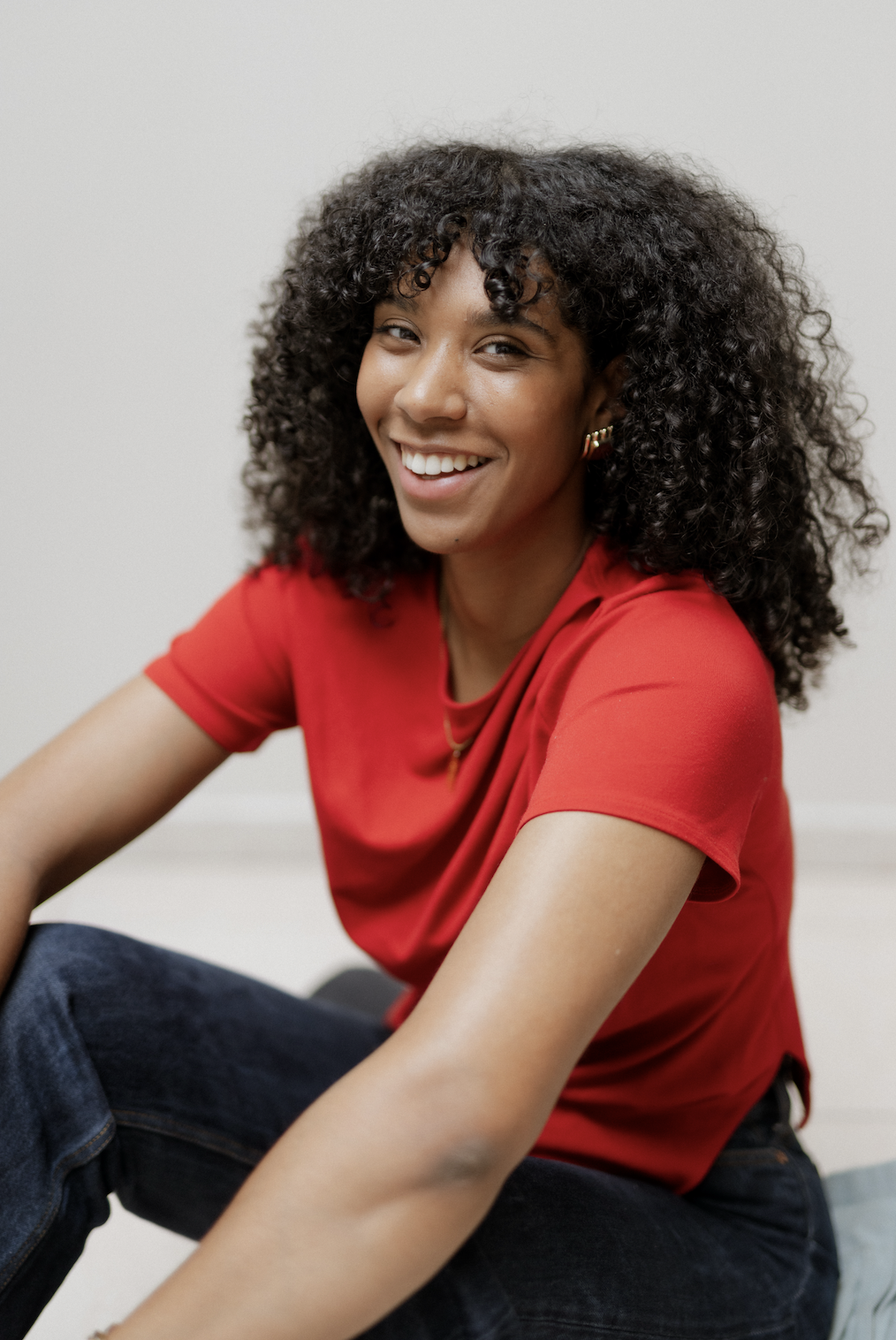
Portrait of Lucie Noliwé Sanou, photo © Inès Dubé
To follow Galerienne Art Club’s upcoming tours, workshops, and encounters, keep up with the Club on Instagram or join its WhatsApp community.
Article by Alexandra Vîstraș
Alexandra Vîstraș is a Brussels-based cultural observer, policy professional and lifelong theatre enthusiast. With a background spanning cultural management, European policy and communications, she is interested in the ways art, politics and collective imagination intersect, particularly through the lenses of gender, identity and social change.