
THE ACT OF EMERGING: INSIDE CALLUM HARRISON’S THEOPHANY
"The colour before it has found its name. The trace of something forming, shifting and unfolding."
That's how Callum Harrison describes Emergence, and the words could just as easily describe his entire practice.
Layers build slowly across the surface, each one only partially concealing what came before, so the photography seems to hold its own history within it; there is a patience to the way the work unfolds, nothing forced into clarity, nothing rushed toward resolution. What emerges instead is a kind of attention: to the way colour behaves before it settles, to the small, unrepeatable moments that occur only once, mid-process, and are gone the instant the eye tries to hold them.
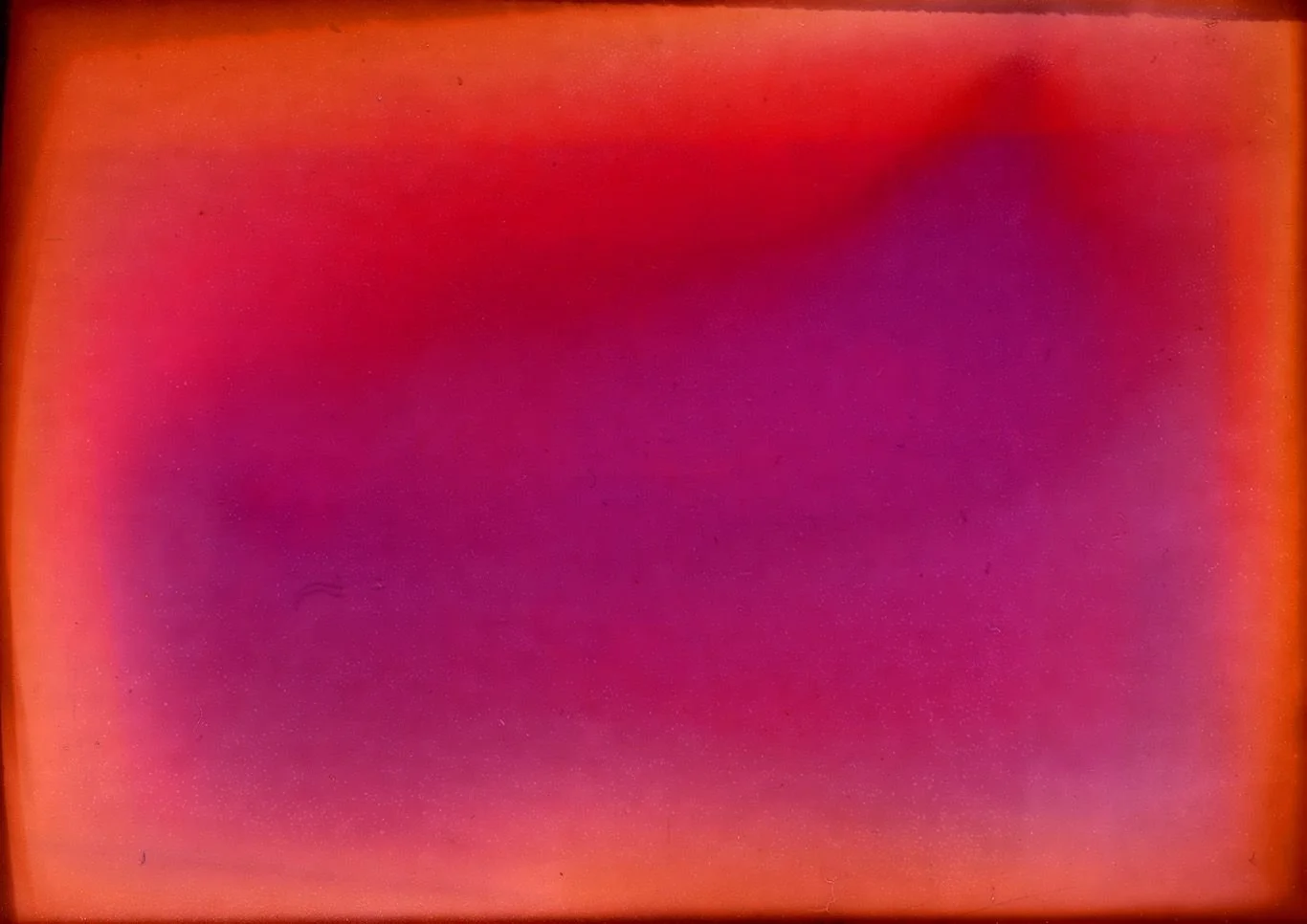
Emergence, Callum Harrison, 2025
Emergence belongs to a larger body of work titled Theophany, a word that refers to the manifestation of the divine. The series is bound up with Harrison's own journey as a recovering addict, and the sense of spiritual emptiness that period of his life left behind. Through Theophany, he searches for the sacred within the ordinary, seeking flickers of revelation in everyday experience.
The tension between formal precision and pure spontaneity runs through all of Harrison's work, not just Emergence. He lets control and unpredictability coexist within the same frame, producing compositions that ask to be looked at slowly. Under his eye, familiar environments and everyday objects shed their ordinariness, taking on a quiet, ambiguous, almost psychological weight. His practice moves fluidly between abstraction, portraiture, and still life, using photography to recast mundane objects, spaces, and passing moments in an unfamiliar light. Long exposures stretch time within the frame. Expired film stocks introduce their own unpredictable chemistry. Light-sensitive papers become surfaces for direct intervention rather than passive recording. The results are images defined by duration, tactility, and a willingness to let chance play its part, work that rewards slow looking in an age of the glance.
His influences are telling: the saturated colour fields of Mark Rothko, the deadpan observational clarity of Stephen Shore, and the conceptual, narrative sensibility of Duane Michals. Harrison threads these references together, blurring the line between painting and photography in the process. What emerges, fittingly, is an ongoing inquiry into how light, time, and material shape not just what we see but also what we remember and how we feel. We asked Harrison to trace the emergence of Emergence.
Can you walk me through your creative process for this piece? Where did the inspiration come from?
For this piece, I started out with blank sheets of photo-sensitive paper and began incrementally exposing the paper to light with the intention of ‘fogging’ the paper. With each exposure time I used an object to imprint its shape onto the material and used chemistry to bring out the resulting piece through a series of experiments. I moved the objects on and off the material intermittently over time in an attempt to capture the shifting shadows of their form.
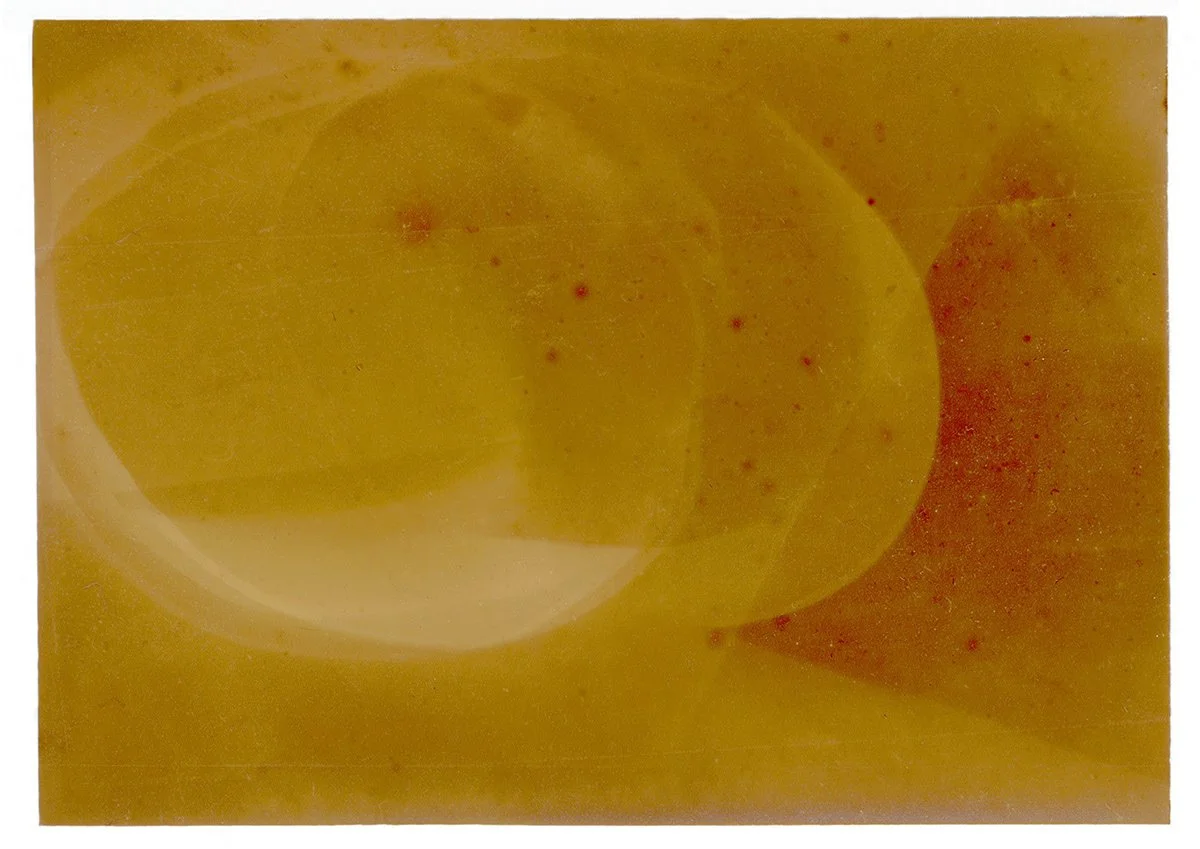
From series Theophany by Callum Harrison
How long did this piece take, and did it evolve from your original vision?
The creation of this piece spanned approximately one week. During this period, I experimented with a variety of materials and exposure times to achieve the desired effect. The process was highly exploratory, focusing on how different shapes and colours interacted with one another on the photo-sensitive paper. Rather than working towards a specific, predetermined aesthetic, my initial vision was centred on investigating the relationship between shape and colour. The resulting work is an examination of the unexpected outcomes that emerged from this experimental approach, highlighting the by-products of the interplay between these elements.
What does abstract art mean to you?
Abstract art holds great importance for me as it is inherently subjective, offering a platform to challenge and interrogate a multitude of ideas without relying on literal representation. It possesses a political dimension, disrupting conventional perspectives and prompting viewers to reconsider how they think and engage with the world. Through abstraction, art becomes a means to provoke thought and encourage a deeper level of interaction with its surroundings.
“I am not an image of emergence; I am the act of emerging.”
What emotion did you most want the viewer to feel when standing in front of this piece?
When considering the emotional impact of this piece, my primary intention was for the viewer to experience any emotion at all upon encountering the work. The inherently subjective nature of abstract art means that, once the piece is released into the world, my influence over its interpretation is relinquished. It is no longer about my agency, but about the personal responses that each viewer brings to the artwork.
How do colours influence your work?
The role of colour within my practice is shaped by both the specific context and the conceptual framework I am investigating. Depending on these factors, I find value in working with both black and white, as well as with colour. Black and white imagery holds a particular significance for me. It evokes associations with history and memory and is especially effective for conveying sombre or melancholic emotions. The absence of colour can intensify the sense of nostalgia and gravity within a piece, encouraging a reflective or introspective response.
In contrast, the use of colour opens an entirely different set of possibilities. Colour in my work often gestures towards the abstract and the future, inviting viewers to imagine beyond the present moment. Furthermore, as we experience the world in colour, it provides a means of documenting everyday life in a way that feels immediate and familiar, capturing the vibrancy and diversity of lived experience.
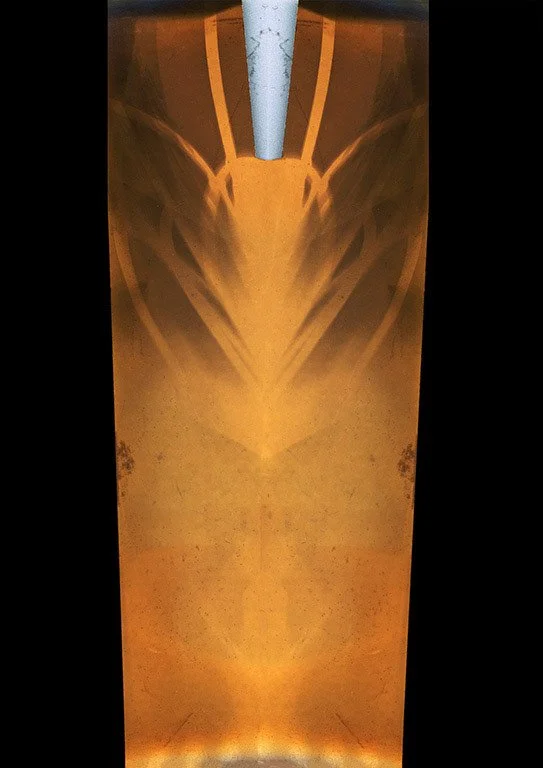
From series Theophany by Callum Harrison
If Emergence were a completely different colour, would it still be the same artwork?
I do not believe so. The colour of the piece is one of its principal structures; to change it would inevitably provoke a different response from the viewer. The interplay between colour and form is fundamental to the experience of Emergence, shaping both its aesthetic qualities and the emotions it elicits. As such, altering the colour would transform not only the visual impact of the work but also its meaning and interpretation.
Do you believe colours carry universal emotions, or is that too simplistic?
It is, in my view, somewhat simplistic to suggest that colours possess universal emotional meanings. For example, the colour red might evoke feelings of anger in one individual, while for another, it may represent passion. Each colour is imbued with a multitude of symbolic associations and meanings that vary across cultures and personal experiences. People relate to colours in ways that are deeply intertwined with their own identities, which is precisely why favourite colours differ from person to person.
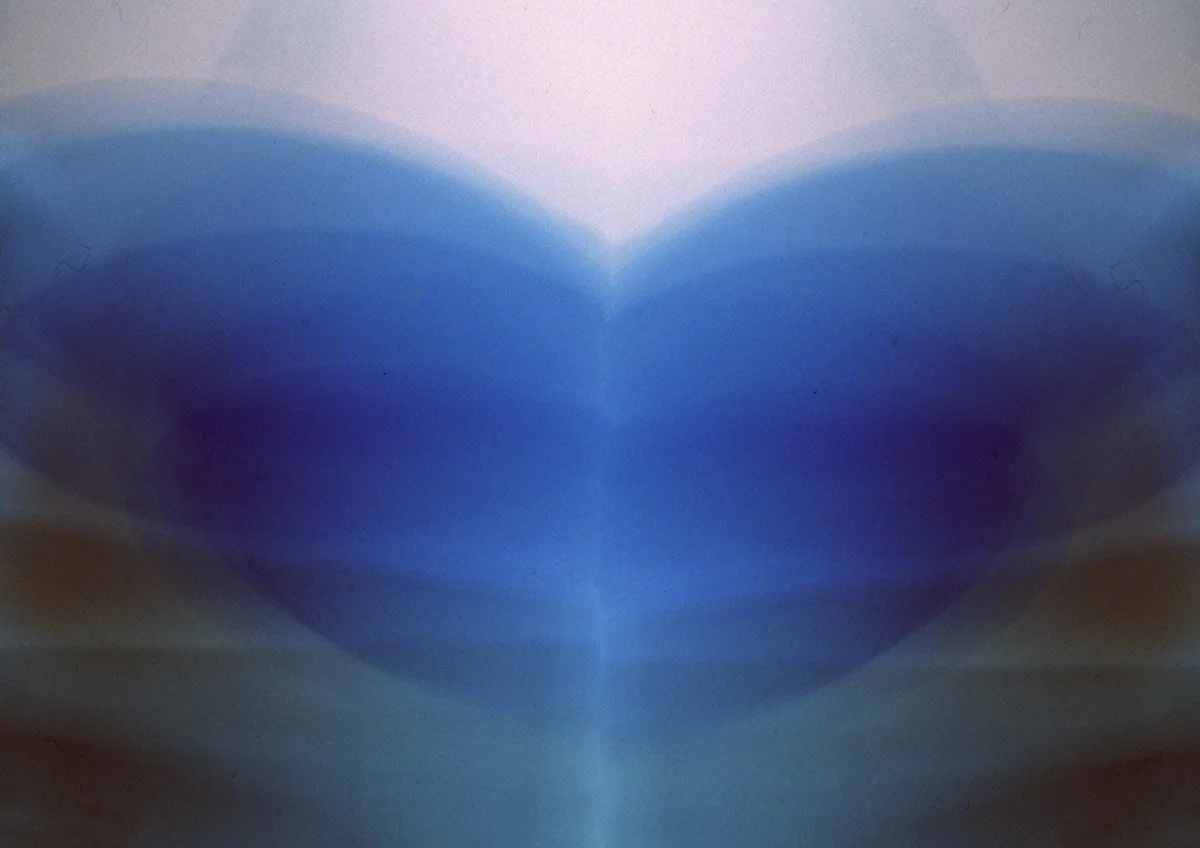
From series Theophany by Callum Harrison
When I first saw the piece, one of the things that caught my attention was the title Emergence. What was your thought process when naming it?
The artwork belongs to a series entitled ‘Theophany’, which refers to the manifestation of a god. This theme is deeply intertwined with my journey as a recovering addict. During a period of substance abuse, there was a profound sense of spiritual emptiness. Through this series, I am engaged in a search for the spiritual within everyday life, seeking moments of revelation and meaning in ordinary experiences.
The title ‘Emergence’ was chosen to capture the essence of renewal and transformation. It symbolises the arrival of a new day — one that is bright, vibrant, and welcoming. This sense of emergence is both literal and metaphorical, representing not only a fresh start but also my ongoing recovery and rediscovery of spirituality. The title encapsulates the idea of something new coming into being, reflecting the optimism and hope central to both the piece and its broader series.
If Emergence could speak, what would it say?
I am the colour before it has found its name. I am the trace of something forming, shifting and unfolding. I carry the marks of time, pressure, accident and intention. I am not an image of emergence; I am the act of emerging.
Talking to Harrison, it's clear that Emergence isn't really about arriving at a fixed destination; it's about staying in the act of becoming. That's the quiet thread running through Theophany, and through his practice as a whole: an artist willing to hand control over to light, time, and chance, trusting that meaning will surface on its own. As he puts it, the piece isn't an image of emergence. It is the act of emerging, and so, it seems, is he.
Article by Ana Gabriela Batista
Ana Gabriela Batista is a translator, writer, and editor. Trained in literature and translation studies in Brazil and Italy, she moves between translating and writing with the same attentiveness: to the shifting contours of meaning across languages, and to the rhythm, structure, and weight each word is asked to carry.