
“I refuse to be influenced by any technical constraint.”
Freedom. It is a word with a heavy, multi-faceted meaning. For some, it is an abstract idea, for others, a distant goal. Some believe they have reached it, while others feel the pursuit itself is meaningless. There are those who live their entire lives without ever giving it a second thought. But for Isabelle Rivière, freedom is a necessity.
While art has been her constant companion throughout her life, it was in 2016, that she made the decision to set herself free. Today, Isabelle is an award-winning artist whose work ranges from deeply introspective sculptures to immersive abstract paintings. In this interview, we talk to Rivière about her path to discover new combinations of color and themes.
Courtesy of Isabelle Rivière
Can you recall your very first attempts at creating art? Looking back, what memories do you have of those moments where you began to experiment with materials and express yourself?
When I was 7 I did a pottery workshop at school, and it was a revelation and I was sure that one day I would become an artist. Since then, I have always had a boundless imaginative and creative mindset.
After nearly thirty years in the fields of law and finance, you shifted your focus to art in 2016. Was that a difficult transition for you to make, or did it feel like a relief?
Transition was the result of long internal process it became an urgency and obviousness and was a relief to be able to materialize my creativity.
There is a unique freedom in being self-taught. Did you ever feel the pull to follow a traditional path through an art institution, or did you find that discovering your own techniques was essential to keeping your vision authentic?
It was essential for me to keep this creative purity away from dogma and conformity. I refuse to be influenced by any technical constraint that could distort the depth of my creative impulse.
“My canvases are made in one shot, flat, capturing an instant and raw emotion that I never retouch… it is not an introspection but a surge of life”
The 2023 Medal of Honor from EDMC-Europe is a significant validation from the art world. Having spent years in a very different career before this, does a moment of formal recognition like this feel like a "welcome home" to your true self? Can you share a bit about that moment?
Having had a flourishing professional career, I wasn’t used to receiving recognition for my achievements. I was extremely surprised and honored to be recognized as I had shown very little of my work especially since you are self-taught.
Could you describe the experience of presenting your work to the public for the first time? Where did this debut take place, and how did the audience's reaction impact you?
The first time I presented my big canvas was in a Gallery in Brussels. As I was feeling free and not preoccupied by the effect of my paintings I was quite serene. However, the extremely gratifying feedback I received confirmed that I was on the right track.
In your own words: "Emotions express themselves in colour. Primary, secondary, intense. " I was wondering, how do you categorize your palette? Which colors do you lean on as your "primary/secondary", and which ones do you reserve for those "intense" parts?
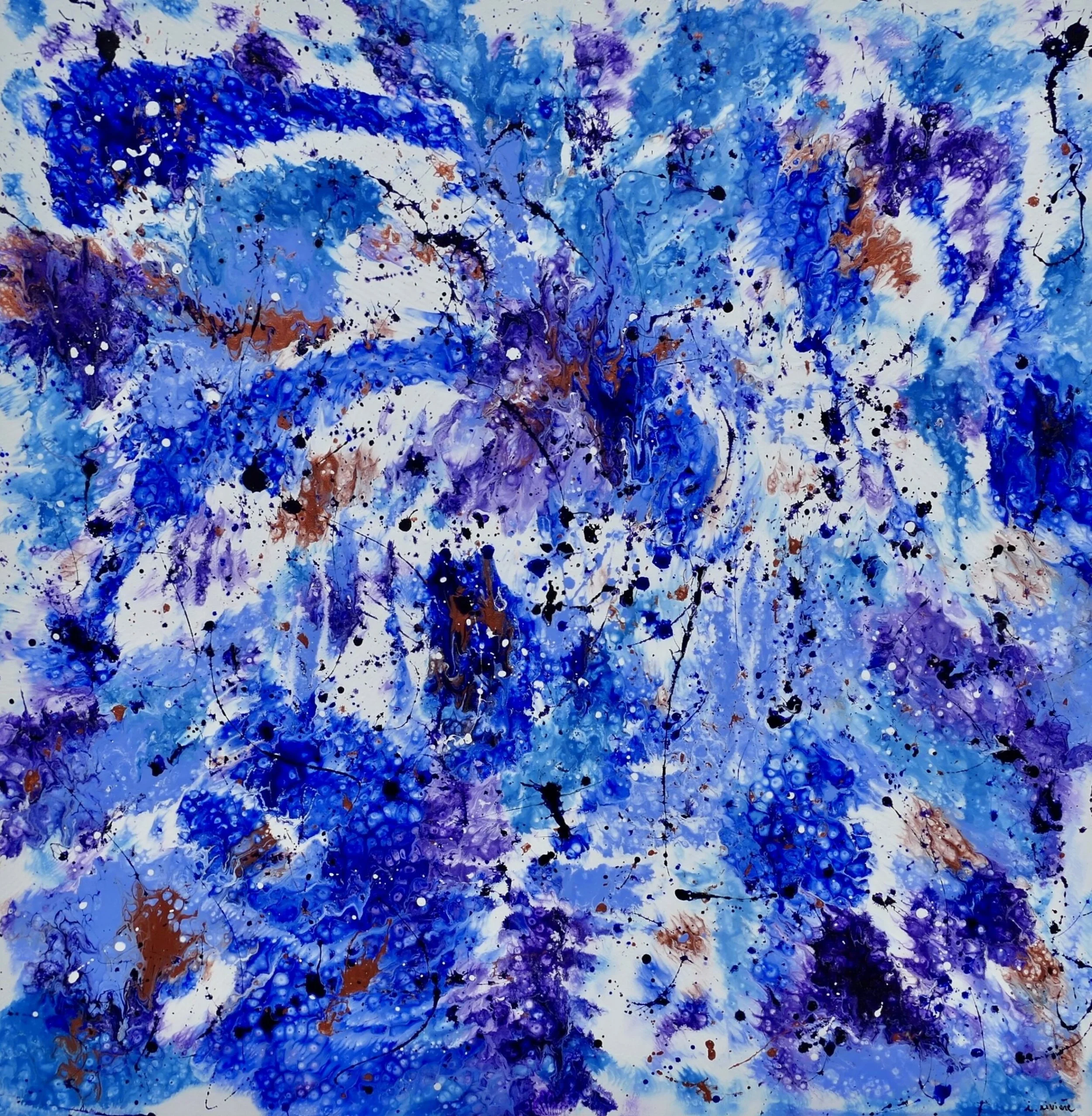
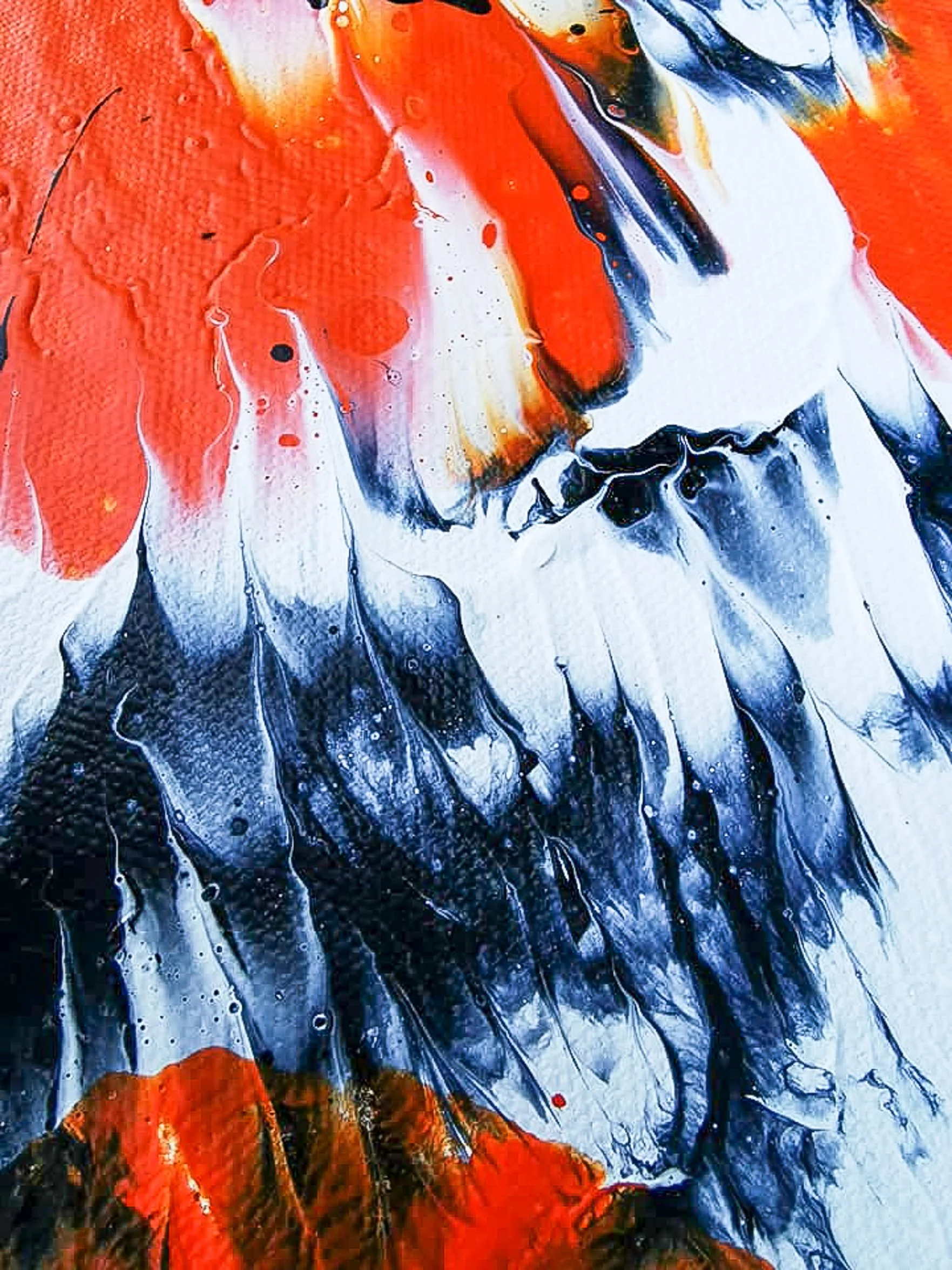
Each canva is a clever chromotherapy blend of primary and secondary colors, resulting in a very powerful intensity. A blue will be associated with a purple, blackcurrant color and a red will be associated with orange and red. Each canva is enhanced with a golden or coppery mineral touch.
Courtesy of Isabelle Rivière
Sculpture and painting are your main mediums. Do you have a "favourite child" amongst these two? Furthermore, why does your clay work is more figurative while the canvas is a place for abstraction?
Both medium have very different energies, the sculpture is a testament to my personal experience, a gestation spanning several months, and each birth is a rebirth that anchors my experience as a woman in the physical world. As this is a testimony, I represent it in a more figurative way. For the canvas there are extremely high energies of impulses connected to the source of life. My canvases are made in one shot, flat, capturing an instant and raw emotion that I never retouch. Unlike sculpture, it is not an introspection but a surge of life.
Following that thought, what does the concept of abstraction mean to you?
Abstraction is the freedom offered to the viewer to immerse themselves in the canvas, allowing them to see what their experiences and mind suggest, and thus to fully and completely appropriate the work. I work with my paint as a living material, suggesting that it take paths according to the energy of the moment.
In your description of the work Harmony, you included Nietzsche’s quote: "Harmony is not just the absence of conflict, it is the symphony of liberation coming together to create a greater beauty." When you were creating this piece, what were the "conflicts" or different forces you had to bring together to reach that final state of liberation? Was this quote the main inspiration behind this piece?
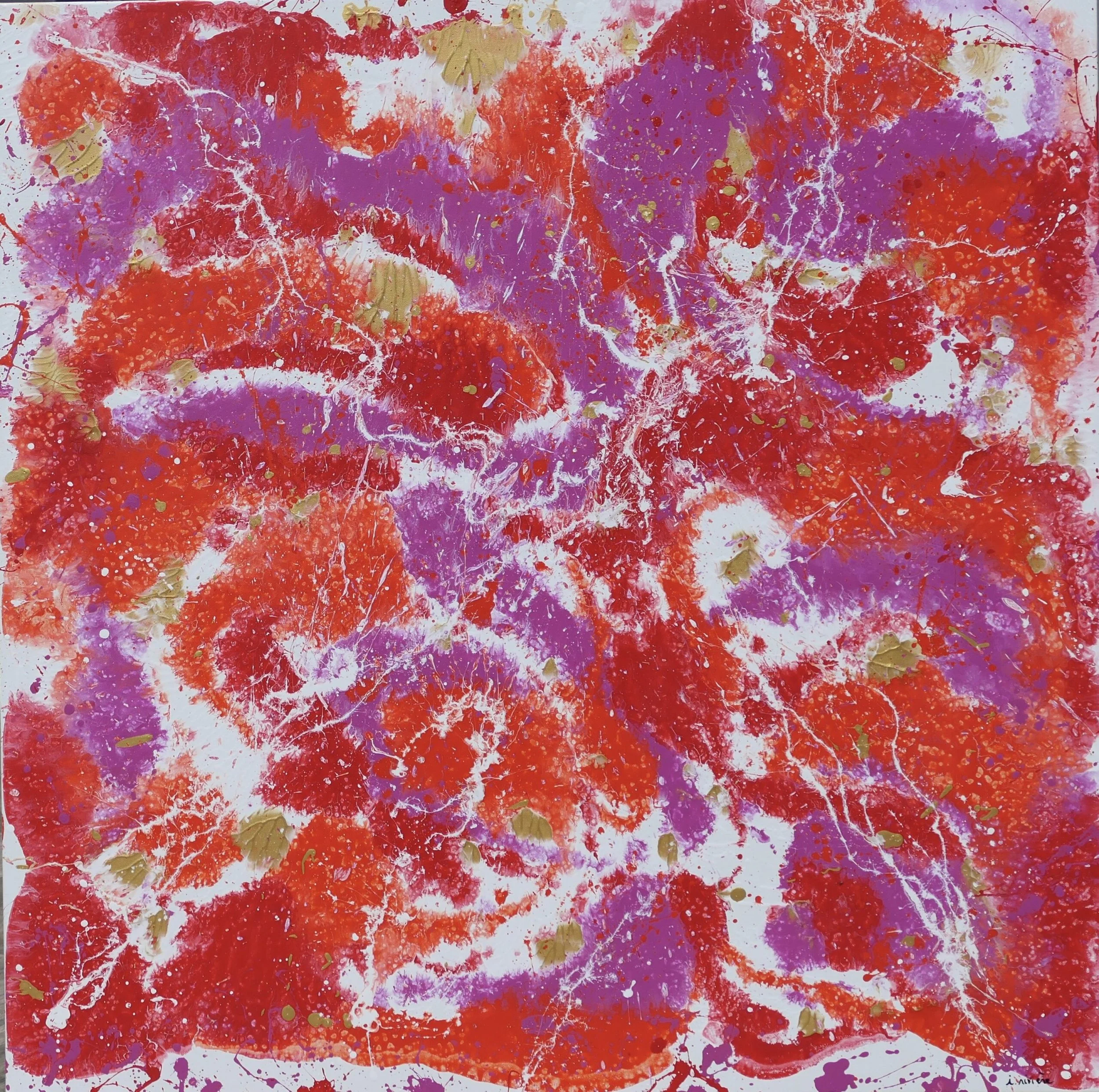
In an incandescent burst, "HARMONY" rises like a chromatic incantation. Vivid red pulses like an awakening heart, traversed by purple veins and bursts of orange that dance in spirals, like sacred flames. Lilac, a soft whisper of the soul, soothes this effervescence, while gold seeps in like divine light, revealing secrets buried beneath layers of matter.
White, omnipresent yet never dominant, acts as a fertile silence: it welcomes, it breathes, it allows the colors to express themselves in their full intensity. Each touch seems guided by an intuitive, almost shamanic hand, which seeks not to represent, but to reveal the subtle energy of emotions.
"HARMONY" is not a composition: it is a vibration. A pictorial wave that passes through the gaze and resonates in the depths of the body.
Yes, it all starts with a quote and an emotion to be released through painting.
Courtesy of Isabelle Rivière
Beyond the philosophical ideas of thinkers like Nietzsche or Plato, are there specific artists or movements that have been more direct influences on your style? And where does your fascination with philosophy come from?
From my adolescence, I was fascinated by and confronted with the complexity of human beings. I was passionate about characterology and sought guidance to illuminate the paths I wished to follow. Great philosophers, thinkers, and virtuous individuals helped me define and refine the values and meaning I wanted to give to my life.
As a final question: When a viewer looks at your work at this exhibition, what is the feeling or the main thought you want them to take away from the experience?
It is extremely important to me to create a strong emotion, whether positive or negative. I want them to feel this life force and spiritual dimension that connects the origins of life to the universe. I want to create soul connections and bring freedom, light, and hope.
Courtesy of Isabelle Rivière
In the end, Isabelle’s journey is a proof that the pursuit of freedom is never meaningless. It took thirty years to return to the revelation she first felt in a primary school pottery workshop, but the result is an artistic voice that is remarkably pure. Her work doesn't just represent emotion - it vibrates with it. As she continues uncovering new horizons, she invites us along the way. She invites us to feel.
See more of Isabelle’s work on Instagram.
Article by Vasya Kavka
Based in Ukraine, Vasya Kavka is a writer working at the intersection of contemporary art and digital culture. Through his platform @ambient.delusion, he researches emerging and underground artists, publishing interviews and editorial features that move beyond aesthetics to examine context, creative process and cultural relevance. His work is driven by curiosity and a commitment to thoughtful, accessible storytelling that situates artistic practices within the broader currents shaping contemporary culture.