“ASK THE BRUSHES, HANDS AND PAINT”: A CONVERSATION ON CONNECTION WITH NEW MATERIALISM ARTIST HENRIE VOGEL
Henrie Vogel is an artist based in the Netherlands who, throughout his life, has developed an earnest passion for visual arts, and more precisely; the New Materialism movement. In contemporary art, this movement that is mostly influenced by late 20th and early 21st philosophy and the posthumanism theory, refers to a thought-process in which we reject the notion that humans are the main characters of our world. Instead, the movement embraces interconnectedness between humans and matter that surrounds us everywhere we go: materials, objects, the elements, fauna and flora. When connected with people, these non-human entities play an important role in shaping reality, and this is exactly what is portrayed in Henrie’s art.
In this exclusive interview, I have been able to delve into Henrie Vogel’s innermost thoughts on what it means to put connection between oneself and otherness at the forefront of every canvas.
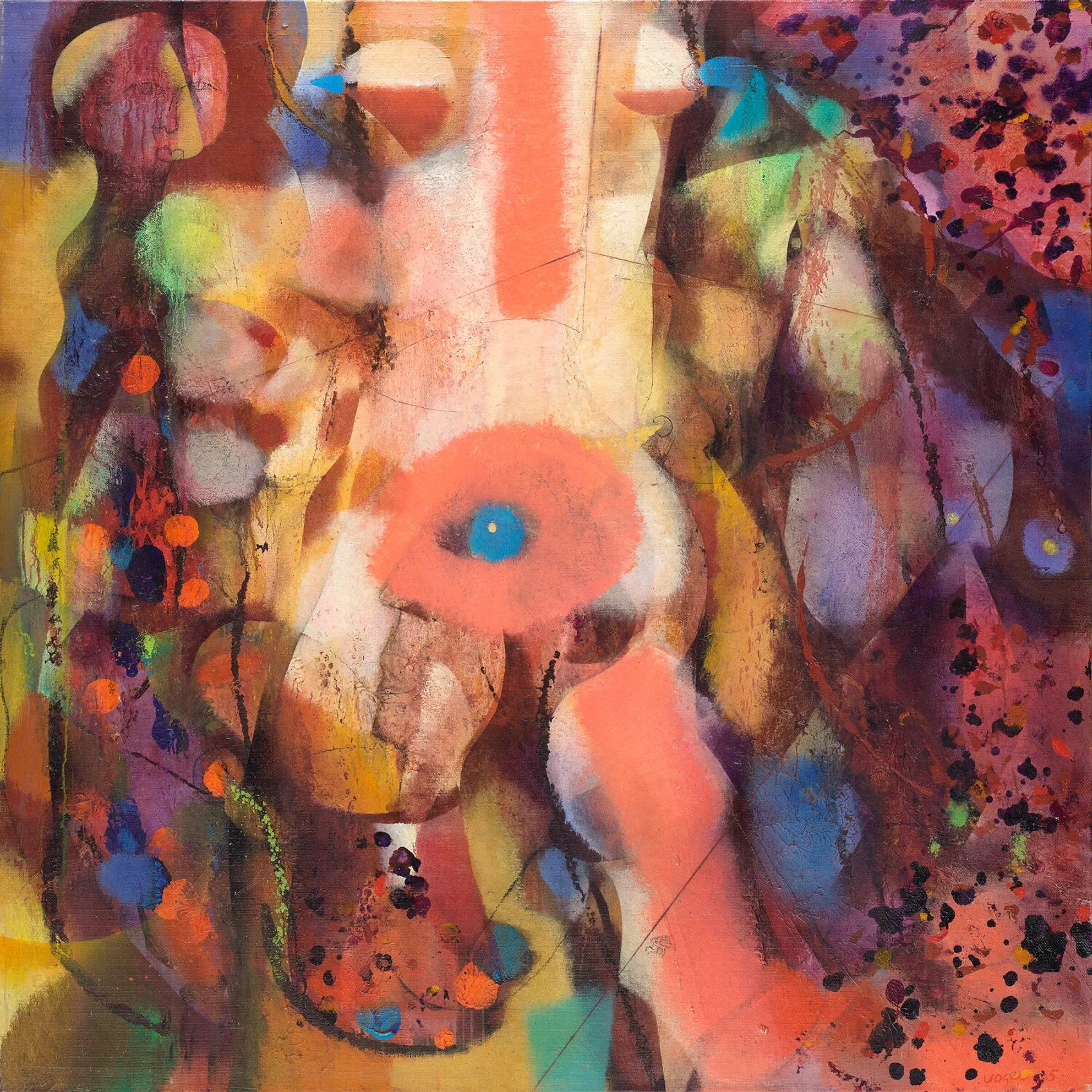
Be careful, it’s my heart, Henrie Vogel, 2005
How would you describe the art that you create?
My work identifies with the New Materialism movement and focuses around the concept of connection. I see this connection being established in a tactile, intuitive dialogue with the tools and the material. I usually work with acrylics, oils, inks and pigments on canvas.
What are the main messages that your artwork communicates?
As a maker, I am part of the process, I form my worldview as I go along. My goal is to experience connection, in the making itself and then with others, when the image is there.
How would you describe the emotions that your art aims the observer to feel? That is up to the observer.
Which part of your creative process do you enjoy the most?
The creative process and the euphoria when something arises that changes my way of thinking.
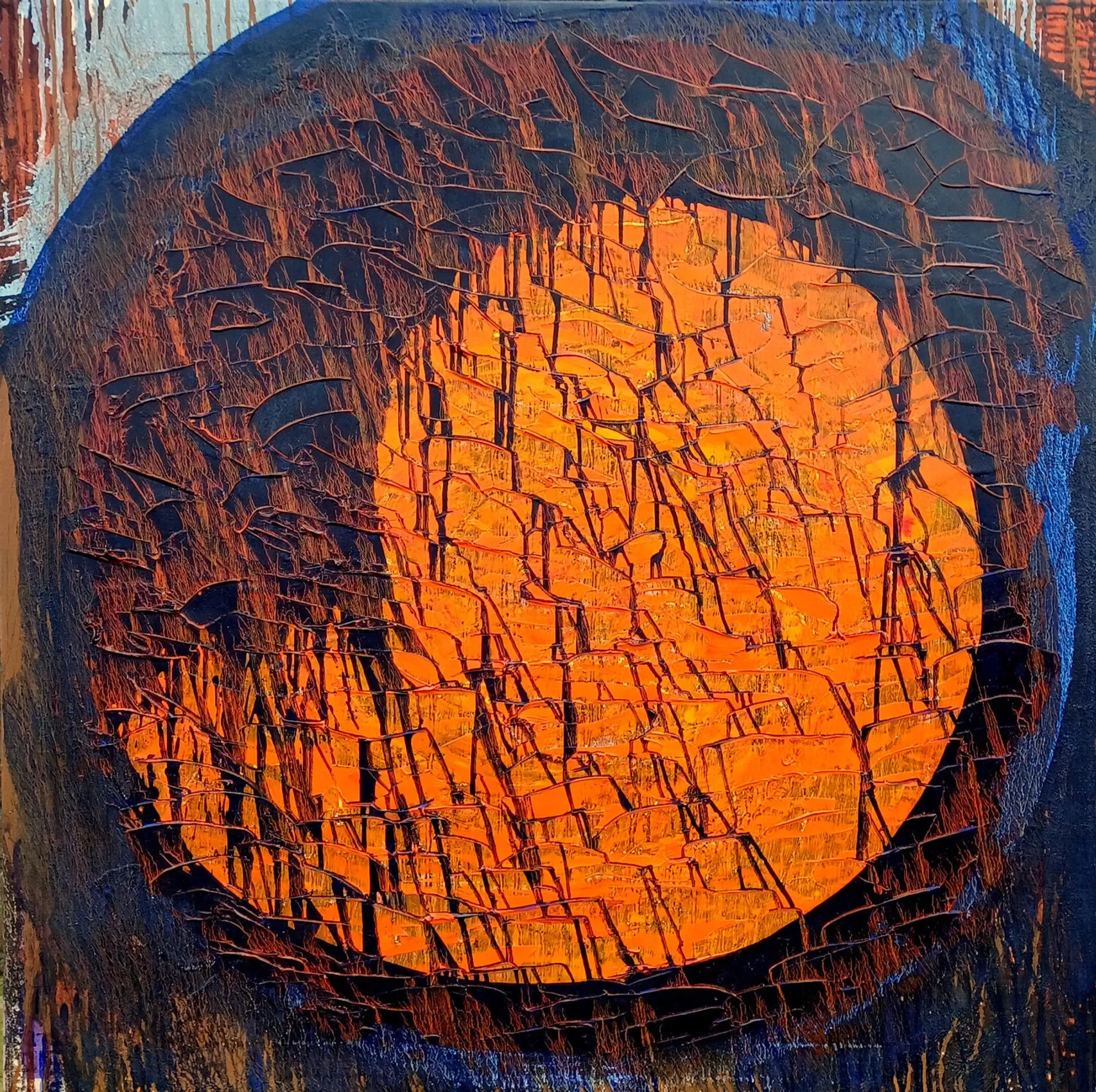
Wirbel, Henrie Vogel, 2023
Do you remember a specific moment when you experienced one of these feelings of “euphoria” when something around you suddenly changed your “way of thinking” and brought you to create one of your works?
The painting (Wirbel) was made during the corona time. I became the host of the coronavirus. I got, as it is called, mild symptoms. The sad thing for me was that a meeting that I was very much looking forward to, could not take place. I was put on hold.
What to do while waiting? Then we oscillate between acceptance and resistance, hope and disillusionment. While waiting it seems as if nothing changes, no space or opening is created. No award ceremony can take place. Do you feel the urge while waiting? It is a wintertime, the old way no longer works and the new way is unknown. Everything on this earth is longing for change, but the expected transformation does not come. And, who still believes it will come? What we are experiencing is an ever-increasing muddle. I think a nicer word for this is the German word Wirbel (English: Whirl). What does the process of painting Wirbel do?
Amazing how quickly I recovered, in a few hours’ time from really sick to “doable”. I was already walking in the forest after a day, stepping on the dead leaves of 2022. They will soon form the leaves of the future. I noticed that I had grown, I noticed that I was at least 10 cm higher than before. Yes, really. The experience I had as a child with cans tied under my shoes… "Something has sunk up!", flashed through me. I couldn't help feeling my stomach and heart and… Yes, they were higher. What have I barked at with the help of corona? You raise me up!
Wirbel, that's what I call the painting attached in the photo. I had just finished it in that corona time. The sculpture started months before, as a left-handed and a right-handed spiral on top of each other. It became a hassle. I couldn't figure it out because I wasn't in it yet. Then you have to wait. And then something just drops up.
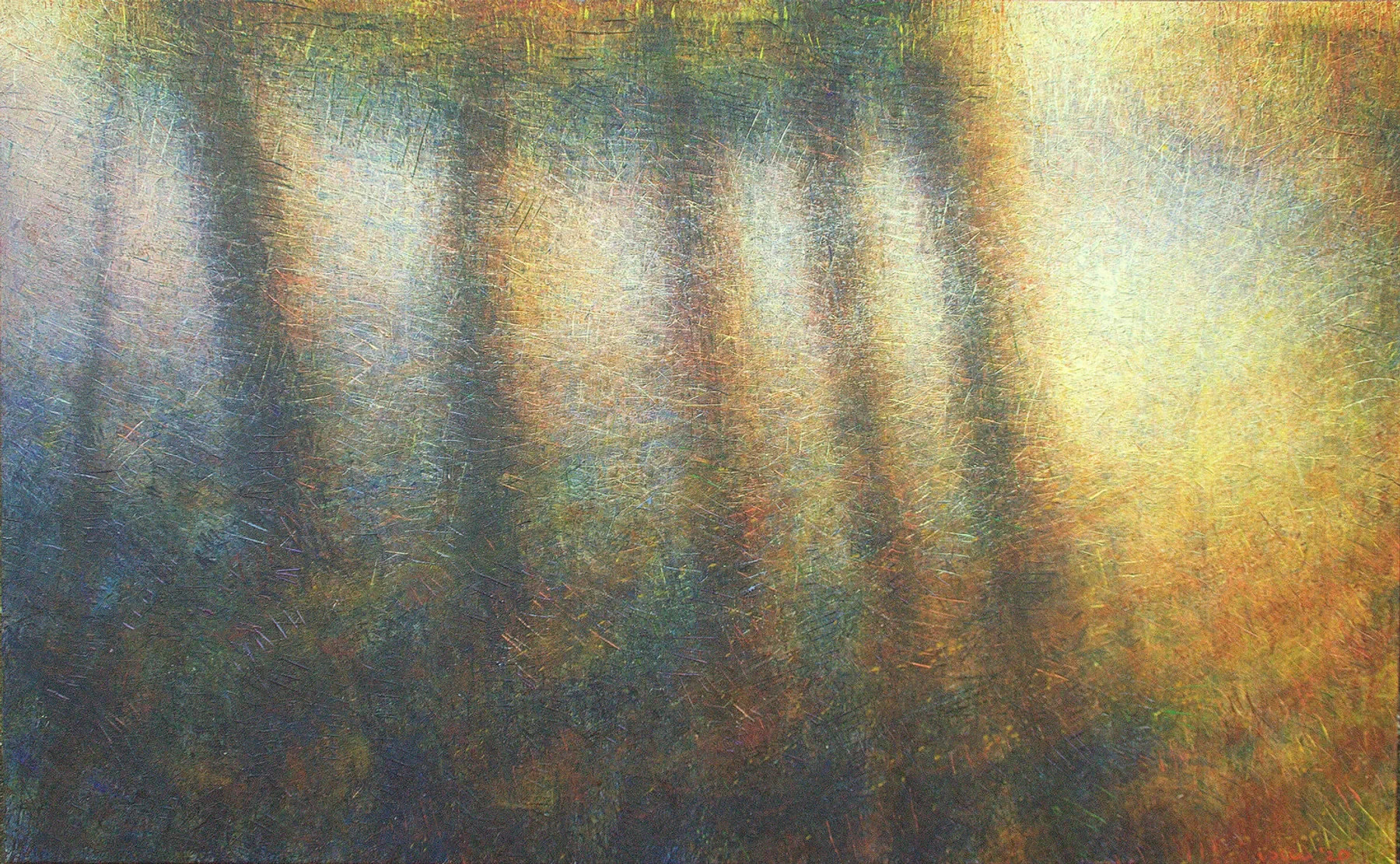
Reflection in a canal, Henrie Vogel, 2020
How did you decide to base your works on the medium of the New Materialism Movement?
Everything is connected, matter is not dead matter, but in the relationships an active creative energy arises. It offers a new perspective on our relationship with things.
What is the first creative moment that you remember? Does it have a connection to the art that you create now?
As a child I found it a discovery that I could conjure up nuances in color with different crayons. The action, the colour and the smell are still the basis of a well-completed imaging process.
Do you have any creative rituals that you always follow when creating? If so, what are they and what do they give to your creative process?
I start by “depicting” myself. I’ll start with nothing. I humbly ask the brushes, hands and paint: just say it. It then starts automatically. From the first act follows the next, by really listening the way presents itself. I look for the order, I’m the expert in that. But no master.
What is your greatest ambition with the work that you do?
Finding something I wasn’t looking for. I am looking for something but I always find something else! Being open to the other, that’s the art.
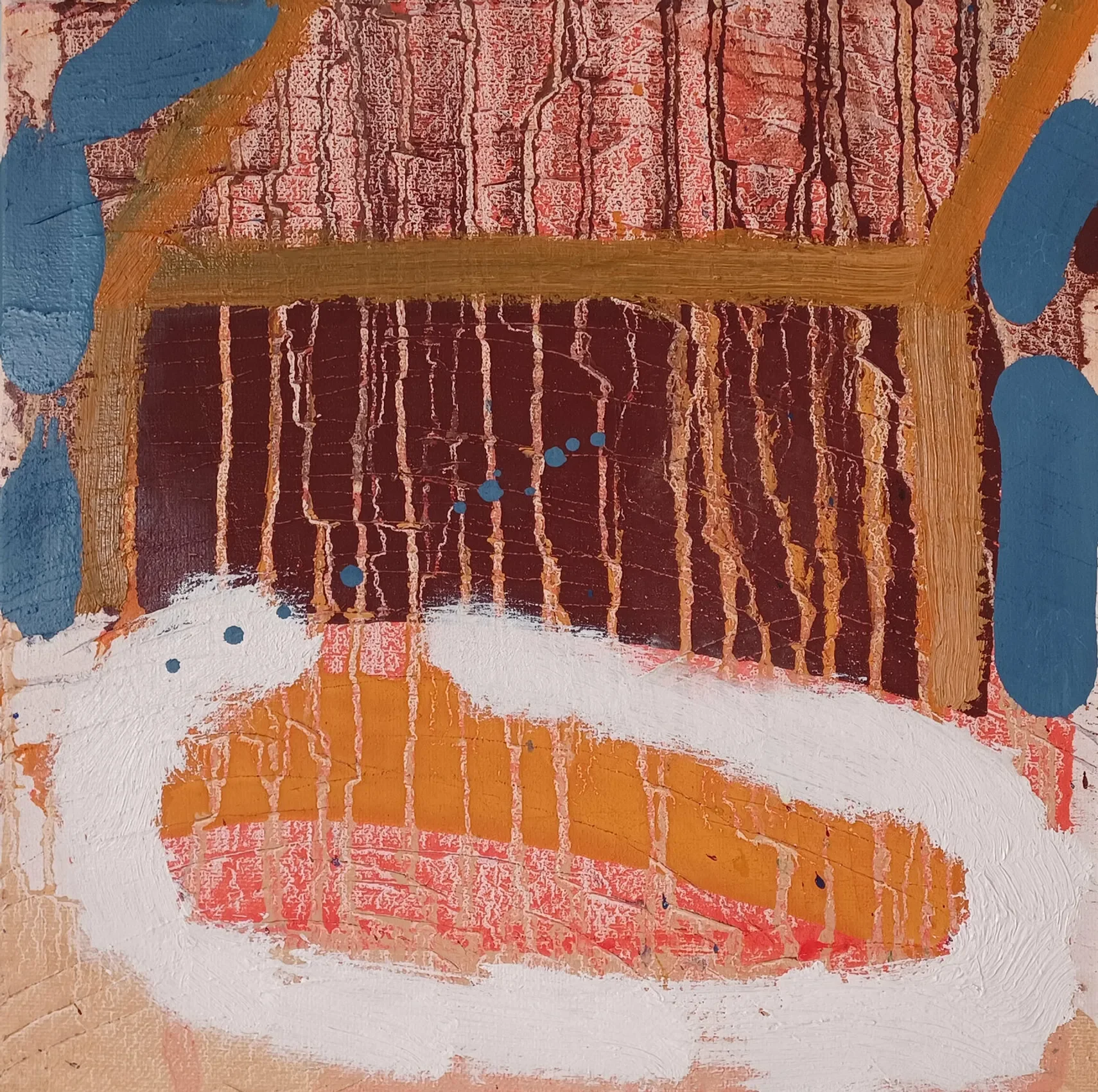
Suspicion of a barn, Henrie Vogel, 2021
How do you feel about exhibiting your work in group exhibitions / what value is it for you to see your work in relation to other people’s work?
I think it is important to share that wonder and the power of the visual process with like minded people. Feeling part of the great legion of connectors: water, people, plants, animals, earth.
I’ve noticed that many of your paintings have a special connection to specific natural elements; water and light for example. Could you tell me a little more about that? Are these things that inspire you? And if so, why?
It starts with our eye. When we open our eyes, we bring in and experience the mystery of the otherness of the other (it can be a flower, an animal, a human).
I experience this, for example, when I walk. Then, I put my ear to the ground. The grass, the air and the water. Then I say, "goodbye little flower". And very softly I hear: "goodbye little Henrie". I love small flowers. Small flowers are so quiet and without a doubt. They grow towards the light and grow into the dark, with small brave roots. The earth is familiar to us, but also heaven because you cannot reach higher.
I also like ditches. They have a silent bottom. No fancy talk, no grand gestures, but with an astonishing directness they separate air, water and land. As if the creator himself is present. To be jealous of when you were a small person with two legs clumsily finding your way.
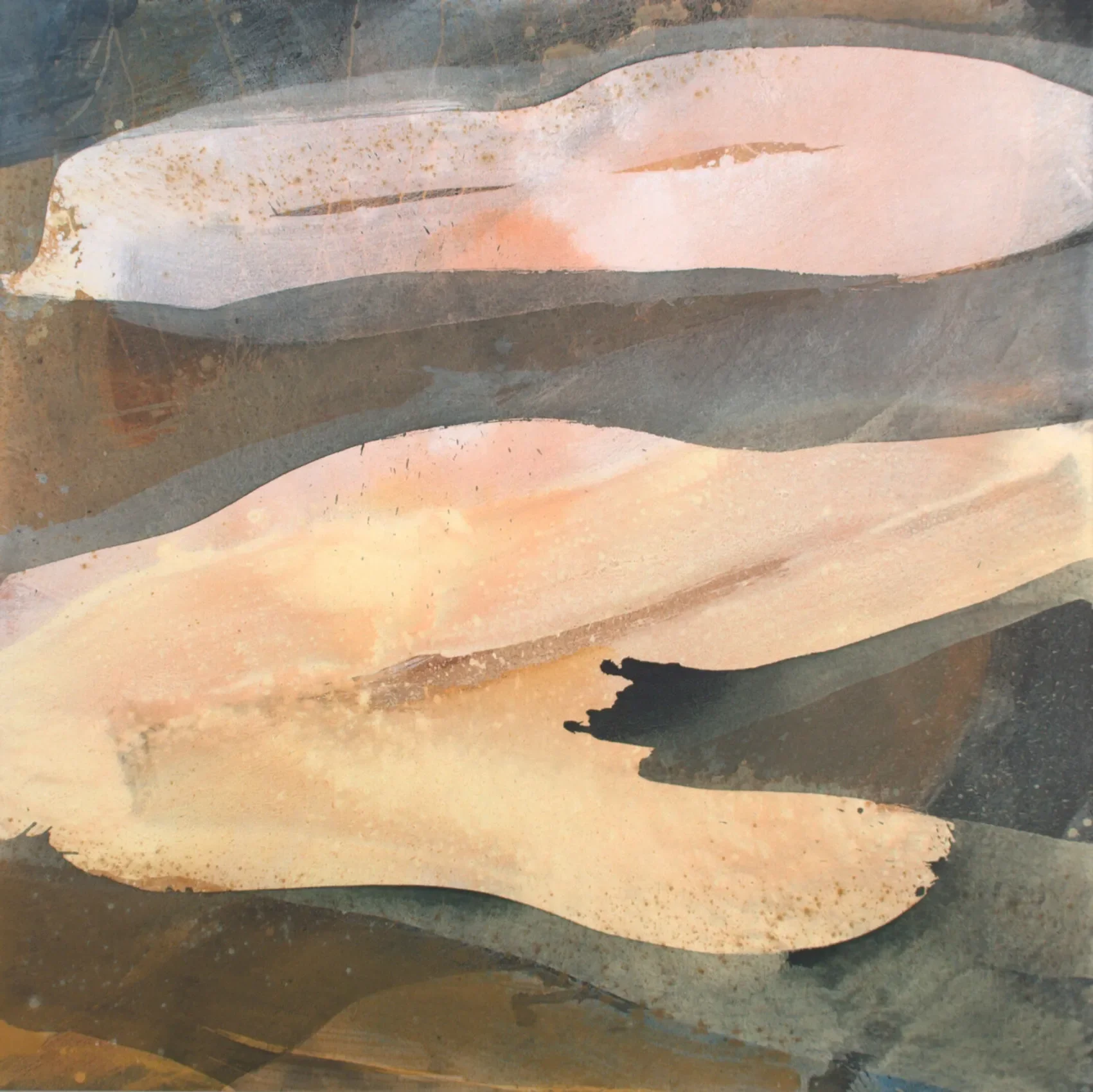
Into the waves, Henrie Vogel, 2015
What is abstract art for you and why did you choose to create this type of art?
It is not abstract for me. The story is there: I don’t paint nature or landscapes, but I am nature and landscape. For me, the work has more of something of what music has and does. I hear and experience colors as sounds.
I believe Henrie’s art can teach us two things. Firstly, we are never truly alone. The World that surrounds us always has something to reveal if we are willing to listen carefully enough. As long as we are alive, everyday is a new experience, a new lesson. And secondly, we humans are not as important as we wrongfully believe to be. In a system wherein the human race has implemented a hierarchy that places itself at the summit of all existence, New Materialism and Henrie’s art remind us that we are nothing without the “smaller” things in life which we are connected to, yet so often taken for granted.
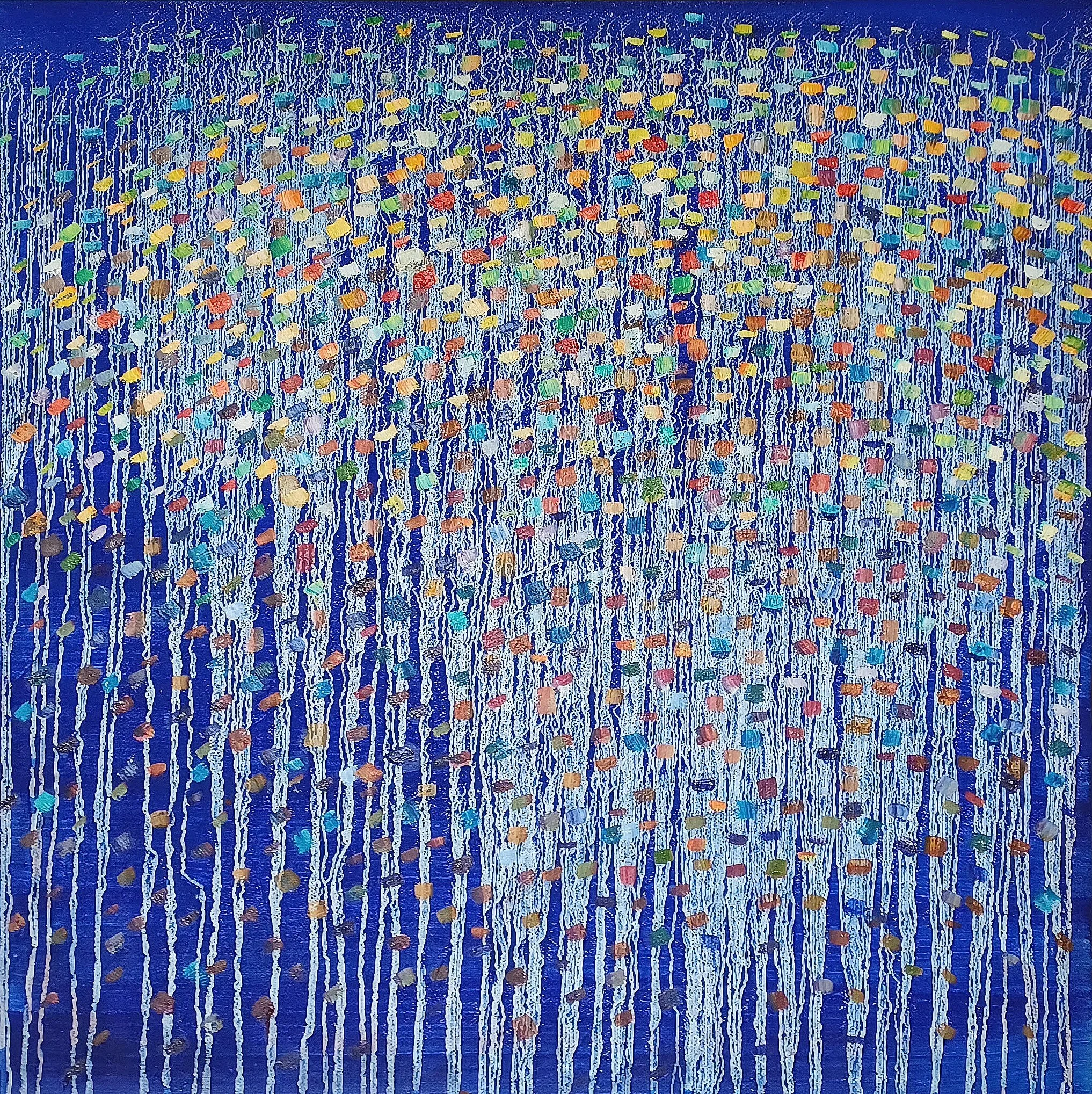
Bye little flower, bye little Henrie, Henrie Vogel, 2022
Find out more about Henrie’s art on his website.
Article by Zoé Vollmer
Originally from Nice, Zoé Vollmer is a French-Irish graduate in English and Sociology from University College Dublin. She is drawn to storytelling in all its forms, from journalism to politics, and to the ways narratives shape how we understand the world. She has written for student newspapers, working on research, writing and editorial pieces around social and cultural issues. Alongside this, Zoé has always been drawn to visual and creative practices such as painting, collage, photography and dance, which continue to influence both her perspective and her writing.