
GRACE FUNG: RESHAPING MEMORY THROUGH ABSTRACTION
Memory has an elusive nature and an ever-changing shape. Once lived, it can never be retrieved as a linear recollection. Embracing the fading of memory and transforming it into intuitive artistic practices, means allowing your subconscious self to translate the hazy, fluid memories into colors, shapes, and textures that give space for abstraction to become a language for remembering what can no longer be seen. Grace Fung is a mixed media artist based in the UK exploring how intuitive painting can function as a visualarchive, contributing to a growing movement of artists whose artistic style approaches memory and emotions through abstraction.
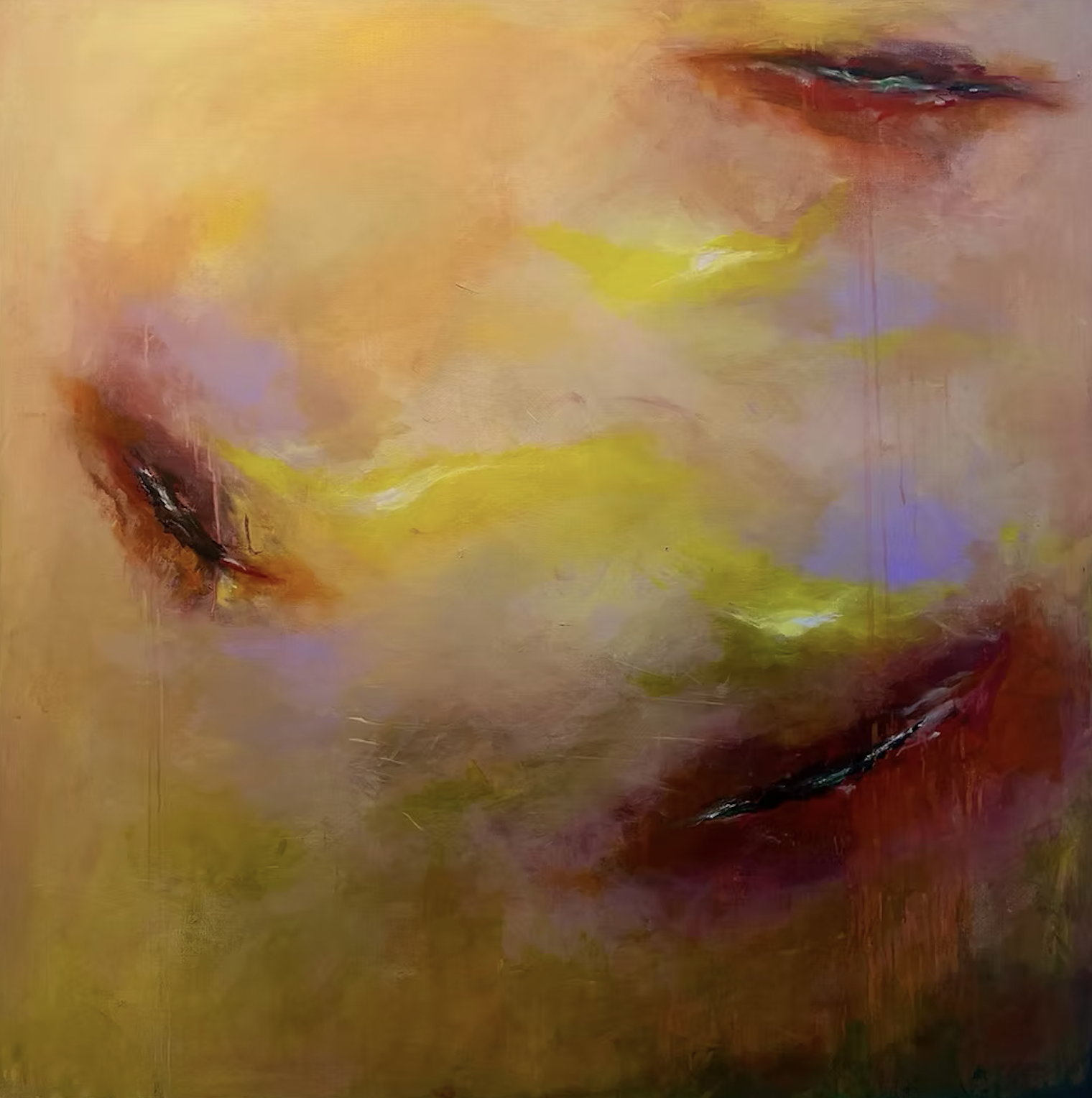
Shape of a Memory, Grace Fung, 2026
Expressing fading memory through intuitive art means letting go of exact details and focusing on the emotional essence of what remains. What does working intuitively allow you to discover that you would not have discovered through careful planning?
“Memory is not a photograph. It's fluid, fragmented, and constantly being rewritten. When I work intuitively, I'm not trying to document what happened, I'm trying to uncover what remains emotionally. Planning can tell you where you're going, but intuition often reveals what you've been carrying unconsciously. I grew up between British and Hong Kong cultures, between Western ideas of individual expression and Eastern ideas of impermanence and flow. Intuitive painting allows those influences to collide on the canvas without me trying to control the outcome. The most meaningful moments in my work happen when I stop trying to make a painting and start listening to it. That's usually where something true emerges.”
Rather than separating forms, Grace Fung’s paintings allow the colour transitions to mimic the gradual erosion of recollection, continuously unfolding rather than statically observed. In her series Shape of a Memory, Grace Fung explores how abstraction becomes a visual representation of fading memory. The composition flows naturally, creating an immersive layout, and the elements appear fluid and atmospheric. Layers of translucent colour overlap with one another, creating soft transitions rather than clearly defined forms. The absence of sharp contours encourages the eye to move across the entire surface instead of settling on a single focal point. This lack of visual certainty reflects the way memories emerge: nonfactual, partially formed, fragmented, and often resistant to complete reconstruction. Rather than focusing on specific images, events, or people, the painting demonstrates how memory shifts, fades and reforms. This way, in its final stage, it becomes an emotional archive.
Another important element of Fung’s work is also the strong sense of rhythm in the paintings’ mark-making. One can almost experience the painting as a physical performance, like dancing or making music, rather than a static image.
Your background spans music, design, and mixed media, and you've spoken about the balance between harmony and chaos. How do rhythm, improvisation, and instinct influence the decisions you make while painting?
“Before I was a painter, I made music but I don’t play any instruments. I was fortunate to work with creative music mentors that helped me create intuitively. I think I'm still composing, just with colour, gesture, and space rather than sound. The rhythm of a painting is incredibly important to me. A line can feel percussive, a colour can feel melodic, and an empty space can function like silence in a song. I was part of an Art Rock band during the Indie Sleaze era, and that spirit of experimentation never left me. Improvisation remains at the centre of my practice. Some of the most exciting discoveries happen when I go beyond what I know. David Bowie's advice about stepping into waters where your feet can no longer touch the ground has stayed with me for years. If I feel completely in control, I often think I'm playing it too safe. Music enters the work long before I pick up a brush. The sounds, conversations, noise and emotional atmosphere I absorb over weeks or months eventually surface as movement, colour and energy on the canvas.”
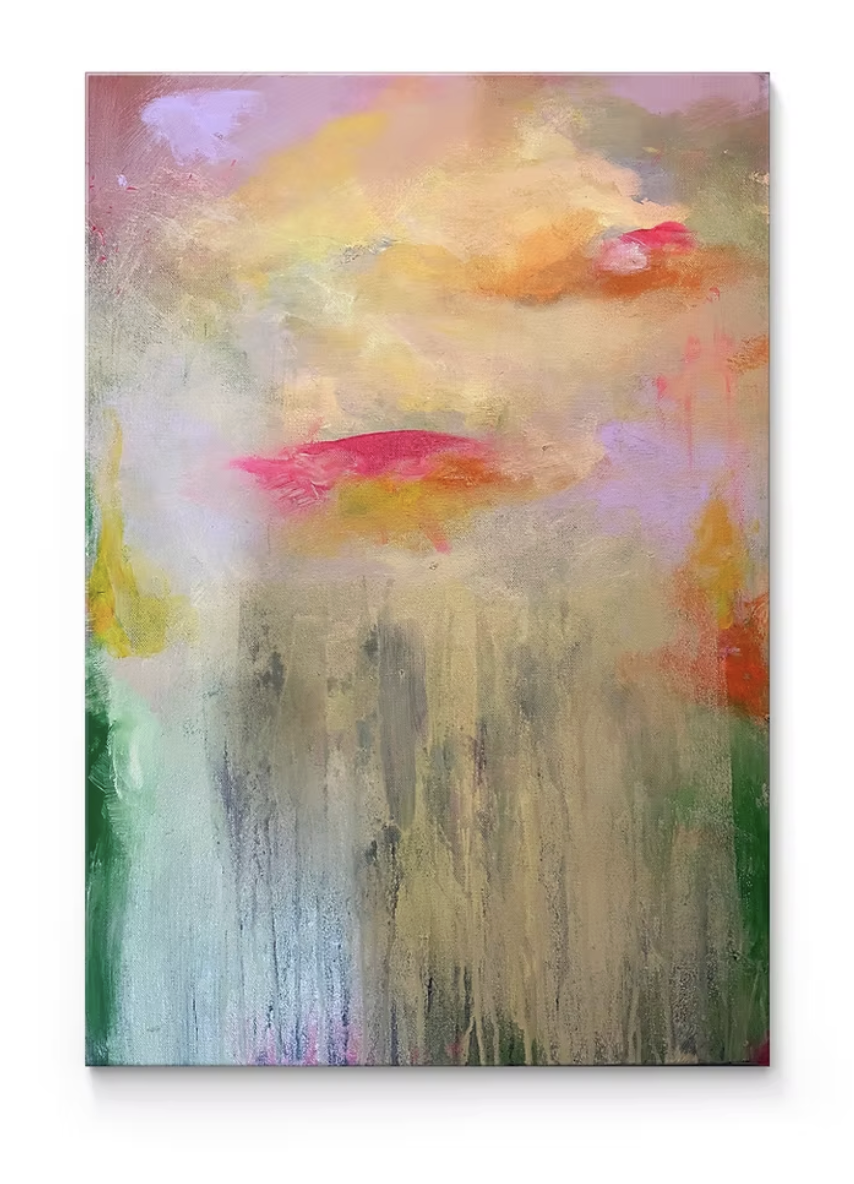
A Fading Past that Time Erased, Grace Fung, 2026
Your work embraces uncertainty and leaves room for accidents. Have there been moments when what initially felt like a mistake became an essential part of the painting?
“Almost every painting contains a moment I initially wanted to erase. The accident is often the beginning of the painting becoming alive. I think there's a misconception that artists know exactly what they're doing. My process is mostly doubt, bad decisions, and carrying on anyway. What looks resolved at the end usually began as something I thought I'd ruined.
Painting has taught me that mistakes are often just possibilities arriving in a form we don't recognise yet. Every painting I have done is born of mistakes. The areas I struggle with most often become the emotional centre of the work. I've learned not to trust first impressions, especially my own. My partner, Damian Toal, who does abstract landscape art, we share studio space and often paint together – he is my artistic mentor who taught me ‘mistakes’ are just part of the process.”
Grace’s work is driven by movement through gesture, shifting colour, and evolving layers. Her paintings begin without a predetermined composition, with each mark responding to the last. By embracing intuition and fluidity, she allows doubt and uncertainty to guide her process. Layers of paint remain partially visible beneath one another, preserving traces of earlier gestures while simultaneously obscuring them. These movements of the painting mirror how memory becomes an endless reconstruction in which each act of remembering subtly alters what is remembered.
“Memory rarely returns as a clear image. It arrives as fragments, sensations, colours and tensions. That’s the language abstraction speaks.”
In the series Shape of a Memory, created in response to the loss of your father, presence and absence seem to exist at the same time. How did the act of painting help you navigate that emotional space, and did the works reveal anything unexpected about grief?
“Grief and painting share a similar rhythm. As I mentioned before, neither moves in a straight line. When my father died, I wasn't trying to make work about grief. I was trying to survive it. The paintings became places where emotions too complicated for language could exist. Painting allowed me to have a conversation with absence. Not to fill the void, but to acknowledge it. What surprised me most was discovering that grief isn't only sorrow. It's love with nowhere obvious to go. The paintings revealed that grief isn't something you move beyond. It's something you move with. Coming from both Hong Kong and British cultural traditions, I've often observed different ways of expressing emotion, restraint on one side, openness on the other. Painting became a space where both could coexist.”
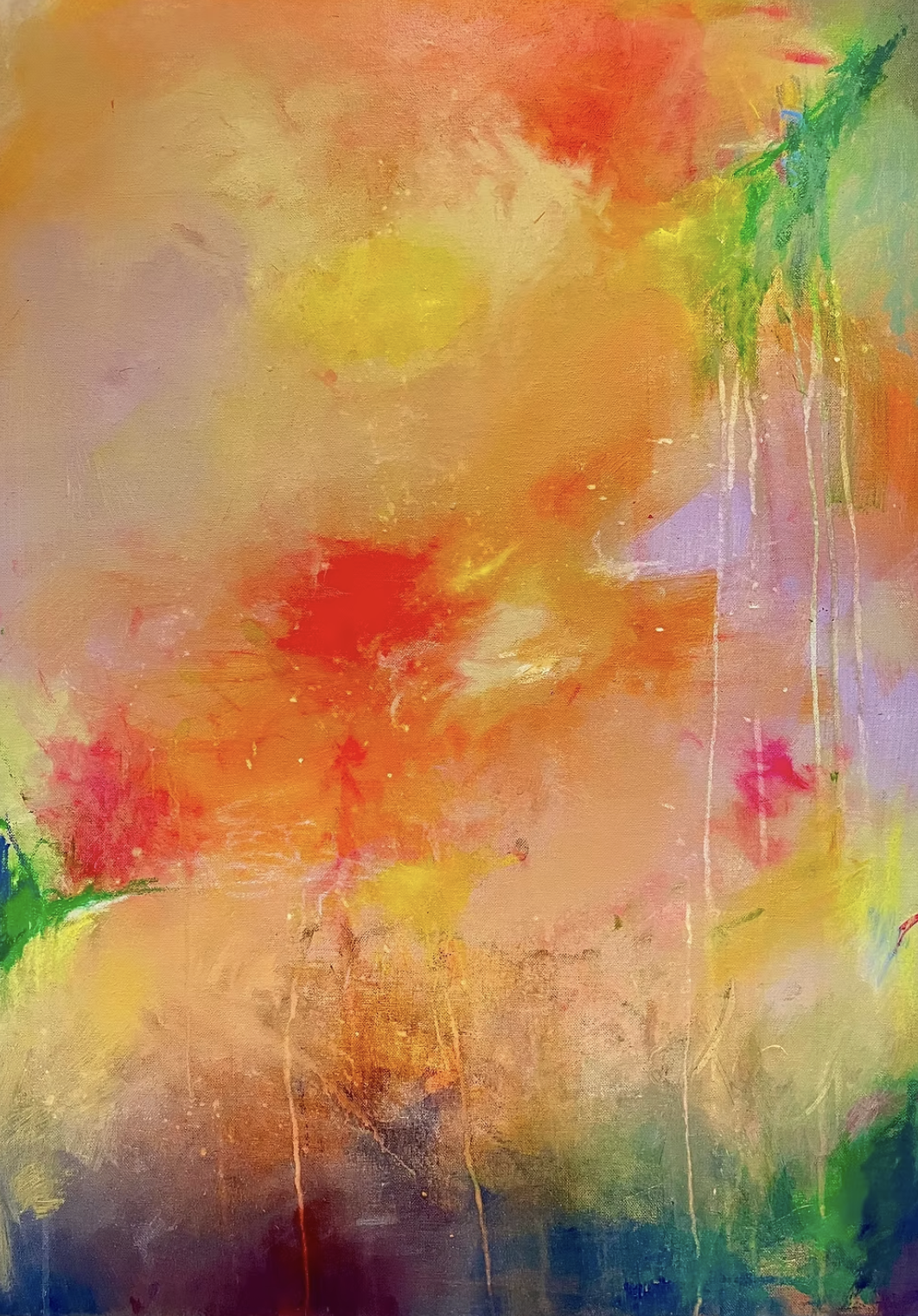
First Light, Last Breath, Grace Fung, 2024
The Shape of a Memory seriesis not merely an illustration of grief but a material record of living through it. This notion is reflected in the painting’s visual language. Its fluid forms, layered surfaces, and gentle shifts between light and darkness resist fixed composition, mirroring the cyclical rhythm that Fung describes – ultimately defining grief as not something you move beyond but something you move along with. The paintings’ brushwork and translucent layers suggest an ongoing dialogue between love and loss, while the soft transitions between brighter passages and darker fields reflect the tension between presence and absence.Shape of a Memory is a reminder that abstraction can articulate experiences that resist representation by transforming colour, light and material into visual expressions of mourning, remembrance and enduring love.
Grief, like memory, often changes with time rather than disappearing. Has your relationship with this body of work changed since completing it, and do you see different emotions in the paintings now than when you first made them?
“Absolutely. Every time I return to these works at different points of my life, I meet them as a different person. When I was making them, the paintings felt heavy with loss. Now I also see tenderness, gratitude, resilience and even moments of humour. The paintings haven't changed, but my relationship to them has. That's one of the fascinating things about abstract work. The meaning keeps moving. It’s almost like time is also a painting tool and collaborator.”
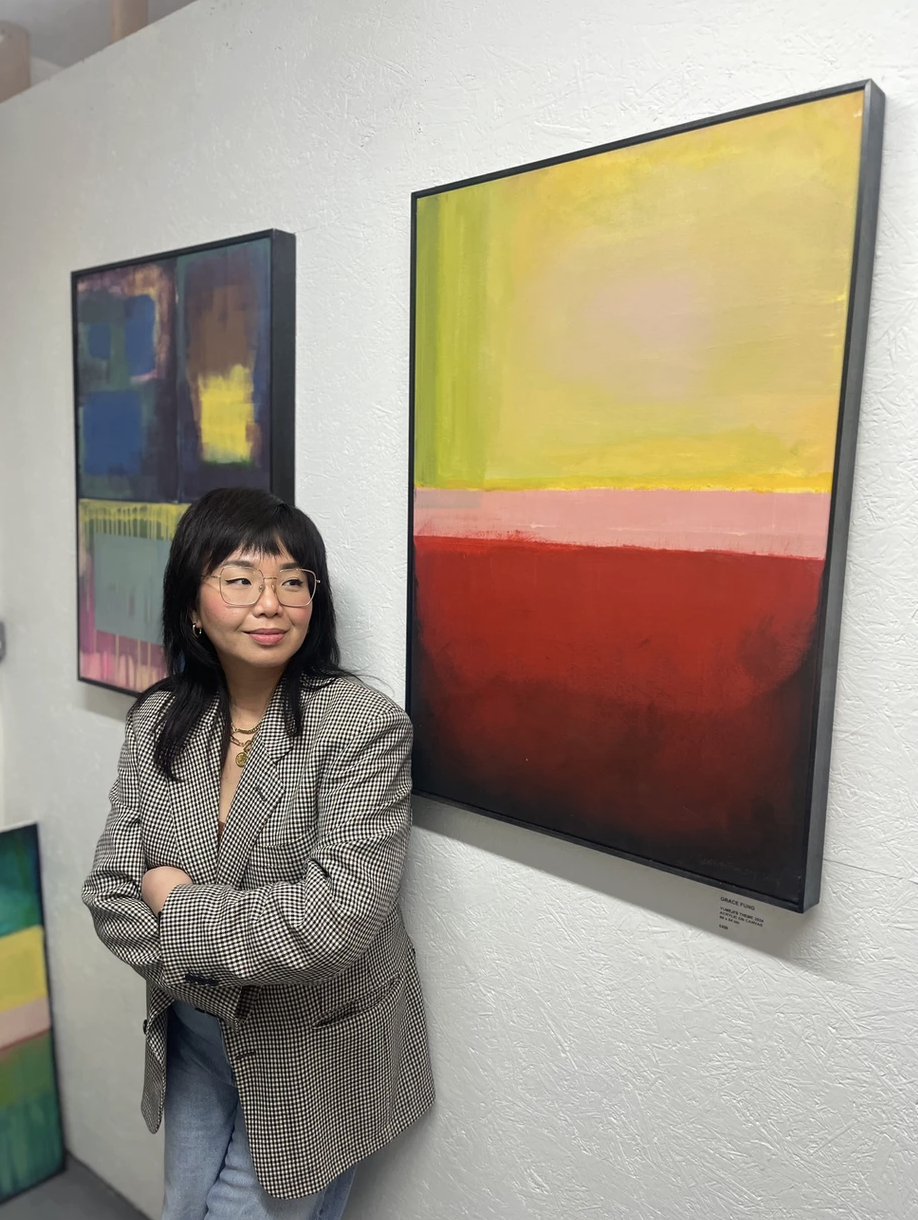
Courtesy of Grace Fung
What do you hope viewers recognise in their own memories when they encounter your paintings?
“I don't want viewers to see my memories. I want them to encounter their own. The most rewarding response is when someone tells me a painting reminds them of something they can't quite explain. That's where abstraction becomes a shared language. A collector who bought `The Shape of a Memory` told me she felt deeply uncomfortable when she first encountered it, yet she couldn't stop returning to it. The emotional pull was so strong she eventually bought the piece. What struck me was that she seemed to experience the painting more intensely than I had while making it. That's when I realised a painting doesn't end with the artist. It continues to evolve through the memories and emotions of the people who encounter it.
My work isn't about providing answers. It's about creating enough space for people to bring their own histories, losses, joys and contradictions into the conversation. We're living in a culture obsessed with clarity and certainty. I'm more interested in the things that remain unresolved. Memory, grief, love, identity. The paintings invite viewers to sit with those complexities rather than solve them. Ultimately, I hope people leave with the feeling that what is fragile, fragmented or unfinished still has value. There is beauty in what cannot be fully defined. My abstract work began with my memories, but it ultimately belonged to someone else's feelings.”
Grace Fung’s artistic practices demonstrate the potential of contemporary abstraction to function as a tool of affective exchange rather than formal experimentation alone. Rather than treating art as fixed imagery, she approaches her practice as a process of engagement shaped by ambiguity. By inviting the viewers to project their personal memories and histories onto the work, Fung emphasizes the experiential nature of art, which unfolds through the interaction between artist, material, and audience.
For intuitive painters like Grace Fung, meaning develops during the making process instead of existing beforehand. Memory is constantly reconstructed, every recollection reshaped when recalled, and past and present coexist. These sorts of artistic practices can become a reminder that abstraction should not be seen as an escape from lived experience but as a powerful tool that gives shape to emotions that resist articulation through language.
See more of Grace Fung’s art on her website.
Article by Christina Anagnostoudi
Christina Anagnostoudi is a cultural anthropologist and researcher based in Brussels. Her academic background spans cultural research and gender studies, with a particular interest in ethnography and socially engaged art practices. Her current work explores contemporary artistic practices, cultural participation and how art institutions can foster more inclusive and meaningful encounters between art and audiences.