THE HARMONY OF THE ABSTRACT: THE POETICS OF EVELYN MARSCHALL-GEBHARD
“Drawing and painting have accompanied me since childhood. What began as a refuge became a lifelong commitment. Art and life are inseparably intertwined for me.”
Approaching one of Evelyn Marschall-Gebhard’s works means stepping into an elsewhere, her personal world. A universe shaped by irrational forms, between dream and reality, where colours engage in a constant dialogue through harmony and contrast. Her art is rooted in her own childhood. An only child, she began drawing and painting as a game, sometimes simply as an antidote to boredom. School, too, became a space for experimentation: during boring lessons, she would observe her classmates and teachers and turn them into caricatures, transforming the ordinary into imagination.
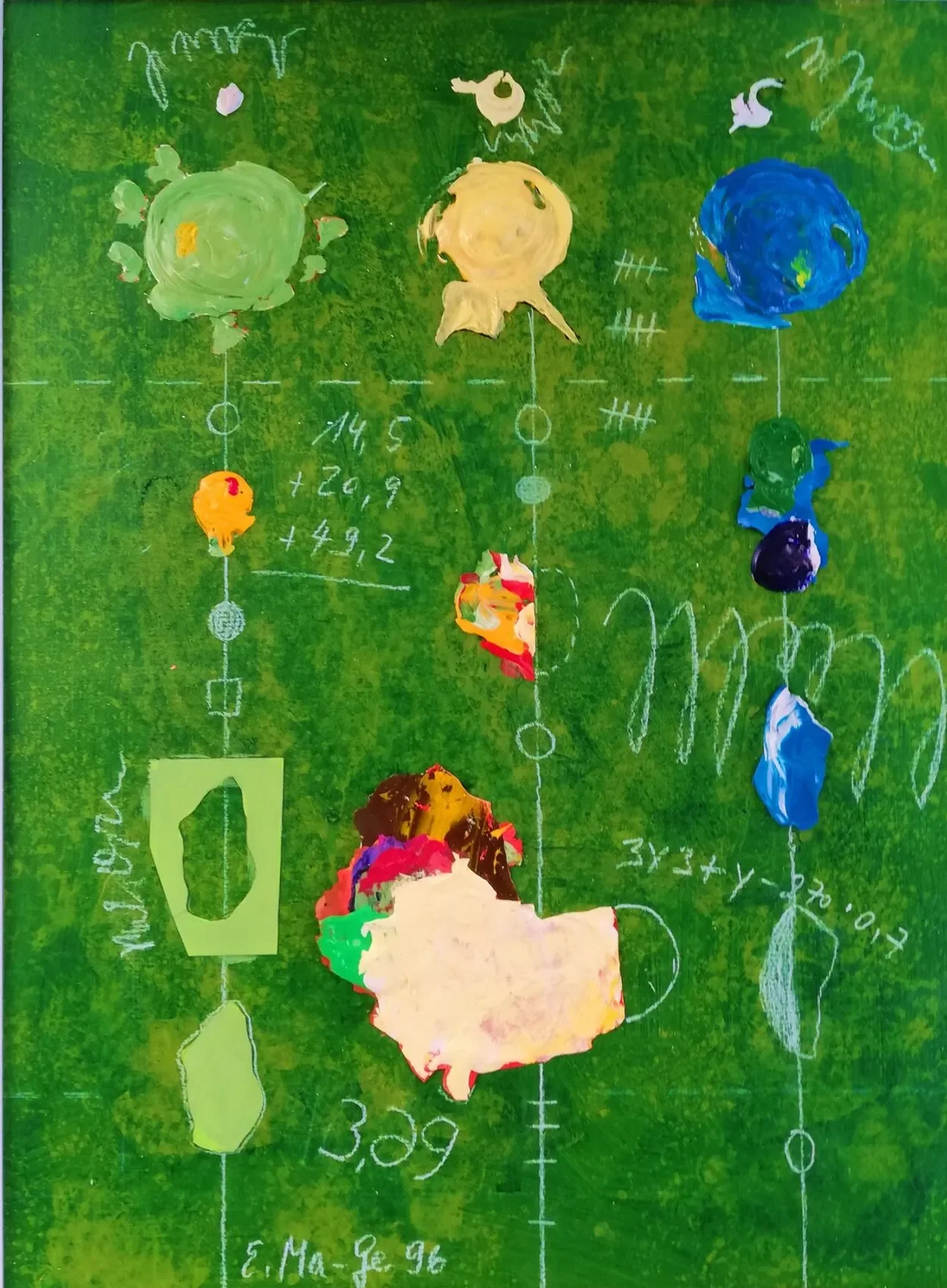
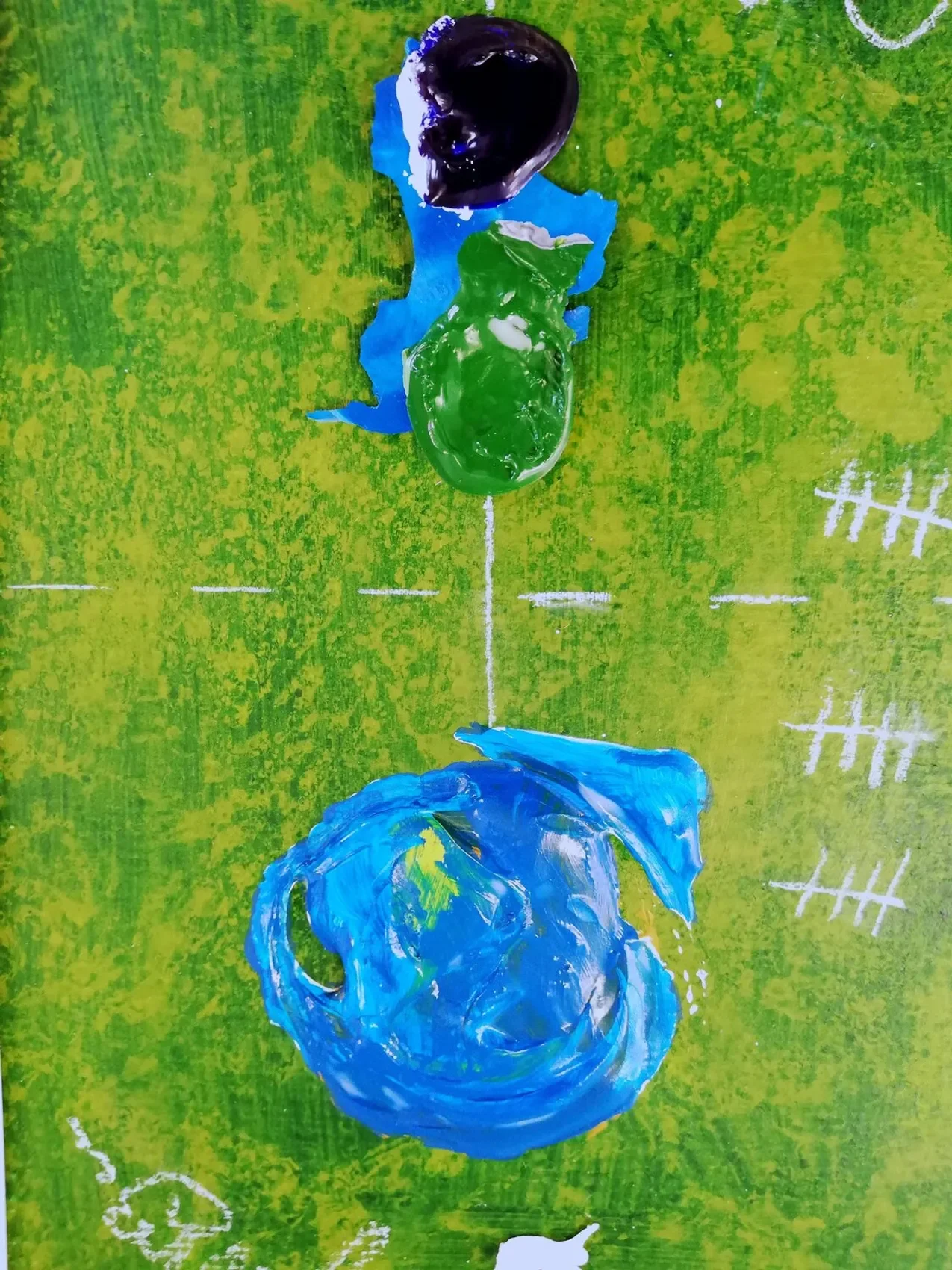
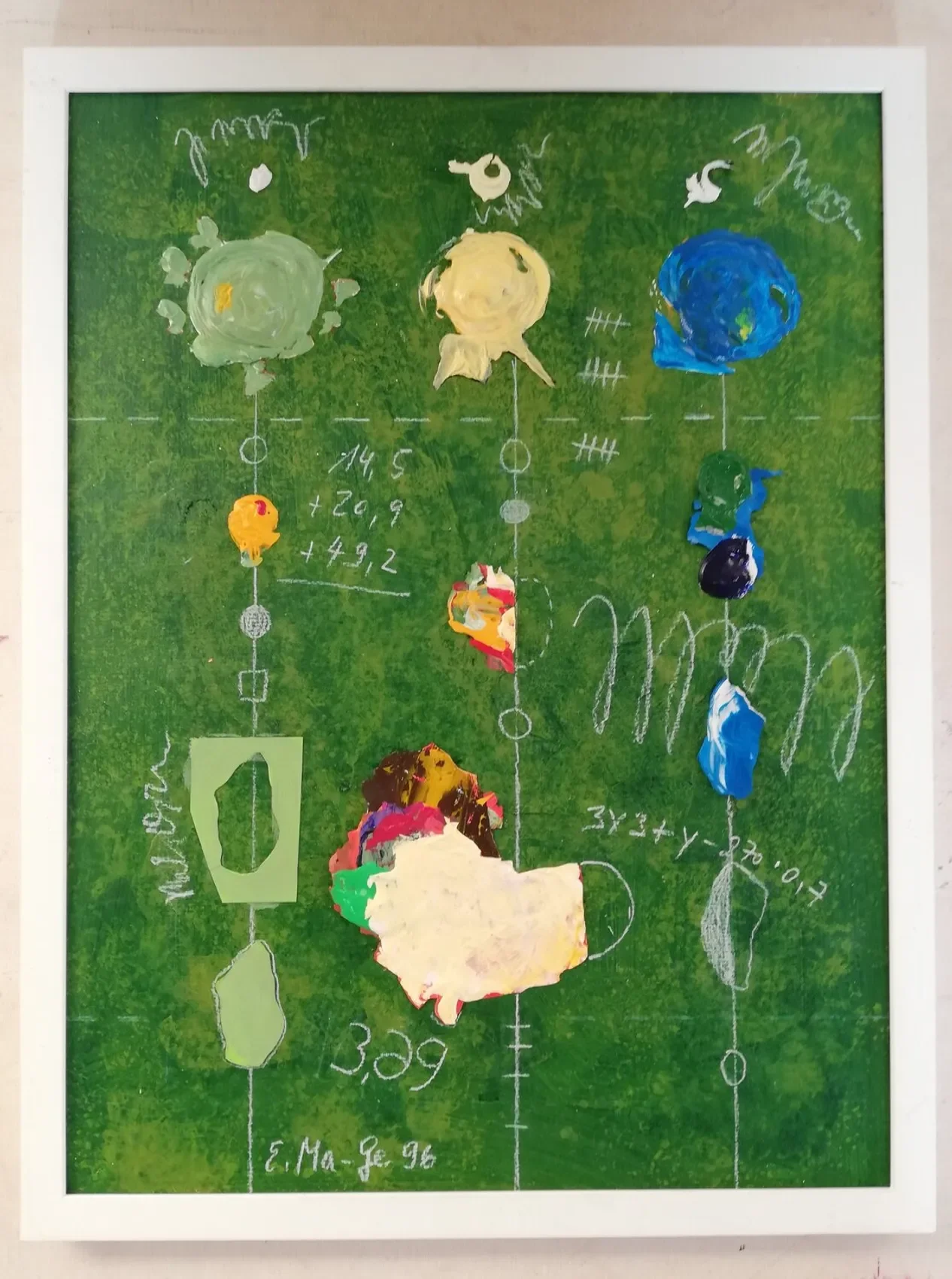
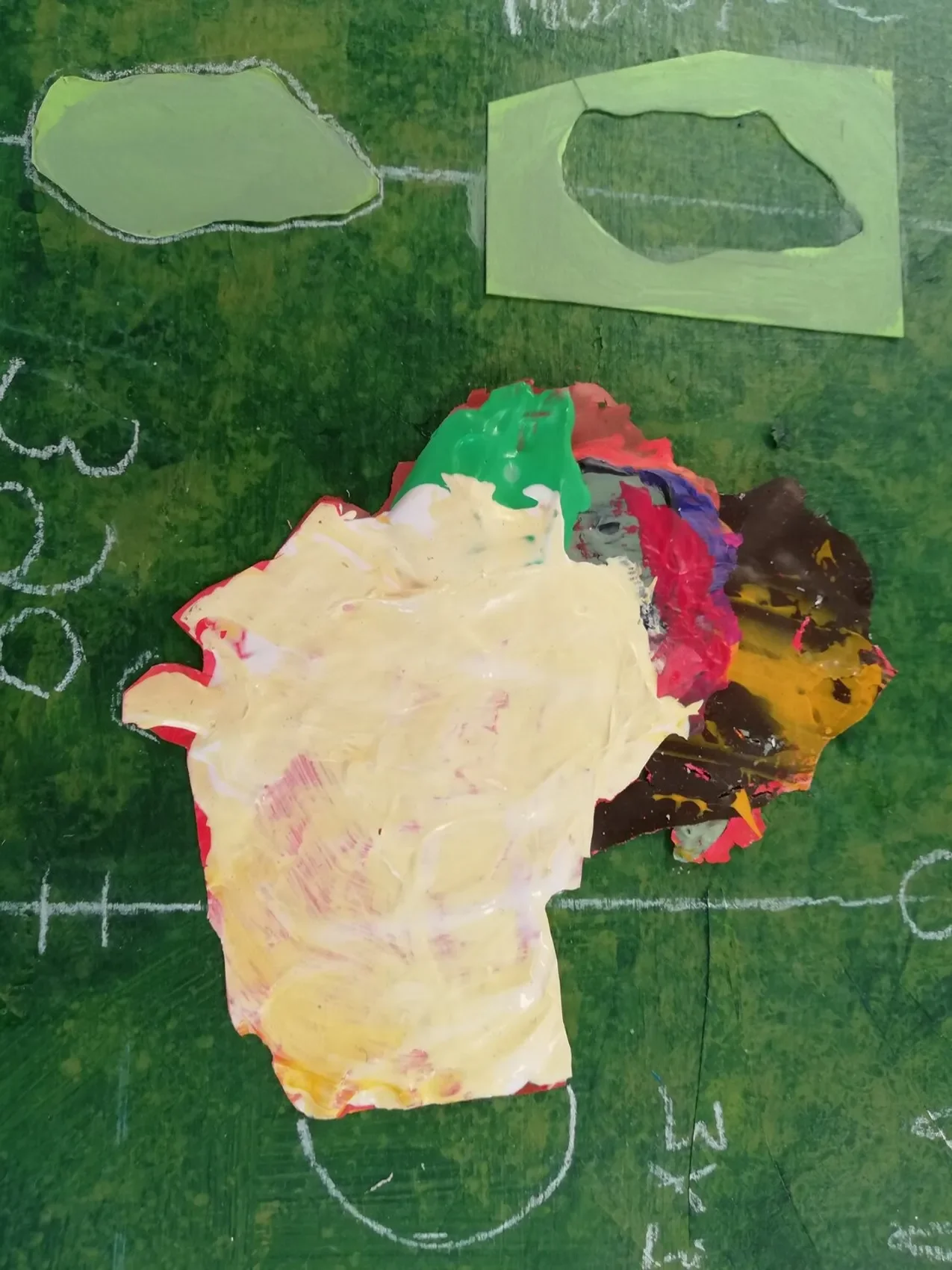
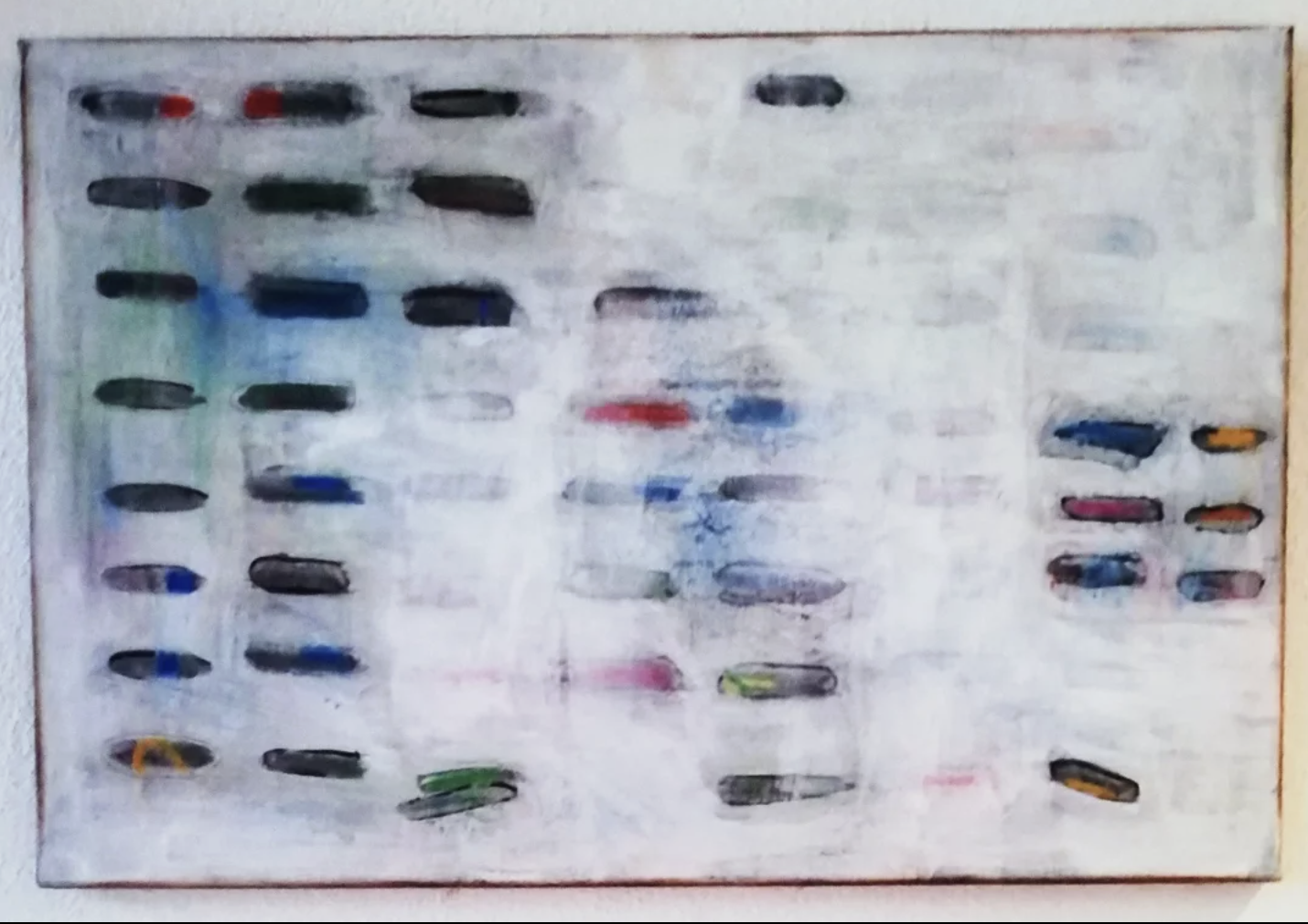
Die Farbe weiß mehr, Evelyn Marschall-Gebhard
As she grew older and began teaching art, among other subjects, drawing remained her refuge. During long meetings, she would sketch as a gesture of escape and freedom, keeping alive a conversation with her own creativity. Well before retiring from teaching, Evelyn chose to take seriously what had long been a constant presence in her life: painting. She came to understand that it was not merely a pastime, but a true vocation.
As she has often reflected, her artistic journey has unfolded in different phases, closely intertwined with the stages of her life. In the beginning, she approached her practice with a strong experimental drive, working with techniques such as printmaking, paper cut-outs and collage. These explorations allowed her to test materials, compositions, and visual rhythms, gradually shaping her first distinctive visual language. An abstract language that today also reflects the legacy of great masters such as Paul Klee, Wassily Kandinsky, Joan Miró, Cy Twombly, and German painter Jonathan Meese.
These artists have profoundly shaped her personal poetics, leaving visible traces in her work, particularly the spiritual abstraction of Kandinsky and the symbolic, playful language of Miró, whose influences emerge with clarity in her compositions.
“Words and signs appear as structural yet fragile elements, introducing poetic and enigmatic dimensions. In my recent series ‘Measures without Results’, graffiti, numbers and text simulate scientific measurement, questioning systems of certainty.”
When looking at Evelyn’s works, one cannot help but wonder: what sets the process in motion? For the artist, every work begins with an inner spark, a vision that takes shape in her mind, often already intertwined with a specific technique. Most of the time, she approaches the canvas directly, allowing instinct to guide her hand. Sketches and studies may occasionally precede the final piece, but they are not essential. Then, when alone with the canvas, what she truly seeks is a dialogue with it. It becomes a space of exchange, tension, and response: sometimes the canvas leads and she follows; sometimes she imposes a gesture and waits for it to answer back. Within this silent conversation, the work reveals itself, layer after layer.
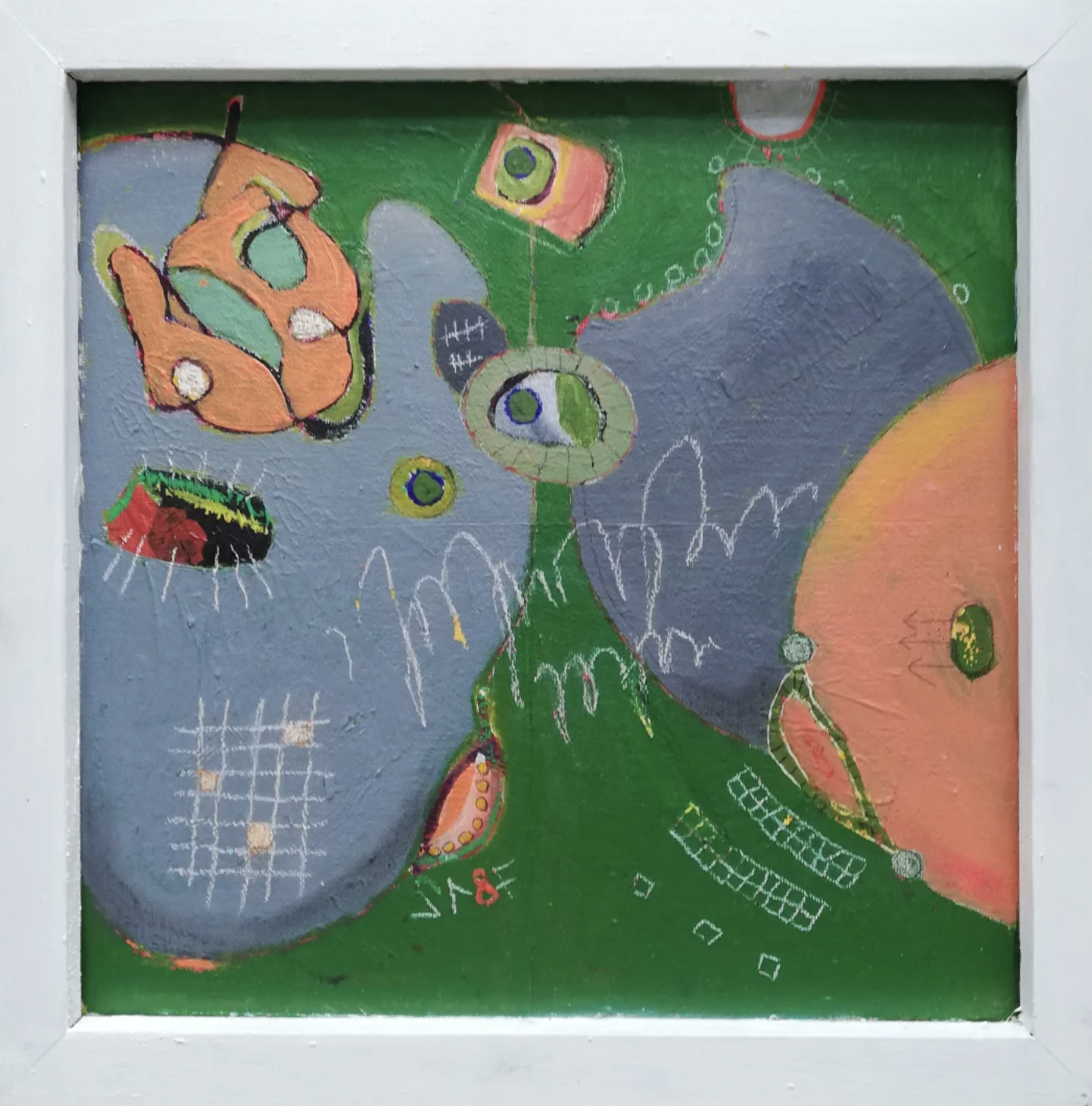
One of the ways she engages with the painting is through colour. Colours allow her to create vast spaces of resonance, as if each shade could correspond to a specific emotional association awakened in the viewer.
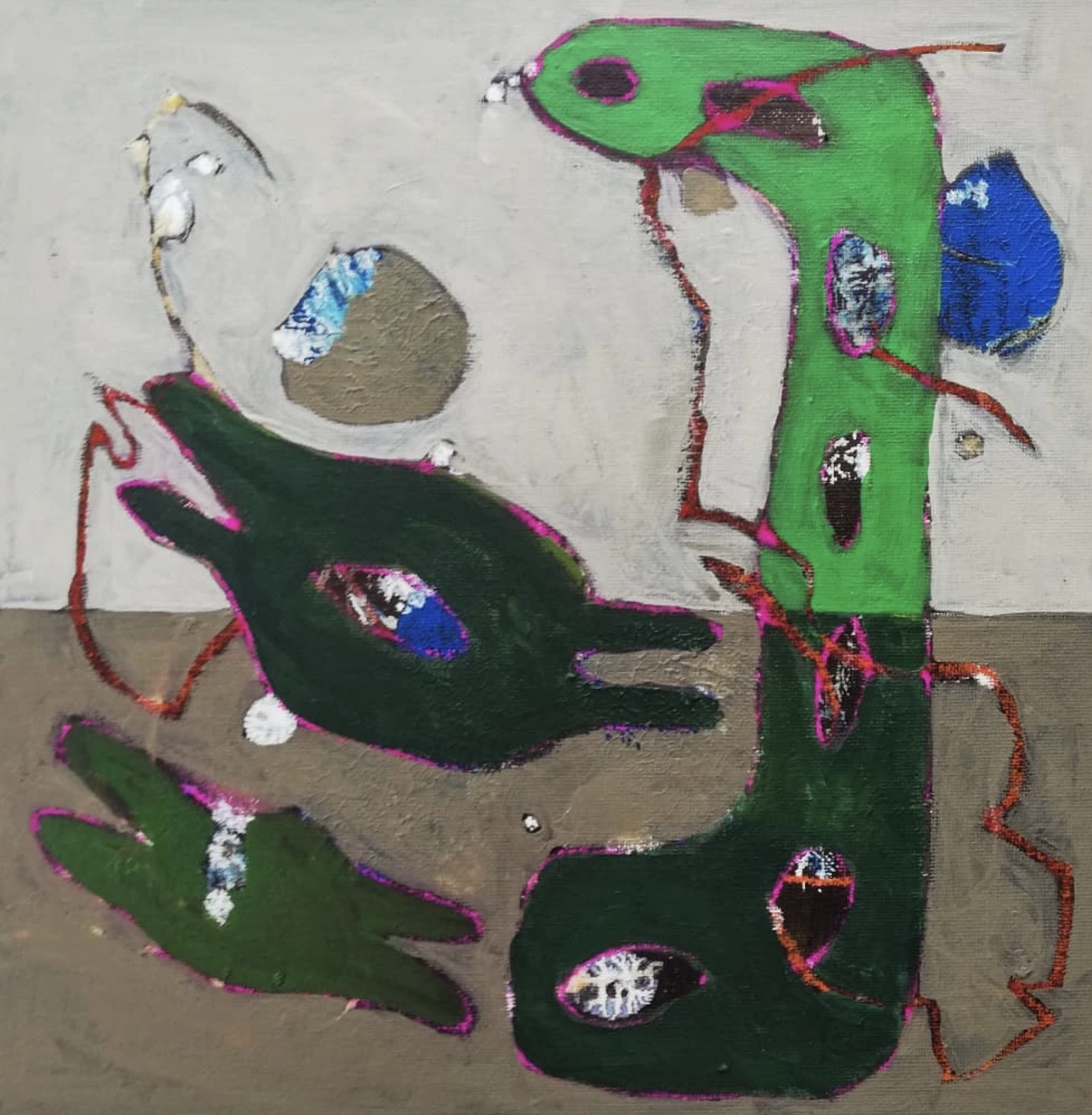
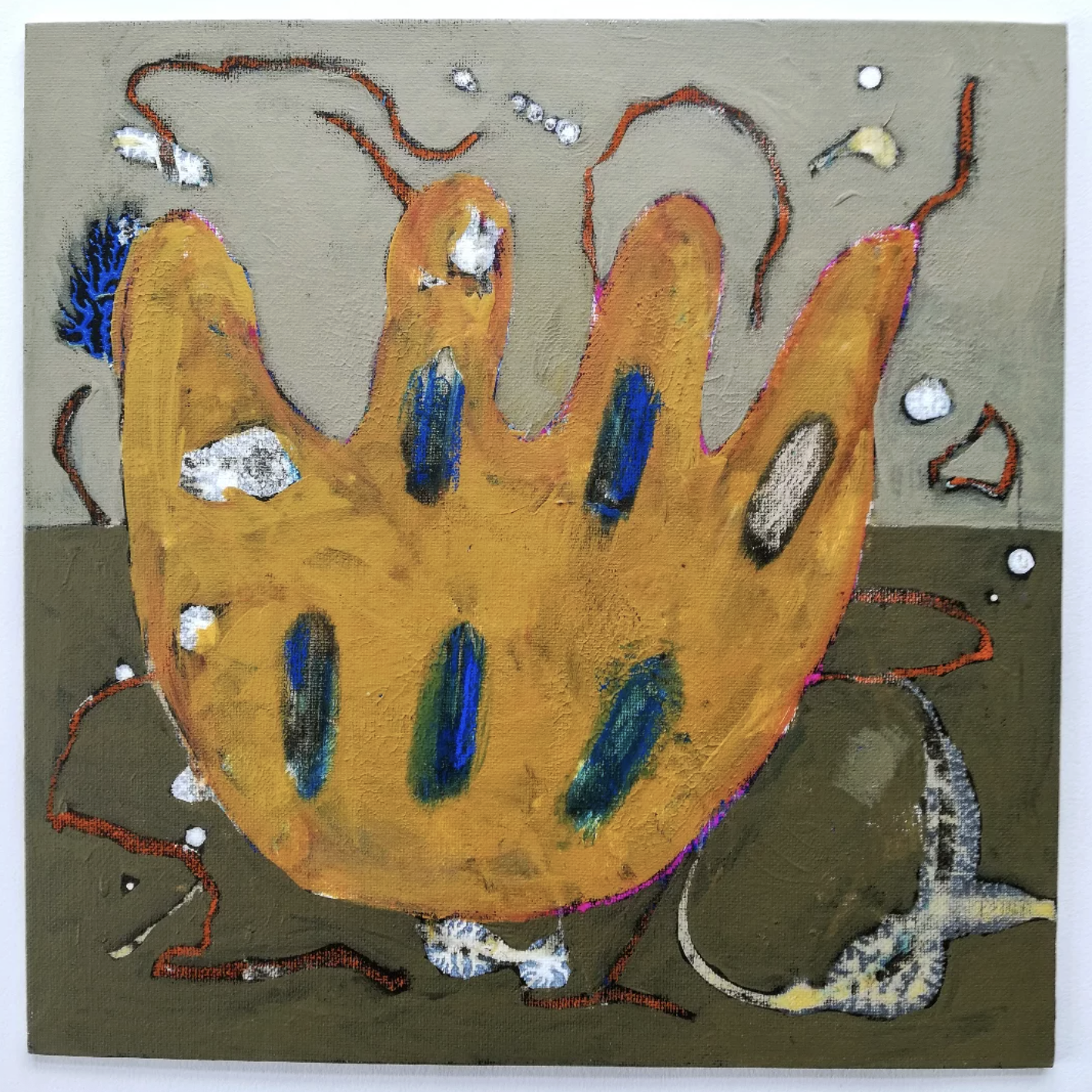
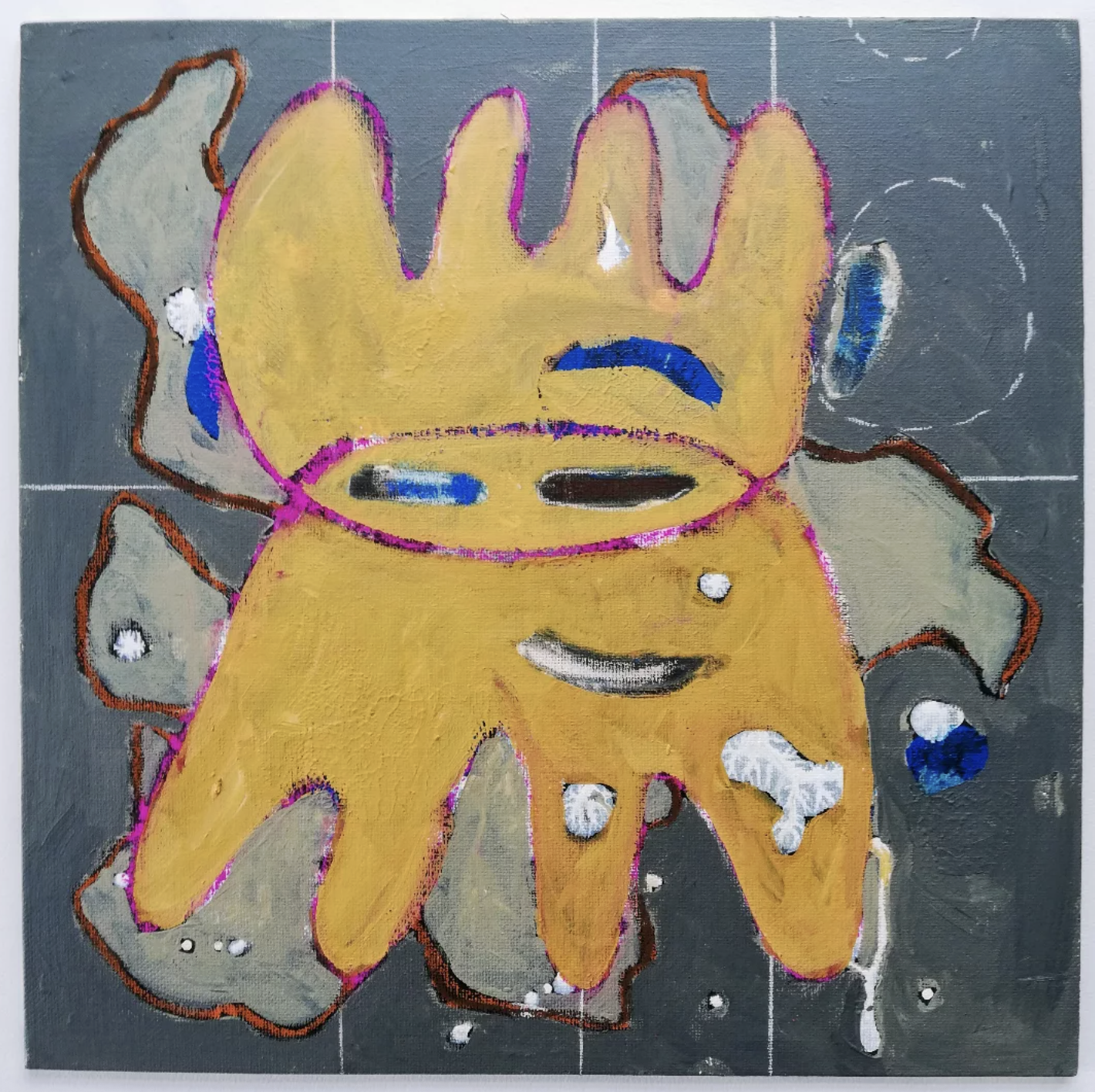
Courtesy of Evelyn Marschall-Gebhard
Evelyn’s works rise from the encounter and layering of multiple elements such as collage – which has always been an essential part of her practice – acrylics and mixed media. Each piece develops through stratification, where materials overlap and interact, generating a vibrant and dynamic visual tension. In many of her more recent works, such as Measures without Results, text, numbers, graffiti, and functional signs frequently appear. These elements operate on a dual level: on one hand, they provide structure and a sense of order to the composition; on the other, they introduce a subtle fragility that lends the work a poetic, enigmatic, almost magical quality. The result is an invitation to the viewer to engage more deeply, opening space for interpretation and personal resonance.
Evelyn constructs her works as evolving systems, where contrasting elements gradually negotiate their place within a shared harmony. It is within this delicate balance that the artwork reaches the moment where it can finally declare itself as “truly complete”. For her, being both a woman and an artist means embracing a vocation that is a path defined by constant transformation rather than a fixed destination. It is an ongoing process of growth, questioning, and renewal. This is what Evelyn continues to seek today: not a final form, but a continuous evolution.
See more of Evelyn’s work on Instagram.
Article by Desideria Manzini
Working between Italy and France, Desideria Manzini specializes in cultural management, strategy, and communication. She has worked and collaborated with private art institutions, contributing to the development and positioning of cultural projects within an international context. Alongside her strategic practice, writing plays a central role in her work: a tool for analysis, critical reflection, and cultural interpretation. Through her texts, she explores the intersections between art, heritage, and contemporary discourse.