
An exploration of artistic identity, craftsmanship and the creative possibilities that emerge when different disciplines converge.
Born in the Bronx and raised in Hunts Point, New York, multidisciplinary artist Tyrone Strother has developed a creative practice that moves across fine art, sculpture, music and literature. Now based in Elgin, Illinois, his work reflects an ongoing exploration of faith, imagination, cultural memory and transformation, bringing together distinct artistic disciplines through a shared interest in storytelling and expression.
At the centre of Strother's visual practice is an affinity for materials and the possibilities they offer. His hand-painted silk compositions explore the relationship between colour, luminosity and intricate linework, while his sculptural works combine traditional hand-sculpting with digital techniques, layered surfaces and carefully considered details. Across both disciplines, craftsmanship plays an essential role, with each work developing through a process that balances technical precision with individual expression.
His artistic journey has been shaped by both mentorship and independent exploration. An early introduction to silk painting through artist Carey Clark at THE POINT Community Development Corporation in the Bronx became a defining moment in his development, opening the door to a medium that continues to occupy a central place in his practice. His participation in the Bronx Artist Documentary Project further documented his work within the borough's artistic community, with his creative history subsequently preserved in the Bronx County Historical Society's archival collection.
Music and literature have remained equally important to Strother's creative identity. With a background in jazz and music production, alongside an extensive body of published writing, he approaches creativity as something that extends beyond the boundaries of any one medium. His work is connected by an interest in narrative, symbolism and the ways in which an idea can take different forms.
In conversation with The Ambrosia Journal, Strother reflects on the experiences that shaped his artistic development, the spiritual foundations of his practice and the importance of creating work that invites closer observation. He also considers the relationship between craftsmanship and imagination, and his ambition to build a body of work that carries meaning beyond the moment of its creation.
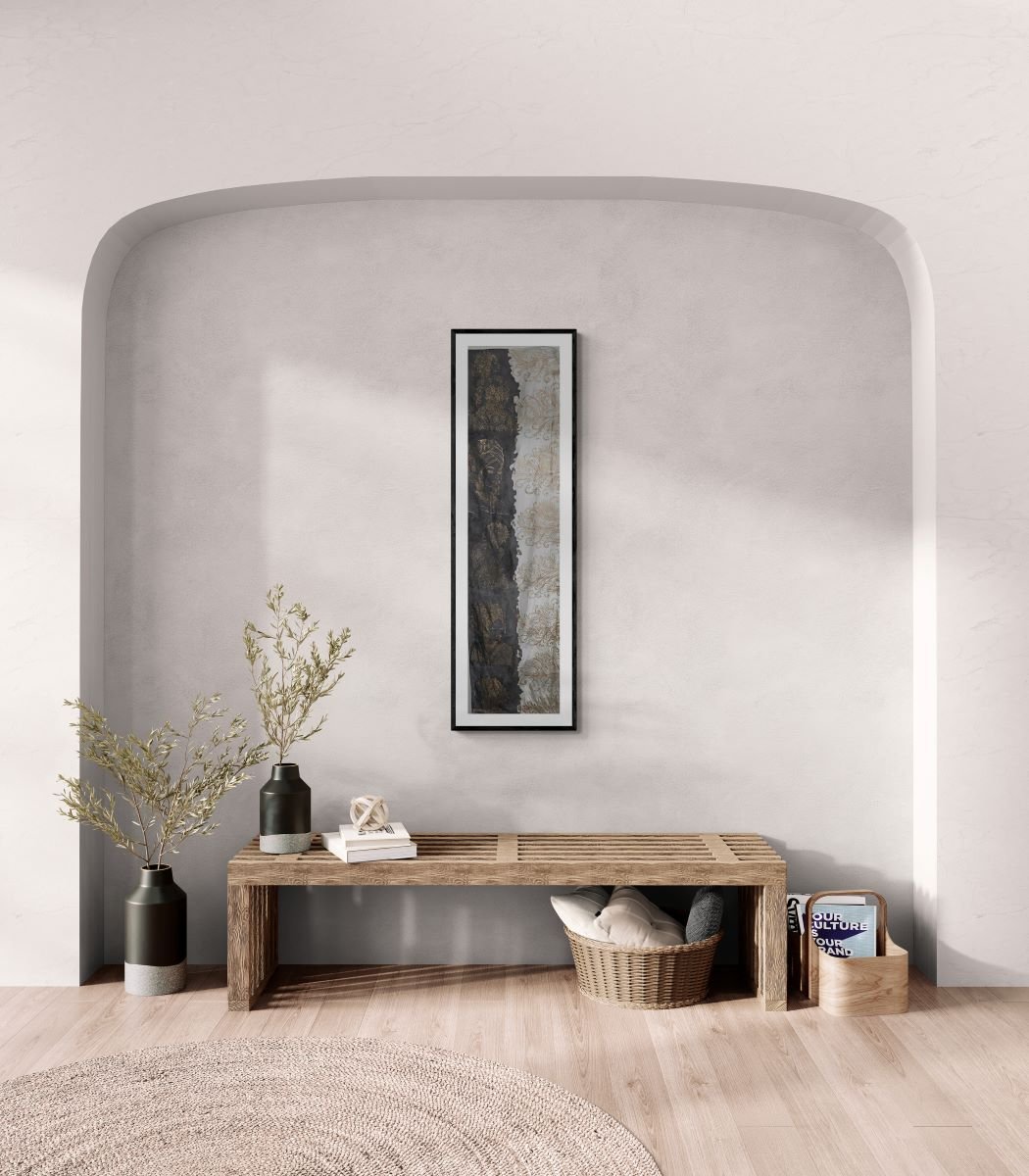
Divine Duality the Golden Ascendant by Tyrone Strother
Image courtesy of the artist
How would you describe the art that you create?
I create multidisciplinary art rooted in faith, imagination, storytelling, and transformation. My practice includes hand-painted silk, sculpture, music, and literature. Each medium gives me a different way to express ideas – through color, form, sound, or language.
In my visual work, I am drawn to luminous color, intricate linework, symbolic imagery, and richly detailed surfaces. My silk paintings combine hand-drawn resist lines with layered dyes, allowing the fabric’s natural movement and light to become part of the composition. My sculptures bring together traditional and digital sculpting with materials such as clay, resin, mica, metallic finishes, and hand-set stones.
I approach each piece as an individual creation, with its own identity. Beauty draws the viewer closer, while the details and symbolism offer something to explore over time.
What are the main messages that your art communicates?
Transformation is one of the central messages in my work: the possibility of growth, renewal, and becoming. My faith shapes that perspective, and I often explore it through butterflies, flowers, light, and the relationships between colors and forms.
My work also carries a sense of cultural memory. Growing up in Hunts Point in the Bronx helped shape my creative identity, and that history remains part of my work as my practice reaches new audiences.
I want the work to suggest that there is depth within a person, a place, or a material that may not be immediately visible. A piece can be beautiful on first encounter and still hold questions about identity, resilience, spirituality, and purpose. I leave space for viewers to connect those ideas to their own experiences.
How would you describe the emotions that your art aims for the observer to feel?
I hope the first response is wonder – the feeling that something deserves a closer look. Color and luminosity can create that initial connection, while the smaller details invite the viewer to slow down.
Beyond that initial response, I hope my work offers a sense of hope, reflection, and possibility. Some pieces may feel peaceful; others may communicate strength, intensity, or movement. The emotional character depends on the individual work.
I also respect that viewers bring their own histories to what they see. Someone may find comfort in a piece that another person experiences as energizing. I want to create room for that personal response. What matters to me is that the encounter feels meaningful and gives the viewer something to carry away.
“I want the work to suggest that there is depth within a person, a place, or a material that may not be immediately visible.”
Which part of your creative process do you enjoy the most?
The part I enjoy most is watching an idea become physically present, as the materials begin to give it a character of its own.
With silk, that happens as the dyes move through the fabric and the colors begin interacting within the resist lines. There is a balance between the structure I have drawn and the behaviour of the material. It requires attention and responsiveness, and that exchange is exciting.
With sculpture, I enjoy the stage when surface work, color, texture, and carefully placed details bring the form into focus. Small decisions can change the entire presence of a piece.
Those moments make the time spent developing and refining the work rewarding. I can begin to see the connection between what I imagined and what someone else will eventually encounter
Photography has played an important role in documenting your artistic journey. How do you see its relationship with your creative practice?
My primary visual mediums are hand-painted silk and sculpture. Photography has played an important role in documenting my practice and helping audiences encounter it.
Through my participation in the Bronx Artist Documentary Project, my work became part of a photographic record of artists creating throughout the Bronx. That documentation connects the finished artwork with the person, environment, and process behind it.
For an artist working with tactile materials, photographs also help communicate details that deserve close attention: the linework and luminosity of silk, the layered surfaces of a sculpture, or the physical stages involved in making a piece. I value photography as a means of preserving and sharing that history, while my own studio practice centers on creating the objects being documented.
What is the first creative moment that you remember? Does it have a connection to the art that you create now?
One of the formative creative experiences I return to is being introduced to silk by Carey Clark. She placed a material in my hands that would become a lasting part of my artistic life and gave me encouragement to explore what I could do with it.
That introduction has a direct connection to the work I create today. Silk remains a central part of my practice, although my techniques and artistic language have developed through years of independent exploration.
Looking back, I recognize how significant it can be for a young artist to have someone provide access, encouragement, and an opportunity to experiment. Carey helped open that door for me. My continued work with silk carries that history forward through my own ideas, discipline, and experience.
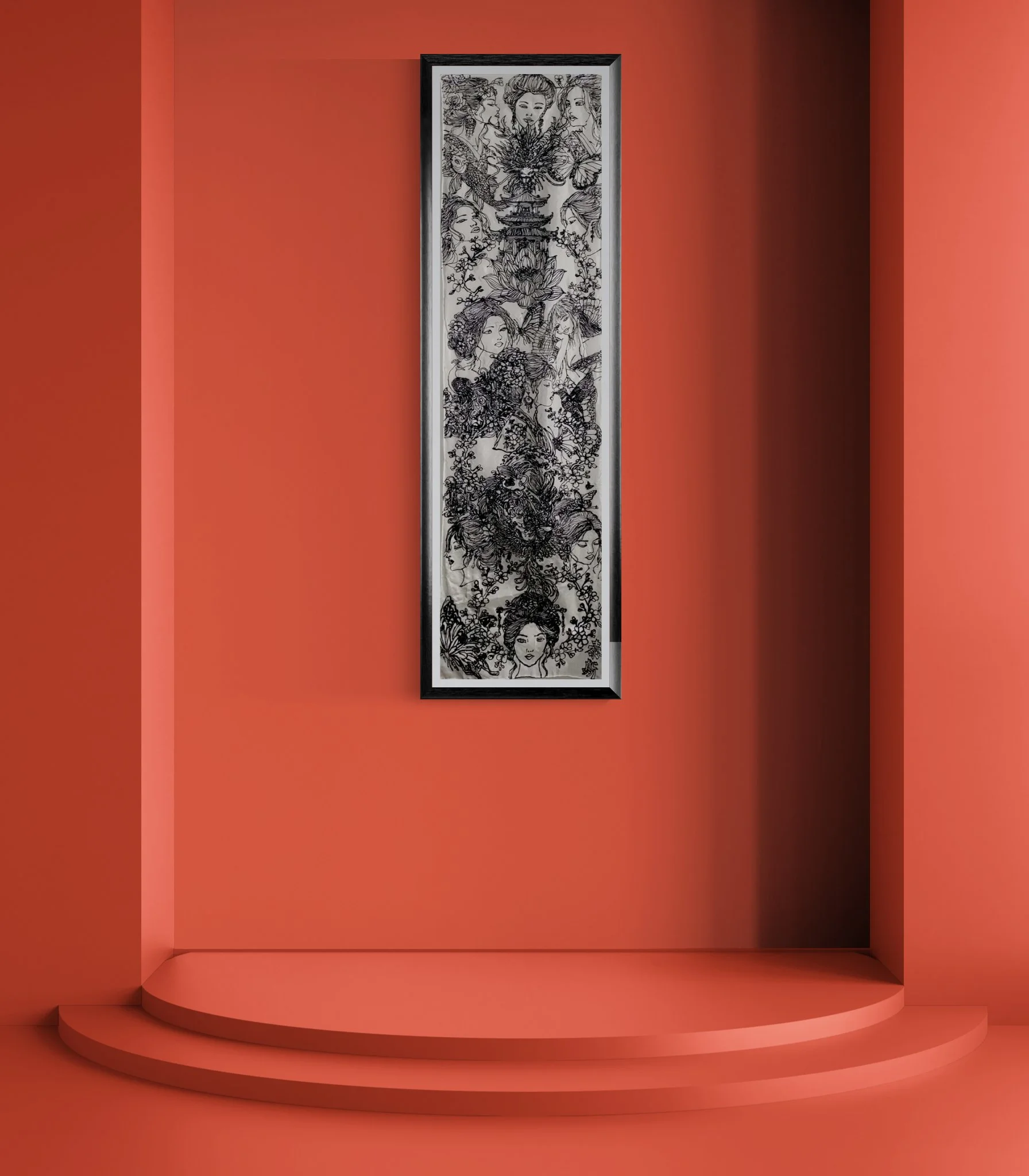
IMPERIAL LOTUS by Tyrone Strother
Image courtesy of the artist
Do you have any creative rituals that you always follow when creating? If yes, what are they and what do they give to your creative process?
Faith and prayer are central to my creative life, and I approach my work with a sense of purpose and gratitude. The reflection behind a piece matters to me alongside the physical act of making it.
There is also a deliberate sequence within my studio process. With silk, I prepare and stretch the fabric, establish the resist linework, develop the colors, and move through setting and finishing. Each stage asks for a different kind of attention. Sculpture has its own progression through form, surface, detail, and finish.
That structure gives my creativity a practical foundation. It helps me stay attentive to the material and allows an idea to develop through patient work. My process brings together spiritual intention, technical discipline, and room for discovery.
What is your greatest ambition with the work that you do?
My greatest ambition is to build a lasting body of work that people can continue to encounter, study, and connect with. I want the care, imagination, and faith behind each piece to remain meaningful beyond the moment in which it was made.
That ambition extends across my visual art, music, and literature. I want to keep developing the relationship between these disciplines while giving each work the attention it deserves.
Having part of my artistic history documented through the Bronx Artist Documentary Project and preserved in an institutional archive has made the value of that continuity tangible to me. I hope to build on it through further exhibitions, meaningful relationships with galleries and collectors, and continued growth in the studio.
Ultimately, I want to leave a creative legacy that reflects where I came from, honors the people who helped me develop, and gives others a reason to believe in the possibilities of their own imagination.
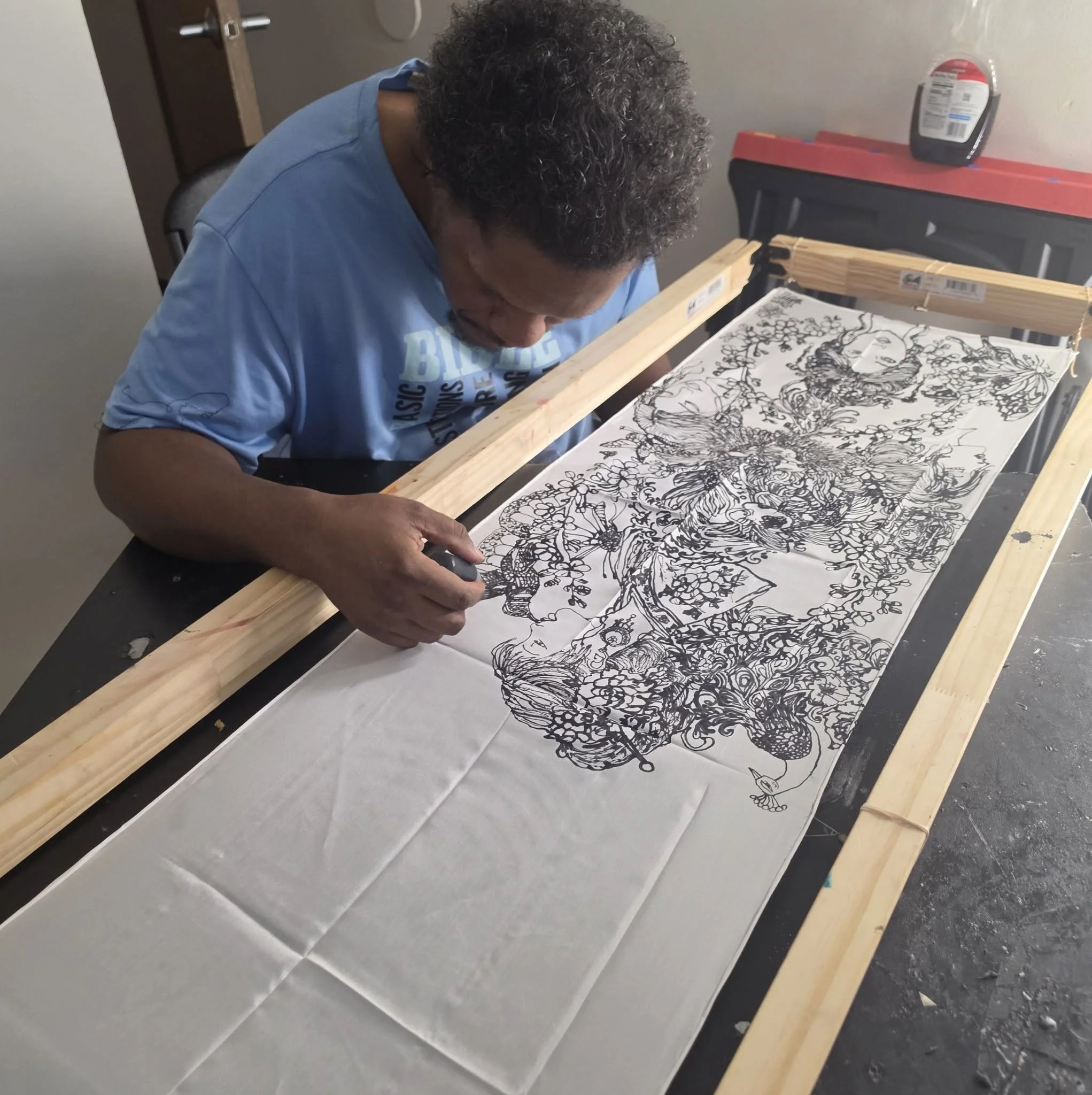
Tyrone Strother in his studio
Image courtesy of the artist
For Strother, creativity is an ongoing process of exploration, one that finds expression through different materials, disciplines and forms of storytelling. Whether working with the luminosity of silk, the physical presence of sculpture, the expressive possibilities of music or the imagined worlds of literature, his practice is connected by an interest in transformation and the potential of an idea to take on different forms.
His journey also reflects the significance of the people and experiences that shape an artist's development. From his early introduction to silk painting through Carey Clark to his participation in the Bronx Artist Documentary Project, these formative encounters have become part of a broader artistic history that continues to inform his work. The relationship between mentorship, independent exploration and sustained creative practice remains an important thread throughout his journey.
As Strother continues to develop his work and reach new audiences, his ambitions extend beyond individual pieces or exhibitions. They speak to a desire to create something enduring, while remaining connected to the experiences, influences and values that first shaped his artistic identity.
Across the many disciplines he pursues, there is a consistent belief in the importance of intention, patience and craftsmanship. Ultimately, his work invites us to look beyond the surface, to consider the stories held within materials and forms, and to recognise the possibilities of creativity as an expression of both personal experience and imagination.
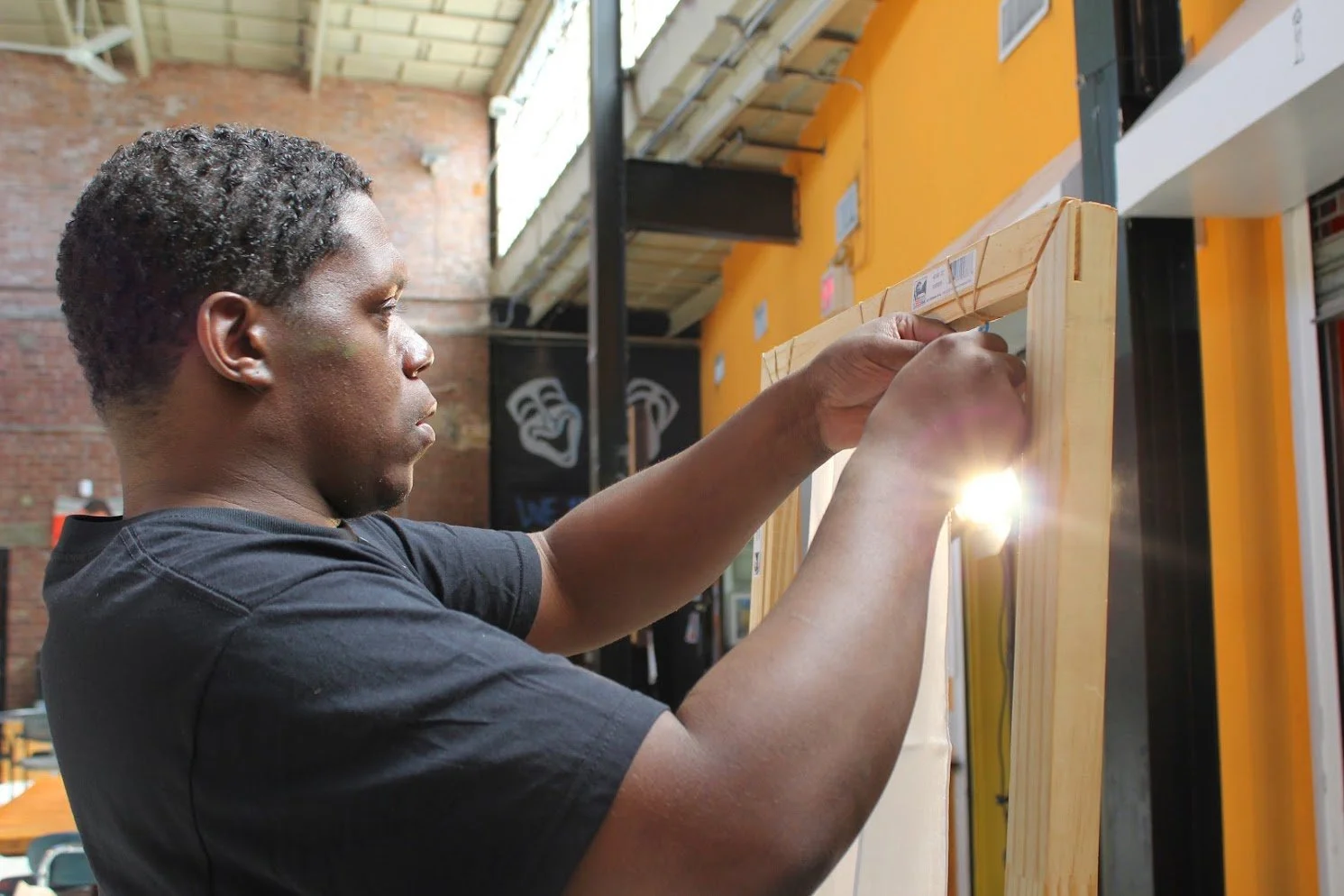
Tyrone Strother in his studio
Image courtesy of the artist
To further explore Tyrone Strother’s work, visit his website and follow him on Instagram. The artist is represented by L’Original Gallery in Montréal.