THE GRADIENT: SEBASTIAN ŚCIGALSKI
“I feel that the world is already loud enough and overloaded with information. I wanted my paintings to become the opposite of that.”
For over a decade, Sebastian Ścigalski spent years in advertising, where every visual element has a job to do. His painting practice is a direct counterpoint to that. Debuting his work in 2025 after years of keeping it private, Ścigalski has found a visual language that prioritizes feeling over meaning.
Here is our conversation on the life of an artwork outside the studio, his transition from art direction, and the power of a quiet mind.
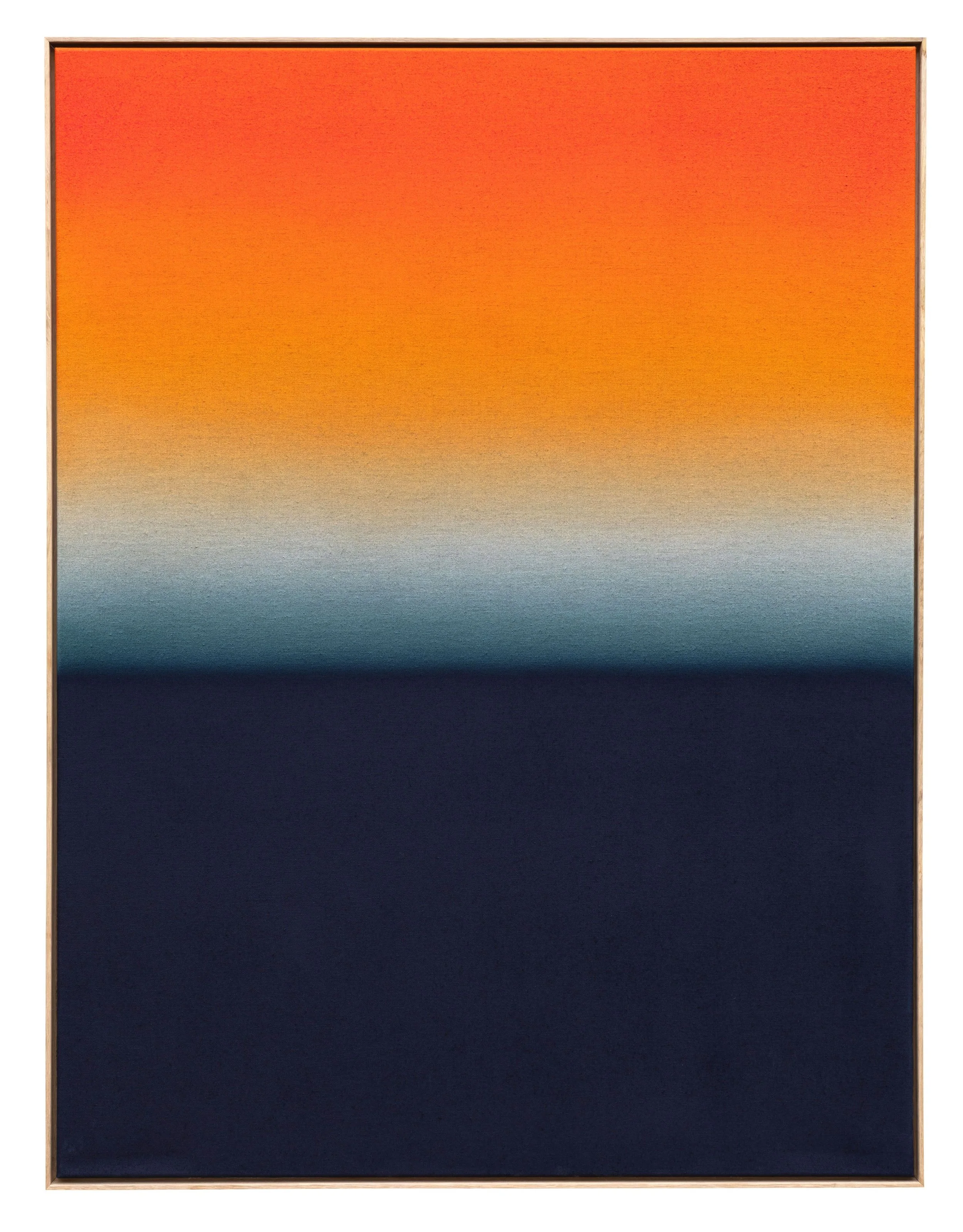
Tonale 001, Sebastian Ścigalski, 2025
Do you remember when art entered your life? Did you make something as a kid?
I’ve been drawing and painting for as long as I can remember. As a child, I spent countless hours drawing and painting. My father is a painter, so art was always a natural part of our home. I still remember the distinctive smell of turpentine – it was as familiar to me as the smell of home itself. My father painted in our apartment, stretching canvases from floor to ceiling. As a child, they seemed enormous and left a lasting impression on me. Looking back, I think that’s when my fascination with painting truly began.
That fascination has never left me. Even when my professional career led me into graphic design, painting always remained an important part of my life.
I would also like to know if there are any artists that had an impact on you?
The first person who had the greatest influence on me was my father. Watching him paint made art feel like something completely natural from a very early age. As a child, I was deeply fascinated by the paintings of Jan Matejko. I still remember being amazed by their monumental scale, incredible attention to detail, and the way they told stories. Later, I discovered the works of Jacek Malczewski and Stanisław Wyspiański, who introduced me to a completely different dimension of painting.
Among international artists, I have always admired Caravaggio, Claude Monet, and J. M. W. Turner – each of them had a unique way of working with light. Mark Rothko, on the other hand, had a profound influence on the way I think about color, space, and presence in painting today.
That said, I don’t try to follow any single artist. I’m inspired by creators who are able to achieve depth through simplicity and who can say a great deal using very little.
“Color stops being just color and begins to create atmosphere and space.”
Your work with art began a long time ago. In 2008 you were an art director, but your first exhibition was in 2025. What gave you the push to share your works with others?
For many years, painting was something I pursued alongside my work as a graphic designer and art director. I constantly experimented with different techniques and ideas, but nothing truly felt like the direction I wanted to dedicate myself to.
Ironically, it was my many years in design that taught me a painting doesn’t always have to communicate a specific message. In advertising, every element is expected to convey information. In painting, I began searching for the exact opposite – a space that doesn’t have to explain anything.
The breakthrough came around 2022, when I started working with smooth tonal transitions on raw linen. I painted my first large-scale works, measuring 170 × 130 cm, and I still remember the impact they had on me. For the first time, I felt that I had found my own visual language. Experiencing these paintings stirred something deeply emotional in me – not only because of the color itself, but also because of the material. The raw linen is left unvarnished; it remains a living fabric that constantly changes depending on the light and the viewer’s angle. That’s why I believe my paintings are best experienced in person.
Everything I had created before naturally faded into the background. Only then did I feel I had found something that was truly my own – something worth sharing with others. That was the moment I decided to present my work publicly.
How did your first exhibition make you feel? Can you share some memories from that day?
My first exhibition didn’t take place in a gallery. Instead, I took three of my paintings and walked the streets of Kraków with them. My original intention was simply to photograph the works in different locations around the city, but it quickly became clear that the paintings themselves were attracting people’s attention.
Complete strangers – both young and old – stopped to look. They asked if they were really paintings, came closer to examine the texture of the canvas, and started conversations with me. Some stayed only for a moment, while others talked with me for much longer. It was a fascinating experience because, for the first time, I was able to observe how my work functioned outside the studio and how people reacted to it without having intentionally come to see it.
That was the moment I realized that paintings truly begin to take on a life of their own when they encounter a viewer. It confirmed my belief that they were meant to be shared with the public.
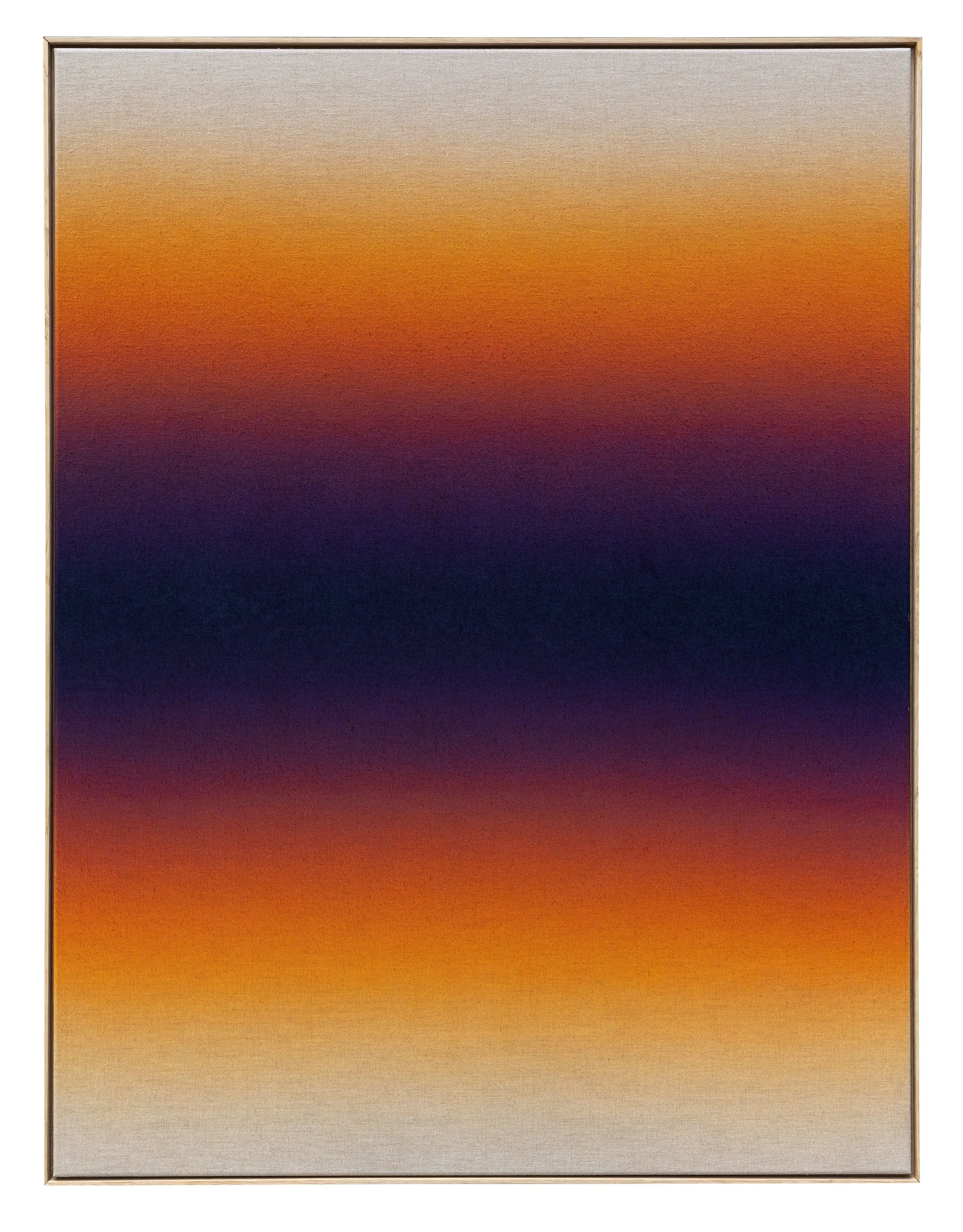
Tonale 005, Sebastian Ścigalski, 2026
You work mainly with gradients. Why is this concept exciting for you?
What fascinates me most is the fluidity of the transitions between colors. When you look at the painting up close, your mind almost stops noticing the exact point where one color ends and another begins. The boundary nearly disappears. Even today, I can spend a long time observing this effect in my own paintings – watching how a color emerges almost imperceptibly, gradually changes in intensity, and seamlessly flows into the next shade.
I have the impression that as the eye slowly moves across these transitions, the brain begins to perceive them almost like a subtle animation. The painting itself remains completely still, yet the act of looking creates a sense of movement and continuous transformation. I find that experience almost hypnotic.
That is the moment that interests me the most. Color stops being just color and begins to create atmosphere and space. Through these subtle transitions, I can evoke a sense of light, depth, and stillness without relying on defined shapes or sharp edges. I believe that the less obvious these transitions are, the more they engage the viewer’s eye and invite them to spend time with the painting.
Have you tried experimenting with other styles?
Yes. Before arriving at my current way of working, I experimented with many different approaches. Through that process, I gradually discovered what truly resonated with me. Over time, I stripped away everything that felt unnecessary until only the essential elements remained: color, light, space, and balance.
That doesn’t mean I’ve stopped experimenting. Quite the opposite – I have many ideas for developing this technique further. I want to continue exploring tonal transitions while incorporating different materials, pigments, and new approaches. For now, though, I’d rather keep those ideas to myself.
One of the things I find most fascinating about creating is that each painting opens the door to new possibilities. Even while I’m working, new directions often begin to emerge somewhere in the back of my mind – ideas that I later want to explore. That creative process doesn’t end when I leave the studio. When I’m walking, observing nature, light, and shifting colors, my mind is still at work. Even when I’m not painting, I’m imagining new paintings and developing them in my thoughts.
I feel that a painting is never created exclusively in the studio. That’s where its physical form begins, but it starts taking shape long before that – and continues to evolve in my mind long afterward.
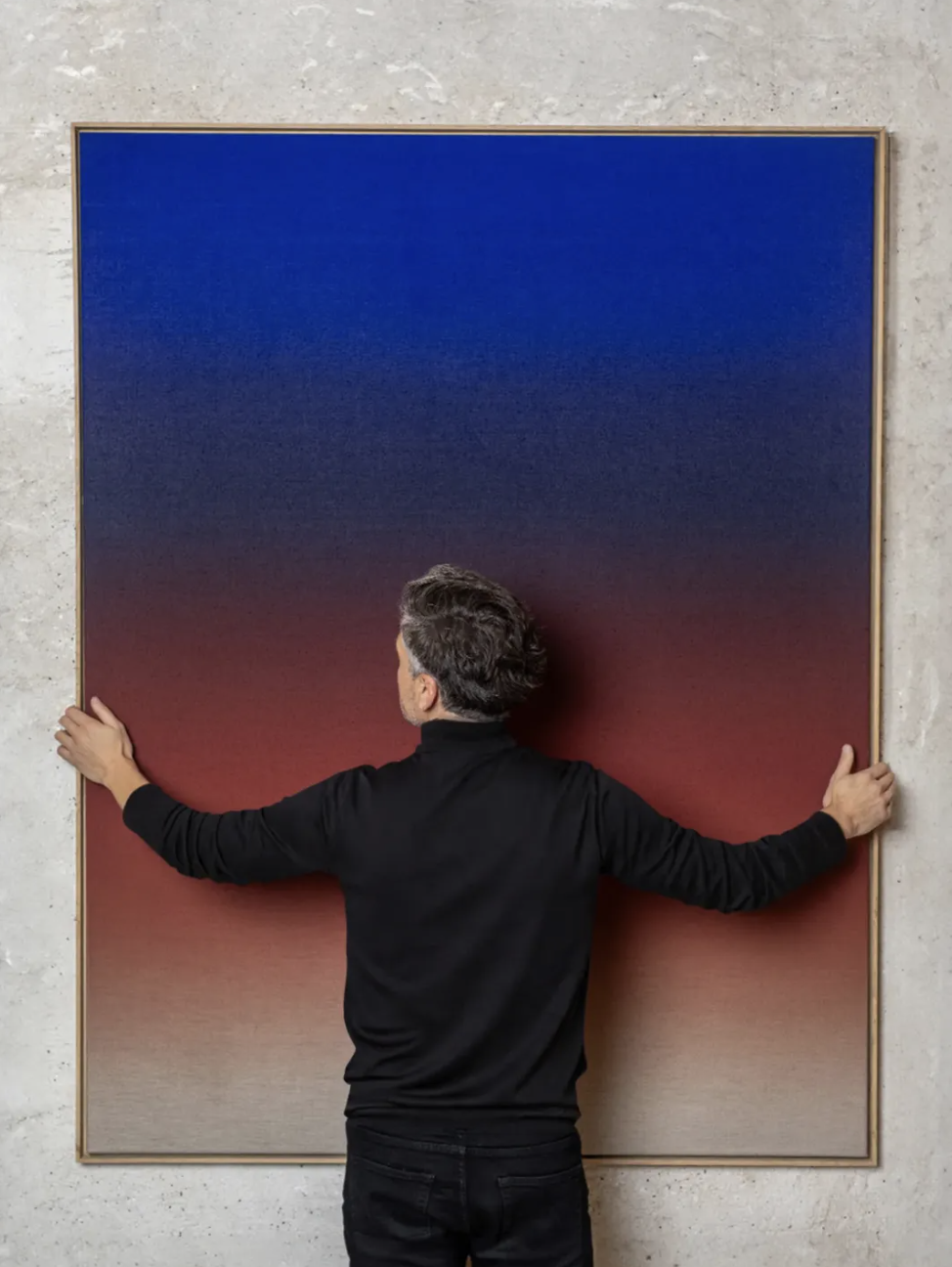
Work in progress; courtesy of Sebastian Ścigalski.
In your own words: "My paintings are not intended to describe or explain." Let's skip the meanings – could you to share your creative process behind your TONALE series?
The idea for the TONALE series grew out of a fascination with a particular state that we all experience from time to time. There are moments when our thoughts simply pause, and only afterward do we realize that, for a brief instant, we weren’t thinking about anything at all. It’s a very short-lived but incredibly valuable state of presence. I wanted to create paintings that could offer viewers a similar experience.
That’s why, when I paint, I’m not thinking about telling stories or conveying specific meanings. I’m not interested in commenting on politics, social issues, or illustrating reality. I feel that the world is already loud enough and overloaded with information. Every day we’re bombarded with news and endlessly scrolling through new content.
I wanted my paintings to become the opposite of that. Rather than adding more information, I want them to create space for stillness and pause. They don’t impose an interpretation – they leave room for the viewer’s own emotions, perceptions, and experiences. Everyone is free to discover something different in them, or just as easily, to look for nothing at all and simply spend a quiet moment with the painting.
You've mentioned before that interpretation gets in the way of experiencing the present. Are you asking the viewer to turn off their analytical mind and simply experience the artwork, or is that philosophy more about your own mindset while creating?
This is primarily my own approach to painting, but I hope the viewer can experience something similar. I’m not asking anyone to stop thinking. I simply hope they allow themselves a brief moment before analysis begins – a moment of simply looking, feeling, and being present.
I don’t see anything wrong with my art being reduced to that simple experience. In fact, I feel that in today’s world, the ability to pause and simply look – without the immediate need to interpret – has become increasingly rare. If someone spends a few minutes with one of my paintings, simply looking at it without searching for hidden meanings, that is just as valuable to me, perhaps even more so, than the most elaborate interpretation.
If I’m able to create that kind of moment, even for just a few seconds, I feel the painting has fulfilled its purpose.
What is the idea or thought you would like people to carry away with them after seeing your works at this exhibition?
I’ve thought about this question many times, and I’ve come to the conclusion that I don’t want to impose any particular emotion or way of thinking on the viewer. It’s not important to me that people feel exactly what I feel when they look at my paintings.
What I hope instead is that they pause for a moment and enter a state of contemplation. I would like the painting to become the beginning of an inner dialogue – or simply a quiet moment of being present with themselves. What they think about during that time, or whether they think about anything at all, is entirely up to them.
If, after leaving the exhibition, someone looks at the world around them just a little more attentively than before, I will be happy. I believe that these small shifts in the way we perceive the world are often the most meaningful.
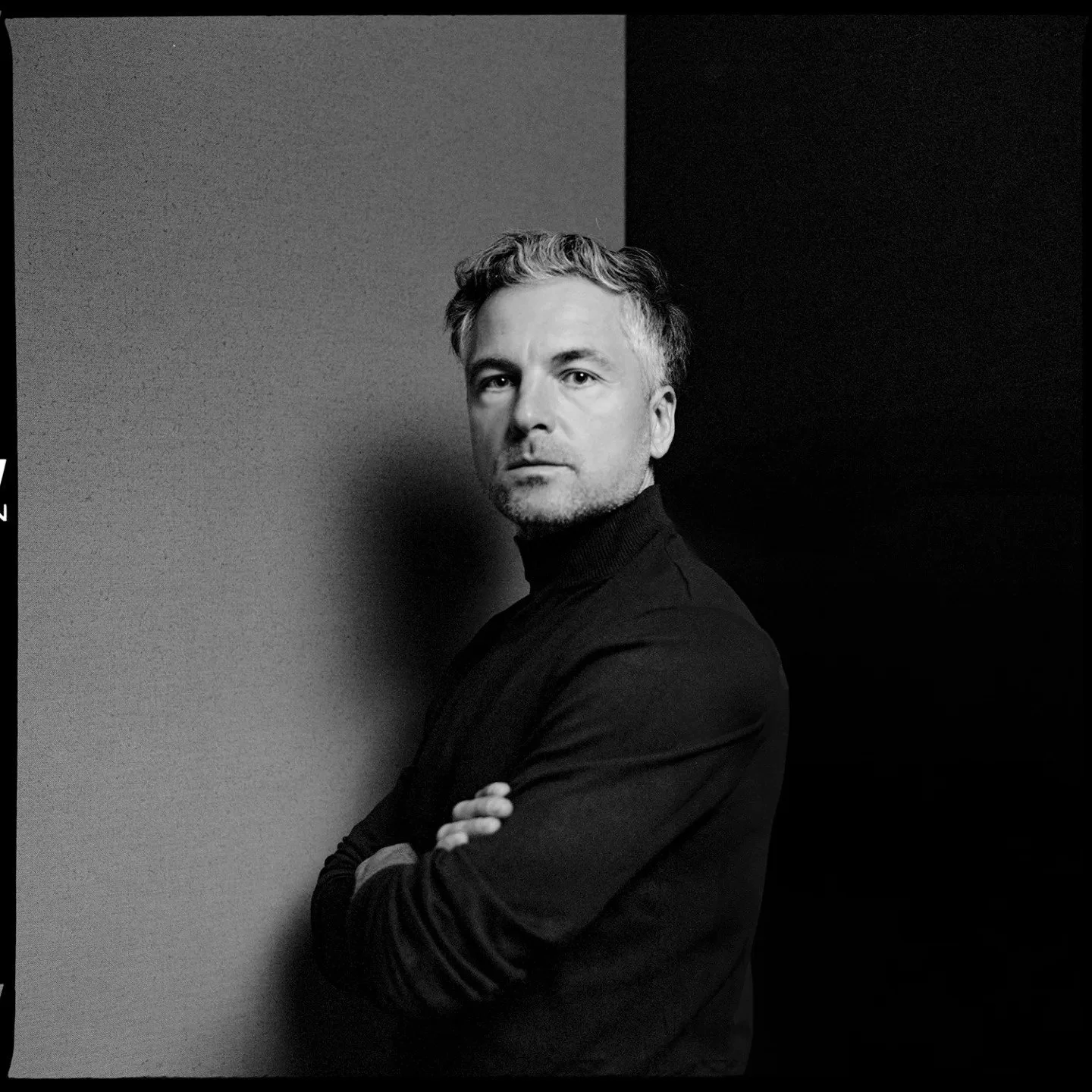
Sebastian Ścigalski; courtesy of Sebastian Ścigalski.
The borders in Ścigalski's work are invisible, much like the line between thinking and simply being. As his gradients flow seamlessly from one shade to the next, they mirror the continuous, hypnotic flow of the present moment. The TONALE series is an environment to inhabit, allowing us to quiet the analytical mind and experience the pure weight of color.
To learn more about Sebastian Ścigalski’s practice, visit his website.
Tonale 001 and Tonale 005 are featured in the online exhibition Color as Concept, on view from 5 June to 20 July 2026, through Ambrose Creatives.
Article by Vasya Kavka
Based in Ukraine, Vasya Kavka is a writer working at the intersection of contemporary art and digital culture. Through his platform @ambient.delusion, he researches emerging and underground artists, publishing interviews and editorial features that move beyond aesthetics to examine context, creative process and cultural relevance. His work is driven by curiosity and a commitment to thoughtful, accessible storytelling that situates artistic practices within the broader currents shaping contemporary culture.