
THE PARADIGM SHIFT: THE ARTIST AS BRAND AMBASSADOR AND STORYTELLER 2.0
The case study of Martina Cabrini between fashion, beauty and cultural institutions: live drawing and visual storytelling for MaxMara, Archetipa SkinCare and Fondazione Magnani-Rocca
In recent years, the relationship between art and business has begun to evolve into increasingly fluid forms. It is no longer just about cultural sponsorships or occasional collaborations, but rather a true process of the “artification” of business, in which the artist becomes an active part of the symbolic construction of the brand.
Within this context, an increasingly relevant professional figure emerges: the artist as a visual storyteller, capable of transforming events, products, and places into narrative experiences.
The work of Italian artist Martina Cabrini fits precisely within this trajectory. An illustrator and visual artist with a background spanning editorial illustration, fashion design, and styling, Cabrini has developed in recent years a practice that combines live drawing, illustration and visual design for events, collaborating with fashion brands and cultural institutions.

Courtesy of Martina Cabrini
Her style, painterly, evocative, and figurative, becomes a tool capable of translating a brand’s identity into signs, gestures, and images created live, transforming art into a language that is immediately shareable.
In the new landscape of the creative economy, the artist is no longer merely the author of works, but a visual interpreter of brand identity. Martina Cabrini’s path shows how illustration, live drawing, and artistic content can be transformed into strategic storytelling tools for fashion, beauty and cultural institutions.
“Unlike traditional commissioned illustration, live drawing introduces a performative dimension: the artwork is created in front of the guests and becomes an integral part of the event experience.”
Live drawing: when the event becomes an artistic experience
One of the most interesting devices in Cabrini’s work is live drawing, a practice that is increasingly widespread in brand events and collection presentations.
Unlike traditional commissioned illustration, live drawing introduces a performative dimension: the artwork is created in front of the guests and becomes an integral part of the event experience.
A significant example is the collaboration with Max Mara Fashion Group for the presentation of the Magic Circus capsule collection. In this case, Cabrini did not limit herself to creating portraits of guests, a widely used format in fashion events, but developed illustrative sketches directly inspired by the imagery of the collection, transforming the act of drawing into a narrative extension of the brand.
The result is an extremely effective communication device, as it produces unique and non-replicable visual content, generates immediate engagement among guests, and strengthens the perception of brand authenticity. In other words, the artist becomes an experience activator, capable of transforming a corporate event into a moment of cultural production.
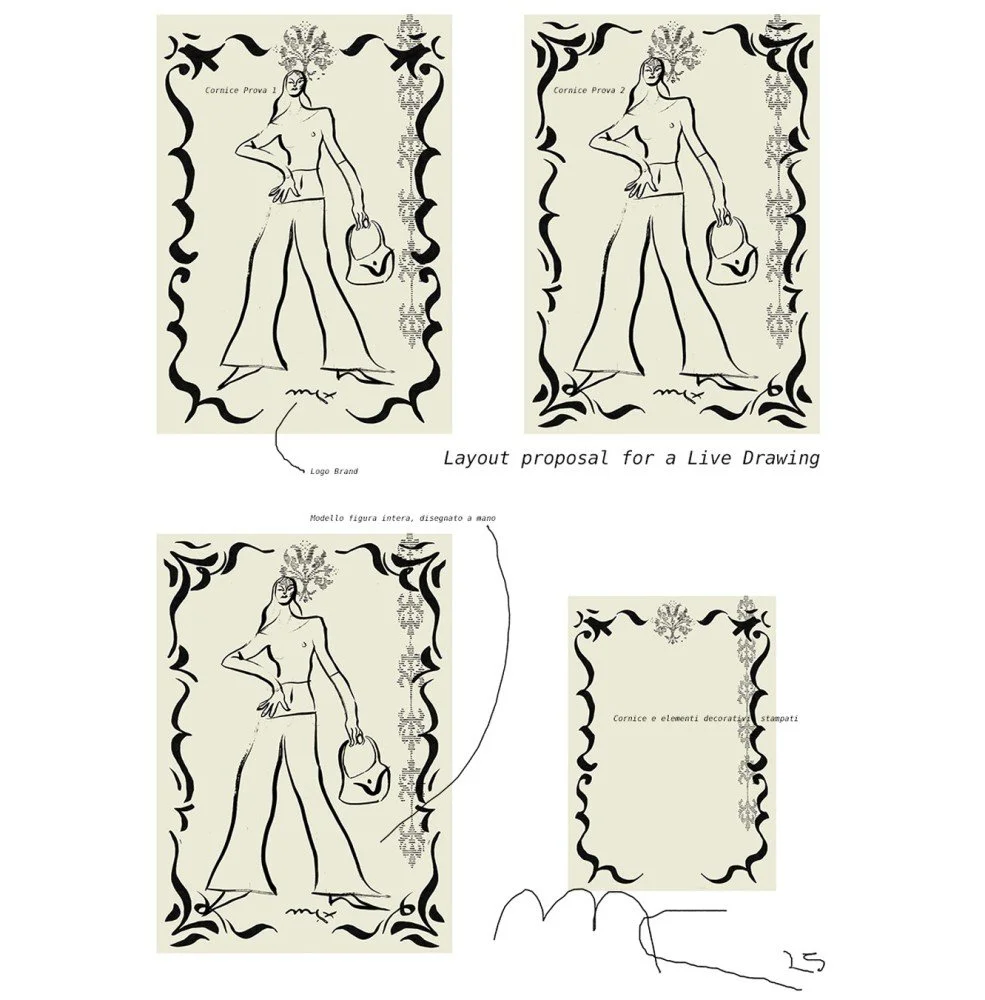
Courtesy of Martina Cabrini
The artist as a cultural ambassador
However, the relationship between artist and institution can go beyond the temporary event. In some cases, the artist becomes a true cultural ambassador, a figure who contributes to narrating and interpreting the heritage of a place through new visual languages.
This is the case of the collaboration between Martina Cabrini and the Fondazione Magnani Rocca, the historic “Villa dei Capolavori” set in the countryside of Parma, which houses one of the most important European art collections, with works by Monet, Cézanne, Titian, Goya, Morandi, and many others.
Within this context, Cabrini does not operate as a simple illustrator, but as a visual mediator between the institution and the public. Her work includes the creation of artistic content to narrate exhibitions and events, the visual design of the foundation’s materials, the development of graphic elements related to the Romantic Park, and workshop activities aimed at the public.
Here, the artist performs a strategic function: translating a complex cultural heritage into a contemporary visual language, accessible especially to younger generations. In terms of cultural communication, this represents an important shift: the institution no longer merely preserves art, but activates new narrative processes through the artists themselves.
From fashion to beauty: art as the visual identity of brands
Another interesting aspect of Cabrini’s trajectory is her recent expansion into the beauty sector. The collaboration with Archetipa SkinCare represents a further example of how art can become a tool for identity-building for emerging brands.
In the case of Archetipa, the artist had the opportunity to explore new illustrative techniques and new visual languages, developing artistic content designed to convey the identity of the brand and its product line. The work does not merely consist in producing images, but takes shape as a true aesthetic research capable of translating the brand’s values into a coherent visual narrative.
The beauty sector is particularly fertile for this type of experimentation. New-generation brands increasingly seek distinctive aesthetic languages, capable of differentiating themselves within the saturated landscape of cosmetics and communication.
In this scenario, the artist does not simply provide decorative images, but contributes to the construction of a recognizable symbolic imaginary.
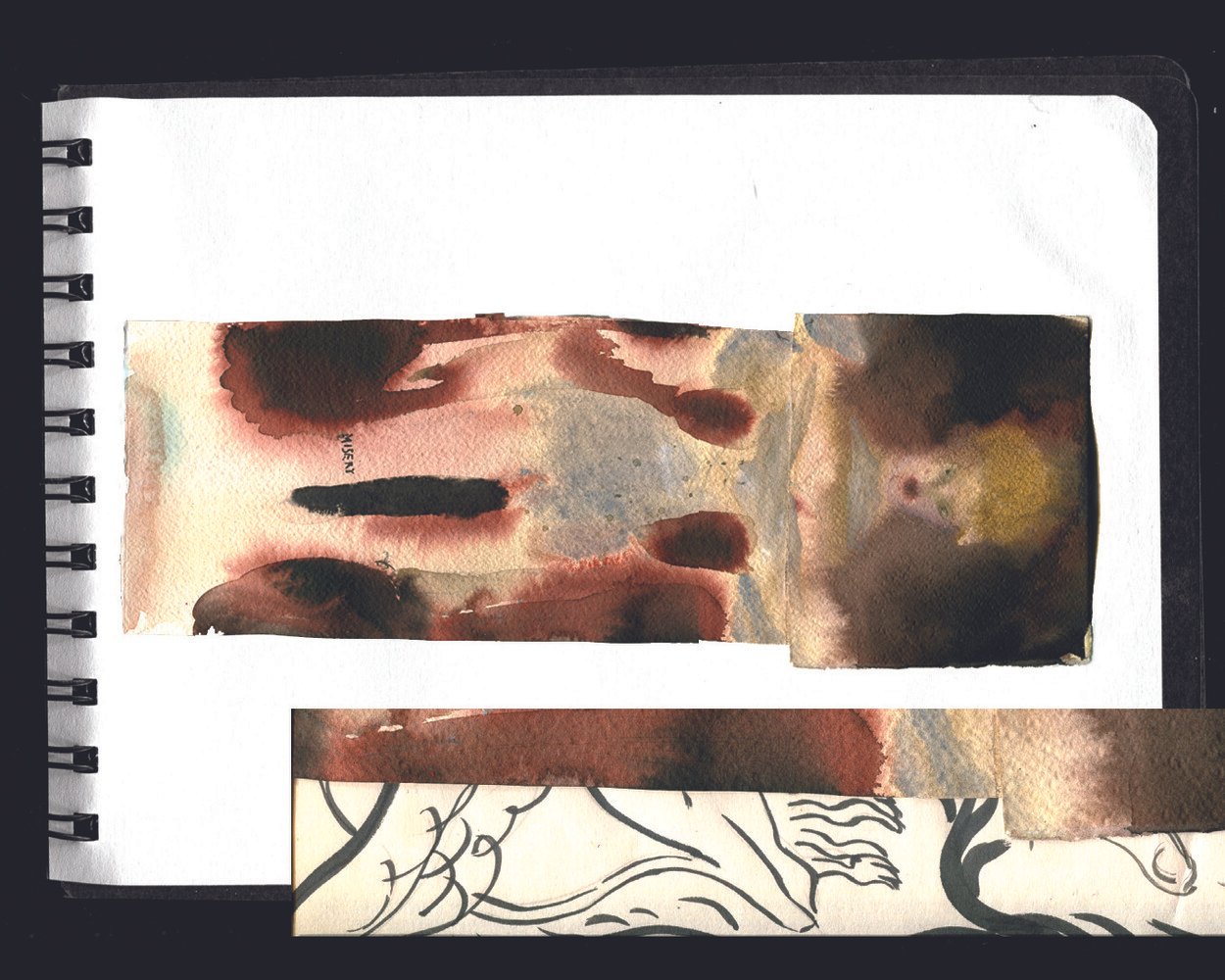
Courtesy of Martina Cabrini
Art and business: an increasingly strategic model
The case of Martina Cabrini clearly shows a broader transformation. Today, the contemporary artist can take on multiple roles within the brand ecosystem:
cultural ambassador for institutions, territories, and brands
cultural strategist and intellectual capable of supporting corporate decisions from an ethical, aesthetic, and philosophical perspective
holistic and unconventional designer who visually reinterprets brand identity
performer in corporate events, in-store experiences, or team-building activities
These functions do not, of course, exhaust all possibilities. The relationship between artist and business is in constant evolution and can take on many other nuances: from the design of brand imaginaries to the creation of cultural content, up to the construction of actual narrative ecosystems around brands.
What is emerging with increasing clarity is that, within the attention economy, brands no longer compete solely on products and services, but on imaginaries, symbols, and cultural experiences. And it is precisely here that art becomes a strategic asset.
When authentically integrated into corporate communication, art is not a mere decorative element: it becomes a language capable of generating meaning, emotion and symbolic value. In other words, it becomes culture.
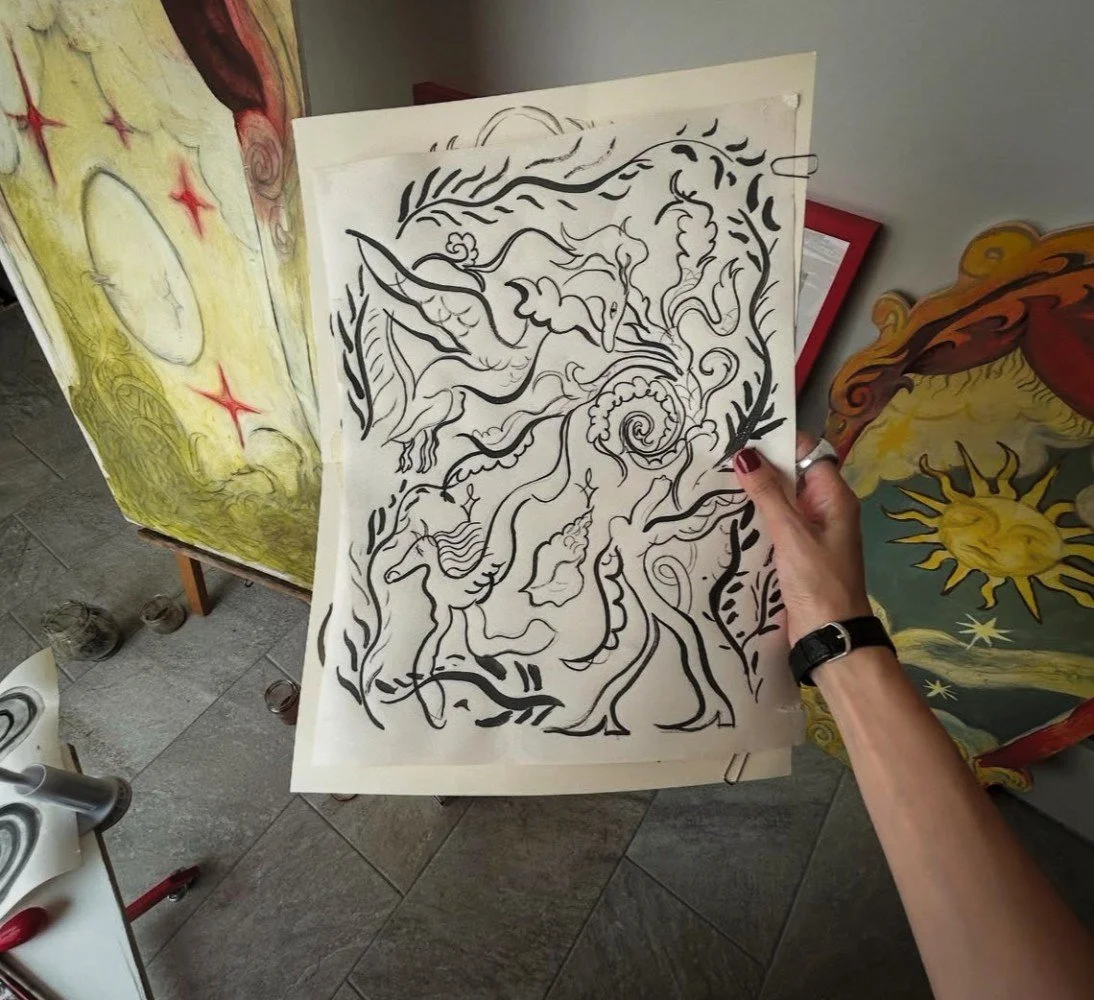
Courtesy of Martina Cabrini
Article by Enrico Dedin
Media artist active since 2013, with over 80 exhibitions worldwide. His works are part of the catalogue of Heure Exquise!, distributor of the audiovisual collections of the Musée du Louvre and the Musée d’Orsay. He has been selected for major events and exhibitions, including the 16th Videoart Yearbook curated by art critic Renato Barilli, the Collettiva Giovani Artisti of the Fondazione Bevilacqua La Masa, and The Wrong Biennale, receiving numerous awards and recognitions over the years. His artistic research has also been included in the volume “L’arte del XXI secolo. Temi, linguaggi, artisti” by Viviana Vannucci, professor and international curator. Alongside his artistic practice, he works as an Art Director in the field of multimedia communication. Operating at the intersection of art and communication, he coined the term “Artivator” to define a new role of the artist: a cultural activator for brands, territories, and entities outside the art system. He is also the author of the literary manifesto of Metaluddism, published in the aperiodical Il Foglio Clandestino.