
THE DARKROOM: MARIANA ROMÃO
“The darkroom becomes a space where I can literally step outside of the contemporary speed regime. There is something I can only find in the dark.”
What is a photograph when you remove the camera? For Paris-based, Lisbon-born visual artist Mariana Romão, it isn’t a departure from the medium - it is a return to its absolute essence. Romão approaches the photographic process not as passive documentation, but as a calculated performance. Whether she is navigating the high-speed choreography of live runways or executing raw chemical movements in the pitch black of her studio, her practice relies on a deep understanding of staging, timing, and presence.
In this conversation, Romão discusses her camera-less series Meditations, the structural balance between control and chance, and how ancient philosophies taught her the necessity of creative surrender.
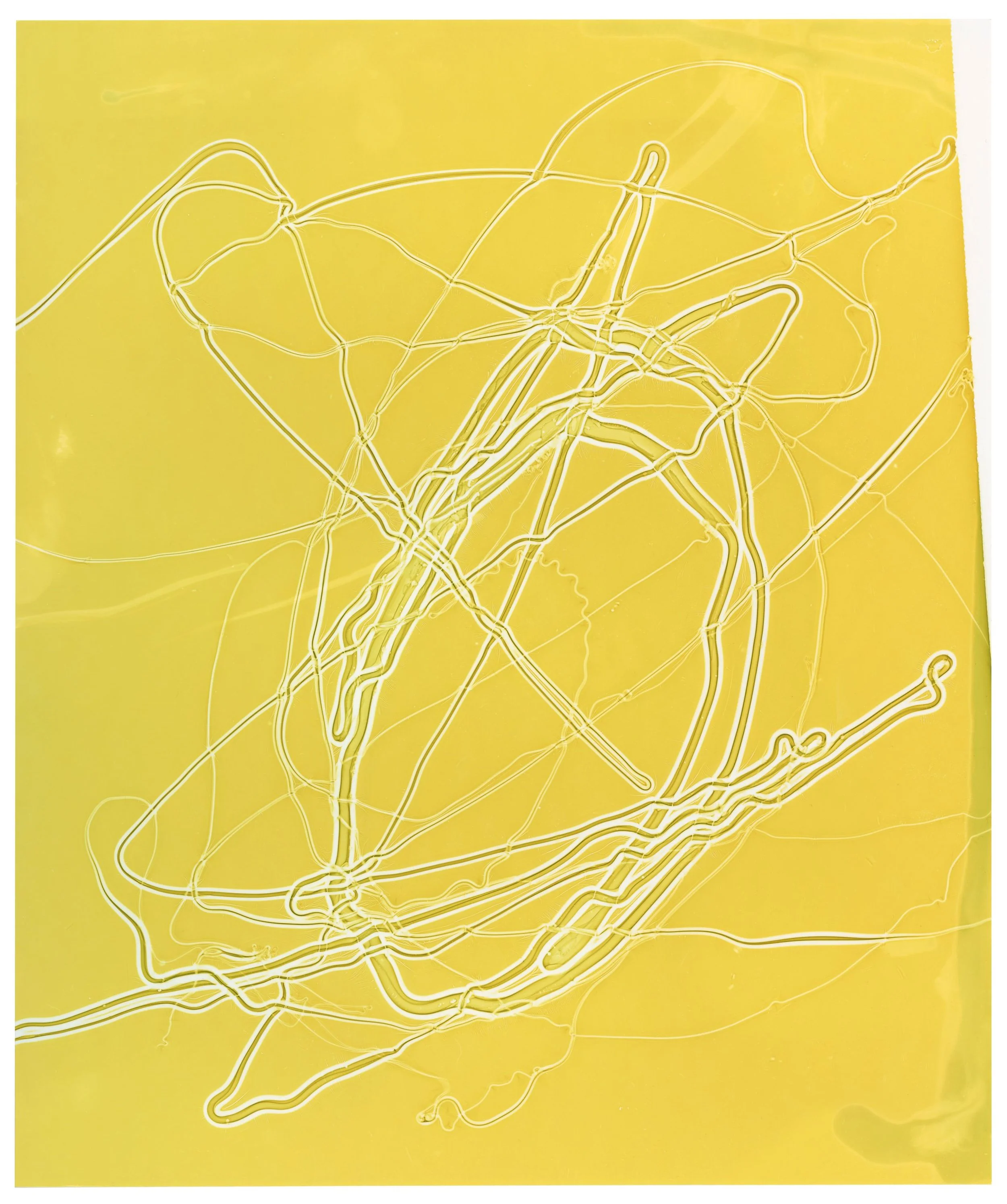
Shifting, Mariana Romão, 2025
You’ve mentioned that you treat darkroom photography as a plastic medium similar to painting or sculpture. With a camera-less project like Shifting, where the image is reduced strictly to light and chemical reactions, do you feel you are pushing photography to its absolute limit, or are you stepping outside the definition of photography entirely?
Photographs like Shifting are certainly far from the most common idea of photography, but photography literally means "writing with light" or "drawing with light", from the Greek words phōs ("light") and graphé ("writing", "drawing", or "recording"). It can be confusing to accept a photograph made without a camera, but when you are in a darkroom, you are actually inside a large camera. Instead of opening the shutter to let light in, you produce the light from within. It's like magic.
Most people associate photography with images that represent the visual world "as we see it". That doesn't make them real or true. Duane Michals has a work entitled This Photograph Is My Proof, and it represents well the idea that photography is accepted as an exact representation of "reality", a proof of a specific moment. But a photograph is a choice: it excludes everything outside the frame, which makes it an obviously subjective matter. We tend to trust figurative images because they feel close to us. But can we keep that belief knowing it is a medium incredibly easy to manipulate? And now, facing the rapid and accelerating development of AI, we are forced to see the truth: an image is just an image. Reality is an interpretation.
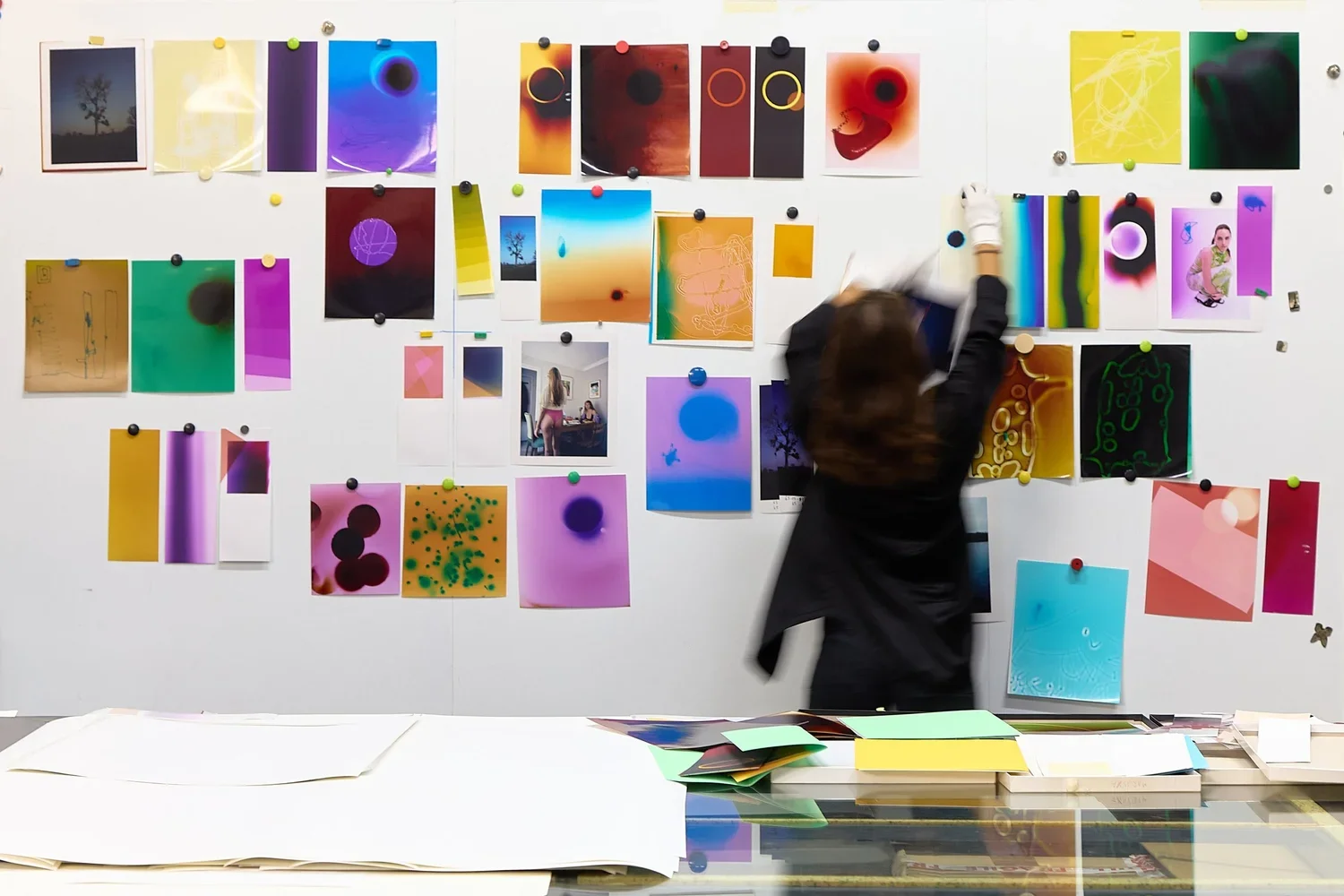
Yes, Shifting and all the images from the Meditations series are camera-less, abstract images, but they are still records of a moment, where shapes and movements of light are fixed. In that sense they are as "real" as any figurative photograph. They are not the limit of photography, but its essence. In this series I am working directly with photography's own materiality: light, a light-sensitive surface, photographic paper, that captures it, and a chemical development process that reveals it (RA-4 color process).
What also sets these alternative processes apart is the absence of reproducibility. These photographs are unique. There is no edition of 10, 30, or 60 prints from an original negative, a factor that also brings them closer to fine art objects. A photograph is an object. You can engage with it the way you would with any other plastic medium: you can use a brush to develop a photograph, or use objects to cast shadows and produce photograms. Of course, photography has its own singular characteristics, but it shares a great deal with other artistic disciplines like painting and sculpture. Since its invention, art history has shown how these disciplines continuously influence and feed one another. The medium is simply a way to communicate something, a language you feel comfortable with to represent, describe, or think about a subject that matters to you.
“Sometimes what appears as a mistake becomes something more interesting than what I intended. Instead of correcting it, I try to respond to it.”
Recently you’ve experimented with using the full moon as a primary light source for larger formats. Given that moonlight has a completely different intensity and quality than an enlarger or a studio lamp, how did the photosensitive paper respond to this natural light? How did stretching that duration change your physical process, and how do you handle the vulnerability of having zero control over the environment?
This project was a real challenge. I need to thank Fee, Lars, Daniel, and Guillaume, who helped me make it happen. I often visit my friends' countryside house, where we not only spend time together but sometimes work in their colour darkroom. They had always been encouraging me to try larger formats and push my own limits. So, I had this slightly crazy idea: to do it in the backyard during the next full moon. I went to a shop and bought eight plastic children's swimming pools to use as developing baths, then went out and filled them with chemicals.
As you can imagine, control was largely impossible in that environment. Although I had done some tests in the days before, full moon light is remarkably strong, and an outdoor "camping lab" setup is difficult to manage. In the darkroom I can switch the light on and off at will, choose colours, adjust everything, none of that applies outside. So, it became a chaotic dance. Fast. I had seconds to work. No time to think. I needed to know exactly what I was going to do before taking the paper out, otherwise it would be exposed and ruined almost instantly. One done, next. Two done, next. In between, I had to stay clear about every movement and every second.
It was late, and I am not used to working at night. I was also used to my intimate, quiet, solitary darkroom, and this was the complete opposite: large, messy, with a small audience of friends watching me act strangely in the dark. It was a genuinely interesting experience, and there were some images I really liked afterwards. I am still thinking about whether to continue with it.
I like the idea of placing myself in situations where I am not entirely comfortable, it shifts both the way you work and the work itself. To go further with it, I would need to learn to accept that certain elements cannot be controlled, get used to working at night, improve the outdoor setup, and also overcome the discomfort of asking for help. That last part doesn't come naturally to me.
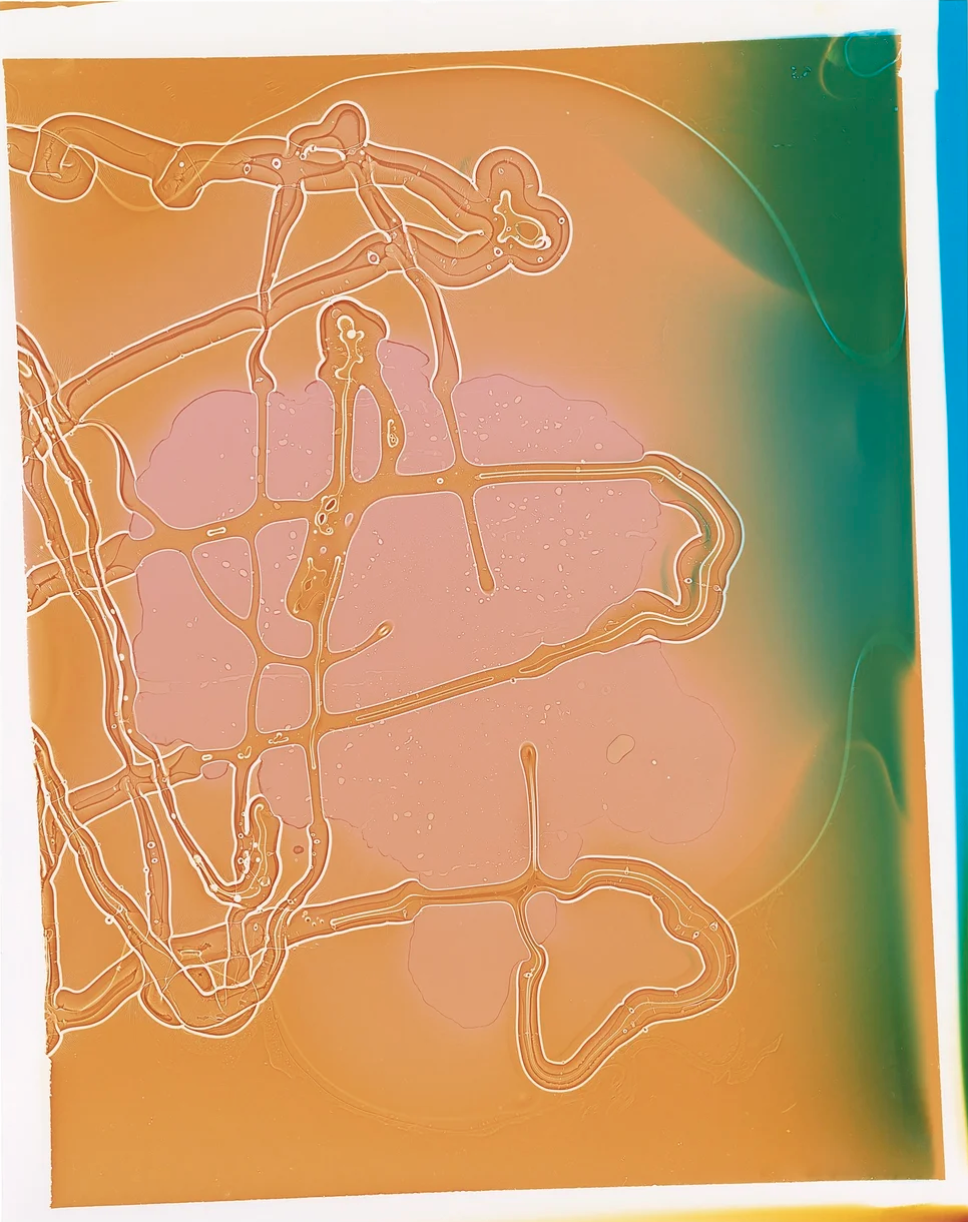
Messing Around, Mariana Romão, 2024
How do the principles of Taoism manifest in your Meditations series? How much control do you retain versus what you surrender to chemical reactions?
I grew up with no religion at home, although I am Portuguese, and Portugal is a deeply Catholic country, so its presence in the culture is everywhere. When I was about ten or eleven, there was an optional religious studies class at school. I remember asking my parents to sign me up. They were confused, but they agreed. I had not been baptized and knew almost nothing about the Bible. I went to the class and was genuinely shocked. I had learned in school that the universe most likely began with the Big Bang, and suddenly there was another teacher, a priest, trying to convince me that was not true, and telling me about Adam and Eve. What troubled my child's mind even more was that Eve was expelled from paradise for eating an apple. Of course. I now understand the metaphors better, and I deeply respect religious people, but at the time I was honestly bewildered.
I started studying photography at nineteen, and around the same age I began travelling. Asia was a natural destination: affordable, and completely different from anything I knew. I went to Vietnam, Laos, and Indonesia, where people lived their spiritual lives in entirely different ways. I met people from deeply different cultures and backgrounds, and something in it resonated with me immediately. It rang a bell.
These philosophies share ideas and ways of being that feel entirely free and in harmony. They inspired me to see, act, and feel differently, and that has naturally had an impact on my work. I absorb what feels precious to me. These ancient Asian philosophies helped me accept the basics of being human, and that this need to surrender is deeply woven into both my life and my work.
Meditations is largely about this search for harmony, a way of observing something and accepting it rather than resisting it. The process of making these photographs is almost like a performance. I can predict certain things: the colours, the intensity of the light sources I use, the size of the paper, the objects I choose to work with, the quality and state of the chemicals. But I will still be in complete darkness, the way I move will always be slightly different, and development can go wrong in unexpected ways. Experimental work is often risky, and the results are not always what you imagined. Sometimes what appears as a mistake becomes something more interesting than what I intended. Instead of correcting it, I try to respond to it. These concepts are, at least to me, a kind of logic. They are rooted in nature and in the way elements flow. They teach you to live in harmony. It is a very simple philosophy, and yet not at all easy to put into practice.
Runway photography requires split-second reactions to fast-moving figures under intense, predetermined commercial lighting. The darkroom, by contrast, is a meditative sanctuary where you choose to work in complete darkness. How do you mentally and creatively switch between the hyper-accelerated chaos of a fashion show, like Vivienne Westwood or Alain Paul, and the slow, deliberate rhythm of your abstract art?
The moment light touches the paper in the darkroom can actually be faster than pressing a shutter, but the overall process is indeed something entirely different.
To be honest, I did not know much about fashion before arriving in Paris. I knew it could be a particular kind of environment, but I genuinely enjoy being part of it. The fashion world is a theatre, an industry filled with some of the most talented people you can imagine, and proportionally, some of the most complex personalities and situations. It is intense, but it is also genuinely inspiring. I have shot some backstage shows, I don't share it much, but I love it. It is like hunting: you need to move and be present at the same time. In that sense it connects to something I find in these philosophies: the idea of going with the flow. It is a completely different environment, but you can adapt your mindset to it. Even though Shifting and the Meditations series come from a deeply introspective place, it is also important to look outward. I need that balance between the two.
I love shooting with a camera, and these environments are full of life and content. I also collaborate with many fashion photographers as a light assistant and Digi-Op, which feeds me in other ways. It may not directly inform the subject of my personal photography practice, but it helps me invest in it, and it is a great place to learn, both about photography and about people.
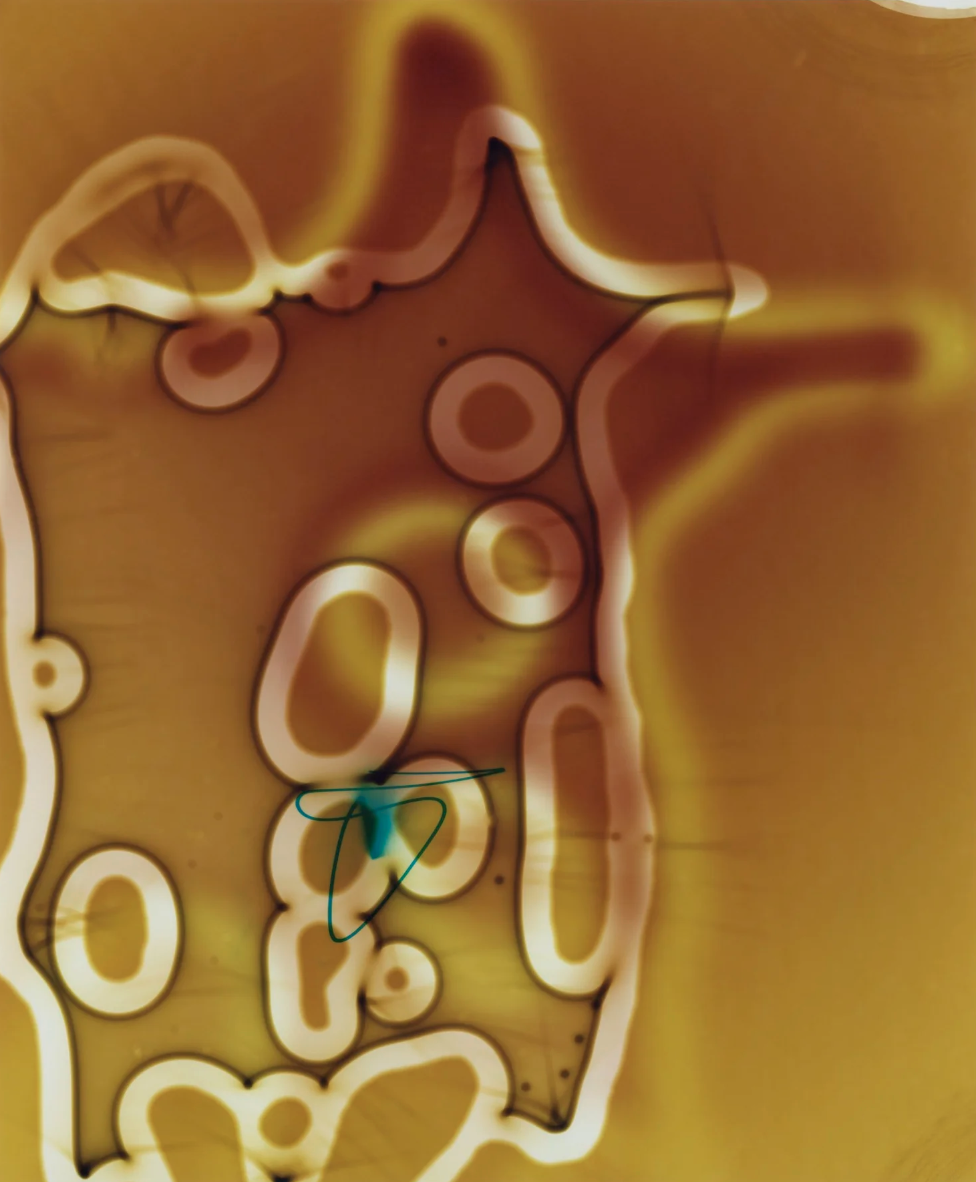
Looking for something knew, Mariana Romão, 2025
Do you see a connection between the way a model moves down the runway and the way a chemical solution fluidly spreads across photographic paper?
I had never made that connection before, but I could connect the backstage atmosphere with the way I feel when I’m developing a project, when everything is still forming in my mind. The runway itself feels more like execution: a moment where everything needs to be precise. It’s less about flow and more about clarity of action.
Does the prolonged deprivation of sight inside the darkroom alter your psychological state, and how does your perception of the outside world change the moment you step out of the darkroom back into the blinding sunlight?
We live in a hyper-connected era where everything has become immediate, reactive, with no delay for thought. The world urges us to be faster and faster, chasing an unreachable efficiency, and if we don't find spaces to slow down, we risk becoming completely alienated from ourselves.
I connect this to Paul Virilio, the French philosopher and urbanist, and his theory of the impact of technological acceleration, what he called the "tyranny of real time", arguing that speed fundamentally reshapes our relationship to time, space, and experience. The darkroom resists this almost by structural contrast: development times, waiting in the dark, repeated precise gestures, none of it can be rushed without ruining the image. The darkroom becomes a space where I can literally step outside of the contemporary speed regime.
There is something I can only find in the dark. I go there on purpose. I allow myself to also see the stars from time to time.
Can you recall the first time you shared your work with other people? How did it feel?
When I was a teenager I had the chance to study at a specialist arts high school in Lisbon, one of only two that exist in Portugal. Its structure is loosely inspired by the Bauhaus: you have access to all kinds of ateliers, ceramics, textiles, wood, design, cinema. At the time I hadn't yet encountered photography. Since I was simultaneously enrolled in a music school, I chose the scenography and costume design department, which was largely focused on theatre, performance, and the only one that let you work across any material.
I was a kind of music performer back then, I had concerts, played in bands from a young age. But I had a deep frustration with music: I couldn't compose. It was genuinely difficult for me to create a song. I couldn't sustain focus long enough, all I could produce were fragments and patterns. That frustration disappeared when I started making visual art. I could finally speak in my own words.
A teacher at that school organized an open call, it wasn't intended for students, it was a real art exhibition at an abbey in Luxembourg (Centre Culturel de Rencontre Abbaye de Neumünster). The theme was "the end of the world", which was perfect for the teenager I was, so I applied. My work was accepted.
I was seventeen. It was the first time I had travelled alone, far from home, family, and friends, to participate in a collective exhibition. I was so happy and proud. I went to the installation and the opening by myself.
It's strange, I hadn't thought about that moment in years until this question.
Years later, my first solo exhibition, Aurora, gave me the opportunity to develop a body of work, collaborate with a curator, and think about how photographs inhabit space. That felt like a dream come true.
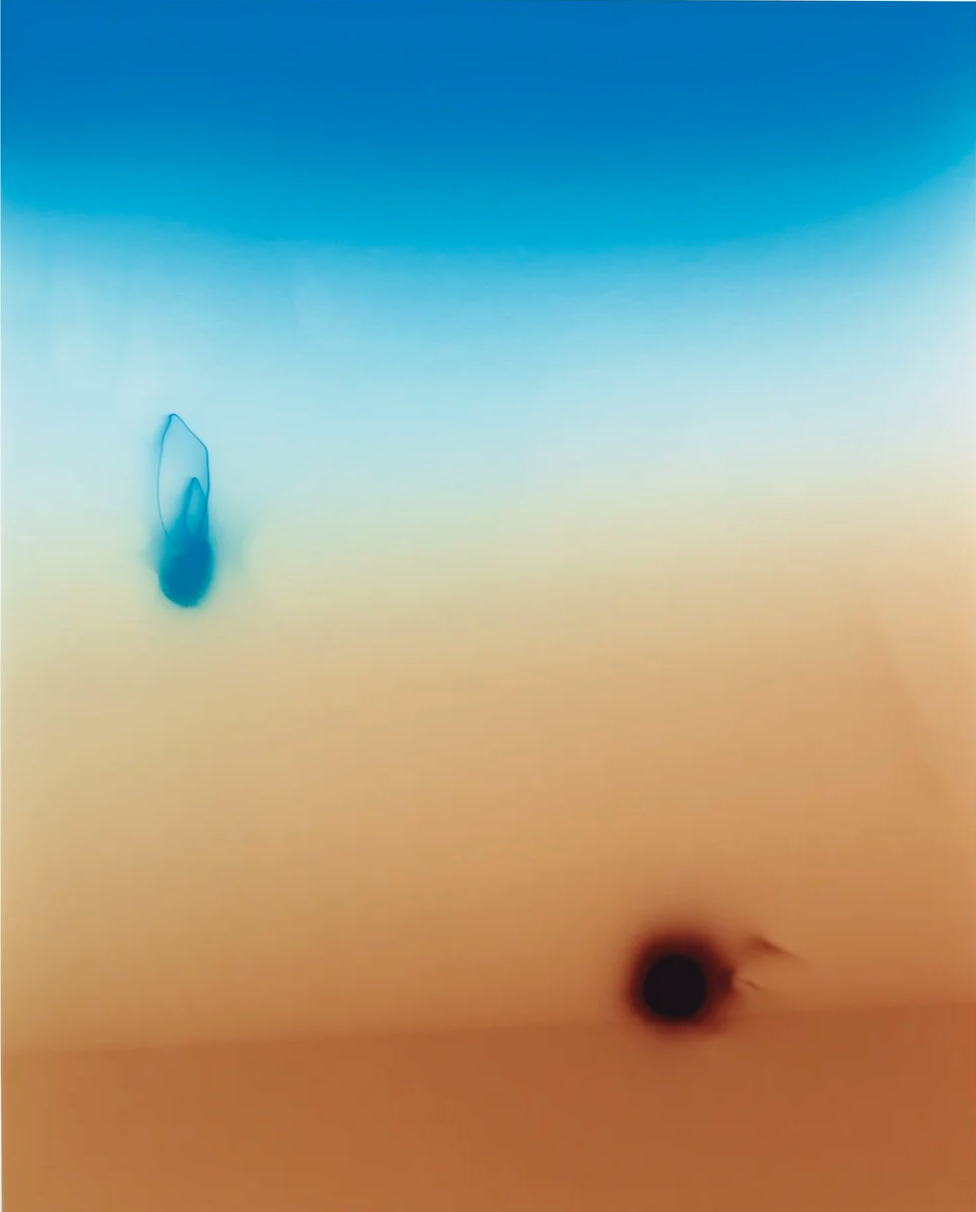
Hope, Mariana Romão, 2025
Lisbon and Paris have drastically different cultural rhythms, architectural weights, and qualities of natural light. While your work often happens in the dark or under the moon, which of these two cities do you currently find yourself more attuned to when it comes to initiating the creative process?
I moved to Paris to learn colour darkroom printing at Diamantino Labo Photo, a reference worldwide. I was supposed to stay three months, it's been four years now. I never planned it, but the city simply took me in.
Since being here I have worked with and encountered so many people and opportunities that have inspired and supported me. I am genuinely grateful to live somewhere that truly prioritises culture, art, and beauty. I can go to an exhibition every day, be surrounded by artists. For someone like me, it is astonishing, deeply nourishing. Though it sounds ideal, being in a city like Paris is also genuinely hard. It can be overwhelming in ways that are difficult to describe.
I never felt fully understood in Lisbon in the way I do here, being an artist there is precarious in a way that is structural, not personal. Culture simply does not have the same industry, power, or presence. And yet, I am from there. I need the sun. I am so accustomed to the colours of the city. Have you been? Every building is a different shade. Water is always present, you can see the river at the bottom of every hill. The ocean is minutes away. It is warm, and people are warm too. There is a collective spirit there that is entirely genuine, people share even when they have little, something quite different from a city like Paris. Life can be hard there, but it is also simple. And all of that feeds me creatively and gives me a great deal of strength. I need to spend time there, otherwise I feel disconnected.
It's like darkness and light. I need both to work.
What is the main message you want to tell people through your work at this exhibition?
Shifting is part of a series called Meditations. It's a series I developed in a very small space in my shared flat in Montreuil, and it is about the need to shut out the noise and listen to yourself. I feel we are overstimulated, and we forget to make space simply to breathe. How do we feel when there is no light, no sound? Do you hear your heartbeat? What is in your mind right now? What are you avoiding? What do you need? What do you want? What colours do you feel in your heart today? Are you afraid? Are you at peace?
I gave myself this time and place, so this series is something like a scan of my inner state at a particular moment. The titles add small pieces of information to an abstract landscape of the mind.
I have learned that creating this kind of time and space, to reconnect with yourself, is precious for anything you need to do or face, day to day. This series is an invitation. Perhaps someone will feel something in it. I am certain that if we know what is happening inside us, we are better equipped for everything outside.
For me, that place was my little darkroom at home. For you, I don't know, because everyone is different. Maybe you already have that place and time. If not, why not create it?
Courtesy of Mariana Romão.
As children, many of us feared the dark for what it hid - the instinctual, human panic that refuses to let us relax, turning us into moths constantly desperate for a single beam of light to survive. Mariana Romão’s work challenges that primal anxiety. By transforming the darkroom into a deliberate sanctuary, she proves that the absence of light doesn't have to mean danger, it can mean clarity. Her series Meditations ultimately forces us to reframe our relationship with the unseen, asking us to stop fleeing like moths toward the nearest digital screen, step into the quiet, and discover what only reveals itself when the lights go out.
To learn more about Mariana Romão’s practice, visit her website.
Article by Vasya Kavka
Based in Ukraine, Vasya Kavka is a writer working at the intersection of contemporary art and digital culture. Through his platform @ambient.delusion, he researches emerging and underground artists, publishing interviews and editorial features that move beyond aesthetics to examine context, creative process and cultural relevance. His work is driven by curiosity and a commitment to thoughtful, accessible storytelling that situates artistic practices within the broader currents shaping contemporary culture.