
TRANSLATING COLORS AND TOUCHING THE HORIZONS: THE ARCHITECTURE OF MALLIKA KANODIA’S PASTELS
Mallika Kanodia’s soft pastels invite viewers to closely examine the horizons. Trained in interior architecture at the Rhode Island School of Design, she blends her structural expertise with a deep exploration of color and emotion. Returning to the easel, she shifted her focus to visual art. Furthermore, her personal experience with constant movement between cities brings a distinct, dynamic edge to her work.
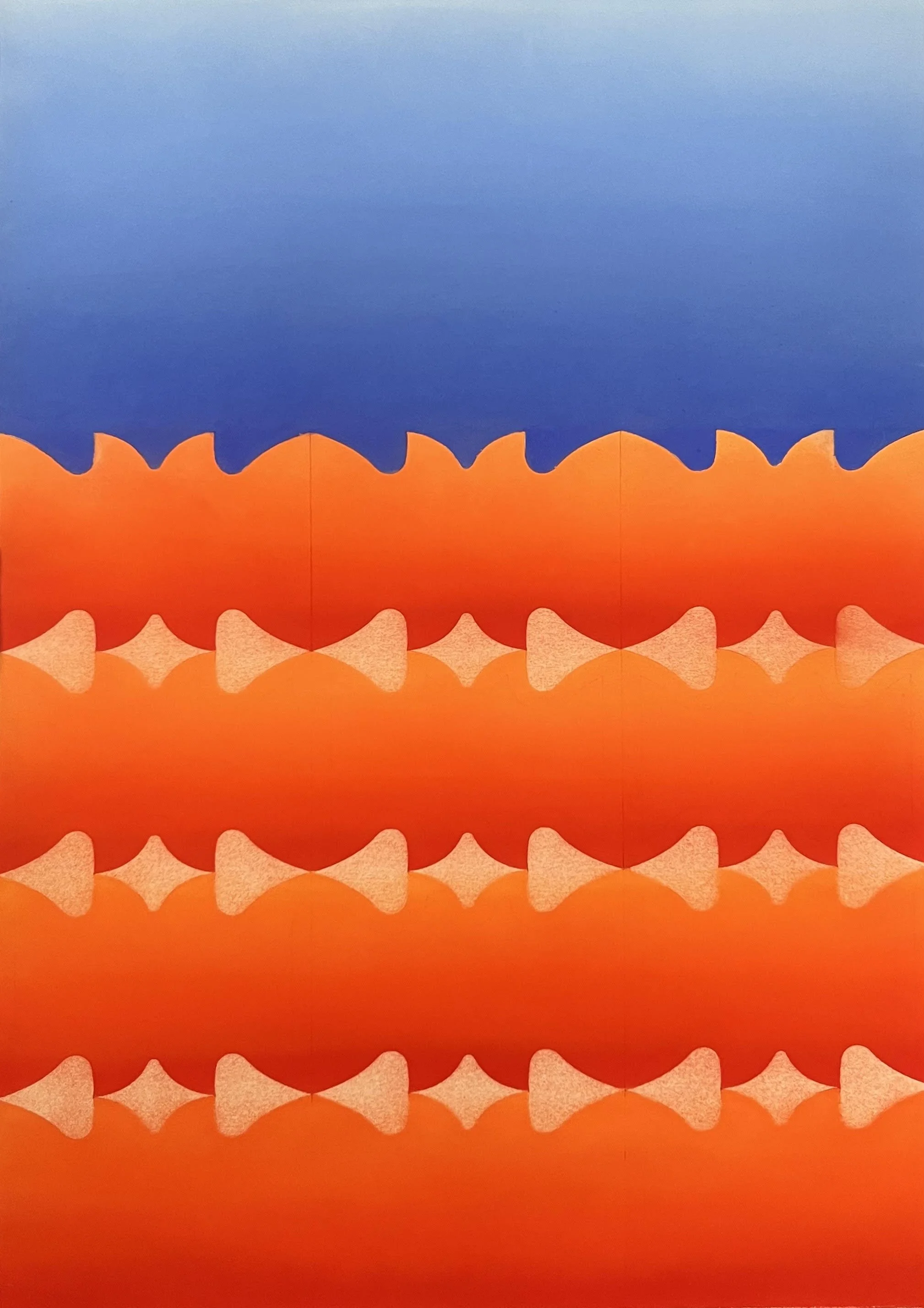
POV #3, Mallika Kanodia, 2026
Building Density One Stroke at a Time
Kanodia moves away from the loose, soft style usually associated with pastels. Instead, she handles the pigment with the strict precision of an architect. She layers the fragile chalk so densely that observers often confuse her saturated surfaces with digital prints or flat acrylic paintings. “I like making the material do something people don’t expect from it. Each horizontal band is hundreds of strokes, back and forth, layering pigment until the color builds a structural density. Through my experiments, I found that soft pastel has this natural brightness, and when worked with concentrated force, it starts to glow.”
In her POV series, Kanodia balances intense energy with strict geometry. You can see her lineage in the color field tradition, the Rothkos and Frankenthalers, who let pure color carry a painting’s emotional weight. Where the color field painters let pigment pool and breathe, Kanodia builds it, structuring the surface with the same instinct for weight, proportion, and light that she brings to physical space in her design practice. In a work like POV #3, a deep fiery red softens into a vibrant orange, and the pigment itself generates the movement across the paper. Held within those firm horizontal bands, the color builds until the surface takes on a genuine physical presence.
“There’s so much history inside color, and it’s still a subject you can push without limits. I think about Hiroshige and the way a gradient does the work of a whole sky. The Transcendental Painting Group, who made color and light carry the entire charge of a painting rather than describe something else. And it isn’t only painters. Bofill or Gaudí used color as a structural element, something that builds and defines space rather than decorates it. In my POV Horizon series, I planned out the compositions, the placement of the lines and left the color to instinct. Once I find the primary colors of a painting, the rest is building depth and motion through the color transitions. What I find interesting is also how the gradient creates a distinct motion in the painting, a physical energy the work holds on its own.”
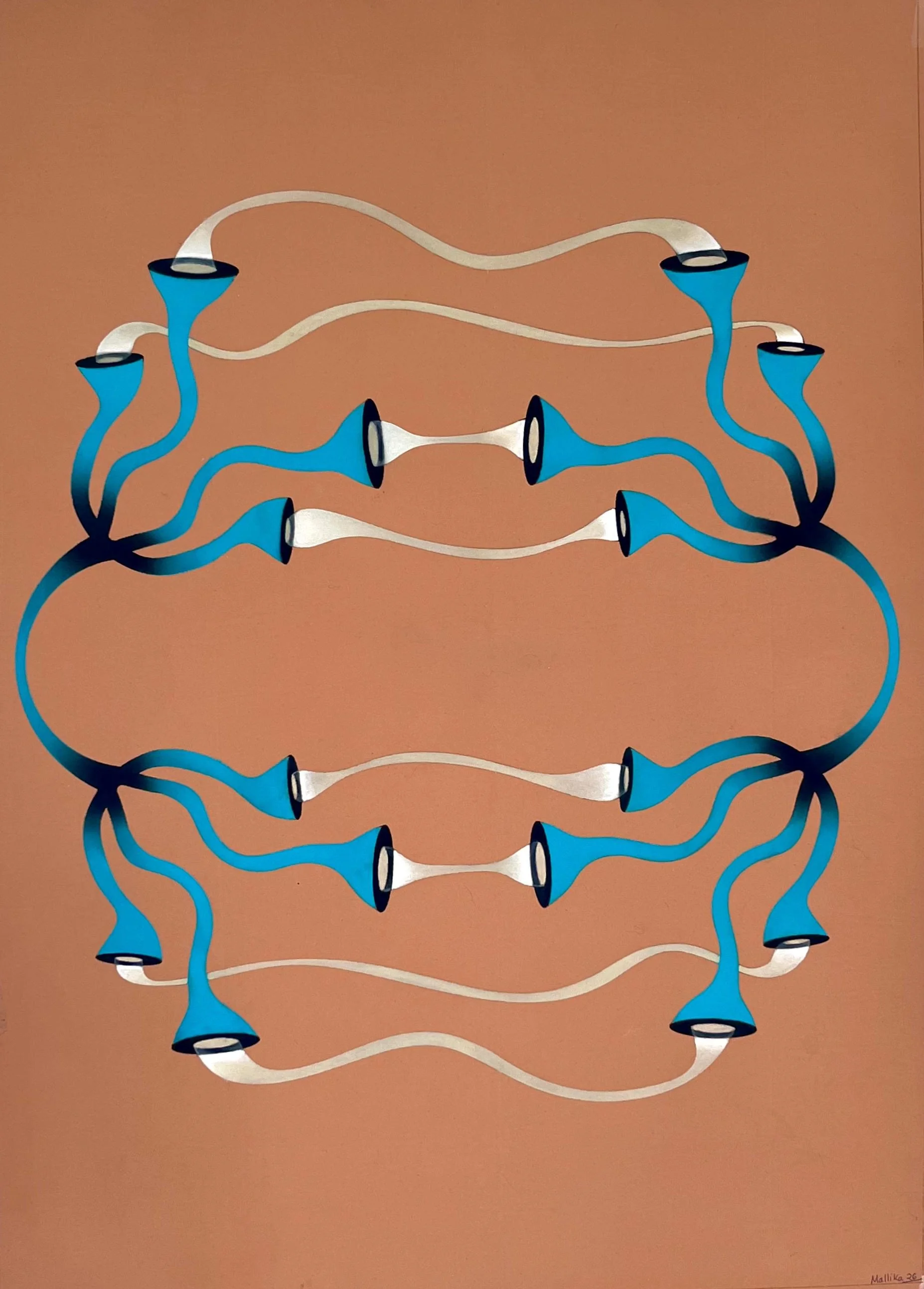
I am you, you are me #1, Mallika Kanodia
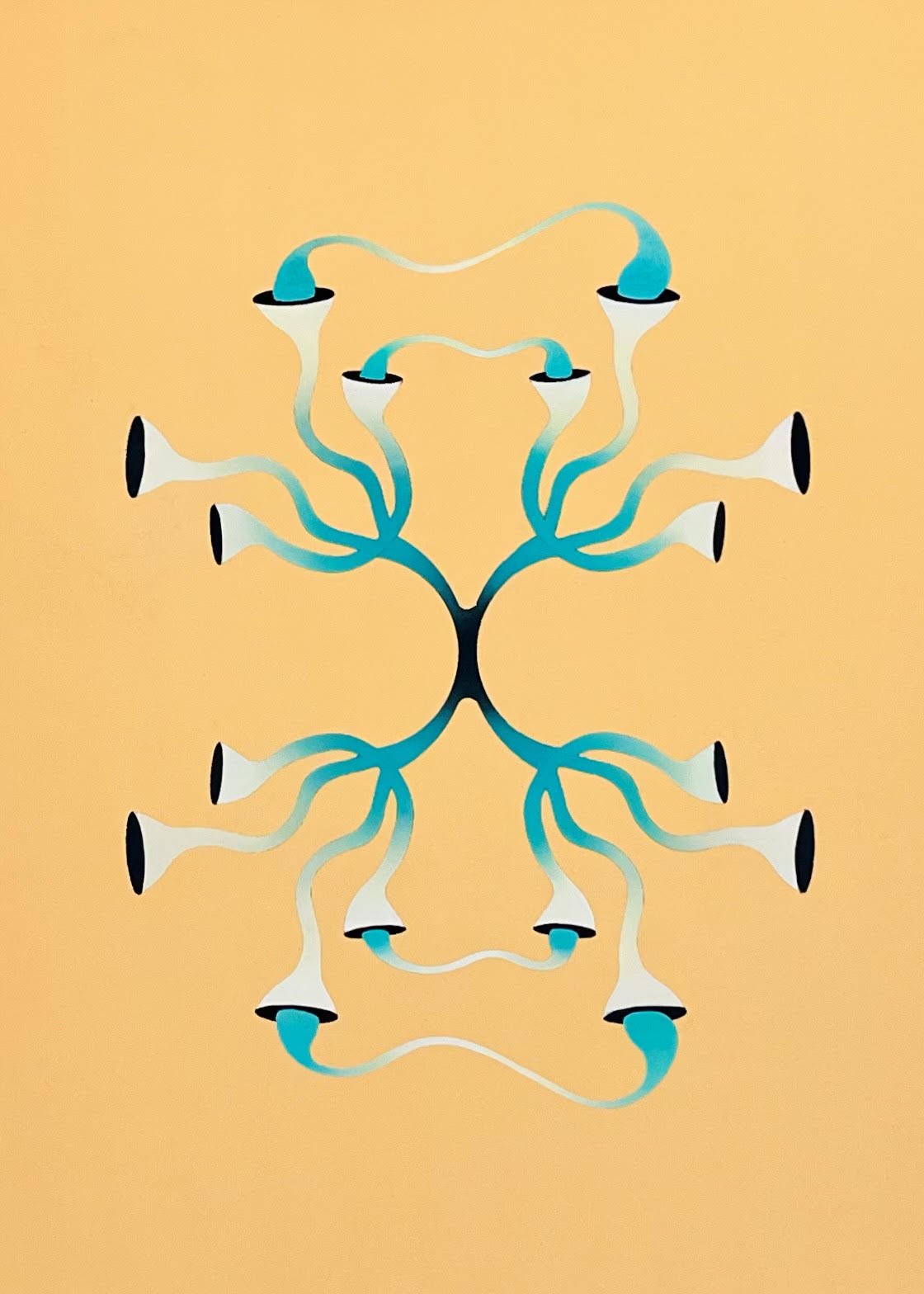
I am you, you are me #2, Mallika Kanodia
“If my art can hold space for a viewer to simply experience a moment of quiet reflection or a singular unburdened feeling, it fulfills its purpose entirely.”
Art and Interdisciplinary Freedom
A defining feature of her practice is a staunch refusal to separate her output into distinct categories. Her fine art practice relies on the six foundational pillars. “Color, texture, light, scale, pattern, and proportion," says Kanodia. These elements provide a universal language, translating across every project she touches. Instead of guiding the viewer through a narrative, she focuses on the pure mechanics of the visual experience. By not boxing herself in as just a painter or an architect, she finds the freedom to blend structural precision with artistic intuition.
“A discipline can give you structure for a moment, but a creative mind receives ideas in any medium. I work in interior architecture and in pastel currently, and I don’t really separate the two. Designing spaces, I’ve learned to read light as the thing that makes a surface feel solid, that gives it depth and weight. I paint the same way. The bands aren’t flat color; the light moving across them is what makes them read as form.”
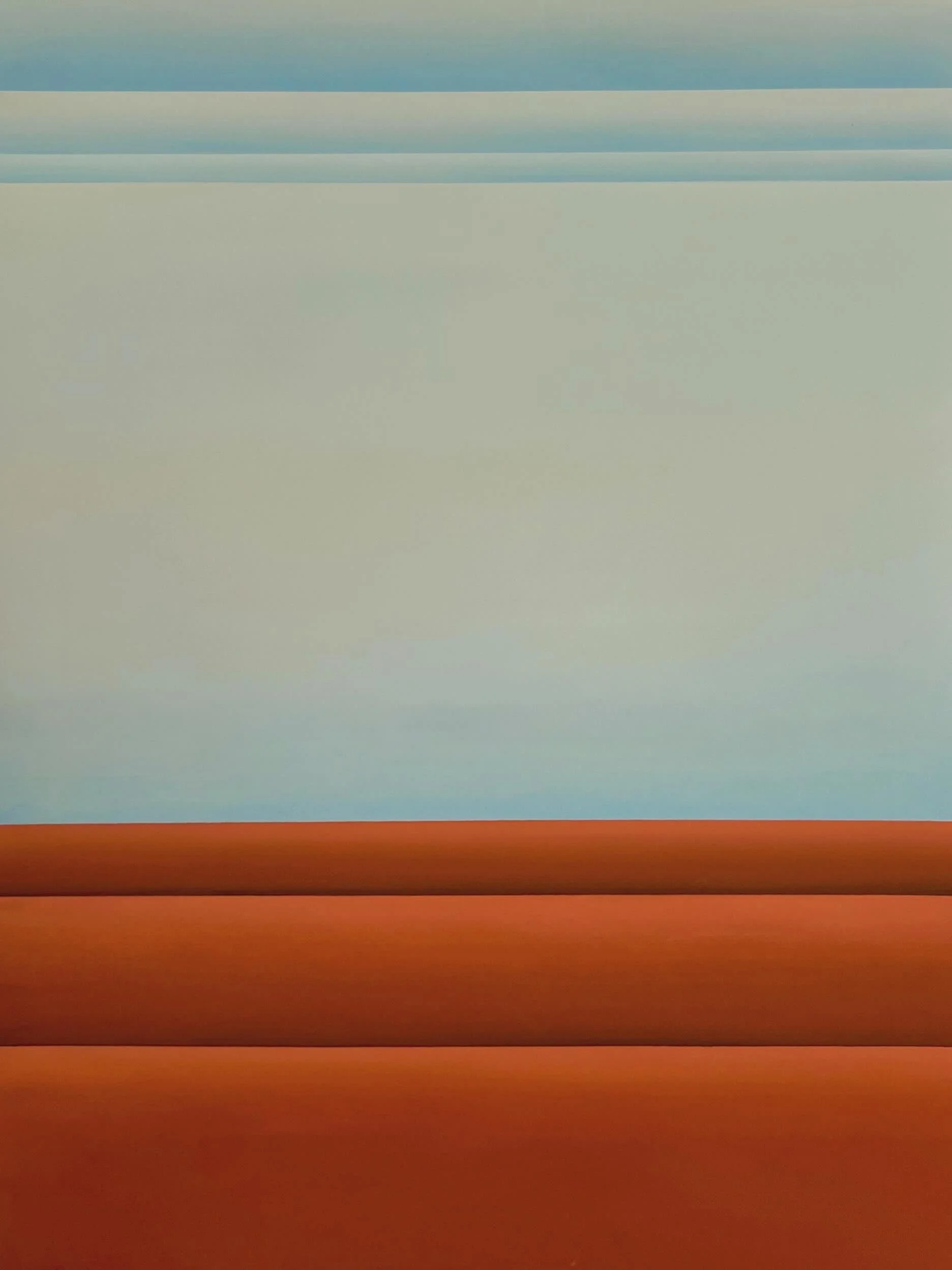
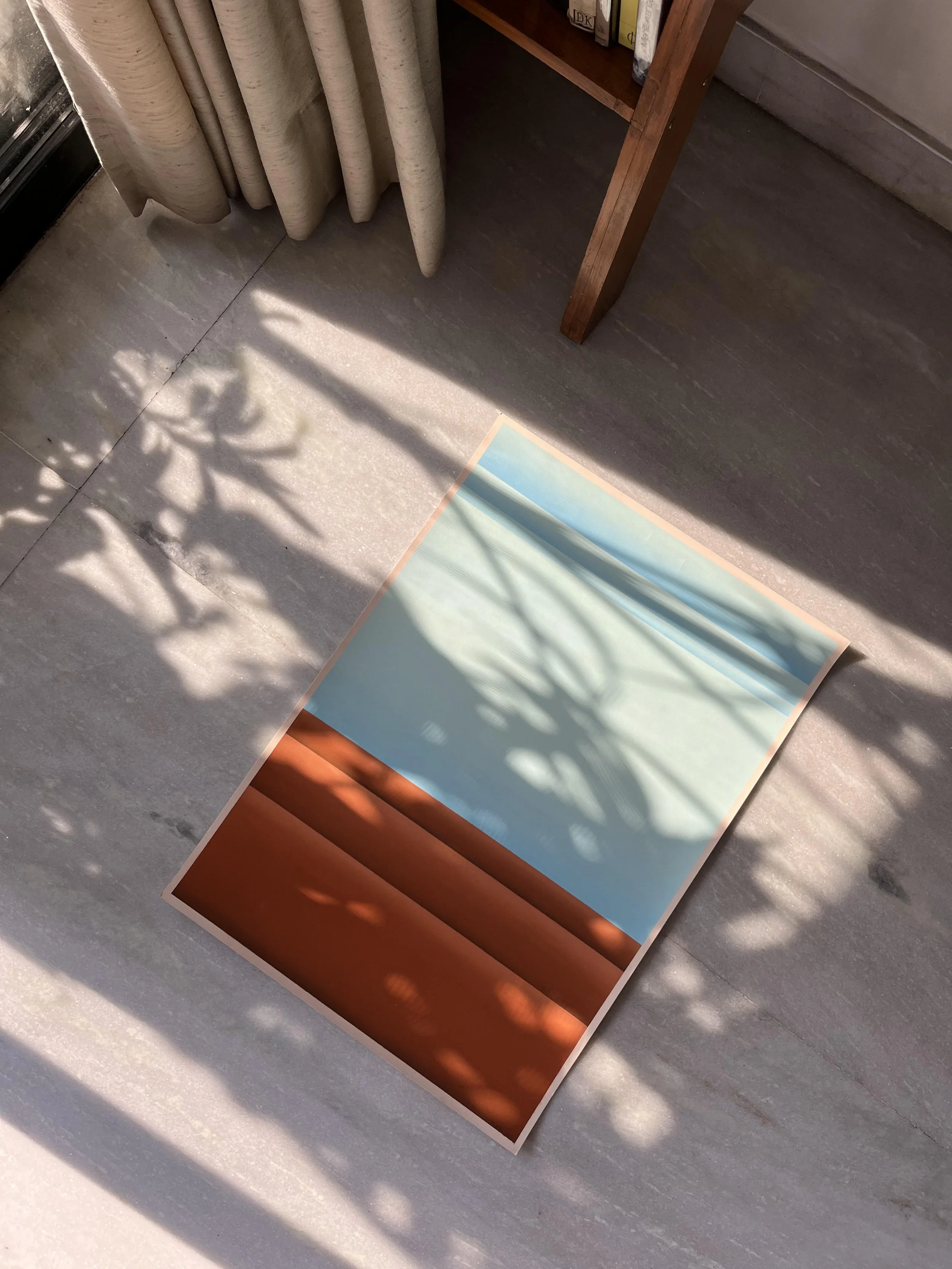
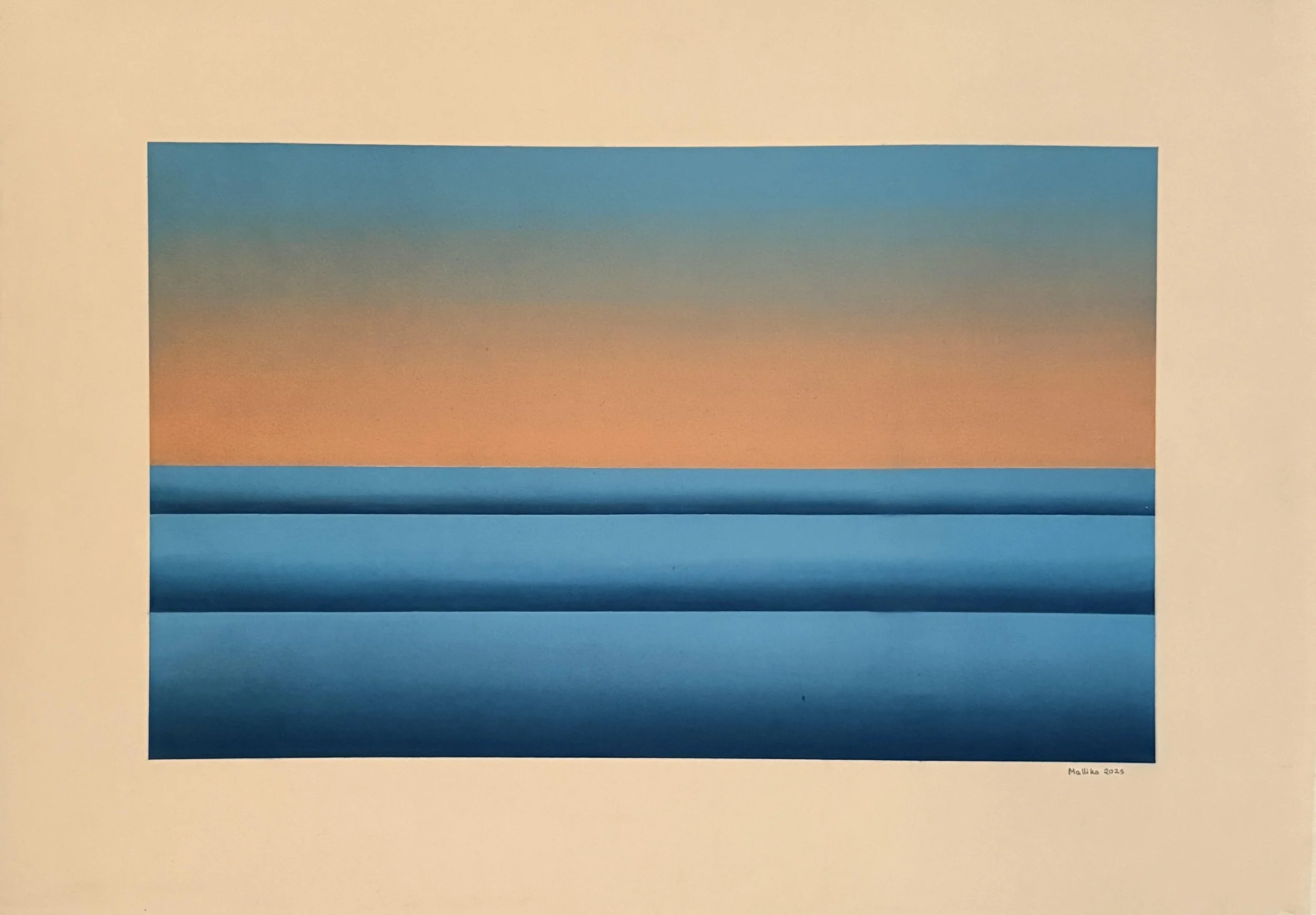
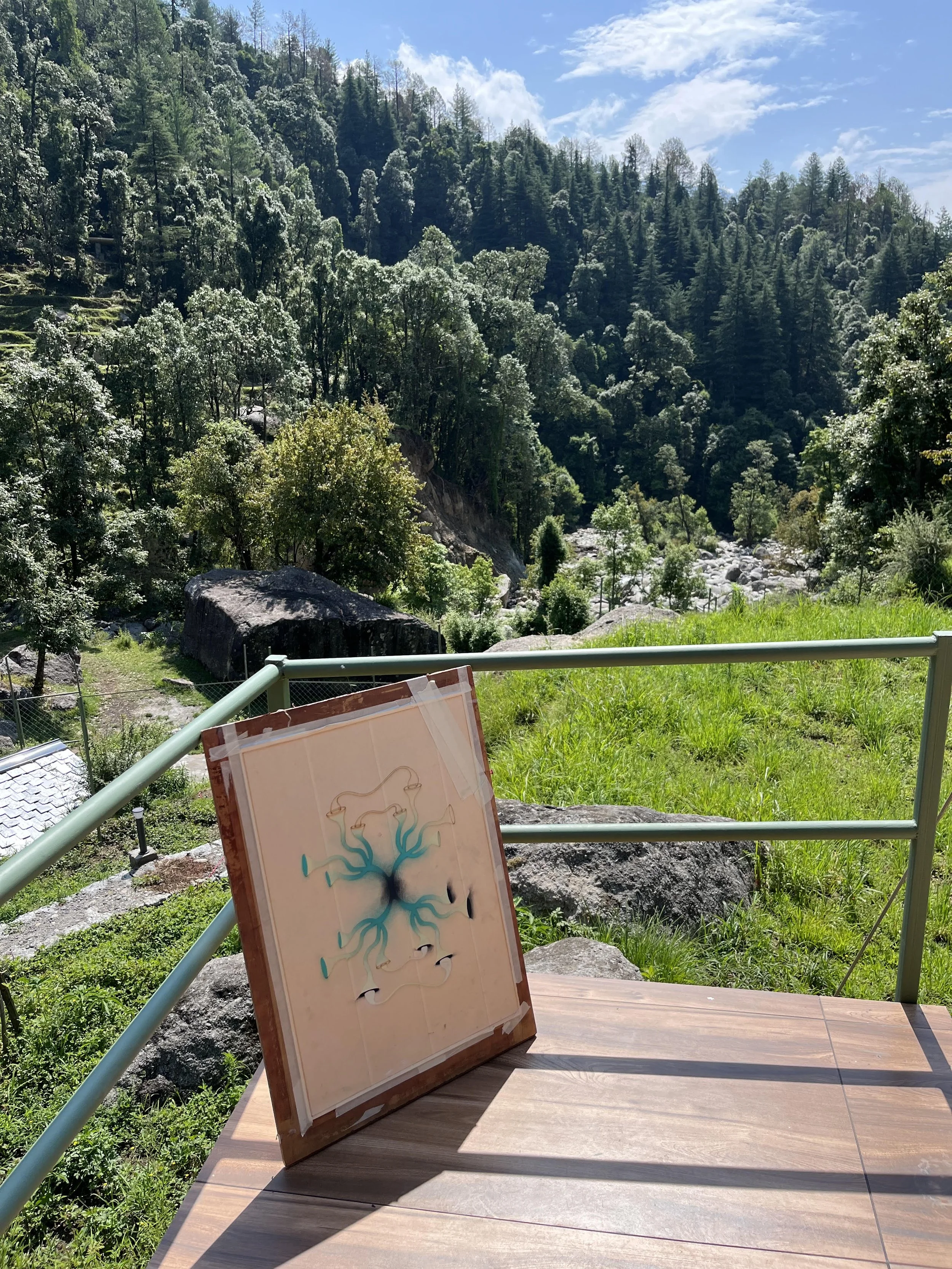
Atworks by Mallika Kanodia (POV #8, POV #1, I am you, you are me #2); courtesy of Mallika Kanodia
Quiet Reflection for the Contemporary Observer
As an observer, I see the stillness of silence in her paintings. Kanodia forces the eye to rest solely on the vibration of the gradient. Her art creates a quiet and peaceful space, which is becoming an increasingly rare opportunity in this saturated and chaotic world. This minimalist geometry offers the audience a physical place to pause and breathe.
"If my art can hold space for a viewer to simply experience a moment of quiet reflection or a singular unburdened feeling, it fulfills its purpose entirely." She pushes this search for immersive space even further in her recent paintings titled I am you, you are me. The new work expands her intense color studies into an exploration of identity and presence. It acts as a physical bridge uniting her spatial awareness with her command over layered pigment to set the stage for her upcoming conceptual pieces.
“To stand before her paintings is to witness the dissolution of the boundary between the observer and the observed. In this fragmented space, the artist’s stream of consciousness converges with the viewer’s, pulling us toward a receding horizon. Her art isn't just a static object to be viewed but a field of consciousness — a collection of fleeting, subjective impressions that the viewer must navigate”, observes Deepshikha.
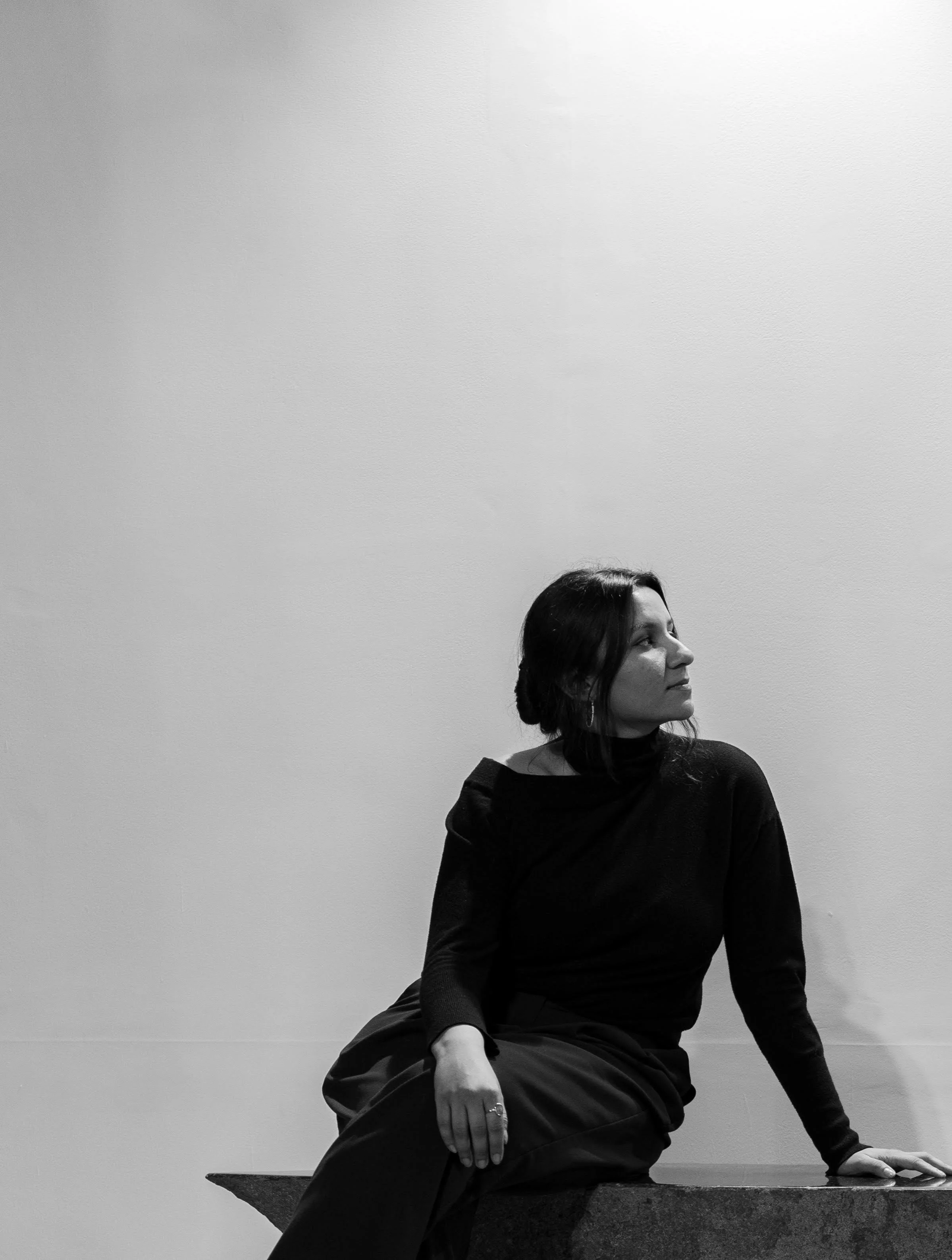
Courtesy of Mallika Kanodia
Article by Deepshikha
Deepshikha is a dedicated writer and cultural analyst with a profound passion for the visual arts and contemporary culture. Drawing from her academic background in literature and her ongoing work interviewing international artists, she specializes in crafting compelling narratives that bring complex creative visions to life.