THE DOOR TO RESONANCE: ERIC RUGERS
“The images don’t explain; they resonate.”
Eric Rugers is an artist based in the Netherlands who spent the majority of his life immersed in the world of commercial design. However, not so long ago, he made the decision to change his life entirely - stepping away from the established path to finally start doing what he loves. Just a few years after that he was recognized by the Museum of Avant-garde and named a finalist for the MA-g Award. We sat down with Eric to discuss his transitions, his obsessions and his curiosities.
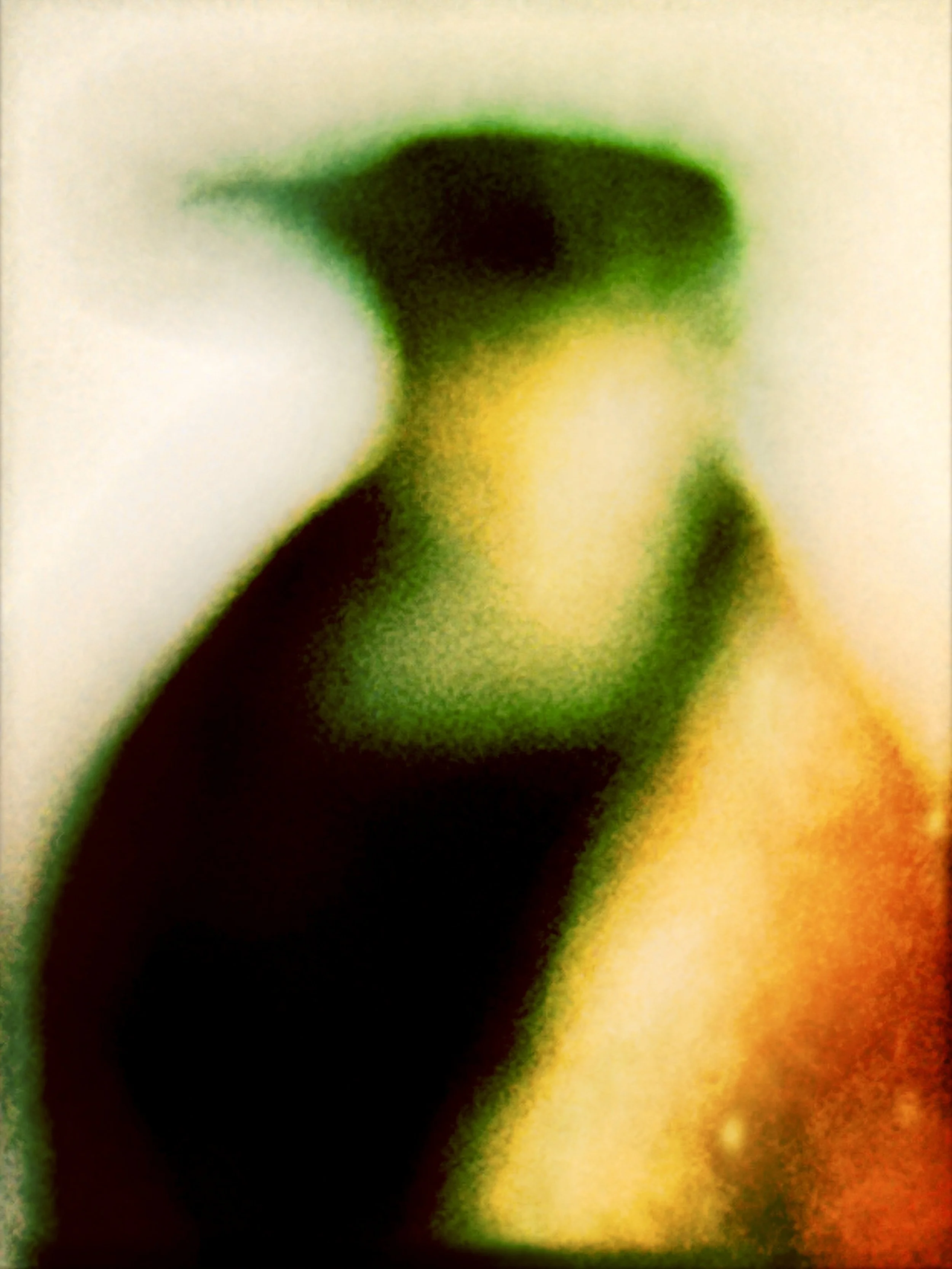
Roi de Brumes, Eric Rugers
Let's start from the origins. You’ve mentioned that "your father instilled values of craftsmanship and precision in you". Looking back at that time, can you recall the very first moments where you felt a creative drive? Perhaps you can tell us about your very first creation?
My first memory of drawing goes back to when I was about five years old. It was my first year of kindergarten. We had to draw a self-portrait, and I placed a tiny figure in the corner of a large sheet of paper. The teacher told me it had to be bigger, that it had to fill the whole page. I remember feeling slightly offended, but I adjusted it. It turned into a kind of double portrait and, looking back, an early lesson in composition and proportion.
My creative drive has been there for as long as I can remember. My father never pushed me, but I learned everything from him. He believed in craftsmanship, not in “artists.” For him, there were only good or bad craftsmen. Maybe that’s why I only embraced the idea of being an artist much later in life.
Talking about precision, you lead the creative direction at Launderette, a creative agency. Does the strictness and strategic energy of your design studio feed into your art, or do you need to keep those two worlds separate to maintain the freedom your abstract work requires?
They are two very different worlds, and they require a different kind of creativity. I keep them strictly separated. In my art, I can truly put my heart and passion into what I do. There’s no client, no brief, no strategy. Just me and my intuition.
“I’m not trying to tell a story. I’m trying to suggest something. The images don’t explain; they resonate.”
In 2022, you made a decision to shift focus toward your autonomous fine-art practice. It is no secret that such significant changes can be daunting. Was that decision scary for you? Furthermore, was this a long-boiling thought that had been simmering throughout your career, or was there a specific event that led you to this change?
It wasn’t so much scary as it was exciting. When I started as an artist, I honestly had no idea where I stood. I just began and slowly discovered my own language and form. Only in the last year or so have I really felt grounded in what I’m doing.
After more than 35 years of commercial work, I was craving freedom. I wanted to make things because I felt like making them.
What I love about this path is that it never feels finished. I never feel “done” or played out. Every new step, every small shift in the work feels like something to embrace rather than something to control. That’s what makes it exciting. It feels right to be here.
My ambition is to gradually move away from graphic design and focus fully on my art. Not as a sudden break, but as a natural transition toward the work that feels most honest to me.
I noticed that in the article by Toni Riegler, he draws a line between your work and the atmospheric landscapes of William Turner. I had a big smile on my face when I read that he is a big influence for you because I’m a massive fan of his work myself (especially his 1841 series A Fire at the Tower of London). While William used oil and watercolor to capture that “fluid” energy, you are mixing painting and digital photography. How do you translate that “Turner vibe” into a digital age?
That comparison by Toni Riegler was a beautiful compliment. And it’s nice to hear you’re a Turner fan as well. I saw my first Turner when I was seventeen, at the National Gallery, and I was completely blown away. I never intended to copy him, but his use of light and color probably echoes in my work. The base of my images is still paint, usually oil paint. Photography is simply a tool to surprise myself with the final result.
The fluid quality comes from the soft focus I use. And by printing the final image on Hahnemühle German Etching paper, I return to something tactile again; something closer to paint or watercolor.
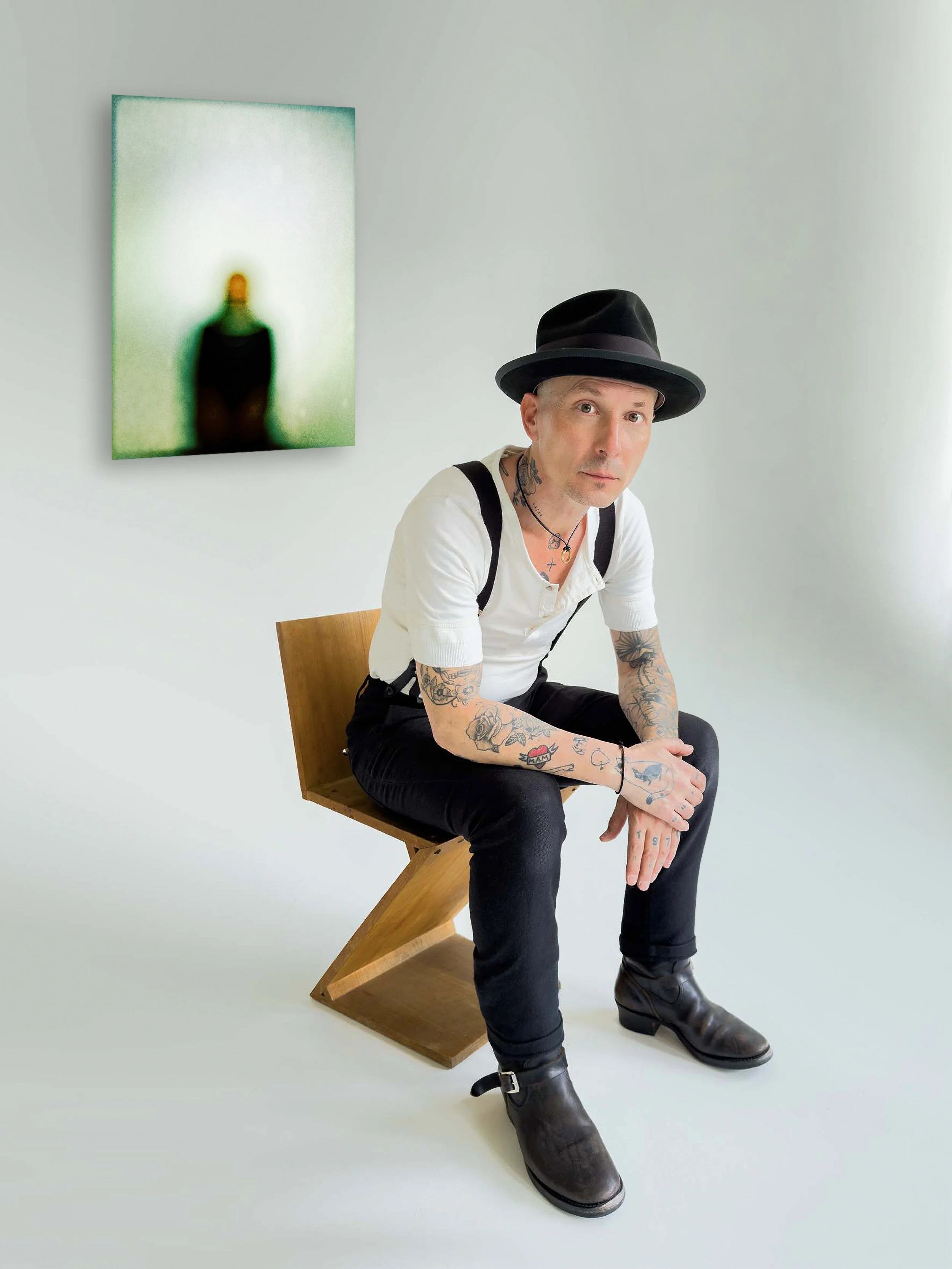
Courtesy of Eric Rugers
In your 2026 piece, Roi des Brumes, a figure emerges that you describe as "neither human nor symbol, but something in between” and that the image originates from a magnified painted surface where form gives way to sensation. My question is: How do you know when to stop? When you are zooming in on those painted layers, what is the signal that tells you to stop? Is it a specific color vibration, a certain loss of detail, or just a gut feeling that you've reached what you call "the door to resonance"?
With Roi des Brumes, the figure only appears at a certain point. Before that, it’s just color, texture, and fragments of paint. Nothing figurative, nothing intentional. But when I keep searching, moving closer, adjusting the focus, something starts to surface. A presence rather than a form.
I usually take fifty to a hundred photographs of a single painted area. Every frame shifts slightly in composition, light, or color. Most of them feel empty or unresolved. But then there’s one image where everything falls into place. The atmosphere becomes dense, almost breathing. That’s when I stop.
It’s not technical, and it’s not rational. It’s a moment of recognition. The image suddenly feels complete, as if it exists on its own terms. That’s the one that remains.
Expanding on that: How do you know when to start? When you are looking at a physical, painted surface, what is the specific spark that tells you a particular detail or texture is worth magnifying? Could you show us behind the curtains of your creative process?
Honestly? I just start. And I try not to be afraid of failure. Most images don’t meet my standards. It’s very much trial and error.
I scan the surface of a painting, a drawing, or sometimes a three-dimensional object with the camera. And then, suddenly, there’s an image that lingers, one that stays with me. That’s the important part.
I’m not trying to tell a story. I’m trying to suggest something. The images don’t explain; they resonate.
I want to congratulate you - in October your work was acquired for the permanent collection of the Museum of Avant-garde! How does it feel to see your work selected alongside your global peers? Does this kind of validation give you a new sense of confidence when you’re back in the studio?
Thank you. It felt wonderful, of course. Recognition like that gives a quiet sense of confirmation that I’m on the right path. It brings confidence back into the studio and motivates me to keep going, and to stay true to the work.
And to finish things out: What do you want people to feel or take away from your work at this exhibition?
I hope something in the work touches a nerve.
Maybe it’s the composition, maybe the color, maybe even the title. If someone pauses for a moment and feels something, that’s enough.
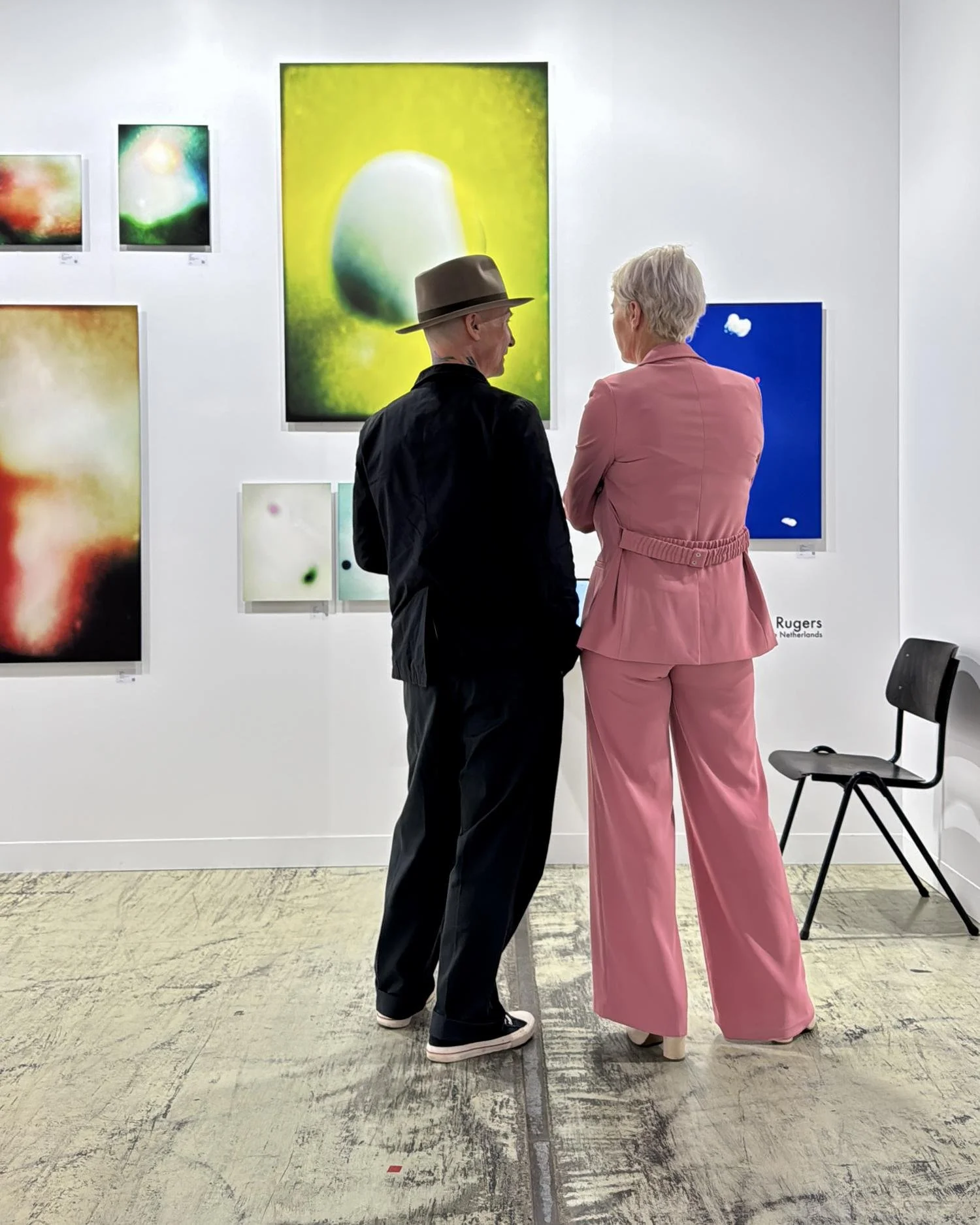
Courtesy of Eric Rugers
Eric Rugers journey is more than a masterclass in abstract photography – it’s a testament to the power of a, in his words, “personal renaissance”. After more than 30 years in the world of design, most would simply choose to stay in that safe, successful career lane. Eric chose to step into the blur.
For me, his transition is a beautiful reminder that life changes are not just about ending one chapter and moving to another – it is about embracing new challenges through the lens of curiosity rather than fear.
Sometimes that shift happens quietly: by paying closer attention, by following a subtle pull, by allowing the work to lead the way. In Rugers images, that quiet movement becomes visible. Form dissolves, sensation takes over, and something unexpected begins to resonate.
See more of Eric’s work on Instagram.
Article by Vasya Kavka
Based in Ukraine, Vasya Kavka is a writer working at the intersection of contemporary art and digital culture. Through his platform @ambient.delusion, he researches emerging and underground artists, publishing interviews and editorial features that move beyond aesthetics to examine context, creative process and cultural relevance. His work is driven by curiosity and a commitment to thoughtful, accessible storytelling that situates artistic practices within the broader currents shaping contemporary culture.