“Some things stay with you because they are part of who you are. You shouldn’t waste time being afraid of losing them.”
From drawing lines in school notebooks to drawing lines on large canvases – all while daring to cross the line. Arco Bruinenberg’s journey is one of healing through color, of feelings, and the power of abstraction. Following a transformative period in 2024, Arco has emerged with a renewed focus on the power of his palette and an intuitive approach to composition. Now an artist and educator, he balances technical precision with a focus on creative liberation. We sat down with Arco to discuss the "creative fire" that fuels his process and the joy of finding new stories within the abstract.
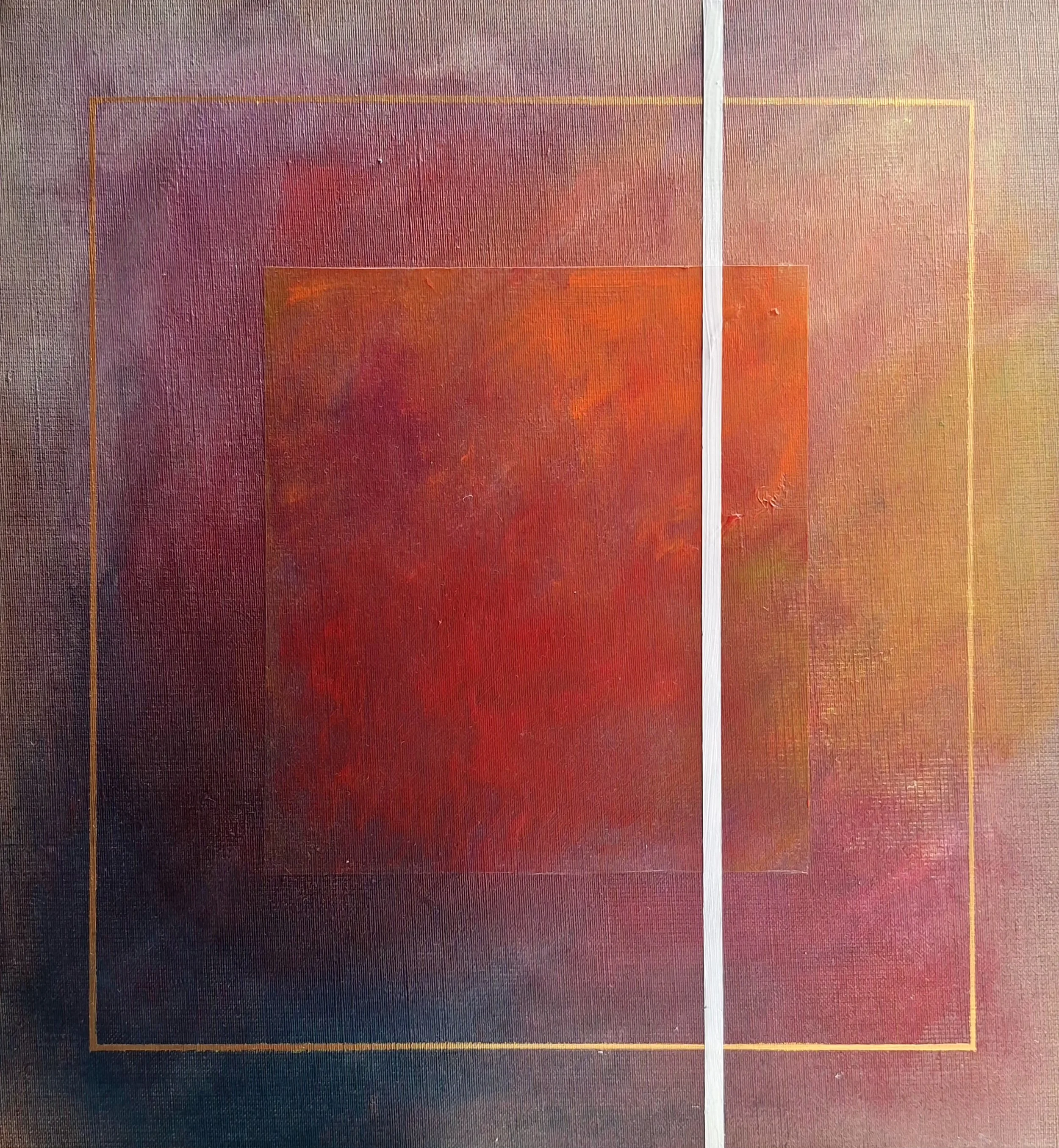
Same Fire by Arco Bruinenberg, 2025
Let’s look back at your first steps into the creative world. You’ve mentioned that during your school years, you were constantly sketching in your notebooks – even during math class. Could you share more about those early attempts? Do you happen to have a favorite piece or a memory from that time?
I started drawing when I was four years old, after much encouragement from my mother. Before that, I wanted nothing to do with it, but for my grandfather who lived in Portugal, I was willing to make an exception. From that moment on, I kept drawing, and eventually I focused mainly on painting.
There are many childhood drawings, clay pieces, and crafts that I remember, but there is one painting that is especially dear to me. I made it when I was eleven years old. It was a square canvas painted with yellow, orange, and dark purple poster paint. It was supposed to be a sunset, but it turned into an abstract painting that we later called Heath on Fire. It hung in my parents’ home for years, then spent some time in storage, and for the past two years it has been hanging in a beautiful large frame next to my desk – as inspiration and a warm memory.
“The experience of creating something I could be proud of, or that made others happy, became a powerful motivation to continue my recovery.”
Do you remember the specific moment you realized you wanted to pursue art professionally? Additionally, could you describe the emotions you experienced when you sold your very first work?
I think it was at the beginning of 2024. I had signed up for a local art route event and received such positive responses. I sold a few small works to family members and people in my close circle. That felt like recognition – confirmation that I could truly do this.
Although I had sold paintings as a teenager before, the sale of my painting Herrijzenis (Resurrection) was a particularly special moment. When I finished that piece, I was so proud of it that I actually found it difficult to let it go. My partner Mike reminded me that I will create so many more beautiful works in the future, and that I don’t need to be afraid of selling one.
I believe it’s vital to discuss mental health, especially given the current state of the world. In your interview with 2OF Entertainment, you mentioned that 2023 was a particularly challenging period for you. If you’re comfortable talking about this, what helped you navigate those obstacles and find your way out?
At the end of 2022, I fell into a depression. In the summer of 2023, my therapist gave me a choice: either I would find a way myself to get off the couch and start moving again, or I would be assigned structured daytime care. That was the push I needed.
I started with cutting and collaging, received a Gelli Pad from Mike for my birthday, and began taking pottery classes. Gradually, more and more creative moments returned, and I started painting again – but this time abstractly. The experience of creating something I could be proud of, or that made others happy, became a powerful motivation to continue my recovery.
* I would like to take a moment to remind our readers about the importance of mental health. Don’t hold everything inside. If you have been feeling low for some time, please don’t wait – seek professional help and talk to your friends and family. You are not alone. Stay safe. *
You said something that I highly agree with: "Art should be accessible to everybody." You clearly reinforce those words by keeping all of your works priced under €1k. Where do you think this specific philosophy originates for you, and why is it so important to keep your art within reach of the public?
I strongly believe that making and experiencing art is essential for storytelling, emotional regulation, and cognitive flexibility. In my opinion, everyone benefits from this and has the right to it.
Through my work as an art teacher, I meet many young people who have never truly been exposed to art. A whole world opens up for them, and it brings so much inspiration. Art makes people happier and more open-minded. How could anyone be against that?
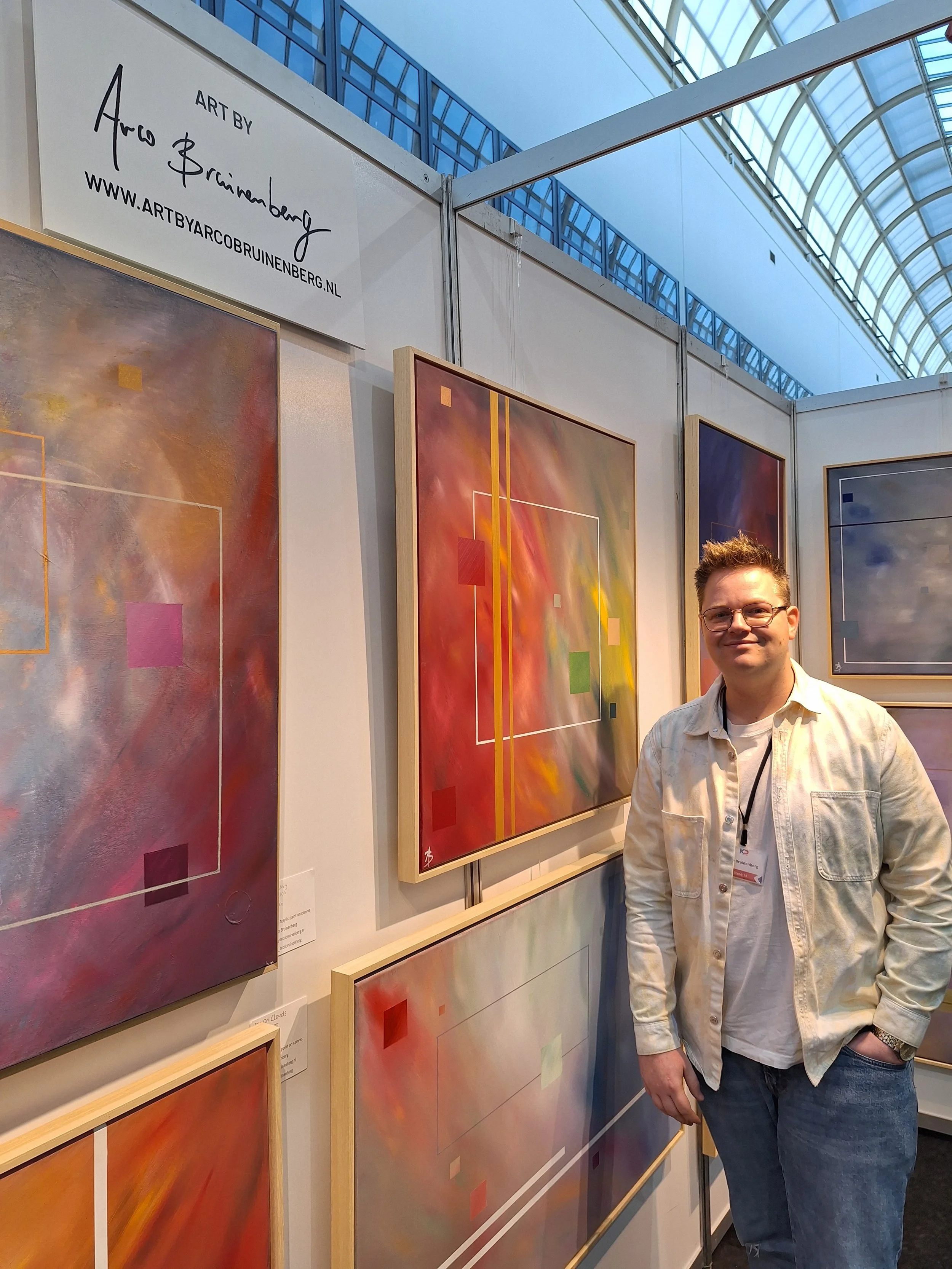
Courtesy of Arco Bruinenberg
Your journey has seen a transition from realistic drawings to the portraiture and abstract work you create today. What was it about abstraction that captured your interest, and why does it feel like the right medium for you right now?
I love experimenting with different techniques, styles, and materials, but abstraction, for me, is a healing and liberating way of working. It also challenges the viewer to look longer and ask themselves: What am I seeing? What does this artwork make me feel?
That is what I love most about abstract art – you can continue discovering something new within the work every time you look at it.
It’s clear from your portfolio that you are a "fan of color." Could you walk us through the motivation behind your palette choices? What does color represent to you emotionally or symbolically in your process?
I have always had a deep love for color. I think I can thank my mother for that – she shares the same love, and it was very visible in our home growing up.
Color is such a powerful tool, and I believe its influence is often underestimated. The impact it has on your emotions, your health, your environment, and the message you can communicate through it – we don’t use this superpower enough. The TED Talk by Ingrid Fetell Lee is a perfect example. Her research into the origins of joy and how our surroundings influence it was truly eye-opening and deeply inspiring for me.
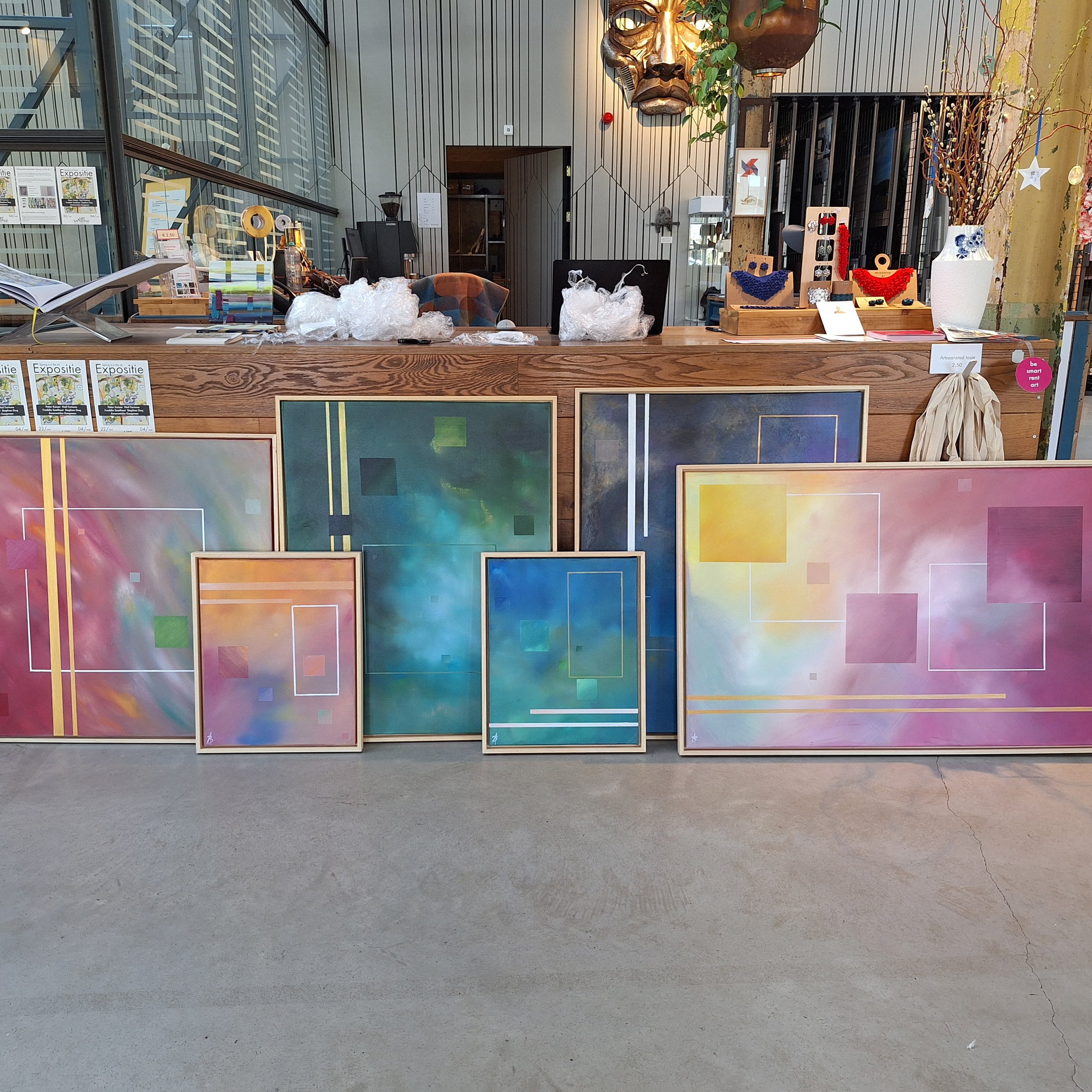
Courtesy of Arco Bruinenberg
A client once asked you, "Weren't you afraid to put those lines on the painting?" To me, those signature lines and shapes are the essence of an Arco Bruinenberg piece. What goes through your mind as you apply them, and how do you determine their placement and timing?
Yes, I thought that was a wonderful question, and I completely understand it. Many people already find the background beautiful and would be afraid to “ruin” it with the next steps. Fortunately, I am no longer that afraid of making mistakes.
I am also quite stubborn, and I actually enjoy boldly placing a line straight across the painting. I create my paintings in four phases. The first phase is the background. In phase two, I add the square blocks. Phase three introduces the frames, and finally, in phase four, I apply the lines.
I don’t start with a fully thought-out plan. I select the colors I want to work with and paint intuitively. After each phase, I step back, observe the whole, and determine the composition for that moment.
Speaking of those definitive lines - could you walk us through the creation of your piece titled Same Fire? What was the inspiration and technical process behind it?
With Same Fire, the process was largely the same. The difference was that I did not use blocks and that I worked on a different surface than usual. I had been drawn to the brown, coarse cotton for some time and wanted to experiment with it.
In the end, the painting did not need much more – the background felt exactly right to me. I sometimes go through periods that are busy, heavy, or uncertain, but inside me there is always a creative fire, full of passion. That does not change. Realizing that brings tremendous peace.
Some things stay with you because they are part of who you are. You shouldn’t waste time being afraid of losing them.
For my final question: What is the primary feeling or idea you hope viewers walk away with after experiencing your work at this exhibition?
When I create art, it gives me calm, confidence, and happiness. I hope that when others experience my work, it gives them something meaningful as well – something they can truly take with them, preferably happiness and confidence.
“Inside me there is always a creative fire, full of passion. That does not change.”
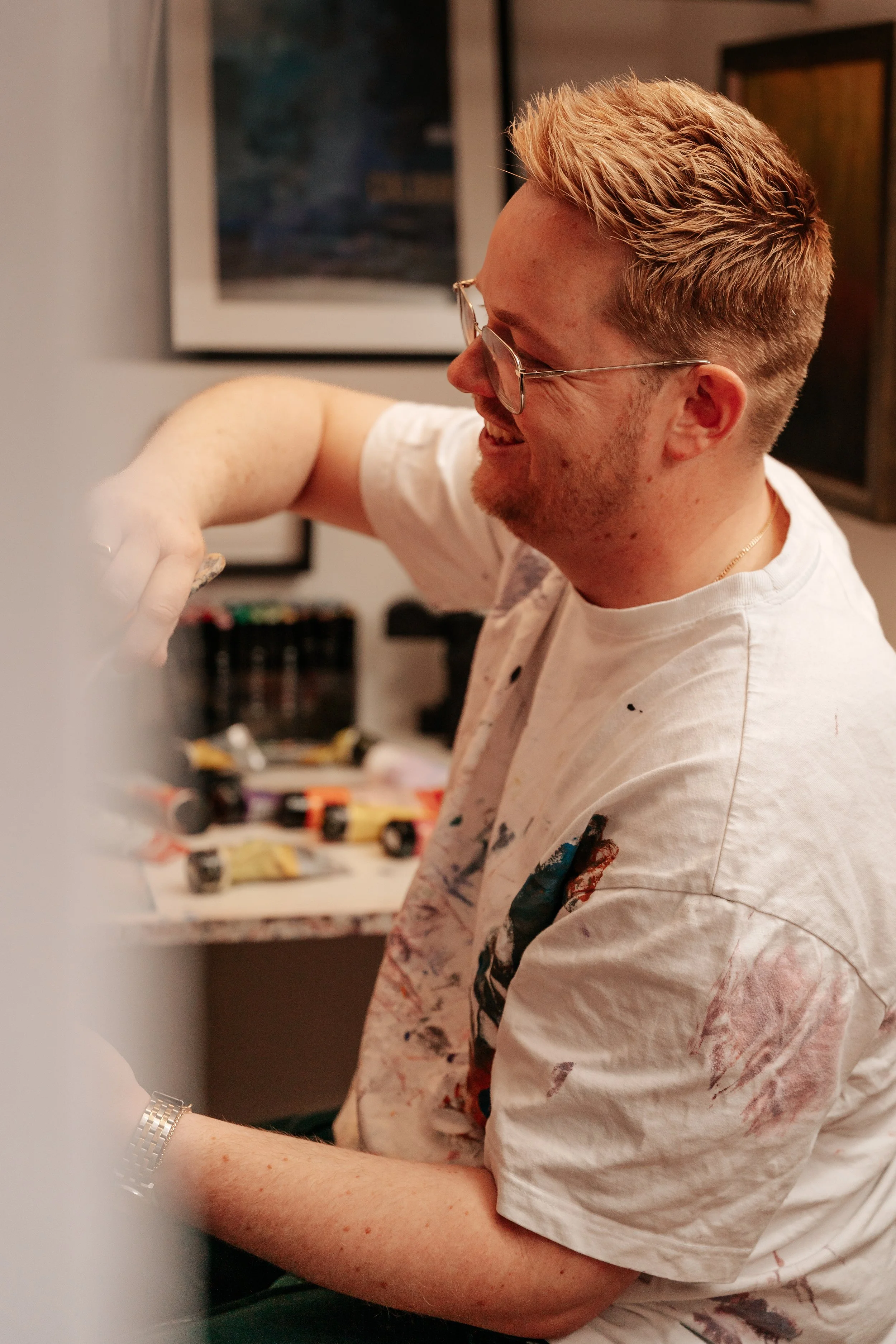
Courtesy of Arco Bruinenberg
Arco Bruinenberg’s abstraction is more than just a style, it is a dialogue between the artist's intuition and the viewer’s own perspective. Each canvas invites a back and forth – a challenge to look longer and discover something new within the layers of color and form. It is in this exchange that the work truly settles, where those final, deliberate lines act as a clarifying highlight, guiding the conversation toward its core.
See more of Arco’s work on Instagram.
Article by Vasya Kavka
Based in Ukraine, Vasya Kavka is a writer working at the intersection of contemporary art and digital culture. Through his platform @ambient.delusion, he researches emerging and underground artists, publishing interviews and editorial features that move beyond aesthetics to examine context, creative process and cultural relevance. His work is driven by curiosity and a commitment to thoughtful, accessible storytelling that situates artistic practices within the broader currents shaping contemporary culture.