
It is not often that you are given the opportunity to explore an artistic journey as rich and multifaceted as Igor Revelis (Klone). He has spent the last decades exploring different forms of artistic expression. From the streets to the studio, his practice reflects a continuous curiosity about the world around him. In a journey through seven questions, I invited him to think about the experiences, influences and ideas that have shaped his artistic path.
“[…]. But somehow, unintentionally, I found myself among the pioneers of the graffiti and street art scene in Israel.”
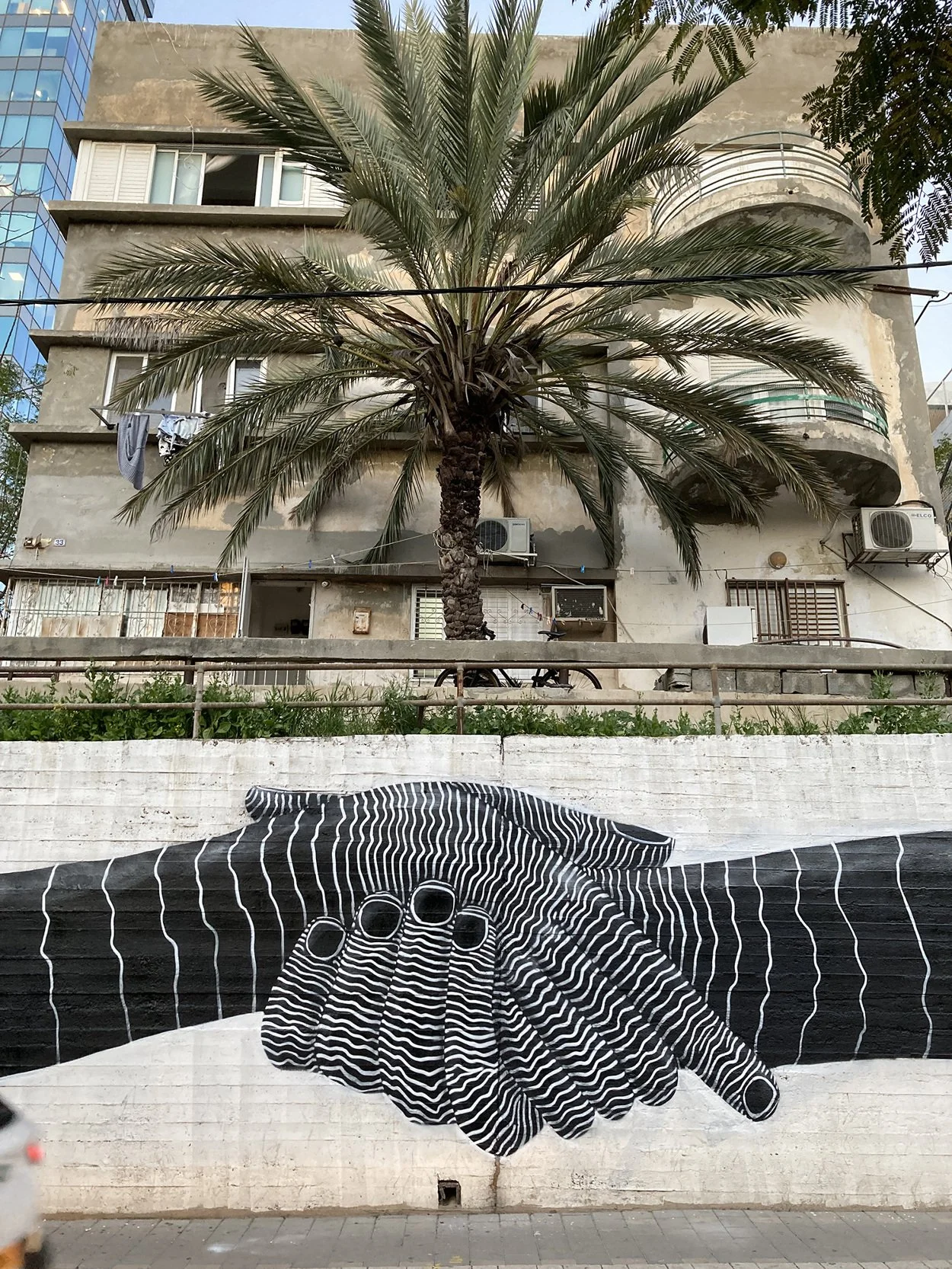
Better Together, Igor Revelis (Klone), 2021
Mural Installation, Tel Aviv, Isreal
Image courtesy of the artist
Could you tell us a little about yourself and how you first became interested in art and painting?
Well, I’ve lived long enough to call it a long story, especially for someone of my generation. But the short version is: I was born in Ukraine when it was still part of the USSR, saw it falling apart as a kid, and moved to Israel with my mom at the age of 11. At 16, I discovered graffiti through a music video on MTV.
Back then, you couldn’t see any graffiti on the streets of Israel, and the Internet was still in its early days. There were only two websites about graffiti, one American and one Dutch, and that was pretty much it. So, I found myself gathering information from wherever I could and experimenting mostly on my own.
Of course, things grew from there, but somehow, unintentionally, I found myself among the pioneers of the graffiti and street art scene in Israel. It also led me to explore other artistic platforms, mainly because I was exposed to the possibilities, to different DIY scenes around the world, and to people stubbornly doing their own thing, long before any of it became cool or even mainstream in a way.
My introduction to the possibility of making art, showing it, and pushing my own boundaries in this field came from using the city as my studio and gallery, before I even knew those terms. So later, when I was invited to take part in exhibitions, it felt like another platform for experimentation, rather than something that replaced the process that had brought me there in the first place.
“[…]. Whether it’s a natural or urban landscape, music, contemporary dance, or the books I read, there are so many voices and movements that can influence my process.”
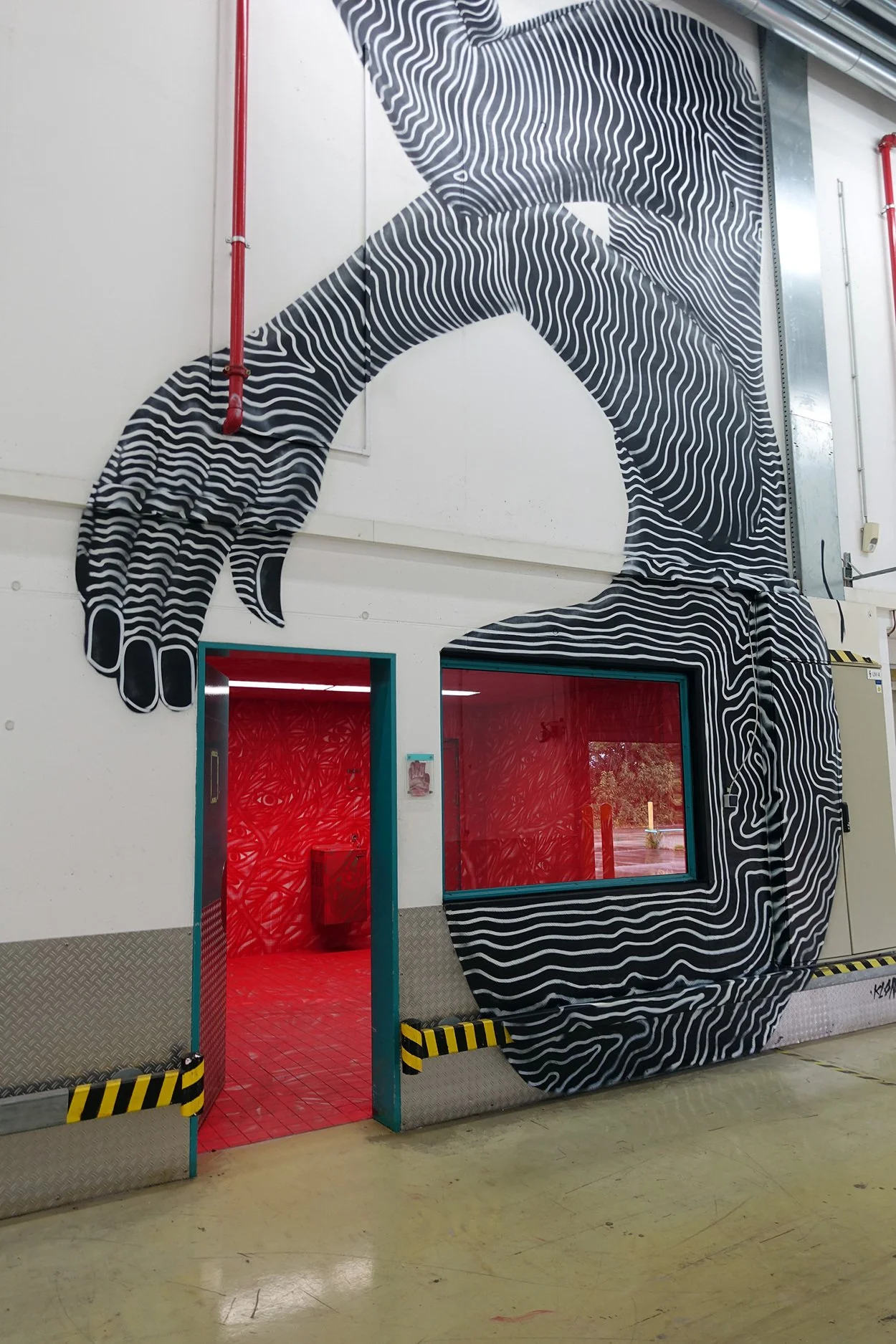
Inner Space, Igor Revelis (Klone), 2019
Mural Installation, Heidelberg, Germany
Image courtesy of the artist
Something I always find interesting when talking to artists is their creative process. How does a new work come about? Where do you start, and how does an idea develop into a finished piece?
There are so many ways to approach this question, and maybe that’s why there isn’t one right answer. A new work often feels like another bolt in a larger machine, just a comma or a vowel in a much larger body of work, made up of everything that has been created before and everything that will come after. My ideas come from many different sources […]. Whether it’s a natural or urban landscape, music, contemporary dance, or the books I read, there are so many voices and movements that can influence my process, and this openness to the world around me is important to me.
Then, of course, there’s the history of art, which is constantly unfolding, and so much art is being made around the world that it can feel overwhelming at times.
“Public art, whether sanctioned or not, is still mostly imposed on the viewer, as people encounter it during their commute, often unintentionally.”
How do you navigate the relationship between your artistic practice and its public dimension? Do you think taking art outside traditional exhibition spaces changes the way it is experienced and perceived?
At this point, my practice also takes place in the street, but I definitely spend most of my time in the studio. Since I began working in the urban environment (about 26 years ago), many things have changed, and my approach to making work outdoors has evolved. It is now more closely connected to the wider scope of my practice. I often use the same materials and explore similar themes, but the gallery and the street are essentially different in the truths they reveal and in the way they are “consumed” or viewed.
Public art, whether sanctioned or not, is still mostly imposed on the viewer, as people encounter it during their commute, often unintentionally. It adds to the visual noise surrounding it, blending into it, competing with it, and often doing all of the above. This raises many questions about the what, why, and when of public art.
I think artists who leave their work in the public sphere quite often neglect the viewer: the person whose window faces the wall or street where the artwork is left to live, the people who pass by it every day on their way to or from work, and so many other factors, such as trying to establish a connection with the architecture of the space, its culture, and its history.
It is quite important to me to find the best possible connection with the environment. Of course, it can never be perfect, but I can certainly make an effort.
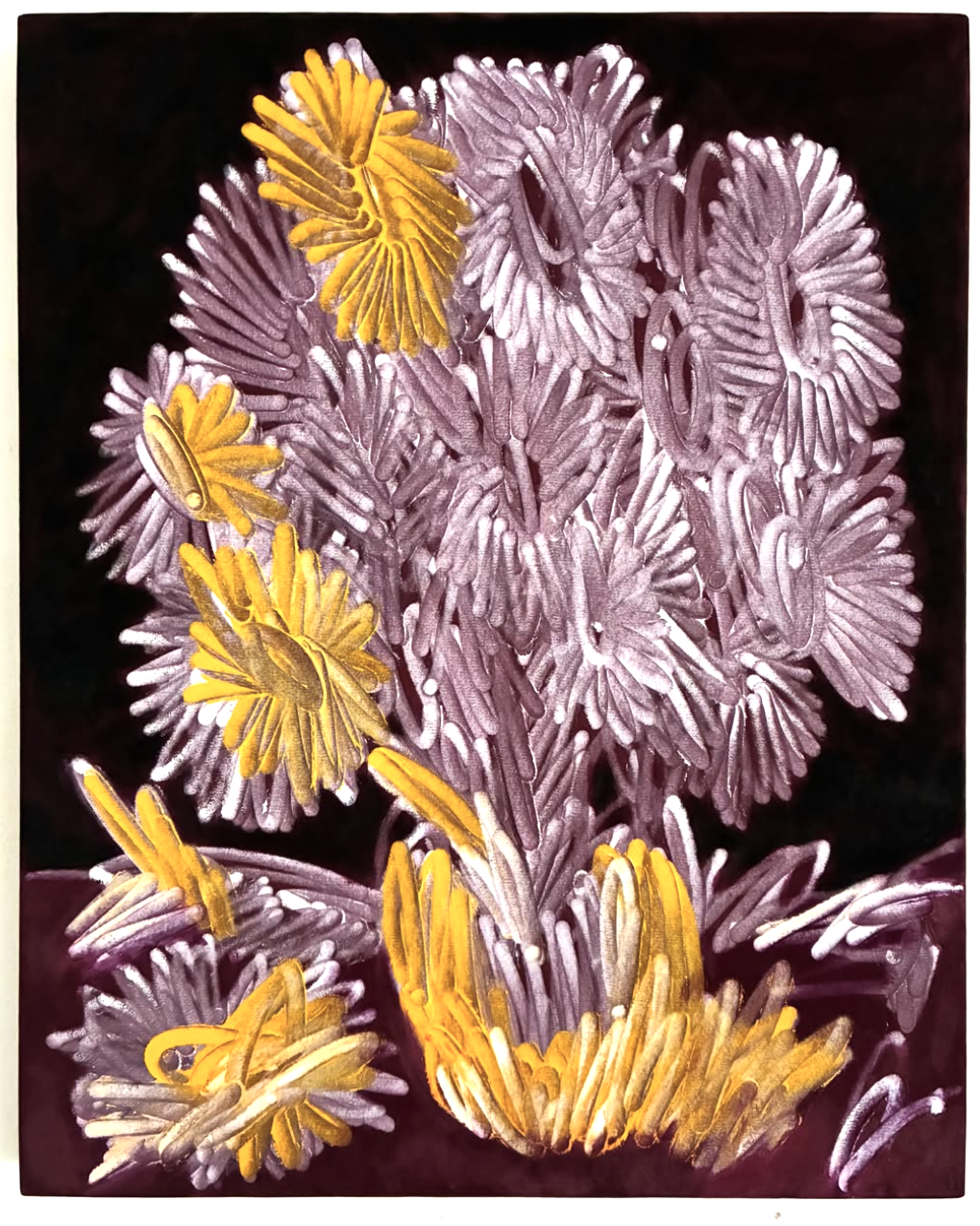
Sun Kissed Goodbyes, Igor Revelis (Klone), 2026
Oil paint on velvet
Image courtesy of the artist
“[…]. So, yes, there’s more colour in my work now, especially because I find it fascinating.”
Monochrome and colour seem to play an important role in your work. How do you decide when to use one or the other? Does your approach change depending on your choice?
For quite a long time, I intentionally neglected most of the colour palette and worked in a rather monochromatic way. This allowed me to express my ideas more directly, often creating a stronger contrast with the already colourful environment of the city. […]. Over the past few years, I’ve started exploring painting more, after spending most of my career focused on drawing. This has somewhat pushed me into the world of colour, which I’ve obviously embraced as a sort of challenge. So, yes, there’s more colour in my work now, especially because I find it fascinating.
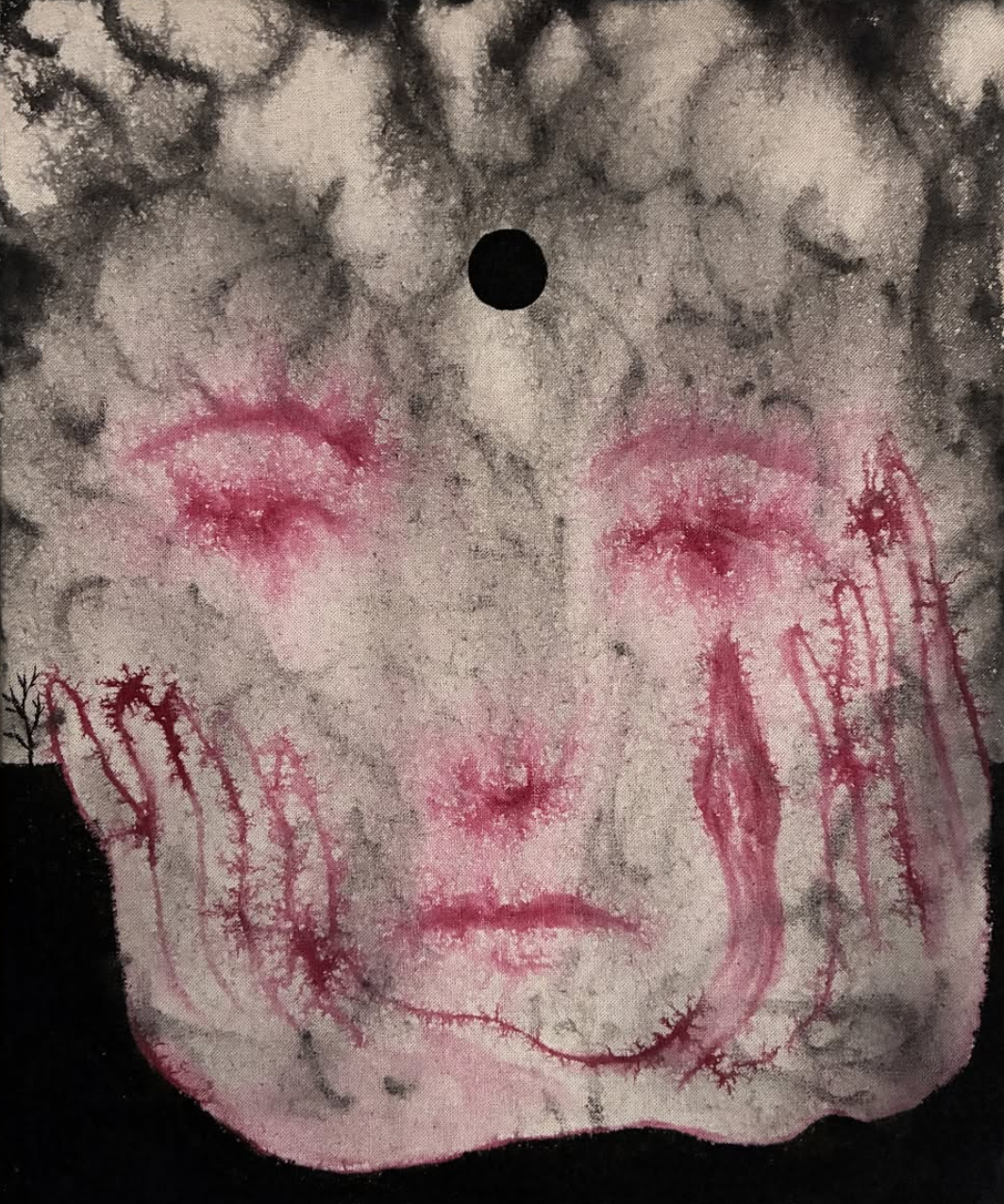
That One Song, Igor Revelis (Klone), 2026
ink and graphite on cotton; 30 x 25 cm
Image courtesy of the artist
“More often than not, one action leads to another, and what might look like improvisation is simply an organic reaction to a situation.”
There seems to be a dialogue between gesture and materiality in your work. How important is the physical act of painting to your practice, and what role does improvisation play?
The physical act of painting is probably the most important aspect, since painting is my way of moving through and exploring the world. […]. And, well, if I go to the trouble of creating a physical object, I do want the viewer to become curious about it, if they’re open to the idea. […]. As for improvisation, I don’t think it’s really possible at this point, as I tend to surrender to a certain process and direction as I go along. More often than not, one action leads to another, and what might look like improvisation is simply an organic reaction to a situation.
Are there particular themes, questions or ideas that keep returning in your work, even as your techniques and visual language evolve?
Yes, definitely. There are recurring questions and themes. When I was younger, I was very curious about my origins and regional influences, looking for answers in childhood stories, which often taught us through visual symbolism drawn from both flora and fauna. […]. My curiosity lies in symbolism, in how we perceive memories, and in how they affect and connect us, both regionally and universally.
Looking ahead, is there anything you would like to explore or experiment with that you haven't had the chance to pursue yet?
Hopefully, more dimensions to my work. Things like sculpture have always drawn me in, but I’m yet to fully dedicate myself to it. On the other hand, I already have enough interests to keep me busy for a few decades, so no worries.
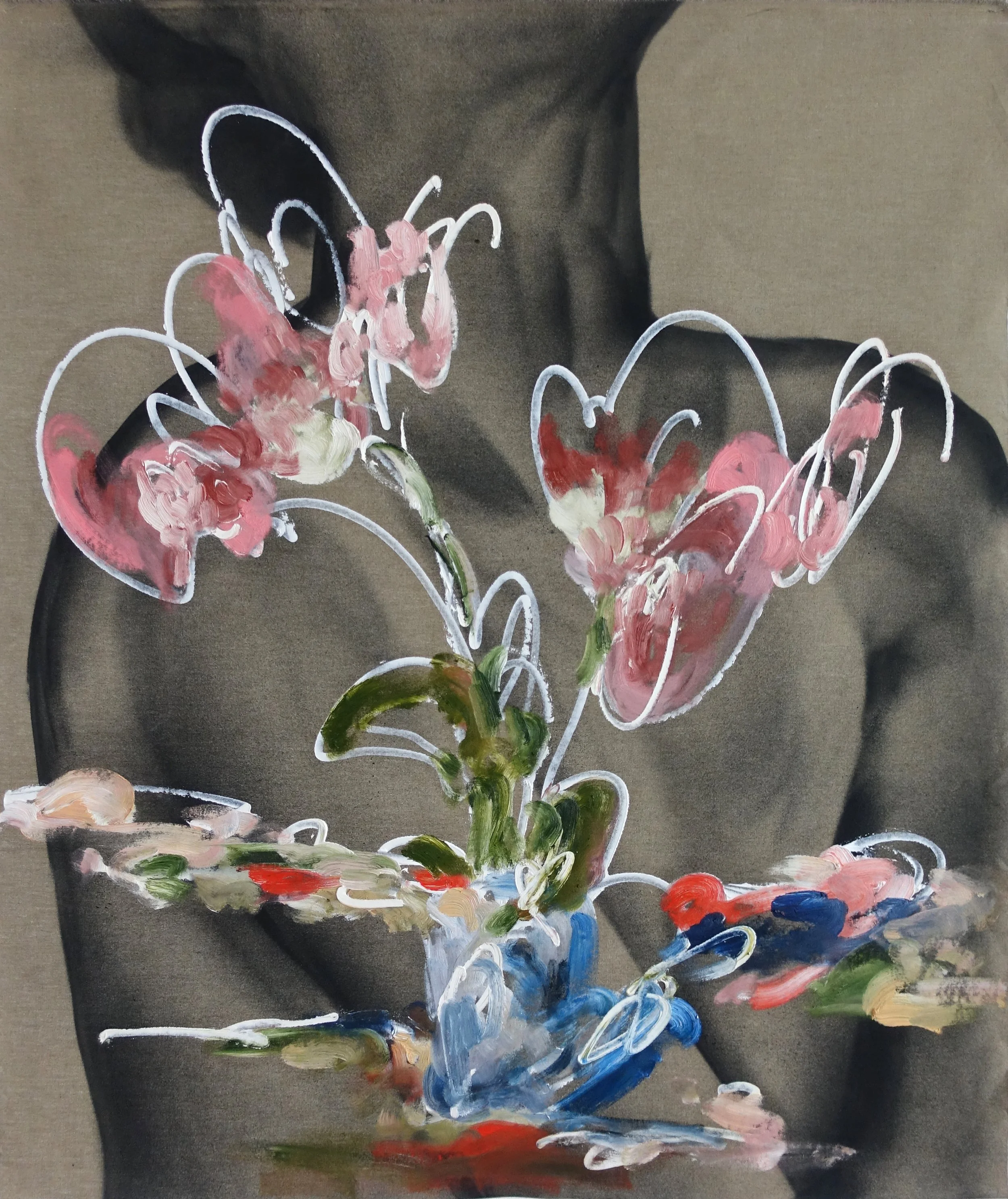
That Holds Memory, Igor Revelis (Klone), 2026
oil paint, spray paint on linen, 85.5x102cm
Image courtesy of the artist
Article by Desideria Manzini
Working between Italy and France, Desideria Manzini specializes in cultural management, strategy, and communication. She has worked and collaborated with private art institutions, contributing to the development and positioning of cultural projects within an international context. Alongside her strategic practice, writing plays a central role in her work: a tool for analysis, critical reflection, and cultural interpretation. Through her texts, she explores the intersections between art, heritage, and contemporary discourse.